How to Plan Flowers for a Backyard Wedding Without Making It Feel Too Casual
A backyard wedding can be incredibly beautiful, personal, and sophisticated, but there is one design challenge that comes with the territory: how do you keep the event from feeling like a regular backyard party where someone happened to show up in wedding clothes? Flowers play a huge role in answering that question. Backyard wedding flowers create visual structure, tell guests which spaces are important, and help transform a familiar lawn, patio, pool area, garden, or family property into a setting that feels genuinely ceremonial. The trick is not using flowers everywhere. In fact, scattering dozens of small arrangements around the property can sometimes make the design feel less polished because nothing has enough visual weight to establish a point of view. The better approach is to identify a few important moments and make them feel unmistakably intentional.
Think about the difference between an everyday dinner table and one prepared for a special occasion. The furniture itself may be identical, but proportion, lighting, linens, flowers, and repetition completely change how you experience it. Backyard weddings work the same way. You may be standing on the same lawn where the family grills on Sundays, but once the ceremony is framed by thoughtful florals, the dining tables repeat a clear color palette, and candlelight starts glowing among the arrangements, the context changes. Familiar becomes special.
That transformation does not require turning the property into a flower garden overnight. You do not have to cover every fence, tree, staircase, chair, and railing. Instead, good floral planning creates hierarchy. The ceremony deserves one level of attention. Dinner deserves another. Transitional areas can be quieter. Personal flowers provide detail at close range, while one or two larger installations establish drama from a distance.
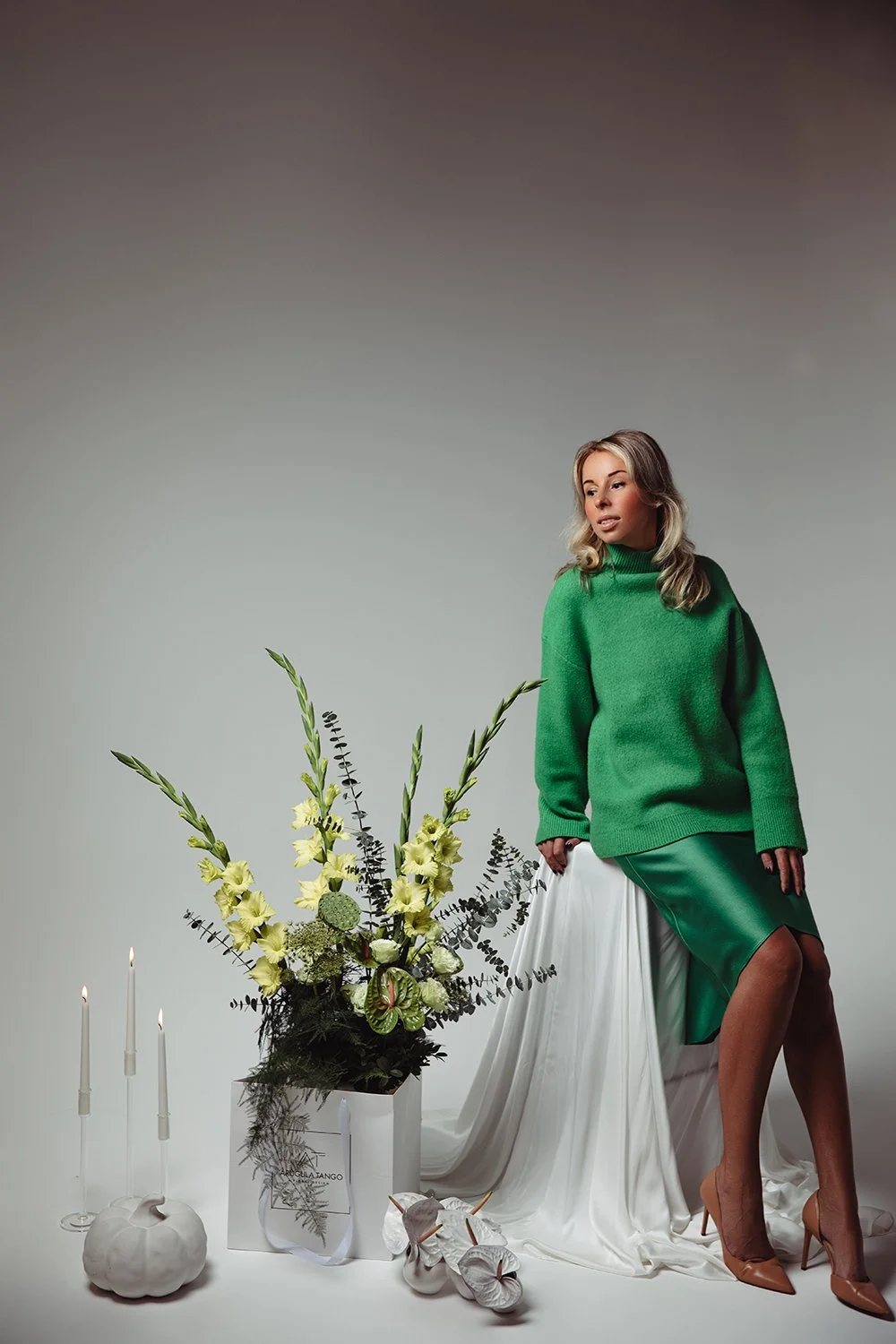
The goal is simple: make every floral decision look like a decision. When the design feels deliberate, a backyard does not read as casual. It reads as intimate, private, and confidently understated—and that can feel far more luxurious than a space decorated simply because there was room to decorate it.
Why Backyard Wedding Flowers Need More Intention, Not More Decoration
The biggest misconception about planning flowers for a backyard wedding is that you need extra decoration to compensate for not being in a traditional venue. That idea can send a floral budget spiraling very quickly. Couples start imagining arrangements at the entrance, beside every chair, around the pool, on every cocktail table, along fences, near the guest book, beside the bar, across the buffet, behind the band, and anywhere else that appears slightly empty. The problem is that filling space does not automatically create elegance. Sometimes it simply creates more stuff. Refined floral design depends on hierarchy, which means allowing some areas to be visually important and giving others permission to stay quiet.
A backyard naturally contains visual information that a ballroom may not have. There are trees, shrubs, garden beds, fences, patios, architecture, stonework, paths, pools, porches, and neighboring views. Your florist is not starting with a blank room. That can be a huge advantage if the design responds intelligently to what is already there. A beautiful old tree may provide the architecture for the ceremony. A stone terrace could become a sophisticated cocktail area with only one large arrangement near the bar. Existing garden beds can eliminate the need for additional flowers along certain pathways. The more you recognize those built-in assets, the less artificial decoration you need.
Intentionality also comes through consistency. If your ceremony flowers are loose and garden-inspired but your centerpieces are tight, formal, and completely different in color, the wedding can feel visually disconnected. If every zone uses different containers, textures, and design styles, guests may not consciously identify the problem, but the event will feel less composed. Repeating several colors, materials, and flower varieties creates a quiet sense of order.
This is where editing becomes important. Instead of asking, “Where else can we put flowers?” ask, “Which spaces need flowers to communicate their purpose?” The ceremony needs to feel ceremonial. Dinner should feel like a reception. The entrance should tell guests they have arrived somewhere special. Once those moments are established, you can simplify aggressively elsewhere. The result often feels much more expensive because your strongest arrangements have enough space around them to actually be noticed.
Start With the Backyard You Actually Have
Before choosing a single flower, spend time looking at the property as an event space rather than as someone’s backyard. That shift in perspective matters. You probably know where the garden hose lives and which part of the patio gets cluttered during summer, but your guests will see the property differently. They will notice the approach, the first view of the ceremony, the path to cocktails, the dinner setting, the lighting, and how naturally they understand where to go next. Your floral design should respond to that experience rather than being planned from a generic wedding checklist.
Start with the strongest existing feature. Maybe the backyard has an enormous tree, a beautiful hedge, an old stone wall, a pool, a garden, a pergola, or a view over open land. Instead of trying to create a competing focal point, use flowers to draw attention to what is already attractive. An asymmetrical arrangement around a tree trunk can establish a ceremony location without building an elaborate arch. Flowers placed at one end of a stone wall can turn it into a natural photo backdrop. A pool does not need flowers floating across every inch of water; a few arrangements around an adjacent lounge or bar area may be far more sophisticated.
Next, identify what should disappear. Every backyard has practical elements that do not belong in wedding photographs: hoses, garbage containers, sports equipment, gardening supplies, children's toys, outdoor storage, grills, or highly visible utility areas. Some can simply be removed. Others may require screens, greenery, draping, or strategic furniture placement. Do not waste expensive flowers trying to camouflage something that could be moved in five minutes.
You should also study how sun and shade change throughout the day. An area that looks perfect during a morning walkthrough may be blazing hot when your 4:30 p.m. ceremony begins. That affects both guest comfort and flower performance. Observe wind patterns too, especially around open lawns and water.
The backyard itself should tell you where the design needs help. Floral planning becomes much easier once you stop forcing a wedding onto the property and start designing a wedding with the property. That distinction is what makes a private-home celebration feel natural without slipping into casualness.
Establish One Clear Floral Design Language
Elegant weddings tend to have a recognizable visual language, even when guests cannot describe it in design terms. The flower arrangements may vary in size, but they feel related. The containers are not necessarily identical, but they belong in the same world. Colors repeat. Textures return in different places. That consistency is especially important at a backyard wedding because the property already contains many unrelated visual elements. A strong floral language ties them together and makes the whole celebration feel professionally considered.
Begin with three decisions: overall mood, color family, and floral shape. Your mood might be romantic garden, clean and contemporary, soft coastal, European countryside, understated classic, or something more colorful and playful. The label itself is not important; what matters is having enough clarity to reject choices that do not belong. If the wedding is soft and garden-inspired, sleek mirrored containers probably do not fit. If you want minimal modern arrangements, suddenly introducing overflowing rustic baskets at the ceremony may make the design feel confused.
Color should have similar discipline. You do not need to match every flower exactly, but the palette needs boundaries. Perhaps the wedding uses ivory, cream, pale blush, muted peach, and green. Or you might choose white, green, lavender, and touches of blue. A richer fall backyard wedding could use burgundy, rust, caramel, dusty rose, and deep foliage. Repeating those colors throughout the property creates a sense of cohesion even when flower varieties change.
Shape is often overlooked. Are arrangements low and loose? Sculptural and asymmetrical? Wild and meadow-inspired? Compact and classic? Decide what kind of movement belongs in your wedding. That choice influences centerpieces, ceremony arrangements, bar flowers, bouquets, and even boutonnières.
Containers should reinforce the same idea. You can mix vessels, but keep materials connected—perhaps clear glass, simple ceramic, stone-like finishes, or understated metal. Random novelty containers tend to push backyard weddings toward a casual DIY feeling.
Once you establish this visual language, you do not need huge arrangements everywhere. Consistency becomes the luxury. A small bud vase at cocktail hour can still feel connected to the larger ceremony installation because it repeats the same flower, color, and shape. That relationship makes the entire property feel intentionally designed.
Make the Ceremony the First Major Floral Moment
The ceremony is where the backyard officially stops being a backyard and becomes a wedding venue. This is the moment when floral design should create a clear visual shift. Guests may have walked past a familiar-looking house, driveway, or garden, but when they reach the ceremony area, there should be no question that they have arrived at the emotional center of the day. That does not require enormous flower walls or a fully covered arch. It does require a focal point strong enough to hold the space.
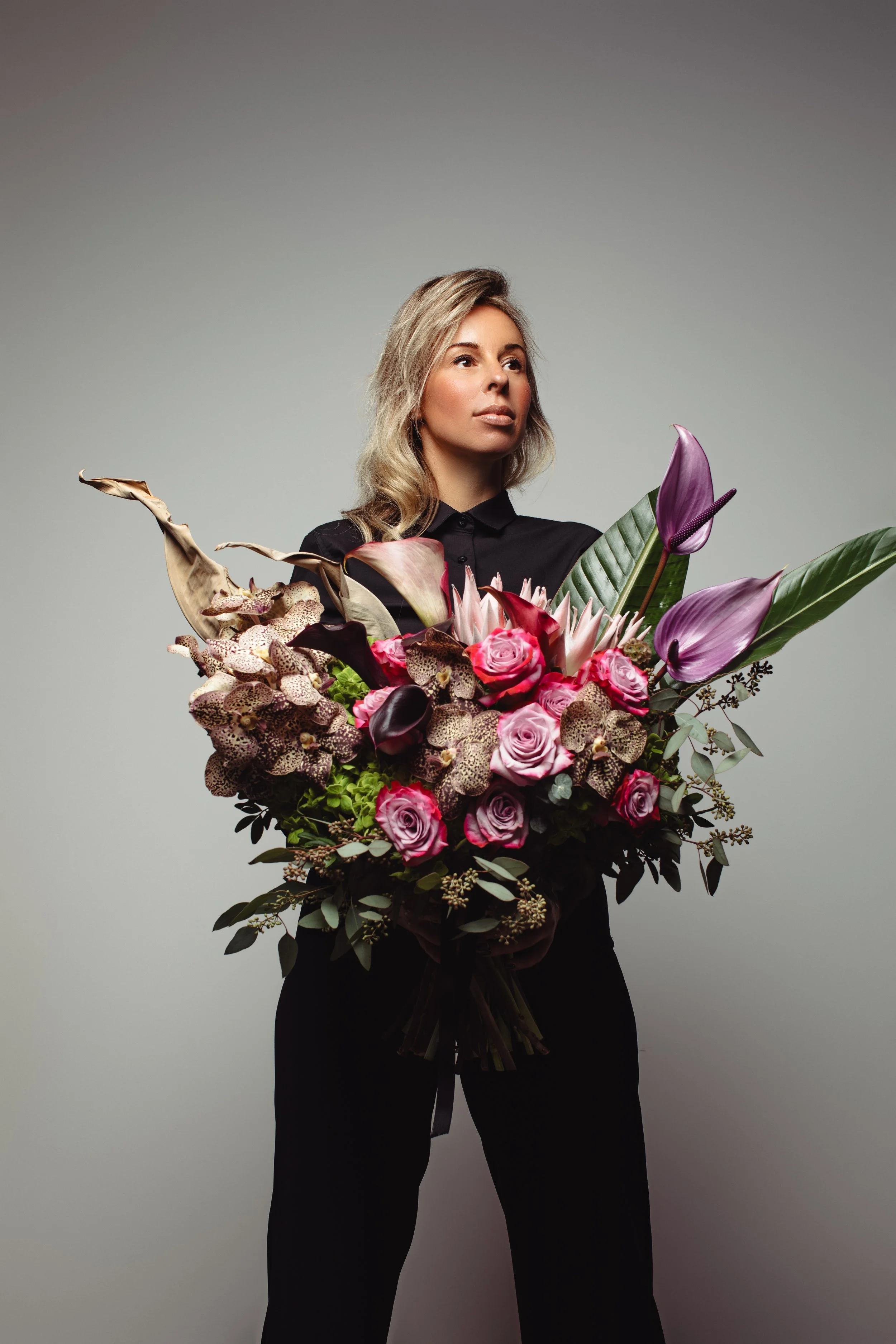
Start by considering what sits behind the couple. The backdrop will appear in photographs throughout the ceremony, including the processional, vows, ring exchange, first kiss, and family pictures afterward. If there is already a strong natural feature—a mature tree, distant field, garden wall, lake, hedge, or architectural façade—flowers should frame it rather than cover it. Asymmetrical arrangements often work particularly well because they define the ceremony without creating a heavy visual barrier. Floral columns, grounded arrangements, urns, or flowers climbing partially around a tree can feel elegant while still respecting the setting.
Next, decide how much attention the aisle needs. This is a common place to overspend. You rarely need flowers attached to every chair row, especially in a smaller backyard ceremony. A cleaner approach is to create two strong arrangements at the aisle entrance, several grounded pieces at strategic intervals, or flowers concentrated near the front. That gives the aisle visual definition without making it look like every chair was decorated because someone felt obligated to decorate it.
Chair style matters too. Beautiful seating can contribute enormously to the finished look. If the chairs themselves are clean and coordinated, they need less floral embellishment. Likewise, a neat lawn or intentional flooring helps the ceremony feel finished before flowers are added.
The ceremony should receive a meaningful portion of the floral budget because it creates one of the day's most photographed scenes. One strong ceremony composition almost always looks more sophisticated than twenty tiny decorative gestures. Give that focal point enough scale to hold the backyard, then allow the surrounding environment to breathe.
Use Flowers to Define Separate Wedding Zones
One reason backyard weddings sometimes feel overly casual is that everything happens in one open area without clear transitions. The ceremony chairs sit twenty feet from the cocktail tables, dinner is visible before the vows begin, and guests can see service equipment from every angle. Traditional venues naturally contain separate rooms, but at home, you often have to create those psychological boundaries yourself. Flowers are one of the most effective ways to do it.
Think of the property as a series of scenes. Guests arrive, enter the ceremony, move to cocktails, transition to dinner, and later perhaps gather near dancing, dessert, or a lounge. Each scene does not need completely different flowers, but it should have a visual marker that tells guests, “This is the next part of the evening.” At the ceremony, that marker is the primary floral focal point. At cocktail hour, it may be one large arrangement near the bar. Dinner can be defined by a beautifully styled table or tent entrance. Later, flowers around a cake table, fireplace, or dance area can create another subtle shift.
The entrance is worth considering carefully. A backyard wedding rarely has a formal hotel lobby where guests immediately understand they have arrived. One arrangement near the gate, front walk, porch, or welcome sign can establish the event before anyone reaches the main space. It does not need to be enormous. It simply needs enough presence to look deliberate.
Transitions can also be created through repetition. Suppose your ceremony uses white garden flowers with green branches. A smaller version near the cocktail bar immediately connects the two spaces. If the same flowers then appear in low dinner centerpieces, the event feels cohesive rather than fragmented.
Do not use flowers as directional signage if simple signs or lighting can do the job better. Flowers should create atmosphere, not solve every practical problem. Their role is to signal importance and continuity.
When different parts of the backyard feel visually distinct but clearly related, guests experience the wedding as an unfolding event rather than one long party on the lawn. That subtle sense of progression is one of the easiest ways to elevate a private-home celebration.
Make Dinner Tables Feel Like a Reception, Not a Cookout
If there is one place where a backyard wedding can accidentally slip into “nice family gathering” territory, it is dinner. Folding tables, basic chairs, uncovered utility surfaces, and a few random flower jars may be perfectly charming at a casual party, but weddings usually need another layer of intention. The good news is that you do not need enormous centerpieces. The combination of flowers, linens, tableware, candles, and spacing creates formality far more effectively than flower quantity alone.
Start with the overall table arrangement. Long tables are especially beautiful in backyards because they create a communal, intimate feeling, but they need rhythm down the center. Instead of placing one arrangement every few feet and calling it finished, consider the entire tablescape as one composition. Low floral bowls can alternate with bud vases, candle clusters, small branches, or seasonal details. The eye connects those elements into a continuous line, which makes the table feel abundant without using a solid floral runner.
For round tables, avoid centerpieces that are too small for the table diameter. A tiny arrangement floating in the middle of a large table will often make the setup feel underdesigned. You do not necessarily need more flowers; you may simply need a wider vessel, several grouped pieces, or candles arranged around the floral centerpiece to give it visual weight.
Linens are one of the easiest ways to change how backyard dinner tables feel. Full-length or beautifully fitted cloths instantly conceal basic rental tables and create a finished foundation for the flowers. Napkins with texture or a refined color can reinforce the palette. Good glassware catches evening light, and thoughtful place settings give flowers something to interact with.
Keep conversation in mind. A backyard wedding is usually intimate, and guests genuinely want to talk. Low arrangements or elevated pieces with open sight lines work better than dense flowers sitting directly at face height.
The most elegant tables feel complete before you mentally isolate any one element. You notice atmosphere first. Flowers are part of that atmosphere, not a decoration sitting on top of it. When the table feels like a designed environment, nobody is thinking about the fact that dinner is being served twenty feet from the family kitchen.
Choose a Color Palette With Enough Structure
Color does more than make the flowers attractive. At a backyard wedding, it helps establish the difference between everyday garden color and intentional event design. Most yards already contain several shades of green along with colorful flowers, patio furniture, house paint, stone, fencing, and whatever else happens to exist on the property. Without a disciplined palette, adding more color can make the event feel visually busy instead of elevated.
A reliable approach is to select two or three dominant floral tones, one supporting neutral, and greenery as the connector. For example, ivory, pale peach, and blush can sit against soft green foliage and feel romantic without becoming sugary. White, green, and muted blue can feel fresh and understated. For late summer or fall, rust, dusty rose, cream, and deep burgundy can bring enough richness to separate the wedding from the surrounding lawn.
You do not need every flower to match perfectly. In fact, slight tonal variation usually makes arrangements more natural. If your palette is blush, allow flowers to move from nearly ivory through dusty pink rather than insisting on one exact shade. This creates depth and helps the floral design feel garden-inspired instead of manufactured.
The house itself should influence the decision. Flowers will be photographed against siding, brick, stone, railings, and landscaping. A palette that looks beautiful against a white home may behave differently beside warm red brick. Likewise, a backyard already filled with colorful perennial gardens may benefit from quieter wedding flowers so the overall property does not become chaotic.
Consider clothing and linens too. Florals do not live in isolation. If the wedding party wears strong colors, the bouquets may need enough contrast to remain visible. If tablecloths are patterned, centerpieces may need to be simpler. If everything else is neutral, flowers have more freedom to carry color.
Avoid adding a new color simply because you found a flower you love. Every addition should strengthen the design story. A controlled palette is one of the fastest ways to make a backyard wedding feel professionally designed, because it creates repetition across spaces that would otherwise have little connection to one another.
Select Flowers That Feel Garden-Inspired but Still Refined
Backyard weddings naturally invite garden-style flowers, but there is a difference between an arrangement that feels organically gathered and one that looks as though someone literally walked around the yard cutting whatever happened to be blooming. The refined version uses variation intentionally. It combines focal flowers, smaller supporting blooms, greenery, branches, and airy textures so the arrangement feels natural while still having a clear shape.
Garden roses, lisianthus, hydrangeas, delphinium, stock, snapdragons, dahlias, cosmos, scabiosa, sweet peas when seasonally appropriate, and other garden-like materials can work beautifully depending on the wedding date and climate. You do not need all of them. In fact, limiting the floral recipe often creates a stronger result. Choose several flowers that perform different roles. One might provide volume, another creates a recognizable focal point, and a delicate stem adds movement.
Branches are particularly useful in backyard settings because they connect arrangements to the surrounding landscape. They can create height without requiring enormous quantities of flowers, and their irregular shapes prevent installations from looking overly symmetrical. Herbs, berries, vines, grasses, seed heads, and interesting foliage can add another layer of texture.
The key is balancing looseness with control. A refined arrangement has negative space, but the empty areas look deliberate. Stems may extend outward, but the overall silhouette is still considered. Colors repeat rather than appearing randomly. The container supports the flowers instead of fighting them.
Do not become too attached to one exact flower variety. Outdoor weddings benefit from flexibility because weather, seasonality, and flower quality can affect what performs best. Describe the mood, texture, and color you want, then allow substitutions that preserve the design.
The same principle applies if the property already has a garden. You can echo what is growing nearby without copying it literally. If lavender is blooming around the patio, perhaps a small touch of lavender color appears in the centerpieces. If large leafy trees surround the ceremony, branches can create continuity.
Garden-inspired should mean connected to nature, not unfinished. That distinction keeps backyard flowers soft and personal while still clearly belonging to a wedding.
Use Scale and Repetition to Make the Design Feel Expensive
One of the most reliable ways to make a wedding look more polished is to understand scale. This has surprisingly little to do with buying the most flowers. A single arrangement with the correct proportions can make a stronger impression than five pieces that are too small for their surroundings. Backyard weddings are especially sensitive to this because outdoor space tends to visually shrink décor. What looks substantial in a floral studio can disappear once it is placed against a broad lawn, tall trees, and open sky.
Start with your major focal points. Ceremony flowers need enough height or width to frame the couple from the guests’ perspective. A bar arrangement should relate to the size of the bar rather than looking like an ordinary kitchen bouquet placed in one corner. Dinner flowers should relate to the table dimensions. Scale does not always mean physically huge; sometimes grouping three medium arrangements creates the necessary presence more elegantly than one oversized piece.
Repetition is the second half of the equation. Luxury often comes from seeing the same thoughtful detail return in multiple places. Perhaps a particular white flower appears in the bridal bouquet, ceremony installation, bar arrangement, and centerpieces. Maybe the same ceramic vessel style is repeated in different sizes. A branch used at the ceremony may reappear more subtly on dinner tables. These connections make the event feel planned as a whole.
Repetition also means you can simplify flower recipes. Using fewer varieties across multiple spaces can sometimes create a stronger visual identity than constantly introducing something new. The eye recognizes patterns, and those patterns produce coherence.
Be careful not to confuse repetition with identical arrangements. Twenty matching centerpieces can feel formal in a way that may not suit an intimate backyard setting. Instead, repeat the language while allowing small variations. One table may have a slightly taller branch, another a fuller focal bloom, but both clearly belong to the same design.
This is a useful budget strategy too. Put size where distance demands it and detail where guests will be close enough to notice it. Large installations establish the wedding from across the property. Small tabletop flowers provide intimacy at dinner. When those scales are used correctly, the entire event feels richer without requiring flowers on every surface.
Give Personal Flowers the Same Level of Polish
Bouquets and boutonnières may be physically smaller than installations and centerpieces, but they are among the most visible flowers of the day. The bridal bouquet appears during portraits, the processional, vows, couple photos, family photos, and countless candid moments. It should feel connected to the backyard setting without looking as though it was casually gathered ten minutes before the ceremony. This is one place where refined craftsmanship makes a noticeable difference.
A garden-inspired bridal bouquet can still have strong structure. The design might be asymmetrical, loose, and full of movement, but proportions should relate to the person carrying it and the style of the wedding attire. Oversized bouquets can overwhelm a simple dress or petite frame, while something too small may disappear in outdoor photographs. The most successful bouquet feels natural in the hands rather than becoming a separate object competing for attention.
This is also a good place to use more delicate or special flowers. A variety that might struggle for hours in a sunny outdoor installation can sometimes work beautifully in a bouquet that remains protected and hydrated until photographs begin. That allows you to introduce something distinctive without trying to use it across every centerpiece.
Wedding-party bouquets should support rather than duplicate the bridal bouquet. They can be smaller, simpler, or built from fewer flower varieties. This creates hierarchy and keeps the main bouquet visually special. Boutonnières and corsages should follow the same design language but remain durable enough for hugging, movement, heat, and several hours of wear.
Think carefully before automatically ordering personal flowers for every relative or member of the wedding party. Intimate backyard weddings often have a less formal structure, and not everyone needs to wear flowers simply because tradition says so. Select the people and roles where personal flowers feel meaningful.
What matters is consistency. A polished bouquet immediately elevates a backyard ceremony because it brings intentional design into the closest, most emotional photographs of the day. Even when the surrounding environment is relaxed, beautifully considered personal flowers reinforce the message that this is a wedding, not simply another summer gathering.
Use Lighting to Make the Florals Feel More Sophisticated
Flowers do not stop contributing to the design when the sun goes down, but without good lighting, they can effectively disappear. Backyard weddings often begin in beautiful natural light and continue well into the evening, which means the floral plan needs to work in two completely different visual environments. During the afternoon, flowers rely on color, texture, and movement. After sunset, lighting determines whether guests can still appreciate them.
Candlelight is one of the easiest ways to make backyard florals feel more formal. Small flames create depth around low arrangements and make even modest centerpieces look richer. Glass vessels reflect the light, pale flowers pick up warm tones, and dark foliage gains more dimension. Instead of placing candles randomly, integrate them into the floral rhythm. On a long table, for example, low flower arrangements can alternate with clusters of different candle heights to create a continuous visual line.
Overhead lighting matters too. String lights can be beautiful, but the installation should feel deliberate rather than temporary. Their color temperature should work with the floral palette and table lighting. Very cool white light can make warm flowers appear flat, while excessively yellow light can distort subtle blush or blue tones. Softer warm illumination usually complements garden-style arrangements and creates a more intimate atmosphere.
Statement flowers deserve their own lighting consideration. If you spent significantly on an installation near the bar, cake area, or dance floor, make sure it does not disappear into darkness by 8:30 p.m. A subtle spotlight, nearby lantern, or architectural light can reveal its shape without making it feel theatrical.
Pathways also need practical illumination, especially on uneven lawns or garden paths. This is not a floral issue alone, but safety and aesthetics are connected. Beautifully lit transitions make the entire property feel more professional.
The most elegant backyard weddings change mood gradually. Daylight highlights the flowers; sunset softens them; candles and ambient light then take over. When lighting is planned alongside the floral design instead of added afterward, even simple arrangements feel significantly more luxurious, because they remain part of the visual experience throughout the entire evening.
Plan for Heat, Wind, Rain, and Real Backyard Conditions
Backyard wedding flowers have to perform in a real outdoor environment, and that means planning for weather before the forecast becomes interesting. Heat, direct sun, wind, humidity, rain, and temperature swings can all affect fresh flowers, containers, candles, paper goods, ceremony structures, and the timing of installation. Elegant design is not just about how flowers look when they leave the workroom; it is about how they look when guests are actually there.
Start with sun exposure. Observe where direct sunlight falls during the hours of your wedding. A shaded ceremony location gives you much more flexibility with delicate flowers than a lawn receiving full afternoon sun. If arrangements must be exposed, choose materials that tolerate heat better and make sure they have substantial access to water. Flowers should also be installed as late as practical. There is no advantage to having a finished ceremony arrangement sitting in July heat for six unnecessary hours.
Wind changes the design mechanically. Tall arrangements need weighted bases, ceremony structures must be secure, and lightweight bud vases should be tested before being placed outdoors. Allowing air to move through an arrangement is often safer than creating one dense floral mass that catches wind like a sail. Menus, table numbers, and other paper details need the same consideration.
Rain requires a backup plan. If the ceremony moves beneath a tent, porch, or into the house, can the major floral pieces move too? Modular arrangements are especially valuable because they can adapt to different spaces. A pair of floral columns may be easier to relocate than one enormous fixed structure.
Humidity can cause delicate flowers to open faster and affect paper, ribbon, or adhesive-based floral mechanics. Even container condensation can matter on certain table surfaces.
None of this means your wedding flowers need to look rugged. The goal is to create the appearance of softness while building durability underneath. Outdoor elegance is partly an engineering exercise disguised as floral design. When hydration, weight, installation timing, and weather contingencies are handled correctly, guests only see the beautiful result rather than the practical thinking that kept everything together.
Know Where to Spend and Where to Simplify
A backyard wedding budget can disappear surprisingly quickly because the property offers so many possible places to decorate. The smartest strategy is to stop thinking in terms of individual flower items and start thinking in terms of visual return. Where will guests spend time? What will appear repeatedly in photographs? Which floral pieces establish the character of the wedding? Those are the places where spending makes sense.
The bridal bouquet deserves attention because it appears throughout the day. The ceremony focal point is another strong investment because it frames the most emotionally important part of the wedding and may later become a portrait backdrop. Dinner tables deserve enough design to make the reception feel distinct from an ordinary backyard meal. One arrangement near the bar or entrance can also be worthwhile because those areas naturally receive heavy guest traffic.
The places to simplify are usually the ones guests encounter briefly. You may not need flowers on every cocktail table. Every chair does not need an arrangement. The bathroom does not require an elaborate floral installation. Garden paths surrounded by existing landscaping can often remain undecorated. A welcome sign may need only a small floral accent if the ceremony beyond it already provides the visual impact.
A practical hierarchy might look like this:
Floral Area
Priority
Best Approach
Bridal bouquet
High
Invest in detail, texture, and beautiful focal flowers
Ceremony backdrop
High
Create one strong visual moment
Dinner tables
High
Combine flowers with candles and refined table styling
Bar
Medium
Use one impactful arrangement rather than many small ones
Entrance
Medium
Add enough flowers to signal a special event
Cocktail tables
Low
Use simple bud vases or skip flowers where appropriate
Aisle
Selective
Concentrate flowers at the entrance and ceremony front
Existing gardens
Low
Let mature landscaping provide natural decoration
The secret is concentration. A few confident floral moments make the event feel intentionally luxurious. Dozens of weak moments can make it feel decorated but not designed. Spend where flowers change how guests experience the wedding, and simplify wherever the property is already doing the visual work for you.
Conclusion: Backyard Weddings Feel Elegant When Every Choice Looks Intentional
A backyard wedding does not become elegant by pretending it is happening somewhere else. In fact, the strongest private-home weddings lean into what makes the setting special: familiarity, privacy, garden texture, old trees, long lawns, porches, family history, and the feeling that guests have been invited into a place that actually means something to the couple. Flowers should elevate those qualities, not cover them up.
The difference between casual and refined usually comes down to intention. One ceremony installation designed specifically around a beautiful tree looks intentional. Fifteen unrelated arrangements placed around the yard because empty spaces felt uncomfortable do not. A long dinner table with repeating floral textures, linen, thoughtful place settings, and candles feels like a reception. A folding table with a random vase in the middle still feels like the table you might use for a weekend barbecue. The transformation comes from consistency, proportion, and attention to the moments that guests actually experience.
Start with the property. Decide what deserves attention and what can quietly disappear into the background. Establish a clear floral language and repeat it. Give the ceremony enough visual weight to establish the wedding immediately. Use dinner flowers, personal pieces, lighting, and a few statement arrangements to continue that story. Then stop. Knowing when the design is finished is part of good taste.
Do not be afraid of empty space. A clean lawn can be beautiful. A stone wall can remain visible. A cocktail table can survive without a centerpiece. An old tree does not need every branch decorated. Restraint gives your strongest floral moments room to feel important.
That is ultimately what separates an elegant backyard wedding from an overly casual one. It is not the number of flowers or the size of the floral budget. It is the sense that every piece belongs exactly where it is. When guests experience that level of visual confidence, they stop thinking of the setting as “just a backyard.” It becomes what you intended all along: an intimate, personal wedding venue with a character no ballroom could duplicate.