Hamptons-Inspired Floral Design for Summer Parties in Connecticut
There is something about a Connecticut summer that practically asks for a long table outside, cold drinks sweating in glasses, linen napkins moving in the breeze, and flowers that look as though they came straight from the garden five minutes before guests arrived. That easy, polished feeling is exactly why Hamptons-inspired floral design works so well for summer parties across Connecticut. It feels coastal without being overly nautical, elevated without becoming formal, and luxurious without needing to look expensive or overly decorated. The style is less about following a strict formula and more about creating the sense that everything naturally belongs together.
The mistake people make is assuming this look means blue-and-white flowers, hydrangeas everywhere, and a few pieces of wicker furniture. That can quickly turn into a theme rather than a sophisticated design. A true Hamptons-inspired party feels layered and lived-in. Think loose garden flowers, soft neutrals, washed coastal colors, simple containers, beautiful seasonal produce, natural materials, candlelight, and enough empty space that everything has room to breathe. Nothing should look as though it was arranged with a ruler.
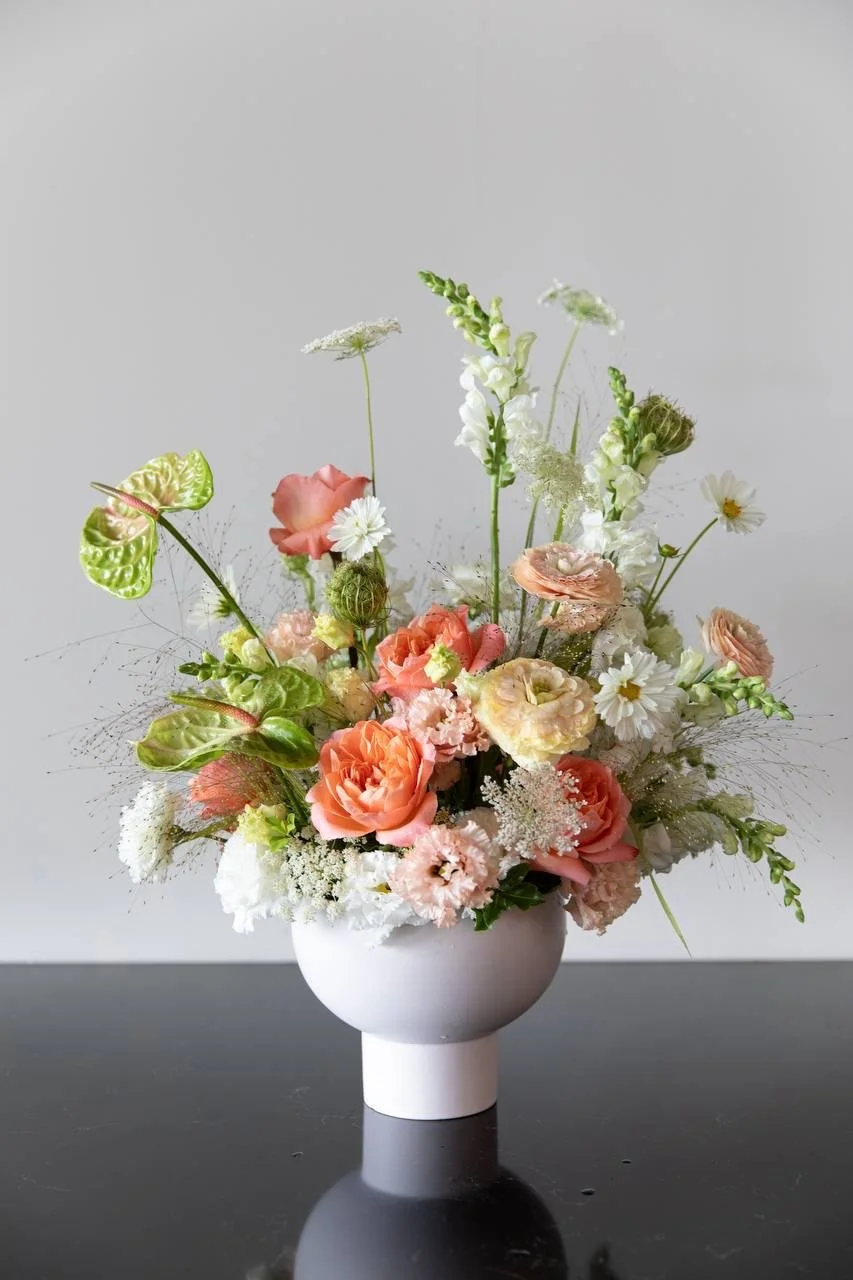
Connecticut is particularly well suited to the aesthetic because so many summer venues already offer the right foundation. Backyard lawns, coastal homes, country properties, porches, stone patios, pool areas, gardens, and waterfront terraces all provide texture before you add a single flower. The smartest floral design does not compete with that environment. It edits and enhances it.
Whether you are hosting a birthday dinner, engagement celebration, rehearsal dinner, anniversary, graduation party, bridal shower, or simply a summer gathering because the weather is too good to waste, flowers can completely change how the event feels. The goal is not to fill every surface. It is to create a few beautifully designed moments that make guests feel as though they have stepped into the most relaxed, stylish version of summer.
What Hamptons-Inspired Floral Design Really Looks Like
Hamptons-inspired floral design is often misunderstood because people focus too heavily on specific flowers instead of the overall feeling. The look is not created by buying a certain type of hydrangea or arranging everything in blue ceramic containers. It comes from a balance of relaxed abundance and disciplined restraint. That sounds contradictory, but it is exactly what makes the style work. Arrangements can feel generous and garden-like while the overall space remains clean, airy, and uncluttered.
Imagine walking into an outdoor dinner where a table is dressed in soft linen, low arrangements move loosely down the center, greenery spills naturally over the edges of simple vessels, and nothing blocks your view of the person sitting across from you. There may be pale blue, white, cream, green, butter yellow, or blush flowers, but the palette feels softened by natural texture. Instead of every bloom being perfectly identical, there is variation. Some stems reach slightly higher, some flowers lean outward, and herbs or branches might break up the traditional floral shapes.
That sense of ease is essential. Arrangements that look too symmetrical, compact, or formal usually miss the point. Hamptons-inspired design is closer to a beautiful garden brought indoors—or onto the patio—than a ballroom centerpiece. You want the flowers to appear collected rather than manufactured.
The containers matter too. Clear glass, white pottery, aged-looking ceramic, stone-textured vessels, simple bowls, and understated metal accents work better than anything overly ornate. Natural materials help the flowers feel grounded in the environment.
Most importantly, this aesthetic is not about proving how much you spent. It is about taste. A small bowl filled with one beautiful seasonal flower can sometimes feel more luxurious than an enormous arrangement containing ten different varieties. The secret is editing. Choose a strong palette, repeat it thoughtfully, allow movement, and resist the urge to decorate every available surface. Hamptons style feels confident because it knows when to stop.
Start With the Connecticut Setting, Not a Theme
Before choosing flowers, look at where the party is actually happening. Connecticut summer settings can vary enormously, and the best Hamptons-inspired design responds to the property instead of dropping the same coastal formula into every space. A waterfront terrace in Fairfield County needs a different approach from a garden in Litchfield County, a poolside backyard in New Canaan, or a shaded porch surrounded by mature trees. The environment should always come first.
Start by identifying what the property already does well. Does it have beautiful hydrangea bushes? Use them as part of the visual story rather than competing with them. Is there a long stone wall bordering the dining area? That texture can influence your container choices and color palette. Maybe the house has white siding and dark shutters, or perhaps the party takes place beneath large trees that create soft afternoon shade. Every one of these details can guide the floral direction.
This prevents the event from feeling themed. When people try too hard to create a “Hamptons party,” they often introduce obvious coastal props that have nothing to do with the actual location. Suddenly there are seashells, ropes, anchors, striped everything, and blue accessories on every table. The result can feel more like a costume than an elegant summer gathering.
Instead, borrow the principles behind the style. Use relaxed garden flowers. Keep the palette fresh. Choose natural materials. Let the architecture and landscape remain visible. If the setting already provides strong color, keep the flowers quieter. If the space is visually neutral, floral arrangements can carry more personality.
You should also think about how guests move through the property. Where do they arrive? Where will drinks be served? Where will most conversations happen? Where does dinner take place? These locations deserve your floral budget. A gorgeous arrangement hidden in a hallway nobody uses is not doing much for the party.
When your design begins with the Connecticut setting, the result feels believable. Instead of looking like you copied an inspiration photo from somewhere else, the party feels as though it could only have happened at that particular home, garden, terrace, or lawn. That sense of place is what makes the design memorable.
Build a Coastal Color Palette That Feels Grown-Up
A Hamptons-inspired palette does not have to mean blue and white, although those colors can absolutely work. The more sophisticated approach is to think about weathered coastal color rather than obvious nautical color. Imagine the tones you see around the shoreline on a summer afternoon: soft sky blue, pale green, warm sand, ivory, bleached wood, hazy lavender, faded blush, deep garden green, and the slightest hint of buttery yellow. These colors feel connected to the coast without shouting about it.
White and green remain popular for good reason. They are fresh, photograph beautifully, and work with almost any Connecticut setting. The danger is making the palette feel too sterile. Adding subtle tonal variation prevents that. Instead of using only bright white flowers, mix ivory, cream, pale green, and perhaps a touch of soft blue. Different textures help as well. A white hydrangea has a very different personality from a delicate white garden flower or a sculptural stem.
Blue can be gorgeous, but use it selectively. True blue flowers are relatively unusual in nature, which makes them visually powerful. A few blue accents can create a coastal feeling without turning the entire party into a color theme. Soft blue-gray foliage, pale lavender, or muted purple can provide the same visual effect in a more natural way.
For something warmer, consider blush, peach, apricot, cream, and green. This palette feels especially beautiful for sunset dinners because the flowers pick up the changing evening light. If the event is more modern, crisp white, green, and one unexpected dark accent can create an elegant contrast.
Whatever palette you choose, avoid using too many unrelated colors. Hamptons-inspired design feels calm because the eye is not being asked to process ten competing shades. Select two or three primary tones and let foliage provide the connection between them.
The easiest way to test your palette is to hold it mentally against the setting. Does it look good beside the lawn, stone, wood, pool, water, or exterior of the house? If it does, you are probably headed in the right direction.
Choose Summer Flowers That Look Effortless and Seasonal
Summer gives you a huge advantage when designing a Hamptons-inspired party because so many flowers naturally suit the aesthetic. The key is resisting the temptation to use all of them at once. A relaxed coastal arrangement looks most convincing when it feels seasonally appropriate, as though the flowers could reasonably have come from a nearby garden rather than being assembled from a global catalog.
Hydrangeas are the obvious summer favorite, but they are only the beginning. Garden roses, lisianthus, cosmos, snapdragons, delphinium, dahlias later in the season, scabiosa, stock, feverfew, yarrow, sweet peas when available, and airy seasonal greens can all contribute to the style. Herbs such as mint, basil, rosemary, or flowering oregano can introduce scent and texture. Branches, grasses, berries, and seed heads make arrangements feel less conventional and more connected to the garden.
The best combinations usually mix a few different visual roles. You need a focal flower that gives the arrangement weight, medium-size flowers that build shape, and lighter materials that create movement. Think of the arrangement like a conversation. If every flower is loud, nobody is listening. Large blooms need smaller textures around them so they can stand out.
Seasonality also helps the flowers feel right for Connecticut. A July party does not need to imitate a spring garden, and an August dinner can take advantage of fuller, more mature textures. Let the time of year influence the design. Early summer might feel softer and lighter; late summer can become richer and slightly wilder.
Another benefit of seasonal flexibility is that you are not forcing a specific flower to perform when it is unavailable or struggling in the heat. Give your floral designer room to substitute varieties based on quality. Two flowers can create the same emotional effect even if they are not identical.
The goal is not for guests to identify every flower. It is for the arrangement to feel alive, natural, and exactly right for the season.
Use Hydrangeas Without Making the Party Feel Predictable
Hydrangeas and Connecticut summer parties seem almost inseparable. They grow beautifully throughout the region, create incredible volume, and immediately communicate that relaxed East Coast garden feeling. They are also one of the quickest ways to make a Hamptons-inspired party feel predictable if they are used without much imagination. A room full of identical blue hydrangea spheres can look pretty, but it rarely feels layered or personal.
The easiest way to make hydrangeas more interesting is to treat them as structure rather than the entire arrangement. Their large flower heads create a strong base, which means you can use them to establish color and volume while introducing smaller, more delicate flowers around them. A few loose garden roses, wispy cosmos, herbs, branches, or tiny textural blooms can completely change the personality of the composition.
Color matters too. Hydrangeas come in far more nuanced shades than the classic bright blue people associate with coastal events. White, pale green, dusty blue, lavender, antique rose, and transitional combinations can produce a much more sophisticated effect. Late-season hydrangeas often develop beautiful muted tones that feel almost naturally weathered.
You can also change the way hydrangeas are presented. Instead of creating one large round centerpiece, separate individual blooms into lower vessels and let smaller flowers move between them. Use them in oversized arrangements near an entrance while keeping dinner tables more delicate. Or place a few generous stems in simple containers so the flower itself becomes the design.
Because hydrangeas are thirsty, hydration is essential during summer. They should not be treated as indestructible simply because the flower heads look substantial. Direct afternoon sun can be challenging, especially if arrangements are installed early. Shaded locations and adequate water make a significant difference.
Hydrangeas work because they feel familiar to the Connecticut landscape. The trick is allowing that familiarity to feel intentional rather than automatic. Use them as a recognizable note within a broader composition, not as the entire song.
Create Centerpieces That Feel Relaxed but Expensive
There is a particular kind of centerpiece that makes guests assume an event was beautifully expensive even when the flower count is relatively modest. It is low, textured, generous in the right places, and never appears to be trying too hard. That is the sweet spot for a Hamptons-inspired summer table. The secret is not necessarily premium flowers. It is proportion, repetition, and restraint.
Start with the height. Summer dinners are social. People want to talk across the table, pass dishes, pour wine, and enjoy the setting. Oversized centerpieces that block faces may look dramatic in one photograph but quickly become irritating during a three-hour dinner. Low bowls, small compotes, grouped vessels, and bud vases allow flowers to create atmosphere without interrupting conversation.
Then think about shape. Avoid the perfectly round “flower ball” unless the event is intentionally formal. Loose asymmetrical shapes feel more relaxed and garden-like. Let some stems extend outward. Allow one branch or flower to rise slightly higher than the rest. The arrangement should have a sense of movement without looking messy.
Repeating colors and flower types creates sophistication. You do not need a different arrangement on every table. In fact, too much variation can make the room feel visually confused. Use a consistent palette and repeat several key flowers, then introduce small differences in height or texture.
Containers should stay quiet. If the flowers are the focus, vessels do not need to compete for attention. Clear glass, white pottery, simple ceramic bowls, understated metal finishes, and natural stone-like textures work beautifully.
Finally, remember that flowers are only part of the centerpiece. Candlelight, linen, glassware, plates, and even the food itself contribute to the table. You can reduce floral volume when the other elements are thoughtfully chosen.
The most luxurious-looking tables often understand this balance. Nothing is screaming for attention, yet everything feels deliberate.
Style a Long Summer Table Like an Outdoor Dinner Party
Few things capture the Hamptons-inspired mood better than one long outdoor table. It immediately feels communal, relaxed, and slightly cinematic. Guests sit closer together, conversation flows naturally down the table, and the flowers become part of one continuous visual story rather than a collection of individual centerpieces. For Connecticut summer parties, this format works beautifully on lawns, patios, porches, pool decks, and beneath tents.
The key to styling a long table is rhythm. You do not need one enormous arrangement stretching from one end to the other. In fact, a solid floral runner can become expensive and visually heavy. Instead, create a sequence of small arrangements, candles, greenery, and open spaces. Your eye will connect them automatically. Think of it like music: the pauses matter as much as the notes.
Start with several low floral moments positioned at comfortable intervals. Between them, add bud vases, small herbs, fruit, or candle clusters. The repeated elements create cohesion while variation prevents the table from feeling overly formal. If dinner is served family-style, leave generous empty zones for platters and bowls. Nothing ruins a beautiful table faster than discovering there is nowhere to put dinner.
Linen can dramatically change the mood. A soft neutral tablecloth creates elegance, while a bare wood table feels more casual. Runners can add texture without covering the entire surface. Napkins in pale blue, green, cream, or muted natural tones can reinforce the coastal palette without becoming themed.
Keep sight lines open. Long tables naturally encourage conversation across and diagonally, so low flowers generally work best. If you want height, use occasional branches or narrow elevated elements rather than dense arrangements.
At sunset, the table should become warmer rather than simply darker. Candles begin to take over visually as flowers recede into the softer light. That transition is part of the magic.
The best long table does not feel like an event setup. It feels like the dinner party everyone wishes they had in their own backyard.
Mix Flowers With Greenery, Herbs, Fruit, and Garden Texture
One of the easiest ways to make Hamptons-inspired floral design feel natural rather than overly formal is to stop thinking exclusively in terms of flowers. Gardens are not made entirely of perfect blooms. They contain leaves, branches, fruit, herbs, seed pods, grasses, vines, and all kinds of small imperfections that create depth. Bringing some of that variety into your event design makes arrangements feel richer without necessarily increasing the flower budget.
Fresh herbs are especially effective for summer parties. Mint, basil, rosemary, thyme, and flowering herbs can add fragrance as well as texture. They feel familiar and edible, which makes them perfect around dining areas. A small pot of herbs on a bar or a few fragrant stems incorporated into a centerpiece can subtly connect the flowers with the food and season.
Fruit works beautifully too. Lemons, pears, peaches, figs, grapes, or small summer berries can be placed around floral arrangements or used as part of the tablescape. The key is restraint. You are not building a produce display. A few pieces introduced thoughtfully can add color and make the table feel abundant in a casual, old-world way.
Branches create architecture. They are useful in larger arrangements where you want height without using an enormous quantity of flowers. Green foliage can create similar volume, especially when you choose varieties with interesting shapes rather than treating greenery as filler.
Grasses and seed heads add movement, which works particularly well outdoors. A soft breeze catches them in a way that feels intentional and alive. Just make sure they are secured well enough that the arrangement moves without falling apart.
These materials also help floral design connect to Connecticut’s summer landscape. Instead of creating a polished arrangement that looks as though it belongs inside a hotel ballroom, you create something that seems comfortable beside a garden, stone wall, orchard, lawn, or shoreline.
That is where the Hamptons-inspired aesthetic becomes most convincing: luxury that still remembers nature.
Design Outdoor Florals for Heat, Sun, and Humidity
Summer flowers in Connecticut do not exist in a climate-controlled inspiration photo. They have to deal with real weather, and that means heat, direct sun, humidity, afternoon storms, and sometimes significant temperature changes within a single event. A successful floral design should be created with those conditions in mind from the beginning.
The first rule is hydration. Flowers installed outdoors need reliable access to water wherever possible. Large arrangements should contain enough water for both the flowers and the length of time they will be displayed. Thirsty varieties require special attention, especially hydrangeas. A beautiful arrangement placed outside at noon may look very different by dinner if the stems have inadequate hydration.
Shade is equally powerful. If you have flexibility, place delicate arrangements beneath umbrellas, covered terraces, tents, porches, or tree cover. Even partial shade can help flowers maintain their structure and color. For unavoidable sunny locations, choose stronger materials and install them as late as the schedule allows.
Timing matters more than many hosts realize. If guests arrive at 5:00 p.m., there is rarely any benefit to exposing fresh flowers to peak afternoon heat several hours earlier. Structural pieces, containers, tables, and other décor can often be prepared in advance while flowers remain protected until closer to the event.
Humidity introduces different challenges. Certain petals soften more quickly, paper details can curl, and condensation may appear on vessels. The floral design should account for these little realities rather than pretending the weather does not exist.
Wind should be considered too, especially near the Connecticut shoreline. Lightweight bud vases, top-heavy centerpieces, and loosely secured branches can become unstable surprisingly quickly. Use containers with adequate weight and keep the center of gravity low.
The goal is not to choose only “tough” flowers. You can absolutely include delicate seasonal blooms. You simply place them where they can succeed and let stronger materials handle the most exposed locations.
Beautiful outdoor design is less about fighting summer and more about understanding how summer behaves.
Make the Bar, Buffet, and Cocktail Areas Feel Intentional
The bar is often one of the busiest places at a summer party, which makes it a great location for flowers. Guests naturally gather there, photographs happen around it, and it often acts as a visual anchor during cocktail hour. Still, you do not need to cover the entire bar in flowers. One well-placed statement arrangement can do more than a dozen small decorative pieces fighting for space with glasses, bottles, ice, napkins, and bartending equipment.
Keep functionality in mind. Flowers should never make it difficult for drinks to be prepared or served. Place larger arrangements at one end of the bar, behind it, or on a nearby surface where they add height without interfering with service. If space is limited, a small cluster of bud vases or herbs can create enough visual polish.
Buffet tables need a similar approach. Food should be the focus, so flowers should frame rather than crowd it. Tall arrangements can work at the back of a buffet, while low flowers may sit near the beginning or end. Avoid heavily scented varieties directly beside food, especially in warm weather. Fragrance is wonderful in a garden but can become distracting when mixed with dinner aromas.
Cocktail tables are one of the easiest areas to simplify. Guests tend to move between them rather than sit for long periods, so elaborate floral centerpieces rarely provide much return. A single sturdy bud vase, one small flower cluster, or even an elegant candle may be enough.
Think about the entrance to cocktail hour as well. If guests move from a lawn ceremony to a terrace, one arrangement marking that transition can make the new space feel deliberate. It creates the impression that the event is unfolding rather than simply moving from one functional area to another.