Flowers for Waterfront Events in Fairfield County: Design Tips for Wind, Heat and Humidity
A waterfront event in Fairfield County can look almost effortless in photographs. There is open sky, reflective water, shifting light, sailboats in the distance, green lawns, stone terraces, private docks, and that soft coastal atmosphere people try to recreate in landlocked venues with an enormous decorating budget. Yet anyone who has actually designed flowers near the water knows the truth: waterfront floral design is not effortless at all. Wind can turn a delicate arrangement into a sail, afternoon sun can dehydrate flowers faster than expected, and high humidity can affect petals, foliage, ribbons, mechanics, candles, linens, and almost every other decorative detail in the space.
That does not mean you need to choose tough, boring flowers and build heavy arrangements that look like they could survive a hurricane. Beautiful waterfront flowers are about balancing appearance with engineering. A good arrangement should still move naturally, feel light enough for the setting, and complement the shoreline rather than compete with it. Behind that relaxed look, however, there needs to be smart flower selection, strong mechanics, hydration, careful placement, and a realistic installation schedule. Think of it like a beautiful coastal home: you notice the windows and the view, but someone still had to make sure the roof could handle the weather.
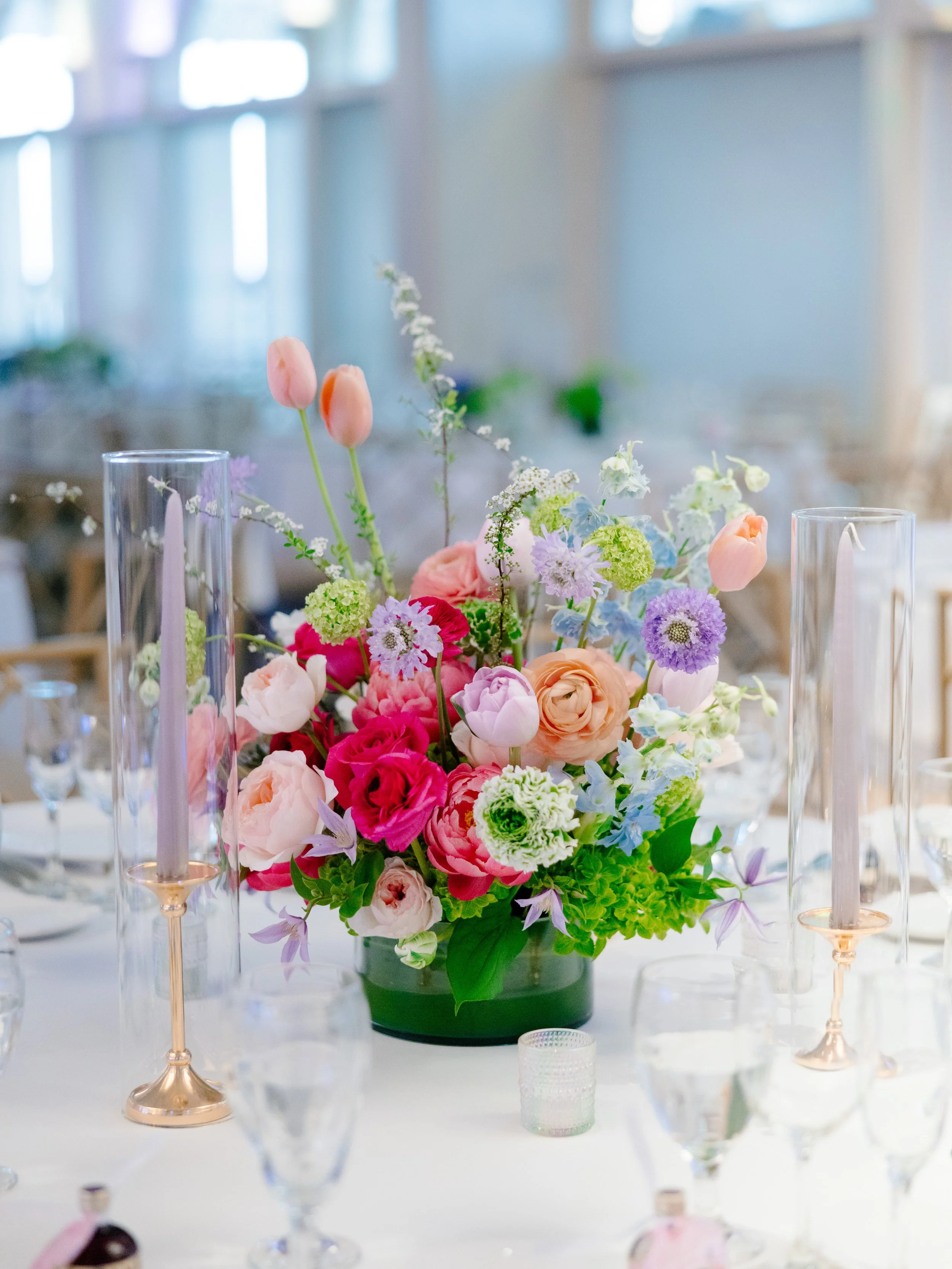
Fairfield County brings its own set of considerations because waterfront events can range from intimate backyard dinners and dockside ceremonies to tented celebrations, private-club gatherings, restaurant receptions, and large estate weddings overlooking Long Island Sound. Conditions can vary dramatically even within the same property. One side of a building may feel calm while the lawn fifty yards away catches a steady breeze. A terrace can become surprisingly hot in direct afternoon sun, while a shaded garden nearby remains cool.
The key is not trying to fight the environment. The smartest designs work with it. Once you understand how wind, heat, humidity, salt air, sun exposure, and changing weather influence flowers, you can create arrangements that look fresh for the moments that matter most.
Why Waterfront Flowers Need a Different Design Playbook
Outdoor flowers always require some extra thought, but waterfront events take that challenge several steps further. The biggest difference is exposure. At an inland venue, trees, surrounding buildings, hills, fences, and landscaping may reduce wind and direct sunlight. Along the Fairfield County shoreline, open water creates long, unobstructed paths for air movement, which means even a day that feels pleasantly breezy to guests can place significant pressure on floral installations. A light arrangement does not experience wind as a romantic detail; it experiences wind as force.
Heat adds another layer. Flowers can arrive beautifully hydrated in the morning and look completely different after several hours on a sunlit terrace. Dark containers absorb heat, metal mechanics can become hot, shallow water vessels lose moisture faster, and delicate petals can soften quickly. The situation becomes more complicated when floral pieces need to be installed well before guests arrive. A ceremony arrangement placed outdoors at noon for a 5:00 p.m. ceremony may already have spent the hardest part of the day fighting direct sunlight before anyone sees it.
Humidity can be equally deceptive. People often assume flowers love humid weather because humidity means moisture in the air. Some varieties do tolerate it beautifully, but high humidity can also soften certain petals, encourage delicate blooms to open faster, make paper products curl, affect ribbon, and complicate adhesive-based floral mechanics. In warm weather, humidity can make an arrangement feel tired even when individual stems still have water.
Then there is the waterfront itself. It is already a dramatic visual feature, so floral design has to be edited carefully. Overdecorating can create visual noise. Underdesigning can make the event feel unfinished. The sweet spot lies somewhere in the middle: structurally reliable arrangements with enough movement to feel natural and enough restraint to let the view remain the hero. That combination requires a different mindset from standard indoor floral design. You are not decorating a room with predictable climate control. You are designing inside a living environment that changes by the hour.
Start With an Exposure Map Before Choosing a Single Flower
Before discussing roses, hydrangeas, dahlias, orchids, grasses, or greenery, study the property. This sounds less glamorous than choosing a color palette, but it may be the most valuable step in the entire floral planning process. Walk through the venue at approximately the same time of day your event will take place whenever possible. Notice where the sun falls, which spaces remain shaded, where wind funnels between buildings, and which tables or ceremony locations are fully exposed to the water. These details tell you far more than an inspiration photograph ever could.
Think of the venue as a collection of microclimates rather than one location. The ceremony might take place on a lawn with direct waterfront exposure, while cocktail hour happens behind a hedge where the air is calmer. The dinner terrace may remain shaded until late afternoon and then suddenly receive strong western sun. A tent can reduce direct exposure while still allowing warm, humid air to circulate. Once you map those differences, you can design each floral zone appropriately instead of forcing one technique across the entire event.
Sun direction matters especially for ceremony flowers. If the couple will stand facing the water, ask where the strongest afternoon light will hit the floral installation. Large clusters placed in full sun may need deeper hydration systems and more heat-tolerant flowers. If the arrangement sits partly in shade, you may have more freedom to include delicate varieties. The same logic applies to cocktail tables and dinner centerpieces. A flower that performs beautifully beneath a covered terrace might struggle on an uncovered stone wall just a few feet away.
Wind deserves its own map. Watch trees, flags, tall grasses, umbrellas, and water movement. These visual clues can reveal patterns that a weather forecast does not capture. Ask venue staff where wind tends to be strongest and whether certain areas routinely require umbrellas, signs, or lightweight furniture to be secured. Local knowledge is extremely useful here.
Once you understand the exposure pattern, flower selection becomes much smarter. You stop asking, “What flowers do we like?” and start asking, “Where can these flowers perform successfully?” That is the question that creates beautiful results.
Choose Flowers That Can Handle Heat Without Looking Heavy
Heat tolerance matters at almost every summer waterfront event, but durability does not require sacrificing elegance. The goal is to build a palette with enough structurally strong flowers to stabilize the design while using more delicate blooms selectively. Some flowers naturally have firmer petals, stronger stems, or better water retention than others. Others are incredibly beautiful but should be treated as short-duration stars rather than all-day workhorses.
Roses, carnations, chrysanthemums, certain orchids, lisianthus, calla lilies, tropical foliage, berries, and many sturdy greenery varieties can perform well when properly conditioned and hydrated. That does not mean every arrangement has to look formal or dense. A loose garden-style centerpiece can still rely on durable materials underneath its softer personality. Florists often create the illusion of delicacy by combining stronger focal flowers with airy accents, grasses, seed pods, branches, or controlled movement.
Hydrangeas deserve special attention because they are incredibly popular in Fairfield County weddings and naturally suit coastal environments. They can look spectacular, especially in large arrangements, but they are famously thirsty. Proper conditioning, hydration, shade, and timing make a major difference. Treating them casually because they appear abundant and sturdy can lead to disappointment on a hot day. When used carefully, however, they can create extraordinary volume without making the design feel overworked.
Delicate sweet peas, certain garden roses, cosmos, poppies, scabiosa, and other soft-textured flowers can still appear in waterfront designs, but placement matters. Use them where they will be seen closely and protected from the most severe environmental stress. A bridal bouquet held for portraits may be an ideal place for a treasured delicate bloom, while a large installation standing in full sun for six hours may not be.
The strongest floral palette is usually mixed. Think of it like building a good team. Not every player has to be the strongest person on the field, but the structure needs enough strength that the more delicate personalities can shine without carrying the entire workload.
Design for Wind Before You Design for Drama
Wind is the factor most likely to expose weak floral mechanics. A tall centerpiece may look perfectly balanced in a studio, but place it beside open water and suddenly its center of gravity matters much more than its color palette. The same is true for arches, floral columns, urns, pedestal arrangements, welcome-sign flowers, candle displays, and lightweight bud vases. When planning a waterfront event, every decorative element should be evaluated not only for appearance but for what happens when a sudden gust hits it from the side.
The first principle is simple: weight belongs low. Heavy containers, solid bases, properly secured structures, and arrangements with controlled height are generally more reliable than top-heavy designs. If you want dramatic vertical movement, consider branching or floral material that creates visual height without placing a dense mass of flowers at the very top. A design can appear tall and airy while keeping most of its physical weight closer to the ground.
Avoid large flat surfaces that catch wind. Fabric backdrops, oversized leaves positioned like sails, loosely attached greenery, ribbons, and lightweight signage can all become unpredictable. Even flowers themselves can catch wind when arranged in a broad horizontal shape. An asymmetrical design with intentional gaps often performs better because air can move through it rather than pushing against one solid floral wall.
Tables require the same thinking. Tiny narrow bud vases can tip more easily than slightly broader vessels. Menus, place cards, table numbers, and loose paper details should also be considered as part of the same system. It makes little sense to engineer the centerpiece beautifully while allowing every paper item beside it to fly across the lawn.
Wind also changes how flowers move visually. Some movement is beautiful. Grasses, delicate branches, and flexible stems can create a sense of life that feels perfectly suited to the coast. The trick is distinguishing controlled movement from instability. When the underlying structure is secure, movement feels romantic. When the structure is not secure, every breeze becomes a source of stress.
Treat Hydration as the Hidden Infrastructure of Floral Design
Guests see petals, color, texture, and shape. They do not see conditioning buckets, water sources, hydration tubes, mechanics, storage rooms, or the hours of preparation that keep flowers looking fresh. Yet those invisible elements often determine whether a waterfront arrangement still looks beautiful at sunset. Hydration should be treated as infrastructure, not as an afterthought.
Cut flowers begin changing from the moment they leave their growing environment. Proper processing allows stems to absorb water efficiently before design work even begins. Once arrangements are built, the challenge becomes maintaining that hydration throughout transportation, installation, photography, ceremony time, cocktail hour, and dinner. At a summer event, this can mean many hours of exposure.
Whenever possible, flowers should be designed in water rather than relying entirely on temporary moisture-retaining materials. Containers with sufficient water reserves are especially valuable for thirsty varieties and long-duration installations. Large ceremony pieces may require concealed hydration systems that keep stems supplied while maintaining the intended visual shape. Small personal flowers need a different strategy because they cannot carry significant water with them. Timing becomes especially important for those items.
Misting can help certain flowers temporarily, but it should not be confused with true hydration. Flowers drink primarily through their stems. Spraying petals may provide a small amount of surface cooling or moisture, but it cannot rescue an arrangement whose stems no longer have access to water. Too much misting can also create problems for varieties that dislike moisture sitting on their petals.
Water temperature, cleanliness, stem preparation, and floral-food practices all contribute to longevity as well. These details may not sound glamorous, but this is where professional expertise becomes visible several hours later. A fresh-looking centerpiece at 9:00 p.m. usually owes its appearance to decisions made long before guests arrived.
At a waterfront event, beautiful floral design is often a kind of invisible choreography. The flowers look effortless because the hydration strategy is not.
Build Ceremony Installations That Look Airy but Stay Put
Waterfront ceremonies invite big ideas. When couples see a wide lawn meeting the horizon, it is natural to imagine sweeping floral arches, dramatic columns, meadow-style arrangements, or sculptural installations framing the view. The challenge is making those pieces feel visually light while building them with enough structural integrity to survive real coastal conditions. That balance between softness and strength is where good design earns its keep.
Start by respecting the horizon. One of the biggest mistakes in waterfront ceremony design is covering too much of the view. You chose the location because the water is beautiful, so the flowers should frame it, not replace it. Asymmetrical installations often work especially well because they create a strong focal point while leaving open space around the couple. Grounded floral arrangements can be equally effective, particularly when wind makes overhead structures less practical.
Structural weight matters. Floral columns, pedestals, and arches need stable bases appropriate for the surface beneath them. Grass, stone, wood decking, sand, and paved terraces all require different solutions. A piece that is secure on a flat ballroom floor may behave very differently when placed on slightly uneven ground. Setup teams should also consider how guests move around the structure and whether children, photographers, musicians, or officiants will pass nearby.
The flower choice should follow the structure. Flexible greenery and stems that move naturally can soften a strong base. Dense flower clusters can be concentrated lower in the composition, where they are less vulnerable to wind. Delicate blooms can appear closer to eye level or in protected pockets rather than on the most exposed outer edges.
Timing is crucial too. If possible, complete the most delicate finishing work close to ceremony time rather than hours earlier. A secure base can be installed in advance, while sensitive flowers and final details are added later. This approach allows you to have the romantic, organic appearance you want without asking fragile materials to survive unnecessary exposure.
Create Waterfront Tablescapes That Survive a Breezy Dinner
Dinner tables near the water should feel inviting, not overengineered. Guests want to see one another, pass food, reach for drinks, and enjoy the view. The best waterfront tablescapes acknowledge those practical needs while using flowers to create rhythm and atmosphere. You do not need towering centerpieces or enormous floral runners to make the dinner feel special. In fact, lower and more grounded arrangements are often both safer and more elegant in windy conditions.
Start with vessel stability. A very narrow vase with a heavy flower head above it can become surprisingly unstable outdoors. Slightly wider bases, low bowls, compact compotes, weighted containers, and sturdy grouped vessels usually perform better. Bud vases can still work beautifully, but choose shapes that are difficult to tip and avoid placing them too close to table edges. If you are mixing several vessel styles, test the lightest ones before event day.
Long tables are particularly well suited to waterfront settings because they create a relaxed communal atmosphere. Instead of one continuous dense flower runner, consider a broken rhythm of low floral pieces, candles in protected holders, fruit, greenery, or small botanical moments. The eye connects these individual elements into one cohesive table, while the physical gaps allow room for plates, serving dishes, wine, and conversation.
Tall arrangements are not automatically off-limits. They simply require better engineering and careful placement. Elevated designs should have substantial bases and open structures that allow wind to pass through. Dense top-heavy arrangements can create both stability problems and visual blockage.
Candles require equal attention. Open flames may not be practical in strong wind, and venue rules can differ. Protected candle holders can maintain the glow without turning dinner into a constant relighting exercise. Remember, a tablescape is one system. Flowers, candles, paper goods, linens, and tableware all interact with the weather.
The result should feel relaxed enough that guests never realize how carefully every element was considered.
Protect Bouquets, Boutonnieres, and Other Personal Flowers
Personal flowers experience some of the hardest conditions of the day because they spend significant time away from a stable water source. A centerpiece can sit in a container for hours. A bouquet is carried through portraits, the ceremony, family photographs, walking, hugging, and sometimes direct sunlight. Boutonnieres sit against warm bodies and jackets. Corsages move constantly and may come into contact with skin, clothing, or bags. Waterfront weather makes those normal stresses even more demanding.
The bridal bouquet should remain hydrated for as long as possible before it is needed. During breaks in photography, returning it to water can make a noticeable difference, especially in summer. Avoid leaving bouquets on sunlit windowsills, outdoor tables, vehicle seats, or other warm surfaces. A few minutes of strong heat inside a car can undo hours of careful conditioning.
Flower selection matters here too. If the bouquet includes especially delicate blooms, the florist may position them toward the interior of the design, where they receive some protection from direct wind and handling. Stronger flowers and foliage can create a supportive outer structure. This allows the bouquet to maintain its desired softness without exposing the most fragile petals to every environmental stress.
Boutonnieres should be built with durability in mind. Very delicate flowers may bruise or soften quickly when pinned to a jacket in humid weather. Stronger focal materials, small botanical accents, berries, seed pods, or textured foliage can provide a cleaner long-lasting look. The same logic applies to wrist flowers and other wearable designs.
Timing is your friend. Personal flowers do not need to be displayed outdoors for guests before the ceremony. Keep them cool and protected until the people wearing or carrying them are ready. At a waterfront event, those extra hours of protection can make the difference between flowers that look fresh in photographs and flowers that already appear tired before the vows begin.
Use Shade, Timing, and Setup Strategy to Extend Flower Life
Sometimes the most effective way to protect flowers costs nothing at all: keep them out of unnecessary exposure. Shade and timing are two of the strongest tools available in outdoor floral design. If a ceremony begins at 5:30 p.m., there is rarely a benefit to placing delicate flowers in full afternoon sun at 11:00 a.m. A thoughtful installation schedule can protect the design for hours without changing a single flower variety.
This requires coordination with the venue and other event professionals. Setup windows may be fixed, especially when a space hosts multiple activities during the day. In those cases, determine which structural pieces can be installed early and which floral details can be added later. Heavy bases, arches, pedestals, containers, and nonperishable decorative elements may be positioned first. Sensitive blooms can remain cool until closer to guest arrival.
Temporary shade can also help during installation. Even when the final arrangement must stand in full sun, keeping it protected while mechanics are being adjusted or surrounding furniture is set can reduce unnecessary stress. Once the ceremony begins, you want the flowers to look as fresh as possible. There is no prize for making them endure more heat than necessary beforehand.
Photography schedules should be considered too. If bouquets are needed for portraits several hours before the ceremony, plan for hydration breaks. If family photographs will happen immediately after the vows, keeping ceremony arrangements in place may provide a beautiful backdrop and eliminate the need for a second floral setting.
Sunset timing can influence flower placement as well. Fairfield County waterfront venues often become dramatically more comfortable once direct sun begins to drop. An exposed terrace that feels intense at 3:00 p.m. may be beautiful by dinner. Understanding that transition allows you to allocate your floral resources intelligently.
Good outdoor design is not simply about selecting tough flowers. It is about reducing the amount of toughness you require from them in the first place.
Understand What Humidity Does to Flowers and Floral Mechanics
Humidity is one of those weather factors people notice physically before they understand what it is doing to the design. Hair changes, clothing feels different, paper curls, glassware sweats, and surfaces can become slightly damp. Flowers experience the same environment, and not every variety responds in the same way. Some petals soften, some blooms open more quickly, and certain flowers become more vulnerable to bruising when moisture levels are high.
Humidity can also affect mechanics. Adhesives may behave differently in warm, damp conditions, especially in wearable flowers or delicate installations. Tape, ribbon, paper, and fabric components can soften or loosen. That means a design that relies heavily on lightweight attachment methods should be tested or reinforced when humidity is expected.
Containers are another consideration. Condensation can form on cool vessels in warm humid air, potentially affecting table surfaces, paper goods, or linens. If arrangements are moving directly from refrigerated conditions to an outdoor dinner, allow for the environmental transition. Small practical details like protective bases beneath vessels can prevent unexpected marks or moisture rings.
Humidity combined with heat is especially challenging because flowers may mature faster. A bloom that looks perfectly tight in the morning can open dramatically by evening. Sometimes that is desirable; fully open flowers can look lush and romantic. The problem comes when the design depends on maintaining a precise shape for many hours. Flower selection and processing should account for how materials are likely to evolve throughout the day.
The best approach is not to panic over humidity. Many flowers perform beautifully in humid coastal environments when they are selected and conditioned correctly. The goal is simply to stop thinking of weather as one number on a forecast. Temperature, wind, direct sun, cloud cover, humidity, and duration all interact. A calm humid evening under shade may be easier on flowers than a dry afternoon with intense sun and wind.
Design for the combination, not the individual statistic.
Choose a Coastal Color Palette Without Falling Into Clichés
A waterfront event does not have to be blue and white. That palette can certainly be beautiful, but coastal design becomes more interesting when it responds to the actual landscape instead of relying on obvious nautical shorthand. Fairfield County offers soft gray water, warm evening light, weathered wood, deep green foliage, stone walls, sandy neutrals, marsh grasses, pale sky, and dramatic sunset colors. There is plenty of inspiration beyond navy stripes and seashells.
For a light romantic look, consider ivory, soft blush, pale apricot, dusty rose, gentle green, and touches of muted blue. These colors reflect natural light beautifully without becoming overly themed. For a cleaner contemporary event, whites, creams, green foliage, and sculptural branches can look incredible against open water. Autumn waterfront celebrations can move into rust, wine, muted plum, caramel, copper, golden foliage, and warm neutrals without losing the coastal character.
Texture may be even more important than color. Airy grasses, fine foliage, seed heads, berries, delicate branches, and flowers with natural movement can echo the environment in a subtle way. These materials feel connected to the shoreline without literally imitating it. The same is true for containers. Stone-like finishes, clear glass, simple ceramics, and natural textures can support the palette without becoming decorative props.
Be careful with colors that fight the surroundings. Highly saturated artificial-looking combinations can work in the right creative concept, but they require strong intention. If the goal is relaxed coastal elegance, letting nature contribute part of the palette usually produces a more cohesive result.
Ask yourself what the waterfront looks like at the actual hour of your event. Morning water feels different from sunset water. A cloudy September afternoon has a different palette from a bright June evening. Use the environment as a collaborator.
The most convincing coastal design does not announce, “This is a waterfront theme.” It simply feels as though the flowers belong exactly where they are.
Build a Weather Contingency Plan Before Event Day
A good waterfront floral plan includes a beautiful-weather version and a bad-weather version. That does not mean designing two separate weddings. It means understanding how the essential floral pieces will function if wind, rain, extreme heat, or thunderstorms force changes. Waiting until the morning of the event to think through these possibilities creates unnecessary stress and can result in arrangements being placed in locations they were never designed for.
Start with the ceremony. If the outdoor waterfront location becomes unusable, where does the ceremony move? Measure that indoor or covered space in advance. A floral structure designed for a twelve-foot-wide outdoor setting may overwhelm a smaller room. Modular pieces are especially useful because they can be rearranged. Two floral columns that frame an outdoor view can often move indoors more easily than one large fixed arch.
Consider surfaces too. Grounded meadow arrangements designed for grass may need protective bases if moved onto hardwood, stone, or carpet. Heavy anchoring systems that work outdoors might not be allowed inside. If you know the backup location beforehand, the florist can design for both possibilities.
Tables may also move. A terrace dinner could become a tented or indoor dinner, changing the lighting and spacing. Fortunately, low centerpieces are generally adaptable. Very tall designs, however, may behave differently under low ceilings or tent structures.
Rain introduces another question: what happens to flowers after they become wet? Some blooms tolerate light moisture reasonably well, while others spot, bruise, or collapse. Floral installations should not be expected to sit through heavy rain and then magically look perfect for the ceremony.
A weather plan should include decision timing. Who decides whether the event moves indoors, and when? Florists need enough notice to adapt installations safely. The goal is not eliminating uncertainty; waterfront weather will always contain some unpredictability. The goal is ensuring that a change in weather does not require a change in aesthetic quality.
Know Where to Spend and Where to Simplify
Waterfront events already come with a built-in visual asset: the setting. That means your floral budget should not be spent trying to decorate every square foot. Instead, identify the moments where flowers create the greatest emotional and photographic value. In most Fairfield County waterfront events, those moments are the ceremony focal point, the bridal bouquet, dinner tables, and perhaps one reception feature such as a bar, fireplace, staircase, or entrance.
Spend on strong mechanics. This is not the glamorous answer, but it matters. A beautifully designed installation that becomes unstable in wind is not a successful investment. Secure bases, appropriate vessels, safe structures, hydration, labor, and careful setup are part of the floral budget even though guests never notice them directly.
Spend on flowers that will be photographed closely. Bouquets deserve attention because they appear throughout the day. Ceremony flowers deserve investment because they frame vows and portraits. Dinner flowers deserve thoughtful design because guests experience them for hours.
Simplify transitional spaces. You probably do not need large arrangements at every cocktail table, bathroom, hallway, sign, doorway, and lounge area. If the property already has gardens, mature landscaping, water views, beautiful architecture, or attractive interiors, use them. An empty surface is not necessarily an undecorated surface.
Here is a practical way to prioritize:
Floral Area
Priority
Waterfront Strategy
Bridal bouquet
High
Choose durable flowers with protected delicate accents
Ceremony focal point
High
Build for wind, shade when possible, frame the water
Dinner tables
High
Use stable low vessels and controlled height
Cocktail tables
Low to Medium
Keep arrangements compact and weighted
Bar flowers
Medium
One strong piece often creates enough impact
Welcome area
Medium
Protect signage and flowers from wind
Aisle flowers
Selective
Grounded arrangements often outperform chair décor
Lounge areas
Low
Let furniture and the waterfront create atmosphere
The smartest budget does not produce the most flowers. It produces the strongest experience.
Conclusion: Let the Waterfront Lead the Design
Waterfront floral design works best when you stop treating wind, heat, and humidity as annoying obstacles and start treating them as part of the brief. Fairfield County’s shoreline has a personality. The light shifts throughout the day, air moves across the water, temperatures change quickly, and the landscape is constantly doing something visually interesting. Flowers should participate in that environment rather than fighting it.
That means choosing materials for performance as well as beauty. It means placing delicate flowers where they will be protected and using stronger varieties where exposure is unavoidable. It means designing structures that have real weight beneath their airy appearance. It means building hydration into the plan, adjusting installation schedules, understanding the backup location, and leaving enough open space for the waterfront itself to remain visible.
Perhaps most importantly, it means embracing restraint. A waterfront venue already offers scale, movement, texture, and atmosphere. You do not need to cover every railing, table, doorway, sign, and chair with flowers to make the event feel luxurious. In many cases, fewer arrangements placed intelligently look far more sophisticated than dozens of small decorative gestures competing with the landscape.
When you walk into a beautifully designed waterfront event, you should not immediately think about the engineering behind the flowers. You should notice the way the bouquet catches the light, how the ceremony arrangement frames the horizon, how the centerpieces move just slightly in the evening breeze, and how everything feels connected to the place.
That effortless feeling is the goal. Achieving it requires thoughtful planning, but the result is worth it. Let the water provide the drama, let the flowers create intimacy, and let smart design quietly hold everything together.