Get-Well Flowers in Connecticut: How to Choose a Thoughtful and Hospital-Friendly Arrangement
Sending flowers to someone who is sick, recovering from surgery, or spending a few difficult days in the hospital sounds simple until you actually start shopping. Suddenly, you are wondering whether lilies are too fragrant, whether the arrangement will fit on a bedside table, whether the hospital even accepts flowers, and whether a huge bouquet might become one more thing the patient’s family has to carry home. That is why choosing get-well flowers in Connecticut is less about finding the biggest arrangement and more about making a thoughtful decision for the person receiving it.
A good get-well bouquet does something subtle but powerful. It changes the atmosphere around the patient. Hospitals and recovery rooms tend to be practical spaces filled with neutral colors, medical equipment, paperwork, medication schedules, and the constant interruption of nurses coming and going. Fresh flowers introduce something completely different: color, softness, nature, and a small reminder of normal life beyond the room. Even at home, where recovery can become monotonous after several days, a bright arrangement on the kitchen counter or bedroom dresser can give the day a little lift.
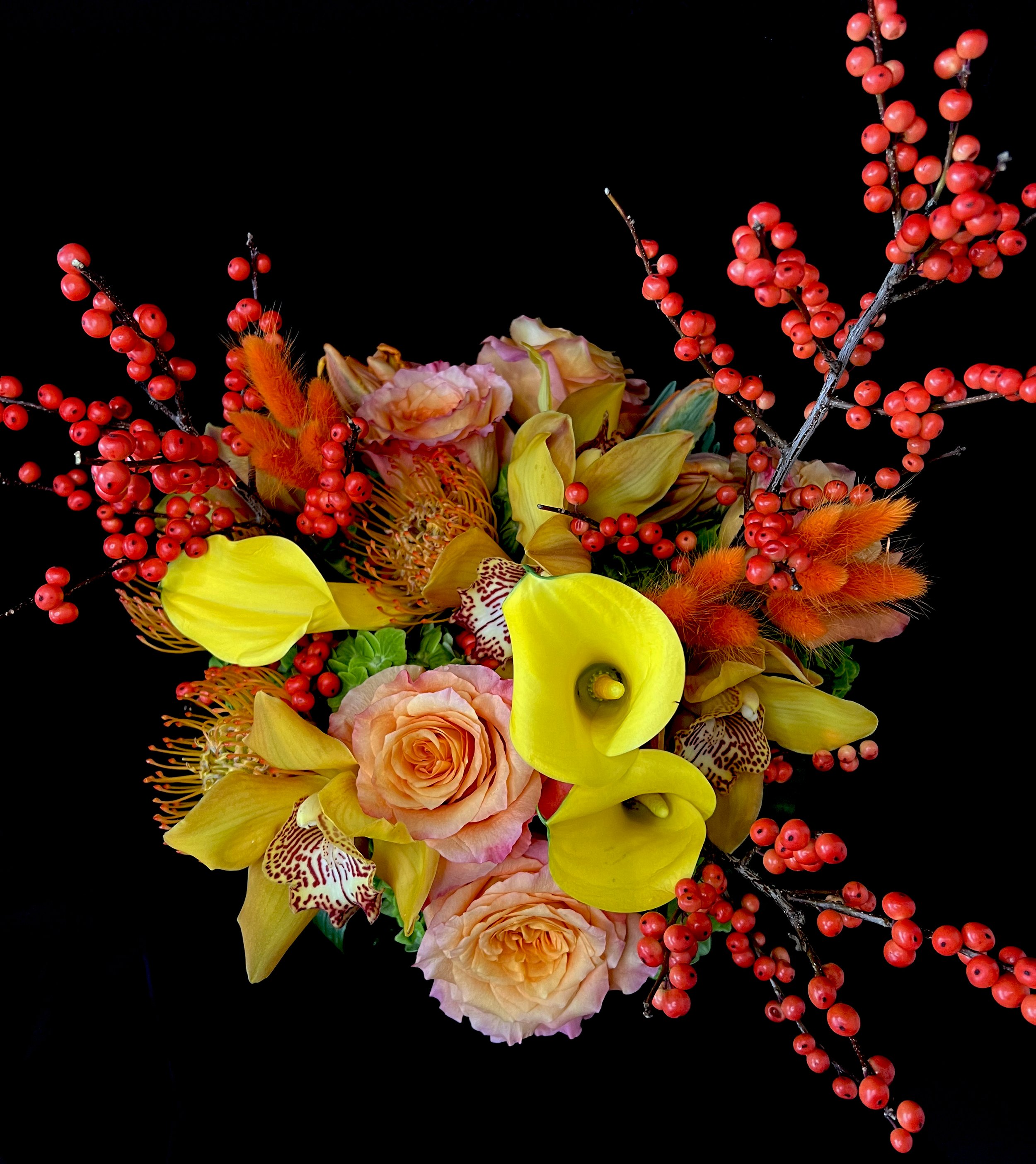
But not every beautiful bouquet is a good recovery bouquet. Hospital-friendly floral design requires restraint. Strong fragrances may bother someone who is nauseated or sensitive after treatment. Oversized arrangements can consume valuable space. Loose bouquets without a vase can create work for a patient or caregiver who already has enough to manage. Certain hospital departments may also have restrictions, so checking delivery rules before ordering is always a smart move.
The best approach is surprisingly simple: think first about comfort, then about beauty. Choose flowers that feel fresh and positive, use an arrangement that is easy to display, and coordinate delivery so it actually reaches the patient at a useful time. Whether you are sending flowers to Hartford, New Haven, Stamford, Greenwich, Norwalk, Bridgeport, or a smaller Connecticut community, the principle stays the same. A thoughtful get-well gift should make recovery feel a little brighter without creating another task for the person you are trying to cheer up.
Why Get-Well Flowers Still Mean So Much
People often ask whether flowers are still a meaningful get-well gift when there are so many other options available. You could send a meal-delivery card, a care package, books, tea, snacks, or something practical for recovery. Those gifts can all be useful. Flowers, though, have one advantage that is difficult to replace: they create an immediate emotional change in the room. You do not have to unwrap them, charge them, read instructions, or wait until you feel better to use them. You simply look at them.
That immediate visual effect matters when someone is recovering. Illness and surgery can shrink a person’s world temporarily. Their days may revolve around appointments, medication, sleep, physical therapy, test results, or waiting for the next doctor to stop by. A vase filled with fresh blooms provides a small piece of the outside world. It brings in color, seasonality, and the feeling that life is still moving forward. That may sound sentimental, but anyone who has spent several days looking at the same hospital wall understands how meaningful one bright object can become.
Flowers also communicate care without demanding a response. When you call someone who is recovering, they may feel obligated to talk even when they are exhausted. Visiting in person can be wonderful, but not every patient wants visitors, and some need quiet. A get-well flower delivery says, “I’m thinking about you,” while giving the recipient complete freedom to rest.
There is also something deeply human about sending living things during recovery. Flowers open, move toward light, and change from day to day. That natural sense of life can feel especially appropriate when the message is one of strength, healing, encouragement, and hope.
The important distinction is between sending flowers because it is traditional and sending flowers thoughtfully. A generic arrangement delivered without considering the patient’s circumstances may feel impersonal. A carefully chosen bouquet in the right size, with a warm note and sensible delivery timing, feels completely different.
That is why get-well flowers continue to matter. They are not medical treatment, and they are not meant to be. They are emotional punctuation—a bright, living reminder that someone outside that recovery room is thinking about the person inside it.
Start with the Patient, Not the Bouquet
The easiest mistake when shopping for get-well flowers is to begin with the florist’s photo gallery. You see a dramatic arrangement filled with exotic blooms, think “Wow, that looks impressive,” and click order. A better approach is to begin with the person receiving the flowers. What are they recovering from? Where are they staying? Do they like flowers? Do they have fragrance sensitivities? Are there pets at home? How much space do they have? Those questions matter far more than whether a particular bouquet happens to photograph beautifully.
Imagine two patients. One is recovering from a minor procedure in a private room and expects to go home tomorrow. The other is spending a longer period in rehabilitation after major surgery. Sending the same arrangement to both does not necessarily make sense. The first patient may appreciate a compact vase that is easy to transport home. The second may enjoy a slightly fuller arrangement that can brighten the room for several days.
Personality matters too. Someone who loves bold color might be delighted by yellow roses, coral gerbera daisies, and bright seasonal flowers. A person with minimalist taste may prefer white tulips, pale green hydrangeas, or a simple arrangement of cream roses. If you know their favorite flower, including it immediately makes the gift feel less generic.
Health circumstances should influence the design without turning you into an amateur physician. A person dealing with nausea, headaches, breathing sensitivity, or medication side effects may find strong perfume unpleasant. In those situations, low-fragrance get-well flowers are usually a better choice. Similarly, a patient with limited mobility should not receive an arrangement that requires constant watering, repositioning, or maintenance.
If the flowers are going home, consider the household. Cats are an especially important reason to discuss flower selection with a knowledgeable florist because some common flowers, including true lilies, can be dangerous to them. If the recipient has young children or energetic pets, a stable container is much smarter than a tall, narrow glass vase.
Thinking about the patient first changes everything. Instead of asking, “Which bouquet looks the fanciest?” you begin asking, “Which arrangement will this person actually enjoy?” That shift is what turns a standard flower order into a thoughtful get-well gesture.
The Best Flowers for a Get-Well Arrangement
The best get-well flowers have a few things in common: they feel fresh, cheerful, easy to enjoy, and appropriate for the environment. You do not need to search for a specific flower that officially means “recovery.” In practice, mood and practicality matter much more. Roses, tulips, hydrangeas, orchids, lisianthus, gerbera daisies, snapdragons, and many seasonal blooms can all work beautifully when chosen in the right colors and proportions.
Roses are one of the easiest choices because they are familiar without feeling boring. Yellow roses have a naturally sunny quality, peach feels warm and gentle, and cream or blush can create a softer, calmer arrangement. Spray roses are useful because several small blooms appear on one stem, giving the bouquet a fuller, garden-like feeling without overwhelming the space.
Tulips are another excellent option for a patient who prefers clean, simple design. Their shape feels fresh and modern, and they continue to move in the vase as they grow toward the light. That little bit of movement gives the arrangement life. Lisianthus offers romantic, layered petals with a lighter look than some larger roses, while gerbera daisies are hard to beat when you want pure cheerfulness. Their bold shape and bright color feel optimistic almost instantly.
Hydrangeas can provide volume, but they do need reliable hydration, so they are best handled by a florist who knows how to condition them properly. Orchids can be elegant and relatively low-scent, especially in a sophisticated arrangement. Seasonal flowers are also worth considering because they can make the gift feel connected to the moment. Spring tulips, summer garden flowers, or warm autumn colors can remind a patient that the world outside is changing even if their current routine feels temporarily stuck.
Greenery deserves attention as well. Soft foliage can add movement and freshness without increasing the flower count dramatically. The arrangement should still feel floral, though, rather than like a collection of leaves.
A good florist can build around whatever is freshest that day. That flexibility often produces a better result than insisting on an exact flower list. The goal is not botanical perfection. It is to send something that looks healthy, uplifting, and natural in the patient’s space.
Choosing Hospital-Friendly Flowers in Connecticut
When flowers are going directly to a hospital, the design needs to work within a very different environment from a private home. Hospital rooms are functional spaces first. Surfaces are used for water pitchers, medication, personal belongings, meal trays, phones, charging cables, cards, and medical supplies. That means the best hospital-friendly flowers in Connecticut are usually compact, stable, and easy to manage.
A medium or small vase arrangement is generally safer than a huge basket or elaborate floral display. Look for a design with a solid base that will not tip if a table is bumped or moved. The flowers should remain relatively contained rather than extending dramatically in every direction. A wide, sprawling arrangement might look impressive in the florist’s studio, but in a hospital room it can quickly become inconvenient.
Fragrance is another major concern. Hospital patients may be more sensitive to smell than they are at home, especially after surgery, during treatment, or while taking medication. Strongly fragrant flowers can become unpleasant when someone is nauseated or dealing with headaches. Choosing low-scent varieties reduces that risk.
The container should arrive ready to use. Do not send a hand-tied bouquet that requires the patient or a nurse to locate a vase, unwrap stems, trim them, and clean up leaves. A hospital gift should require almost no effort from the person receiving it.
It is also essential to remember that flower policies are not identical everywhere. A hospital may allow flowers in standard patient rooms but limit them in certain specialized units. Intensive-care areas, transplant units, oncology areas, or other departments may have stricter rules depending on patient needs and facility policy. Because those policies can change, the safest step is to verify the current delivery rules with the hospital or florist before ordering.
Connecticut has everything from large urban medical centers to smaller community hospitals, and delivery procedures can differ from one facility to another. Never assume that because flowers were accepted at one hospital, the same rules automatically apply elsewhere.
Think of hospital floral design like packing for a small airplane seat: everything should earn its space. A compact arrangement with cheerful color and little fragrance is almost always more considerate than a huge bouquet that dominates the room.
Low-Fragrance Flowers Are Usually the Smartest Choice
Fragrance can make flowers wonderful, but it can also make them completely wrong for a recovery environment. Someone who enjoys the scent of lilies at home may find the same fragrance overwhelming after anesthesia, during chemotherapy, while experiencing migraines, or simply while spending hours in a small hospital room. That is why low-fragrance flowers are one of the safest choices for get-well arrangements.
Tulips are often a good option because their scent is generally subtle. Many roses have a relatively mild fragrance, although some specialty garden varieties can be much stronger, so it is worth asking the florist. Orchids are another possibility, particularly when you want something elegant without filling the room with perfume. Gerbera daisies can provide bright color with little noticeable fragrance, while many types of lisianthus also work well in softer arrangements.
Strongly scented lilies, stock, hyacinths, and certain garden flowers may be beautiful but should be chosen carefully. The problem is not that these flowers are “bad” for get-well gifts. The issue is that you usually do not know how sensitive the recipient may feel on a particular day. In a small room, fragrance that seems pleasant for five minutes can become intense after several hours.
Scented candles and fragranced add-ons are generally unnecessary for the same reason. If you want to include something extra, a simple card, small snack if appropriate, or another non-fragrant item is often more useful.
At home, you can be slightly more flexible if you know the recipient well. Someone who adores fragrant garden roses may genuinely enjoy them. But if there is any uncertainty, understated fragrance is the safer direction.
This is a good example of why thoughtful floral design is not only visual. A bouquet interacts with the recipient’s whole environment. It has scent, scale, texture, and maintenance requirements. The most beautiful arrangement is not automatically the most comfortable one.
When ordering, tell the florist directly that the flowers are for someone who is recovering and that you want a low-scent arrangement. That one sentence gives the designer useful information and helps them avoid flowers that might be gorgeous in another setting but overwhelming here. Comfort should always win over fragrance drama.
Pick Colors That Feel Cheerful Without Being Overwhelming
Color has a real emotional effect, especially in spaces that are dominated by beige walls, white sheets, gray flooring, and clinical lighting. That is why get-well flowers often work best when they introduce some warmth or brightness. The trick is choosing color that feels encouraging rather than chaotic.
Yellow is an obvious favorite because it naturally reads as sunny, positive, and energetic. Yellow roses, tulips, gerbera daisies, or seasonal flowers can make a room feel brighter immediately. Peach is softer and often feels more sophisticated, especially when combined with cream or pale green. Coral adds personality without being as intense as bright red. Lavender can feel calming, while soft pink creates warmth and gentleness.
White and green arrangements can be beautiful too, particularly for someone who prefers understated design. The key is to keep them from feeling overly formal or solemn. Adding pale yellow, peach, or fresh green texture can make an all-neutral palette feel more like recovery and less like a formal event.
Bold red flowers are not automatically wrong, but they can feel heavy depending on the design. If red is the recipient’s favorite color, use it. Otherwise, lighter and fresher tones often fit the get-well message more naturally. Deep burgundy, dark purple, or very moody palettes may be stylish but are usually better suited to other occasions unless you know the recipient would love them.
Mixed-color arrangements can work wonderfully when the colors are coordinated rather than random. Think yellow, coral, peach, and cream rather than every color available in the cooler. A florist can use several hues while maintaining a polished overall look.
You should also consider the season. Soft pink tulips feel right in spring. Bright yellow and orange garden flowers can be perfect in summer. Peach, rust, and warm cream work beautifully in fall, while crisp white, green, and touches of berry can brighten a Connecticut winter.
Color is essentially emotional shorthand. Before choosing, ask what you want the bouquet to say. “You’ve got this,” “thinking of you,” “hope today feels brighter,” and “sending some sunshine” all suggest slightly different palettes. Pick the colors that support the message instead of choosing them only because they match a product photo.
Size and Container Matter More Than You Might Think
People often assume a larger bouquet sends a bigger message. In get-well gifting, that logic can backfire. Oversized flowers may look generous online, but a patient might have nowhere practical to put them. Hospital rooms especially reward restraint. A smaller arrangement that fits comfortably on a bedside table can be enjoyed far more easily than a massive vase that has to be moved every time breakfast arrives.
A medium arrangement is usually the sweet spot. It provides enough flowers to feel substantial without becoming difficult to manage. For a hospital, compact width is often as important as height. Tall flowers may interfere with televisions, wall equipment, or staff movement, while broad designs consume table space. A balanced arrangement that stays within the footprint of its vase is generally easier.
The container should have a stable base. Hospital furniture moves, visitors bump tables, and patients may reach for items without perfect coordination. A narrow, top-heavy vase is simply less practical. Low glass cylinders, sturdy ceramic containers, and other weighted vessels are better choices.
At home, you have more freedom with scale, but convenience still matters. Someone recovering from surgery may not be able to lift a heavy vase filled with several pounds of water. They may also have limited counter space because medications, meals, and recovery supplies are already competing for room. A beautiful arrangement should not require rearranging half the house.
Reusable containers can add value. A simple ceramic pot or attractive glass vase may remain useful long after the flowers are gone. Avoid novelty containers unless you know the recipient’s taste. A giant mug reading “GET WELL SOON!!!” may feel cheerful to one person and visually painful to another.
Ready-to-display arrangements are almost always better than wrapped bouquets for recovery situations. The recipient should be able to enjoy the flowers immediately, not perform flower-arranging homework.
Think of size as part of the message. A thoughtful arrangement says, “I wanted to brighten your space.” An unnecessarily huge arrangement can accidentally say, “I have now assigned you responsibility for a small botanical garden.” In recovery gifting, practical elegance wins every time.
Hospital Delivery vs. Sending Flowers to the Patient’s Home
One of the most useful questions to ask is whether the flowers should go to the hospital at all. Hospital delivery feels immediate, which is appealing. You hear that someone had surgery or was admitted, and you want them to know right away that you are thinking about them. Sometimes that is perfect. Other times, sending flowers to their home a few days later is actually more thoughtful.
Hospital delivery works best when the recipient is expected to remain admitted for enough time to enjoy the arrangement. A small bouquet can provide real comfort during a multi-day stay. It also makes sense when you cannot visit in person but want to acknowledge what the patient is going through.
The downside is logistics. Hospital stays can change quickly. A patient may be discharged earlier than expected, moved to another unit, or transferred to rehabilitation. Flowers delivered too late can miss them completely. Even when they arrive successfully, the patient or family eventually has to transport the vase home along with bags, paperwork, medication, and other belongings.
Home delivery eliminates most of those complications. The flowers can arrive when the patient is settled, and they may be appreciated even more during the slower phase of recovery. Once people return home, the initial wave of messages and support often begins to fade, even though healing may continue for weeks. A bouquet arriving at that point can feel like a wonderfully timed second reminder that people still care.
Home arrangements can also be slightly larger and more decorative. You have fewer restrictions on space and more flexibility with containers. If the recipient has pets, children, or scent sensitivities, you can design around those circumstances as well.
There is no etiquette rule saying get-well flowers must arrive immediately. A bouquet sent four days after surgery is still thoughtful. So is one sent two weeks into a longer recovery.
If you know the hospital accepts flowers and the patient will be there, hospital delivery can be lovely. If the situation is uncertain, home delivery is usually the safer choice. The best destination is the one where the flowers create pleasure instead of logistical work.
Connecticut Hospital Delivery Details to Check Before Ordering
Successful hospital flower delivery begins with information. The florist can create a perfect arrangement, but if the patient’s name is incomplete, the wrong hospital campus is listed, or the unit does not allow fresh flowers, the bouquet may never reach the room. A few minutes of checking details can prevent most of these problems.
Start with the patient’s full name as it appears in the hospital’s records. Nicknames may not be enough, especially in larger medical centers. Confirm the exact hospital location. Connecticut health systems can operate multiple buildings, campuses, outpatient centers, and affiliated facilities, so the name people casually use may not provide enough information for a delivery driver.
If you know the room number, include it, but do not panic if you do not. Hospital staff may be able to route the delivery using the patient’s full information when facility policy permits it. A reliable phone number for the sender or recipient can also help if the florist encounters a problem.
The most important step is confirming whether the patient’s unit accepts flowers. Rules can vary by hospital and department and may change over time. Certain areas can have restrictions because patients are especially vulnerable, space is limited, or infection-control procedures are stricter. Since current rules are facility-specific, verify with the hospital or ask the local florist to confirm before sending.
Delivery hours matter too. A hospital may accept deliveries only during certain times, and flower shops may have their own cutoff times for same-day service. If the recipient may be discharged soon, early delivery is much safer than scheduling late in the day.
Weather deserves consideration in Connecticut as well. Winter cold can damage flowers quickly during loading and unloading, while hot summer days can stress delicate blooms. Professional local florists generally package arrangements for seasonal conditions, which is one advantage of working with someone familiar with the area.
Finally, do not use hospital flower delivery as a surprise visit strategy. The arrangement can express your support without requiring the patient to host you. Recovery is unpredictable, and rest may matter more than conversation.
Good delivery looks effortless because the details were handled beforehand. Correct patient information, verified policies, sensible timing, and an appropriately sized arrangement make all the difference.
Flowers to Avoid in Certain Recovery Situations
There is no universal blacklist of get-well flowers, but some choices deserve extra thought depending on the recipient’s health, environment, and household. Strongly fragrant flowers are the first category to consider. Lilies, hyacinths, strongly scented stock, and certain garden roses can fill a small room quickly. For someone experiencing nausea, migraines, respiratory sensitivity, or medication-related changes in smell, that fragrance may be uncomfortable rather than uplifting.
Flowers with prominent pollen can also be inconvenient. Pollen can stain clothing and linens, and sensitive individuals may prefer designs without heavily exposed pollen. A florist can suggest alternatives or prepare certain flowers to reduce mess.
If the arrangement is going to the patient’s home, pets become another factor. True lilies are particularly dangerous around cats, and other plants or flowers may also pose problems if pets chew them. Rather than trying to memorize every potentially unsafe species, tell the florist that the household has pets and ask for appropriate selections. That is much more reliable than guessing.
Dried flowers may look trendy, but they are not always the best choice for a traditional get-well gift. Fresh flowers usually communicate vitality and renewal more naturally. Dried material can also collect dust, which may not be ideal for someone dealing with respiratory sensitivity.
Very delicate flowers that wilt quickly can create disappointment. Recovery gifts should ideally remain attractive for several days. A florist can balance specialty blooms with sturdier varieties so the arrangement ages gracefully.
Plants are another interesting case. A potted orchid or green plant can last much longer than cut flowers, which sounds perfect, but it also requires ongoing care. For someone who loves plants, that may be wonderful. For someone struggling to get out of bed, it may feel like a responsibility. Know your recipient.
Avoid anything that creates work. That includes huge wrapped bouquets requiring a vase, arrangements that need constant misting, or heavy containers that are difficult to move.
The principle is simple: do not choose flowers only because they are beautiful. Choose them because they are beautiful for this person, in this recovery situation. Thoughtfulness is not about following a rigid list of approved blooms. It is about anticipating what will make the recipient comfortable.
How to Make Get-Well Flowers Feel More Personal
Personalization does not require turning a tasteful arrangement into a novelty gift. In fact, the most meaningful details are usually subtle. Including the recipient’s favorite flower, choosing colors that reflect their personality, or writing a genuinely personal card can make a standard floral delivery feel completely different.
Start with what you know about the person. Do they love sunflowers? Ask the florist to use a few when available. Are they obsessed with purple? A palette of lavender, cream, and soft green may make them smile before they even read the card. Someone who loves minimalist design might appreciate white tulips in simple glass more than an overflowing mixed bouquet.
The card deserves real attention. Generic messages like “Get well soon” are perfectly acceptable, but when you know the recipient well, adding one or two personal sentences makes the gesture warmer. Mention something specific you are looking forward to doing together once they recover. A friend might appreciate, “Rest up—we still have that dinner reservation to reschedule.” A family member might prefer something more tender, such as, “Thinking about you every day and hoping this week brings a little more strength and a lot more comfort.”
Avoid pressure. Phrases like “You’ll be back to normal in no time” can sound reassuring, but not every recovery has a predictable timeline. Messages that focus on support rather than promises are usually safer. “Sending love and hoping today is a little easier than yesterday” feels warm without telling the recipient how quickly they should heal.
You can also pair flowers with a small practical gift. A meal-delivery card, audiobook credit, soft socks, or favorite snack may complement the arrangement, especially during home recovery. Just keep hospital gifts compact.
If you are sending on behalf of a group, list names clearly. Patients often receive several cards and messages at once, and knowing exactly who sent the bouquet matters.
Personalization is really about recognition. The arrangement should say, “I thought about you,” not simply, “I remembered that flowers are what people send when someone is sick.” That distinction may be small from the sender’s perspective, but it is enormous from the recipient’s.
Conclusion: Send Comfort, Not Just a Pretty Bouquet
The best get-well flowers in Connecticut are not necessarily the most expensive arrangement or the one containing the largest number of stems. They are the flowers that fit the recipient, the recovery situation, and the place where they will actually be enjoyed. That means thinking beyond appearance and considering fragrance, size, container stability, hospital rules, delivery timing, allergies, pets, and the patient’s personal style.
If the bouquet is going to a hospital, compact and low-maintenance is usually the right direction. Choose a stable vase, low-fragrance flowers, and an arrangement that will not take over the bedside table. Confirm the hospital’s current policy before ordering, particularly if the patient is in a specialized unit. Use the recipient’s complete information so the florist has the best chance of completing the delivery smoothly.
If the person is already home, you have more flexibility. A fuller arrangement may work beautifully, and you can coordinate the colors with their taste or home environment. Just remember that someone recovering from illness or surgery may have limited energy, so flowers should arrive ready to display and should not require elaborate care.
Color can do a surprising amount of emotional work. Yellow brings sunshine, peach feels warm, lavender can be calming, and white with green creates a clean sense of freshness. None of these choices is medically magical, of course, but that is not the purpose. Flowers work on the emotional side of recovery. They make a room more pleasant and remind someone that their world extends beyond appointments, medications, and rest.
And then there is the card. Do not underestimate it. A few sincere words can carry the emotional weight of the entire gift. You do not need to write something profound. You simply need to sound like yourself.
Ultimately, get-well flowers are about presence from a distance. They say, “I’m thinking about you even when I can’t be in the room.” When the arrangement is chosen with care, it does exactly what a thoughtful gift should do: it asks nothing from the recipient and quietly makes their day a little better.