Flowers for a New Baby: What to Send to the Hospital or Family Home
A new baby has arrived, everyone is excited, and then comes the surprisingly complicated question: what flowers should you send, and where should you send them? It sounds simple until you realize that the parents may still be at the hospital, the hospital may have delivery restrictions, the family could be exhausted, and the last thing anyone needs is an enormous bouquet that requires a search for a vase at midnight. New baby flowers are supposed to make the moment happier, not create another chore. When chosen thoughtfully, though, they are still one of the warmest and most personal ways to celebrate a birth.
The best flowers for a new baby are not necessarily the biggest, pinkest, bluest, or most expensive arrangement available. A smart gift takes the family's situation into account. Hospital deliveries usually need to be compact, easy to move, and low-maintenance. Flowers sent to the family home can be fuller, more decorative, and designed to last through those first chaotic days of bottles, feedings, visitors, laundry, and very little sleep. In both cases, freshness and practicality matter as much as appearance.
Modern new baby floral design has also moved well beyond the traditional “pink for a girl, blue for a boy” approach. Soft creams, fresh greens, peach, lavender, butter yellow, white, coral, and mixed garden colors can feel cheerful without turning the arrangement into a predictable baby-shower centerpiece. You can absolutely use pink or blue if the parents love those colors, but there is no reason to feel limited by them.
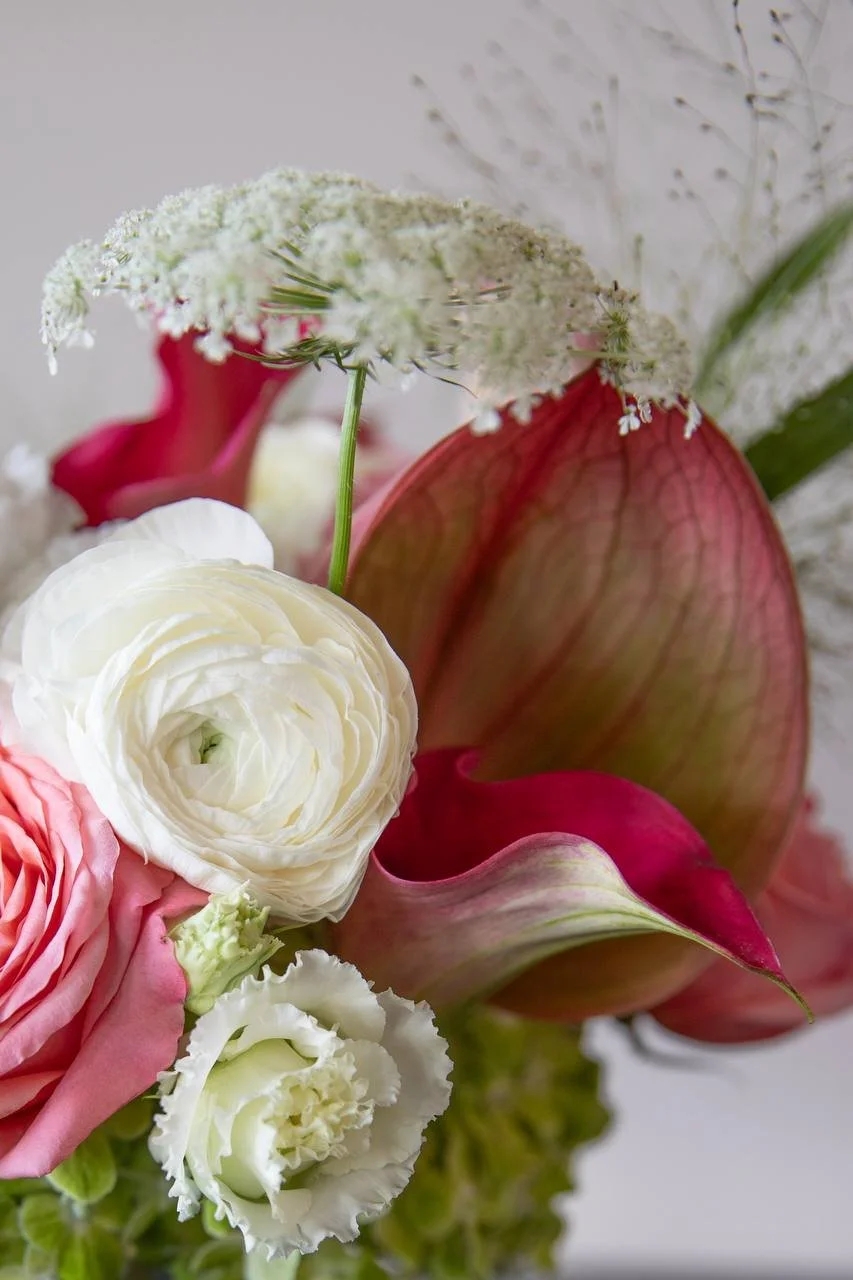
Think about new baby flowers as a small emotional reset for the room. Hospitals can feel clinical, and a home with a newborn can feel beautifully chaotic. A fresh arrangement adds life, color, and a little moment of celebration in the middle of all that change. That is what makes the gift meaningful. You're not sending flowers because the baby needs them. You're sending them because the people who just experienced one of life's biggest transitions deserve something beautiful to look at.
Why Flowers Are Still One of the Best New Baby Gifts
There are plenty of practical gifts for a new baby. Diapers will be used. Baby blankets are useful. Gift cards can save exhausted parents from cooking dinner. Yet flowers continue to hold their place as one of the classic gifts after a birth because they do something practical objects do not: they immediately change how a space feels. A bouquet does not ask to be assembled, washed, charged, registered, or saved for when the baby reaches a certain age. It simply arrives looking like a celebration.
That emotional quality matters more than people sometimes realize. Giving birth, welcoming a baby through adoption, or bringing a newborn home can be joyful and overwhelming at exactly the same time. The parents may be surrounded by medical paperwork, feeding schedules, recovery instructions, and messages from relatives asking for photographs. Flowers cut through all of that with a very simple message: something wonderful happened here, and we're thinking of you.
They are also one of those rare gifts that can be appreciated by nearly everyone in the household. The baby obviously will not remember the roses on the kitchen counter, but the parents will. Grandparents visiting the home will see them. Siblings may notice that the house looks festive. And because floral arrangements often end up in photos, they sometimes become part of the visual memory of those first few days without anyone planning it.
The key is sending the right arrangement for the moment. A massive basket dripping with lilies may look impressive online but become a problem in a small hospital room. A delicate hand-tied bouquet without a vase might be inconvenient for parents who cannot remember where they put the clean glasses, let alone a suitable flower container. The best new baby flower delivery combines beauty with ease.
That is why flowers remain such a strong choice. They can feel luxurious without being excessive, personal without requiring you to know exactly what baby gear the parents need, and celebratory without demanding anything in return. In a week when almost everything in the family's life suddenly feels new, a thoughtful arrangement provides something simple: color, beauty, and a reminder that people are celebrating right along with them.
Hospital or Family Home: Where Should You Send the Flowers?
The biggest decision is not actually which flower to choose. It is deciding where the flowers should arrive. Sending them to the hospital feels immediate and exciting. Sending them to the family home is usually easier and, in many cases, more practical. Neither option is automatically better, so think about the circumstances before placing the order.
A hospital delivery makes sense when you know the parent will remain there long enough to receive and enjoy the flowers. It can be especially meaningful if you are a close friend or relative who cannot visit in person. A compact arrangement brings warmth to a room that may otherwise feel clinical, and seeing the card from someone they love can be an emotional bright spot. The complication is that maternity stays can sometimes be relatively short, delivery procedures vary by facility, and flowers may not be accepted in every area. There is also the practical issue of getting everything home. New parents already leave the hospital carrying bags, paperwork, gifts, baby supplies, and, most importantly, a newborn. A giant vase is not exactly the dream addition to that trip.
Sending flowers to the family home solves many of those problems. You can schedule delivery after the parents have had a chance to settle in, and the arrangement can remain in place rather than being transported again almost immediately. At home, there is usually more room for a medium or large design, and the flowers may actually be enjoyed longer. For families who prefer privacy immediately after the birth, a home delivery also allows you to show that you care without asking to visit.
When in doubt, home delivery is often the smoother choice. You do not have to rush. Sending flowers for a new baby three or five days after birth does not make them less thoughtful. In fact, they may arrive at exactly the right moment, after the initial flood of congratulatory messages has slowed down.
The best rule is simple: choose the location that creates the least work for the new parents. A gift should make their week easier and brighter, not give them one more object to pack, carry, or manage.
The Best Flowers for Welcoming a New Baby
When choosing flowers for a new baby, freshness and mood matter more than following some imaginary list of “official” birth flowers. You want blooms that look cheerful, soft, healthy, and celebratory. Roses are an obvious favorite because they come in almost every color imaginable and adapt to both traditional and modern designs. Cream, blush, peach, yellow, and soft pink roses can create a warm, garden-inspired arrangement without feeling overly formal.
Lisianthus is another fantastic choice. Its petals have the romantic softness of a rose, but the overall flower feels lighter and more relaxed. Hydrangeas create fullness and can make an arrangement look generous without requiring dozens of individual stems. Spray roses are particularly useful because each stem carries multiple smaller blooms, giving the design an abundant feeling. Tulips can be beautiful for a cleaner, more contemporary arrangement, while ranunculus brings layers of delicate petals when it is in season.
For a brighter gift, consider cheerful blooms such as gerbera daisies, stock, snapdragons, or seasonal garden flowers. Yellow and peach flowers can feel especially happy without being tied to gender. Greenery also matters. Soft eucalyptus, leafy stems, or delicate textural greens can make an arrangement look fresher and more natural, although strong-smelling varieties should be used thoughtfully when sending flowers into a hospital or small home.
White flowers are often associated with purity and new beginnings, but an all-white arrangement can sometimes read more formal than celebratory. Mixing ivory and white blooms with soft green, pale yellow, peach, or blush keeps the design warm. On the other end of the spectrum, highly dramatic dark flowers may not be the most natural choice unless you know the parents have a bold design style.
What matters most is choosing flowers that look alive and optimistic. A newborn celebration is not the time for an arrangement that feels heavy or overly serious. Think softness, movement, freshness, and a little joy. The strongest designs do not scream “BABY!” from across the room. They simply make the room feel happier the moment they arrive.
Choosing Colors Without Falling Into Old-School Rules
For decades, new baby flowers followed a predictable formula: pink bouquet for a girl, blue bouquet for a boy. There is nothing wrong with that if the parents genuinely love traditional colors. A pale pink arrangement filled with garden roses can be beautiful, and blue delphinium mixed with white flowers can look fresh and elegant. The problem comes when the color choice feels automatic instead of thoughtful.
Modern baby flowers can pull from a much wider palette. Peach and cream are warm, soft, and universally cheerful. White and green feel fresh and calm. Butter yellow brings instant happiness and works especially well in spring or summer arrangements. Lavender adds a gentle color without feeling sugary. Coral, pale orange, soft apricot, and dusty rose can create a garden-inspired look that feels sophisticated enough for the parents while still being appropriate for a newborn celebration.
If you know something about the family's style, use it. Maybe their nursery is sage green and cream. Perhaps the parents love minimalist interiors and would appreciate a simple arrangement of white tulips in clear glass. Maybe they are color lovers who would be genuinely delighted by a joyful mix of coral roses, yellow ranunculus, lavender stock, and playful greenery. The arrangement should feel like something you chose for them, not simply something that appeared when you clicked “new baby” on a flower website.
Neutral colors are especially useful when the baby's gender has not been shared or when the parents simply do not care for traditional gendered décor. Cream, soft green, yellow, white, peach, and light lavender can all create a celebratory look.
Also consider the container. A bright pink vase combined with bright pink flowers makes a much stronger statement than a blush arrangement placed in clear glass. If you want color without overwhelming the design, keep the vessel neutral and let the flowers do the work.
Color should create emotion, not follow a rulebook. Ask yourself what you want the arrangement to say when it enters the room. Fresh, joyful, peaceful, warm, and loving are usually better design goals than simply trying to announce whether the baby's blanket is pink or blue.
The Best Types of New Baby Flower Arrangements
The format of the arrangement is just as important as the flowers inside it. For new parents, convenience should be part of the design. A wrapped bouquet can be beautiful, but it requires the recipient to find a vase, trim stems, arrange the flowers, and clean up packaging. That may sound easy on an ordinary Tuesday. During the first week with a newborn, it can feel like a full home-improvement project.
That is why a vase arrangement is usually the best choice. It arrives ready to display and can go straight onto a table, dresser, windowsill, or kitchen counter. Clear glass is a safe option because it works in almost any home. Ceramic vessels can feel more decorative and may become useful keepsakes afterward. For hospital deliveries, choose something stable and relatively compact. A low or medium-height vase is easier to fit on a small table and less likely to tip over.
Flower boxes and hatbox-style arrangements can look stylish, but check how they are constructed. Some designs use floral foam and require occasional watering, while others may have shorter longevity than traditional vase arrangements. They work best when the florist uses fresh materials and provides straightforward care instructions.
Basket arrangements are another traditional option, especially for larger family gifts, but they can feel bulky in hospitals. Save those for the home unless you know there will be plenty of room. Small bud-vase collections can be charming, but multiple loose containers may create extra work for parents, so one self-contained arrangement is usually easier.
Think carefully about scale. A massive arrangement can be impressive but difficult to move. An extremely tiny design might look underwhelming when several people are sending gifts. A medium arrangement generally strikes the right balance.
The perfect new baby arrangement should pass one practical test: can the recipient enjoy it immediately without doing anything? If the answer is yes, you are probably on the right track. When someone is surviving on broken sleep and reheated coffee, “ready to enjoy” is not a minor detail. It is part of the gift.
What to Send When the Flowers Are Going to the Hospital
Hospital flowers need to be designed differently from home flowers because the environment is completely different. Space is usually limited, surfaces may already hold personal belongings and medical items, and the arrangement could need to leave with the family sooner than expected. Smaller and simpler is often smarter.
A compact vase filled with cheerful, low-fragrance flowers is an excellent starting point. Roses, lisianthus, spray roses, tulips, hydrangea accents, or other softly scented seasonal flowers can work well. Keep the design upright and contained rather than dramatically spreading outward. A vase with a stable base is important because hospital tables get moved more often than dining-room tables.
Before sending anything, verify that the hospital accepts floral deliveries to the relevant unit. Policies can vary, particularly in areas where infection control, patient sensitivity, or specialized care is involved. The florist may already know the hospital's standard delivery process, but providing accurate patient information is essential. Use the recipient's full legal name if requested, and include the hospital's exact location rather than assuming the florist can figure out which building or maternity center you mean.
Avoid overwhelming fragrance. Even someone who normally loves lilies or highly scented stock may feel differently after labor, surgery, medication, or hours in a small room. Strongly fragrant flowers can also bother visitors or roommates. When you're uncertain, ask the florist for a low-scent design.
Balloons, stuffed animals, oversized signs, and other extras deserve restraint too. One small addition can be sweet, but you do not need to build a parade float around the bouquet. Remember that nearly everything in the room eventually has to go home.
The card matters more than the size. A warm message such as “Welcome, little one. So happy for your family and sending you all so much love” can mean far more than another dozen flowers.
For the hospital, think bright, compact, easy, and thoughtful. You are adding a moment of happiness to the room, not attempting to redecorate the entire maternity floor.
What to Send When the Family Is Already Home
Home delivery gives you more creative freedom. The flowers do not have to fit onto a tiny hospital table, and the parents will not need to transport them later. This is where a fuller garden-style arrangement, stylish ceramic vase, or slightly more dramatic bouquet can make sense. You can still keep the design manageable, but you have more room to create impact.
A medium vase arrangement is usually ideal. It can be placed on the kitchen island, dining table, console, or coffee table and enjoyed for several days. Consider cheerful colors that bring energy to the home without adding visual chaos. Peach roses, cream lisianthus, pale yellow flowers, soft greenery, and seasonal accent blooms create a particularly welcoming look.
Home flowers can also be paired with another useful gift. A food-delivery gift card, breakfast basket, snacks, or a small treat for older siblings turns the delivery into something that supports the whole household. You do not need to combine everything into one giant gift basket. Sometimes flowers and a simple digital meal card are the perfect combination: one gift feeds the eyes, the other feeds parents who have forgotten what a normal dinner looks like.
If you know the family has a specific interior style, choose the vase accordingly. Minimalist home? Clear or white ceramic glass usually works. Warm, traditional home? A classic ceramic container may fit beautifully. Colorful household? Do not be afraid of something more playful.
Timing is also easier at home, but do not assume someone will always be available to answer the door. Newborns have a special talent for requiring attention exactly when a delivery person rings. Good florists can often coordinate contactless or carefully timed delivery, although flowers should not be left outside for long in extreme heat or cold.
The biggest advantage of sending to the home is that the flowers become part of those first days as a family. They may sit beside cards, bottles, baby blankets, and half-finished cups of coffee. That slightly messy setting is exactly where flowers can feel most meaningful: a beautiful reminder that this exhausting new chapter is also something worth celebrating.
When to Send New Baby Flowers and What Etiquette Says
There is no rule saying flowers must arrive within hours of the baby's birth. In fact, rushing can create unnecessary problems. Families are often busy contacting relatives, recovering, meeting doctors, adjusting feeding plans, and figuring out when they are going home. Sending flowers immediately can be lovely when you know the details, but waiting a little can be equally thoughtful.
If you are sending to the hospital, try to confirm that the parent is still admitted and can receive deliveries. A bouquet that arrives after discharge creates frustration for everyone involved. If you do not know the hospital schedule, waiting until the family is home is usually safer.
For a home delivery, anywhere from a few days to a couple of weeks after the birth can feel perfectly appropriate. Actually, a slightly later delivery can have an unexpected advantage. During the first day or two, families often receive a flood of messages, visitors, gifts, and calls. By the end of the first week, some of that attention naturally fades while the sleep deprivation definitely does not. Flowers arriving then can feel like a second wave of encouragement.
Etiquette around visits is another issue. Sending flowers does not automatically mean you should expect an invitation to see the baby. The gift should stand on its own. New parents may need privacy, recovery time, or simply an afternoon without visitors. If they invite you, great. If not, let the flowers carry the congratulations.
It is also perfectly acceptable to send flowers when you cannot attend a baby celebration or visit in person. Include a personal card so the gift feels intentional rather than transactional. If you are part of a workplace or larger group, a shared arrangement with a clearly signed message works well.
Do not stress if you learn about the birth late. A beautiful arrangement sent three weeks afterward is still a kind gesture. Babies do not stop being new after seven days, and parents rarely complain that someone remembered them “too late.”
The best etiquette is built around consideration. Send something beautiful at a time that creates joy without creating work. That principle matters more than any rigid calendar.
Fragrance, Allergies, Pets, and Other Details That Matter
Flower selection becomes more thoughtful when you consider what happens after the bouquet arrives. Strong fragrance is one of the biggest issues. Some flowers smell wonderful in a garden but can be overwhelming in a hospital room, bedroom, or small apartment. Lilies are a classic example. Many people adore their fragrance, but others find it intense, and certain lilies can create serious safety concerns in homes with cats.
That brings us to pets. If you know the family has a cat or dog, tell the florist. Some popular flowers and plants can be unsafe for pets if chewed or ingested. You do not have to become an amateur botanist before ordering a bouquet; simply ask for a pet-conscious arrangement and let a knowledgeable florist select suitable materials. For cat households in particular, avoiding true lilies is an important precaution.
Allergies and sensitivities matter as well. New parents may be dealing with headaches, medication, hormonal changes, or general sensory overload. Choosing low-fragrance flowers can make the gift easier to enjoy. Roses often have mild fragrance depending on variety, while tulips, orchids, and many other flowers can work well in lower-scent designs. Tell the florist if fragrance is a concern rather than relying solely on the flower's appearance.
Pollen is another consideration. Flowers with exposed pollen can stain fabric and may bother sensitive recipients. Professional florists can often remove prominent pollen-bearing parts from certain flowers or recommend cleaner alternatives.
The container deserves practical thought too. Avoid unstable, top-heavy vessels, especially in a home with older children or curious pets. A wide-base glass or ceramic vase is safer than something tall and narrow. If the family has a toddler who treats every surface like a climbing challenge, a compact arrangement placed high on a counter is much more realistic than a low floor installation worthy of a wedding.
None of this means the bouquet has to be boring. Practical flowers can still be beautiful. The point is simply to think beyond the delivery photo. A truly thoughtful gift remains enjoyable once it is sitting in someone's real home, surrounded by real children, real pets, and real life.
How to Personalize New Baby Flowers Without Overdoing It
Personalization turns a nice flower delivery into a gift that feels chosen specifically for the family. The easiest way to personalize an arrangement is not necessarily by adding the baby's name in giant glitter letters. Often, subtler details feel more elegant and more sincere.
Start with color. If you know the parents love sage green and cream, ask the florist to build around those tones. If the baby's nursery has a cheerful yellow theme, a few buttery yellow flowers can make the bouquet feel connected to the family's world without becoming overly literal. If one parent has a favorite flower, including it is a lovely way to acknowledge that the celebration is also about them.
The card is where personalization matters most. Skip generic phrases when you know the family well. Mention the baby's name, acknowledge older siblings, or write something that sounds like you. “Welcome to the world, Emma. Your family already loves you more than you can imagine” feels warmer than “Congratulations on your new arrival.” For close friends, humor can be wonderful too, as long as it is kind. A line about coffee, sleep, or entering the wonderfully chaotic newborn stage can sound much more human than a formal greeting.
A keepsake vase is another subtle personal touch. A neutral ceramic vessel can become part of the family's home after the flowers are gone. You could also include a tiny plush toy, but keep additional items modest, especially for hospital deliveries.
Avoid over-personalizing the flowers themselves. Printed ribbons, glitter picks, oversized baby figurines, name toppers, multiple balloons, and novelty accessories can quickly overwhelm a beautiful arrangement. If the parents enjoy that style, go for it. Otherwise, let the flowers remain flowers.
The best personalization feels like a private reference rather than a billboard. It tells the recipients, “I know you, I thought about what you would enjoy, and I chose this with your family in mind.” That sense of care is what makes a flower gift memorable long after the final petals have dropped.
Are the Flowers for the Mom, the Baby, or the Whole Family?
Technically, people often call them “flowers for the baby,” but let's be realistic: newborns are not evaluating floral design. They are busy mastering breathing, eating, sleeping, and waking up approximately thirty seconds after their parents finally sit down. The flowers are really for the people welcoming the baby, and recognizing that can make the gift much more thoughtful.
If the mother gave birth, flowers can be a beautiful way to acknowledge what she has been through rather than focusing every ounce of attention on the newborn. Pregnancy, labor, delivery, surgery in some cases, and early recovery are enormous physical experiences. A card that says, “These are for you, too. You did something incredible,” can feel deeply meaningful. It reminds her that she has not suddenly become invisible because everyone is excited about the baby.
The same principle applies more broadly. Partners, adoptive parents, foster parents, grandparents helping at home, and older siblings may all be part of the transition. A flower arrangement placed in a shared living space can celebrate the family rather than assigning the gift to one person.
If there is an older child in the household, consider acknowledging them in some small way. They do not necessarily need their own bouquet. A tiny treat, book, or card saying “Congratulations on becoming a big sister” can help them feel included in the excitement.
Your card can reflect this broader approach. Instead of writing only “Congratulations on your baby,” try something warmer and more specific: “So happy for all of you as you begin this beautiful new chapter together.” It celebrates the newborn while recognizing that an entire family has just changed shape.
Flowers work particularly well for this because they are not baby gear. They do not belong in a diaper bag or nursery drawer. They live in the shared space, where adults can actually enjoy them.
A new birth centers naturally on the baby, but the best gifts remember the human beings standing around that tiny new person, exhausted and amazed. Sending flowers is a simple way to say that the whole family deserves celebrating.
Delivery Details and Common Mistakes to Avoid
A beautiful arrangement can still turn into a bad gift if the delivery details are wrong. The most common mistake with hospital flowers is incomplete recipient information. Hospitals can be large, sometimes with multiple buildings or maternity units, and a nickname that works among friends may not match the patient's registered name. Provide the full name, hospital address, and room information when available. If you are unsure whether flowers are accepted, confirm before ordering.
Timing matters just as much. Do not schedule a hospital delivery late in the stay unless you know the recipient will still be there. For home deliveries, provide a reliable phone number when possible so the florist can coordinate if nobody answers. Avoid leaving delicate flowers outside in freezing winter temperatures or intense summer heat.
Another common mistake is choosing size based entirely on the desire to impress. Bigger is not always kinder. Oversized arrangements can dominate hospital rooms, clutter small apartments, and become difficult to move. Choose a size that fits the setting. The same goes for balloons and accessories. One tasteful addition is often enough.
Skipping the vase is another avoidable problem. A hand-tied bouquet may be romantic, but new parents do not necessarily want a floral-arranging assignment. Sending something ready to display is usually better.
Be careful about fragrance and pets, too. Highly scented lilies may be a poor choice for a small room, and certain plants or flowers can be problematic in homes with animals. Mention these considerations when ordering.
Finally, proofread the card. This sounds obvious until someone's beautifully arranged congratulatory bouquet arrives addressed to the wrong baby because autocorrect changed a name. Double-check spelling, especially if the child has a less common name.
The best delivery feels effortless to the recipient because all the effort happened before the flowers arrived. The address is correct, the arrangement fits the environment, the message feels personal, and there is nothing the new parents need to fix. That is what professional, thoughtful new baby flower delivery should accomplish.
Conclusion: Choose Flowers That Make Life a Little Brighter
Sending flowers for a new baby is not complicated once you stop treating the gift like a decorating contest. The goal is not to find the largest bouquet on the website or the arrangement containing the most obvious baby-themed accessories. The goal is to send something beautiful that fits naturally into an intense, joyful, exhausting moment in someone's life.
If the flowers are going to the hospital, keep them compact, low-fragrance, stable, and easy to transport. Verify the hospital's delivery policy and make sure the florist has the correct patient information. If you are sending flowers to the family home, you have more flexibility. A fuller arrangement, stylish vase, or cheerful garden-inspired design can brighten the kitchen or living room during those blurry first days of newborn life.
Choose colors based on the family's taste instead of automatically following pink-and-blue traditions. Soft cream, peach, yellow, white, green, lavender, and mixed seasonal colors can all feel beautifully appropriate. Think about pets, fragrance sensitivity, allergies, and the size of the recipient's space. These details may seem small, but they are exactly what separates a generic flower order from a genuinely thoughtful gift.
Most importantly, remember who the flowers are really for. They celebrate the baby, but they also acknowledge parents whose entire world has just shifted. They can recognize a mother recovering from birth, a partner finding their way through new responsibilities, siblings adjusting to a new family dynamic, and the household as a whole.
Years from now, nobody may remember exactly how many roses were in the arrangement. But the parents may remember looking across a messy kitchen at a vase of fresh flowers and feeling loved, remembered, and celebrated. Sometimes a thoughtful gift does not need to solve a problem. It simply needs to make a difficult, wonderful week a little brighter.