Micro-Wedding Flowers in NYC and Connecticut: Where to Spend and Where to Simplify
A micro-wedding gives you something a 200-person ballroom wedding rarely does: the freedom to be extremely intentional. When you have 20, 30, or 50 guests instead of a huge crowd, every table matters, every arrangement is easier to notice, and every floral decision becomes part of the atmosphere rather than background decoration. That sounds like a reason to order more flowers, but in practice, the smartest micro-wedding floral designs usually come from doing the opposite. Instead of spreading your budget across dozens of small arrangements, you can concentrate it in a few places that guests actually see, remember, and photograph. Think of it like dressing for an important dinner: one beautiful jacket can do more for the entire look than ten accessories competing for attention.
That principle matters especially when planning micro-wedding flowers in NYC and Connecticut, because the two locations create very different logistical realities. New York City weddings often involve tight rooms, elevators, loading restrictions, limited installation windows, and venues where every square foot has to earn its keep. Connecticut weddings, meanwhile, are more likely to include gardens, estates, barns, private homes, inns, or tented outdoor spaces where the challenge is not lack of room but deciding how much of that room actually needs decorating. In both cases, spending intelligently means understanding where flowers have the greatest visual return.
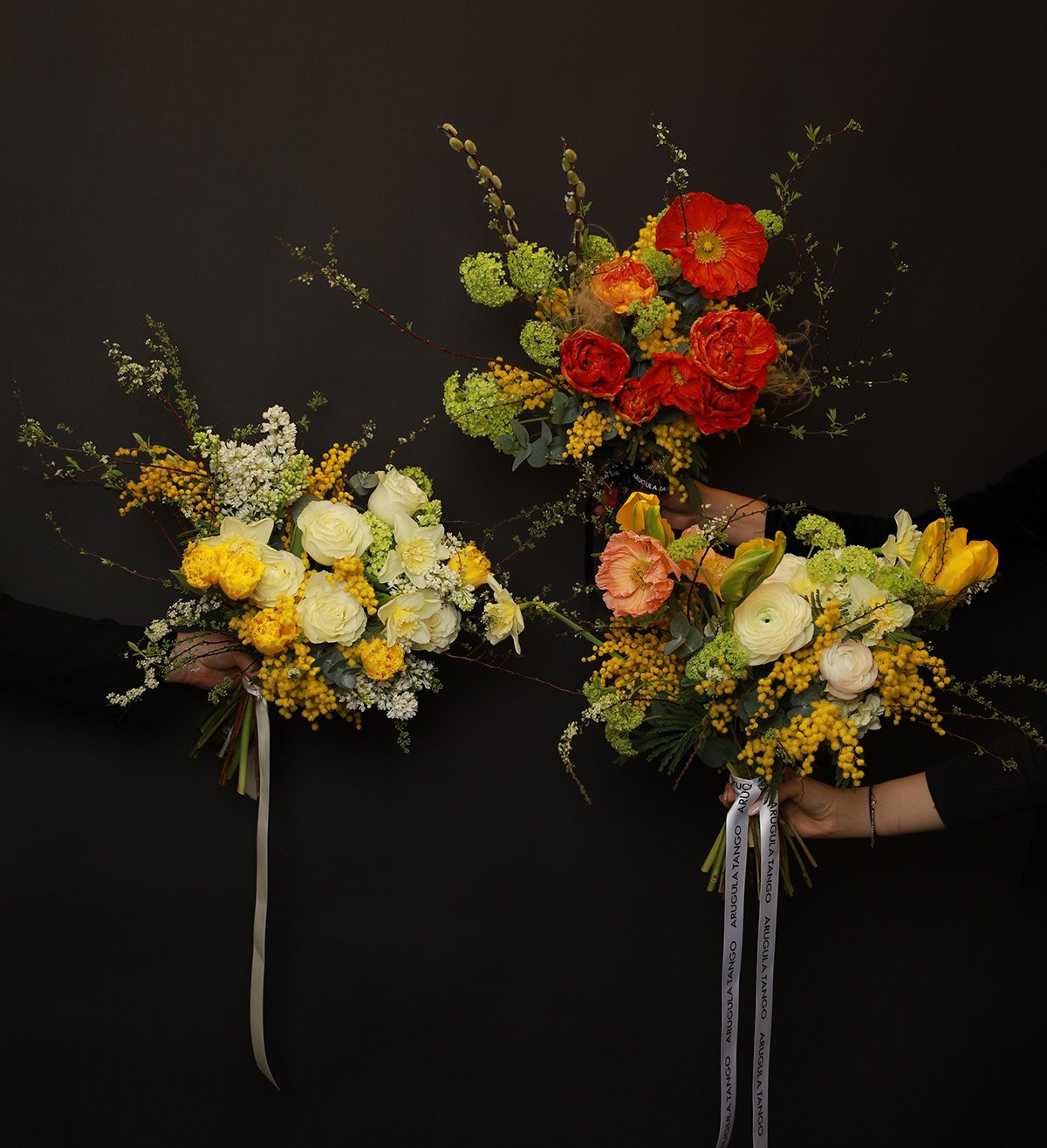
The good news is that a small wedding does not need small ideas. You can have an abundant bouquet, a dramatic ceremony arrangement, candlelit dinner tables, and flowers that feel editorial without turning the entire venue into a greenhouse. The secret is deciding what should feel luxurious and what can simply feel clean, thoughtful, and finished. Once you make that distinction, the floral budget becomes much easier to control.
Why Micro-Wedding Flower Budgets Work Differently
The most common mistake couples make with a micro-wedding is taking a traditional wedding flower checklist and simply reducing the quantities. That sounds logical, but a small wedding is not just a scaled-down version of a large one. It has a completely different visual rhythm. Guests are closer to the ceremony, closer to the couple, closer to the dinner tables, and often moving through fewer spaces during the event. That means the details they do encounter receive much more attention. A modest centerpiece sitting three feet away from a guest may make a stronger impression than a huge arrangement viewed from across a 10,000-square-foot ballroom.
This changes how you should think about value. In a large wedding, florals often create cohesion across a big environment: dozens of centerpieces, multiple bars, cocktail tables, escort card displays, wide aisles, grand entrances, and expansive stages. At a micro-wedding, the strongest floral plan usually relies on concentration rather than repetition. You may need only one memorable ceremony installation instead of eight separate floral moments. You might have three dinner tables instead of twenty-five, which allows each one to feel more layered without creating an enormous overall order.
There is also an emotional difference. Micro-weddings tend to feel closer and more personal, so florals can respond to that intimacy. Loose garden-inspired arrangements, bowls of seasonal flowers, bud vases mixed with candles, and sculptural branches often feel more natural than oversized symmetrical pieces built primarily to fill a large venue. You are creating a room guests will experience from just a few feet away.
The smartest question, then, is not “How many flowers do we need?” Ask, “Which floral moments will define the wedding?” Once you identify those moments, you can invest confidently. Everything else can support them rather than compete with them.
Spend More on the Bridal Bouquet
If there is one floral piece where cutting too aggressively rarely pays off, it is the bridal bouquet. Your bouquet follows you through nearly every important part of the wedding day: getting-ready photographs, first look, portraits, ceremony entrance, vows, family pictures, couple portraits, reception details, and often the exit. It may be one of the smallest floral elements in terms of physical size, yet it appears in more photographs than almost any other arrangement. For a micro-wedding, where photography often plays an especially important role, that makes the bouquet a high-value place to spend.
Spending more does not necessarily mean making it enormous. In fact, a thoughtfully designed smaller bouquet can look much more luxurious than a giant one filled with inexpensive blooms simply to create volume. The magic usually comes from flower quality, shape, texture, color balance, and movement. A bouquet that mixes focal flowers with delicate seasonal material, foliage, interesting stems, or subtle tonal variation can feel personal instead of mass-produced. Your florist can also choose blooms that photograph beautifully from multiple angles rather than designing only for a front-facing view.
This is also where specific flower preferences make the most sense. If you love a premium bloom that would be too expensive to use across twenty arrangements, placing a few stems in the bridal bouquet lets you enjoy it without forcing the entire floral budget upward. The bouquet becomes your concentrated dose of luxury.
Do not forget proportions. A bouquet should complement the wedding outfit, the person carrying it, and the overall formality of the event. A compact city hall ceremony may call for something sleek and architectural, while a Connecticut garden wedding can handle a softer, more sprawling composition. Either way, this is one place where craftsmanship is visible. If you are choosing between upgrading the bridal bouquet or adding small arrangements to places nobody will photograph, put the money in your hands.
Invest in One Strong Ceremony Focal Point
A ceremony lasts a relatively short time, but visually it is the heart of the wedding. This is where guests first see the couple together, where the most emotionally important photographs happen, and where everyone naturally directs their attention. Because of that, a single strong ceremony floral focal point can carry far more impact than multiple smaller decorations scattered around the space. For micro-weddings, this is one of the best opportunities to spend strategically.
The focal point does not have to be a traditional flower-covered arch. Depending on the venue, it could be an asymmetrical arrangement beside the couple, floral columns, grounded flowers that appear to grow from the floor, an arrangement built around an existing fireplace, or a loose garden-style installation at the base of a tree. What matters is that the design clearly frames the ceremony. When guests look forward, the composition should feel finished before they even notice individual flowers.
This strategy works especially well in intimate venues because the scale of the installation can remain controlled. You do not need to build something fifteen feet wide to command attention in a room holding thirty guests. A beautifully proportioned arrangement with depth and texture can feel dramatic from nearly every seat. It also becomes an instant backdrop for vows, ring exchanges, first kisses, and family portraits afterward.
Whenever possible, talk with your florist about repurposing the ceremony focal flowers later in the day. Certain arrangements can move behind a sweetheart table, beside a cake display, near a bar, or into the dinner room after guests leave the ceremony area. Repurposing requires planning because not every installation can be moved safely or quickly, but when it works, you essentially get two major visual moments from the same floral investment. That is exactly the kind of budget efficiency a micro-wedding allows.
Make the Reception Focal Point Feel Intentional
Once the ceremony ends, the visual center of gravity shifts to the reception. At a micro-wedding, there may not be a traditional sweetheart table at all; you might sit at one long dinner table with everyone else. Either setup can look beautiful, but the key is deciding where guests’ eyes naturally land and making that area feel intentional. Spending on a reception focal point works because it gives the room a visual anchor rather than asking every corner to compete for attention.
If you have a sweetheart table, the design can be surprisingly simple. Ceremony flowers placed nearby, a low arrangement along the front edge, or a pair of asymmetrical floor pieces can immediately distinguish the couple’s table. The goal is not to bury the table in flowers. You still want comfortable seating, clear sight lines, room for dinner, and photographs that feel natural. A few well-positioned flowers combined with candlelight often create more atmosphere than a dense wall of blooms.
For a single long table, think differently. Instead of creating one centerpiece every few feet, build a continuous visual rhythm using varying heights and textures. That might mean small arrangements, scattered bud vases, fruit or botanical accents, and candles moving down the table. The effect feels abundant even when the actual flower count is controlled because the eye reads the entire table as one composition.
This is particularly useful for intimate weddings because guests spend a large portion of the evening seated together. They will notice the dinner environment more than they would at a large reception where dancing, room transitions, and crowd movement constantly shift attention. Make the table feel special where people actually gather. You can then leave peripheral spaces considerably simpler without sacrificing the sense of occasion.
Put Your Floral Budget Where the Camera Goes
One of the easiest ways to decide where to spend on flowers is to look at the wedding through a photographer’s eyes. Which spaces will appear repeatedly in the final gallery? The bridal bouquet is obvious, but think beyond that. The ceremony backdrop, reception table, cake area, entrance, staircase, fireplace, or another architectural feature may become a major part of your wedding photographs. If flowers are going to appear in dozens of images you keep for years, they usually deserve more attention than decorations placed in transitional areas guests pass for thirty seconds.
This does not mean designing the entire wedding for social media. It means recognizing that photography compresses the event into a series of visual memories. A flower arrangement near a coat check may be pleasant in person, but it contributes very little to the visual story. Meanwhile, a grounded ceremony arrangement may appear behind your vows, kiss, portraits, family photographs, and even reception shots if it is repurposed. The return on that spending is dramatically different.
Micro-weddings give you another advantage: fewer spaces often need decorating. If your ceremony and dinner happen in the same restaurant, private room, townhouse, garden, or estate, one or two floral zones may define the entire event. Ask where the photographer is likely to shoot portraits and whether an existing architectural feature can become part of the composition. Beautiful windows, staircases, fireplaces, garden walls, and mature trees reduce the amount of floral intervention needed because the setting is already doing part of the design work.
A simple planning trick is to imagine five photographs you absolutely want from the wedding. Then ask what will be visible behind you in each one. Those backgrounds deserve your design attention. Everything outside those frames can usually be simplified more aggressively.
Simplify the Ceremony Aisle Without Losing the Romance
Ceremony aisles are easy places to overspend because they look dramatic in inspiration photos, especially when every chair row is decorated or flowers appear to grow continuously along both sides. In an intimate wedding, however, elaborate aisle flowers can become visually overwhelming. If you have four or six short rows of chairs, covering each one with arrangements may actually make the ceremony space feel smaller. This is where restraint can look more sophisticated than abundance.
Start by deciding whether the aisle needs flowers at all. In an elegant indoor space, a clean aisle lined with candles may already provide enough definition. Outdoors, the landscape can serve as decoration. A garden path surrounded by mature greenery does not need dozens of imported flowers to announce that a wedding is happening there. Your ceremony focal point and guests dressed for the occasion already accomplish that.
If the aisle feels unfinished, choose a few purposeful accents rather than decorating every row. Two arrangements at the entrance can create a visual beginning. Small clusters near the front can connect the aisle with the main ceremony design. Grounded flowers placed at irregular intervals can create a natural garden effect without requiring a continuous installation. You can also use petals selectively, although venue rules and cleanup requirements should be confirmed before making that part of the plan.
The biggest advantage of simplifying aisle flowers is that guests rarely experience the aisle as a separate decorative moment for very long. They walk down it, sit, and immediately turn their attention toward the ceremony focal point. Spend where their eyes remain. A clean aisle leading toward one beautiful installation often feels more deliberate, more modern, and more expensive than an aisle packed with small pieces simply because tradition suggests they should be there.
Scale Back Bridesmaid Bouquets and Personal Flowers
Personal flowers are meaningful, but they can multiply quickly. Even at a micro-wedding, you may have attendants, parents, grandparents, siblings, an officiant, flower children, and other important people you would like to recognize. Before long, the floral order includes bouquets, boutonnieres, corsages, pocket flowers, crowns, and individual pieces that quietly consume a substantial part of the budget. You do not need to eliminate these traditions, but you can be selective.
If you have bridesmaids or other attendants, their bouquets can be smaller and simpler than the bridal bouquet. In fact, this visual hierarchy often looks better in photographs because it keeps the primary bouquet distinct. Consider using one flower variety, one tonal palette, or a foliage-forward composition for attendants while reserving more complex blooms for the bride. For a tiny wedding party, a single statement stem or very compact posy can also feel chic instead of sparse when the style is intentional.
Boutonnieres and corsages deserve similar consideration. Ask whether the recipients actually want to wear them. Some people love the tradition; others spend the day worried about crushing flowers against jackets or snagging delicate pieces. You may choose to provide flowers only for parents or skip personal flowers for certain roles entirely. There is no universal wedding rule requiring every important guest to wear a botanical badge.
For micro-weddings, intimacy already signals who matters. Your guests usually know one another, and there is less need to identify members of the wedding party visually. That gives you permission to simplify. Put the most detailed craftsmanship into the pieces that will be photographed repeatedly, especially the bridal bouquet, and allow everything else to support it quietly.
Keep Cocktail Hour Flowers Simple
Cocktail hour tends to create one of those strange wedding-budget traps: because guests will spend time there, couples assume the space needs to be fully decorated. But most cocktail hours are highly social and highly mobile. People are greeting relatives, ordering drinks, finding appetizers, signing a guest book, and catching up with friends. They are not studying floral arrangements on every high-top table. That makes cocktail hour a perfect place to simplify without making the wedding feel less polished.
Start with the bar. A single arrangement placed strategically can give the entire area a finished look. It does not need to be huge, especially if bartenders need functional workspace. A sculptural branch, compact arrangement, or small group of bud vases can add color while staying out of the way. If you have several cocktail tables, resist the urge to put a traditional centerpiece on every one. Tiny bud vases, a single stem, candlelight, or even no flowers at all may be sufficient.
The venue itself matters enormously here. In a Manhattan restaurant, rooftop room, townhouse, or hotel lounge, the existing furniture and lighting may already create plenty of visual interest. In Connecticut, cocktail hour may happen on a lawn, terrace, or porch where trees, gardens, and landscape provide natural decoration for free. Trying to compete with that environment using dozens of little arrangements often adds cost without adding much beauty.
Think of cocktail hour as a supporting scene rather than the main act. Guests need atmosphere, but they do not need floral overload. Save the dramatic flowers for the ceremony and dinner, where people are stationary long enough to appreciate them and where those arrangements are much more likely to become part of your photographs.
Simplify Guest Tables Instead of Filling Every Inch
The phrase “wedding centerpiece” can create unnecessary pressure. It makes couples feel as though every guest table needs one large, formal arrangement in the exact center. At a micro-wedding, you have much more freedom. Because tables may be smaller, fewer, or arranged in one long configuration, you can build atmosphere through repetition and texture instead of relying on expensive floral mass. This is one of the easiest places to create a high-end look while carefully controlling flower quantity.
Bud vases are an obvious approach, but they work best when they feel designed rather than randomly scattered. Mix a few heights, choose flowers with interesting shapes, and repeat colors intentionally down the table. Add candles where the venue permits them. Candlelight creates movement, depth, and warmth for far less than filling every gap with flowers. Even simple linens, thoughtful place settings, menus, and glassware contribute to the tablescape, which means the flowers do not have to carry the entire visual burden.
Another approach is to alternate. If you have several tables, some can feature fuller floral arrangements while others rely more heavily on candles or botanical details. In a very intimate room, guests see the tables together, so the overall composition matters more than making each table identical. This creates visual variation and can prevent the room from feeling overly formal.
Height should also be considered carefully. Large centerpieces can be dramatic, but at a micro-wedding, conversation is often one of the main attractions. Guests have been invited precisely because they matter to you, so blocking their view with flowers can undermine the intimacy you worked so hard to create. Low arrangements, petite clusters, or carefully elevated designs that leave sight lines open often make much more sense.
Understand the Realities of Micro-Wedding Flowers in NYC
Planning wedding flowers in New York City is not simply a question of choosing blooms and calculating stems. Logistics can shape the budget almost as much as the flowers themselves. Florists may need to account for loading zones, parking, freight elevators, building access, security requirements, narrow staircases, strict delivery windows, and venues where setup must happen quickly between other events. Labor is part of floral design, and in NYC, that labor can become especially important.
Space is another factor. Many city micro-weddings happen in private dining rooms, restaurants, loft-style spaces, rooftops, apartments, galleries, or smaller event venues. These locations can be visually strong before a single flower arrives. Exposed brick, city views, architectural lighting, interesting bars, fireplaces, or dramatic windows may already provide the atmosphere you need. Instead of covering those features, use flowers to frame them. One thoughtful installation beside a window can do more than five unrelated arrangements competing with the room.
NYC also rewards designs that are easy to move and install. Extremely complicated ceremony structures may require additional setup time, labor, or venue coordination. If the space has limited access, a modular floral design can sometimes provide a similar visual effect with fewer logistical challenges. Ask how arrangements enter the building, where boxes and equipment can be stored, and whether floral pieces need to leave immediately after the event.
The city itself is part of your wedding aesthetic. You do not have to disguise it with flowers. If you are marrying in New York because you love its energy, architecture, skyline, or intimacy, allow that character to show. Florals should feel like a beautiful conversation with the setting, not an attempt to replace it.
Plan Differently for a Connecticut Micro-Wedding
Connecticut micro-weddings often present the opposite design challenge: instead of working around tight urban spaces, you may be surrounded by acres of lawn, mature trees, historic architecture, gardens, stone walls, barns, terraces, or waterfront views. The temptation is to decorate all of it. Resist that impulse. Nature already creates scale and atmosphere, and trying to “fill” a large outdoor property with flowers can send the budget soaring without producing a proportional visual improvement.
The smartest approach is to identify the specific areas where guests will gather. If the ceremony happens beneath a large tree, you may only need floral arrangements at the base or along one side to frame the couple. If cocktails are served on a terrace overlooking the landscape, small table arrangements may be completely unnecessary. For dinner inside a tent, barn, private home, or dining room, concentrate the flower budget there because that is where guests will spend the longest uninterrupted stretch of time.
Weather also matters. Connecticut weddings can experience heat, wind, rain, and sharp temperature changes depending on the season. Flowers that look wonderful in an air-conditioned Manhattan dining room may behave differently after several hours outdoors. Your floral plan should account for sun exposure, wind, humidity, and whether arrangements can be installed close to the ceremony start time. Stability matters as much as beauty when a centerpiece is sitting on an outdoor table during a breezy afternoon.
Connecticut settings often look best when floral design feels connected to the surrounding landscape. Seasonal branches, local-looking greenery, meadow-inspired textures, and garden-style arrangements can feel as though they belong there. The goal is not to compete with the property. Use flowers to guide the eye toward the parts of the landscape you already love.
Let Seasonality Do Some of the Budget Work
Seasonality is one of the most useful tools in floral budgeting, although it is often misunderstood. Choosing seasonal flowers does not automatically mean every stem will be inexpensive, and modern flower sourcing makes many varieties available beyond their traditional local season. Still, giving your florist flexibility to work with what is beautiful and naturally abundant around your wedding date can make the design more efficient and often more visually interesting.
Instead of building your entire floral plan around one exact variety, begin with color, texture, and mood. Maybe you want soft cream, dusty pink, and green with a romantic garden feeling. Or perhaps you prefer white, deep burgundy, and sculptural foliage for a late fall dinner. When your florist has room to select the strongest flowers available in that palette, they can adapt if a particular variety is costly, unavailable, or arrives in poor condition. That flexibility protects both the look and the budget.
Seasonality can also make the wedding feel more connected to place. Spring branches can create dramatic height without relying entirely on traditional flowers. Summer gives you access to airy garden textures and abundant color. Autumn can bring deeper tones, grasses, berries, branches, and foliage that feel naturally appropriate in Connecticut landscapes or intimate city dining rooms. Winter weddings can lean into evergreens, branches, rich textures, candlelight, or minimalist blooms without attempting to imitate June.
The biggest budget mistake is becoming emotionally attached to a specific flower simply because you saw it in a photograph from a wedding held in a different month, climate, or country. Treat individual flower varieties as ingredients, not the entire recipe. If the overall design language is clear, substitutions can preserve the feeling you want while giving your florist far more room to work intelligently.
Build a Spend-and-Simplify Floral Budget That Actually Works
A useful floral budget begins with priorities rather than percentages. Before asking how much every category should cost, decide which three visual moments matter most to you. For many micro-weddings, those are the bridal bouquet, ceremony focal point, and reception table. For another couple, photography around a staircase or fireplace may matter more than a formal ceremony installation. The important thing is choosing deliberately instead of automatically ordering every traditional floral item.
Here is a practical way to think about the balance:
Floral Area
Spend or Simplify?
Why
Bridal bouquet
Spend
Highly photographed and personally meaningful
Ceremony focal point
Spend
Defines the ceremony and creates a strong photo backdrop
Reception focal area
Spend
Guests experience it for several hours
Dinner tables
Balanced
Use flowers selectively with candles and other design elements
Ceremony aisle
Simplify
Guests focus forward, not on every chair row
Bridesmaid bouquets
Simplify
Smaller designs still look polished
Boutonnieres and corsages
Selective
Include only where meaningful
Cocktail tables
Simplify
Guests are moving and socializing
Bar flowers
Balanced
One thoughtful piece can be enough
Transitional areas
Simplify
Low photographic and guest-experience impact
Once those priorities are clear, ask your florist what each choice means for labor as well as flower quantity. A complicated installation built with inexpensive stems may cost more than a refined arrangement made with premium flowers because construction, transportation, setup, and breakdown require time. Micro-wedding budgeting works best when you consider the whole production rather than judging arrangements only by size.
Finally, leave a little creative freedom in the plan. A rigid stem-by-stem recipe can prevent your florist from making smart substitutions. A strong visual direction combined with clear financial boundaries usually produces a more natural, sophisticated result.
Conclusion: Design for Impact, Not Flower Count
The best micro-wedding flowers are rarely the ones that appear everywhere. They are the ones that appear exactly where they matter. Whether you are exchanging vows in a compact New York City space or celebrating on a Connecticut property surrounded by trees and open sky, your floral budget becomes more powerful when it is concentrated around experiences rather than distributed according to a traditional checklist. Spend on the bouquet you will hold all day. Invest in the ceremony backdrop that appears behind your most emotional photographs. Give the dinner environment enough floral character to make guests feel that the evening is special.
Then allow yourself to simplify. You probably do not need flowers on every chair, every cocktail table, every bathroom shelf, every sign, every corner, and every surface simply because those items appear on wedding planning lists. Negative space is not unfinished space. In the right setting, it gives important arrangements room to breathe. It can also make the entire design feel more mature because your eye knows where to look.
This is especially important with intimate weddings. When thirty people are gathered in a room, they notice texture, candlelight, movement, conversation, food, music, and the expressions on each other’s faces. Flowers are part of that atmosphere, but they do not need to overpower it. The most successful floral design feels woven into the experience rather than placed on top of it.
So when you are deciding between adding five more arrangements and making one important floral moment truly exceptional, choose the moment. A micro-wedding is already built around the idea that fewer things can mean more meaning. Your flowers can follow exactly the same philosophy.