Floral Design for Quinceañeras: Elegant Ideas for a Modern New York Celebration
A quinceañera in New York is never just another birthday party. It is a family milestone, a fashion moment, a cultural celebration, and often one of the most photographed events in a young woman’s life. That is exactly why floral design for quinceañeras deserves more thought than simply choosing a few pretty centerpieces from a catalog. The flowers help create the emotional atmosphere of the celebration. They can make a ballroom feel softer, turn an industrial Brooklyn loft into a romantic garden, or give a sleek Manhattan rooftop the warmth it needs to feel personal rather than corporate.
Modern quinceañera flowers also look different from the highly traditional arrangements many families remember from years ago. Today, the strongest designs tend to mix elegance with personality. You might see airy white orchids next to sculptural greenery, garden roses paired with sleek acrylic details, or blush flowers arranged asymmetrically instead of forming perfectly round bouquets. Some celebrations lean into old-school romance, while others look almost editorial, with bold color blocking, unusual textures, and flowers suspended above the dance floor. There really is no single “correct” quinceañera look anymore, and that freedom is exciting.
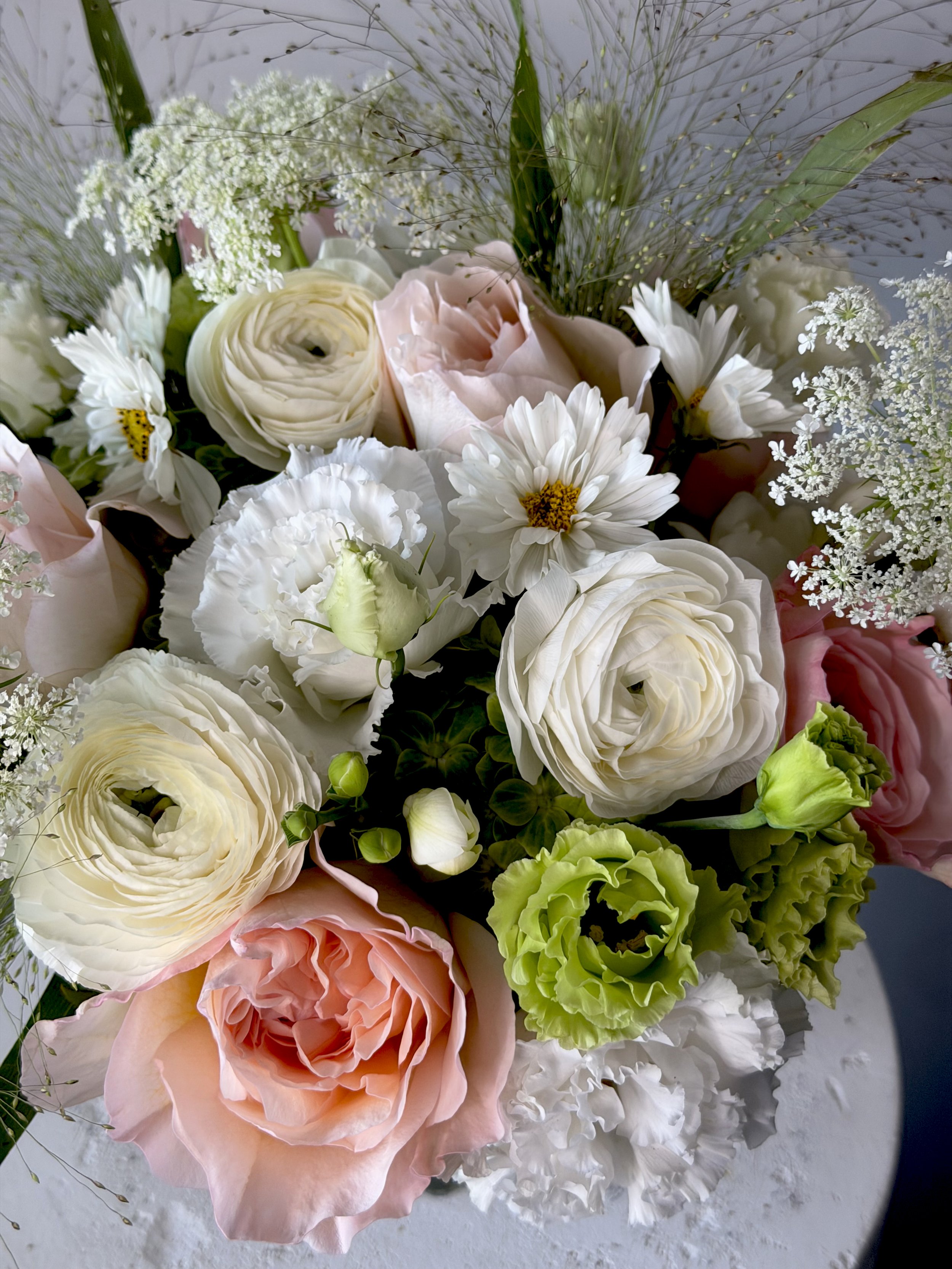
The challenge is creating floral décor that feels impressive without making the room look overdecorated. New York venues already come with strong personalities, and the best floral design works with the architecture instead of fighting it. A crystal-filled ballroom needs a different approach than a converted warehouse in Queens, just as a Central Park-adjacent hotel calls for something different from a waterfront venue on Long Island. Think of flowers as the thread that ties the dress, lighting, tables, ceremony, cake, photographs, and venue together. When that thread is thoughtfully designed, the entire celebration feels intentional from the moment guests arrive.
Why Flowers Set the Tone for a Modern Quinceañera
Walk into any beautifully designed event and notice what your eye sees first. It is usually not the flatware or the chair covers. You notice the overall color, the light, the scale of the room, and almost immediately, the flowers. Floral design has a visual power that few other decorative elements can match because flowers bring together color, movement, texture, fragrance, and natural shape at the same time. For a quinceañera, where the goal is often to create a sense of transformation and celebration, that makes flowers incredibly important.
The best floral designs do more than fill tables. They help tell guests what kind of evening they are about to experience. Cascading white orchids, ivory roses, and touches of crystal can instantly suggest polished New York glamour. Wild-looking garden roses, sweet peas, delphinium, and trailing greenery feel softer and more romantic. Hot pink roses mixed with orange ranunculus and red anthuriums can make the same room feel fashion-forward and energetic. Even before the music starts, the flowers are already telling a story.
Scale matters just as much as flower choice. Imagine a grand ballroom with twenty-foot ceilings and tiny arrangements sitting low in the middle of oversized tables. Even expensive flowers can disappear in that environment. Now picture a smaller restaurant or loft filled with enormous centerpieces that block everyone’s view. Suddenly, what should feel luxurious becomes uncomfortable. Strong quinceañera floral design is about matching the size and energy of the arrangements to the space.
There is also an emotional side that families sometimes underestimate. Flowers appear in the entrance photos, formal portraits, cake-cutting pictures, dances, speeches, and hundreds of guest phone photos. Years later, those images become part of the family’s visual memory of the day. Choosing flowers thoughtfully is not about chasing trends for the sake of Instagram. It is about creating a setting that feels worthy of the moment while still reflecting the personality of the girl being celebrated.
Building a Floral Vision That Feels Personal, Not Generic
One of the easiest ways to end up with forgettable quinceañera décor is to begin with the sentence, “We just want something elegant.” Elegant can mean almost anything. A black-tie Manhattan hotel filled with white orchids is elegant. So is a candlelit garden-inspired celebration with loose peach roses and greenery. Before discussing specific flowers, it helps to define the personality of the event in more visual and emotional terms.
Start with the quinceañera herself. Is she drawn to glamorous fashion, romantic vintage details, modern minimalism, enchanted-garden aesthetics, or bold editorial looks? What colors does she actually like when she is not looking at event photos online? What does her dress look like? What kind of venue has the family chosen? These questions give a floral designer far more useful information than simply showing a folder of random Pinterest images.
A good design concept usually has a few clear words behind it. You might describe the celebration as romantic, airy, and modern, or perhaps dramatic, glamorous, and fashion-forward. Those words become filters for every later decision. If the theme is airy and modern, tightly packed floral balls probably will not feel right. If the celebration is supposed to be dramatic, tiny arrangements with delicate greenery may lack enough visual weight.
Personalization does not have to mean putting the quinceañera’s name on every available surface. Flowers themselves can create identity. Her favorite flower might appear in the bouquet and then subtly repeat throughout the reception. A family with Latin American roots might love using tropical textures in a sophisticated way rather than choosing predictable décor. A girl who loves ballet could inspire graceful, movement-focused arrangements without turning the party into a literal ballet theme. Think of the floral concept like styling an outfit. The most interesting look is rarely created by matching every element perfectly. It comes from choosing pieces that belong together while still having character, contrast, and a few unexpected details.
Choose a Color Palette with Depth
A modern color palette should be more interesting than “pink and gold” or “white and blue.” Those combinations can absolutely work, but the difference between an average floral design and a sophisticated one often comes down to the shades hiding inside those broad color labels. Instead of thinking only about pink, consider blush, dusty rose, mauve, raspberry, ballet slipper pink, or deep berry. Instead of plain white, picture ivory, cream, champagne, pale butter, and soft nude tones working together.
Layering nearby shades creates dimension. A blush quinceañera, for example, can look flat if every rose, napkin, linen, and candle is exactly the same pink. Mix pale blush garden roses with creamy spray roses, dusty mauve flowers, soft green foliage, and perhaps a few deeper accents. Suddenly the palette has movement. The eye travels through the arrangement instead of seeing one solid block of color.
New York celebrations also provide a great opportunity to be bolder. Rich burgundy with cherry red and pale pink can feel dramatic without looking heavy. Lavender mixed with cobalt blue and icy silver feels youthful but sophisticated. Butter yellow, peach, coral, and soft pink can create an almost sunset-like effect. Even black can play a role when it appears through vessels, candles, menus, or table details rather than flowers themselves.
Your venue should influence the palette too. If the ballroom already has burgundy carpet and gold walls, an icy all-blue design may feel disconnected from the surroundings. A clean white loft gives you much more freedom. Rooftop venues often benefit from colors that remain visible against city lights after sunset.
Before committing, look at the palette under both daylight and warm event lighting. Some colors shift dramatically. Pale lavender can read gray under certain lights, while blush flowers may appear much warmer around amber candles. The goal is not to match everything perfectly. It is to build a palette with enough variation that the design still looks rich, layered, and beautiful from every angle.
Mix Romantic Blooms with Modern Texture
Flowers such as roses, peonies, hydrangeas, and orchids remain popular for quinceañeras for a reason. They photograph beautifully, feel celebratory, and instantly bring softness into a room. But using only classic blooms can sometimes make an arrangement feel overly traditional. One of the easiest ways to create a more current New York look is to pair romantic flowers with unexpected textures and shapes.
Picture a centerpiece made from fluffy garden roses and hydrangeas. Pretty? Absolutely. Now add a few stems of sculptural anthurium, delicate sweet peas reaching beyond the arrangement, wispy grasses, or trailing amaranthus. The composition suddenly feels more editorial. The same idea works with greenery. Instead of surrounding flowers with a standard collar of leaves, greenery can be used intentionally through twisting vines, olive branches, ferns, eucalyptus, or almost no foliage at all.
Orchids are especially effective in modern quinceañera designs because their natural shape creates movement. Phalaenopsis orchids can cascade elegantly from tall arrangements, while cymbidium orchids bring stronger color and a slightly more structured appearance. Calla lilies, ranunculus, tulips, delphinium, snapdragons, lisianthus, and sweet peas can all add personality depending on the season and design direction.
Texture can also come from non-floral elements. Glass, mirror, brushed metal, ceramic vessels, stone-inspired containers, candles, fruit, branches, and fabric can all sit beside flowers without competing with them. The trick is restraint. When every centerpiece contains six types of flowers, three metallic finishes, pearls, crystals, feathers, lights, and floating candles, nothing gets a chance to stand out.
Think of your arrangements the way a fashion stylist thinks about clothing. A romantic dress becomes more interesting with a modern shoe or unexpected piece of jewelry. Floral design works the same way. Let the classic blooms create beauty, then use texture to give the celebration its own point of view.
Ceremony Flowers That Feel Grand Without Feeling Staged
The ceremony is one of the most meaningful parts of a quinceañera, yet floral planning sometimes focuses almost entirely on the reception. That is a missed opportunity. Whether the family is holding a church service, a blessing at the venue, or a symbolic ceremony before dinner, flowers can make the moment feel visually distinct from the party that follows. The key is creating significance without turning the ceremony space into a theatrical set.
Church flowers usually benefit from restraint and respect for the existing architecture. Historic New York churches may already contain carved wood, stained glass, ornate altars, stonework, or dramatic ceilings. Rather than trying to cover those features, floral arrangements should support them. Elegant altar pieces, arrangements near the aisle entrance, pew accents, or a beautiful bouquet for the quinceañera may be more effective than filling every available surface.
Venue ceremonies offer more flexibility. An asymmetrical floral arch, modern floral columns, low meadow-style arrangements, or clusters of blooms at different heights can create a focal point without feeling overly formal. The design should look beautiful from the audience’s perspective and in photographs, especially during important moments with parents and family members.
It is also smart to think about how ceremony flowers can be reused. Large arrangements can sometimes move to the reception entrance, stage, sweetheart table, or photo area afterward. This does require planning. Heavy installations cannot magically relocate in five minutes, and some structures are designed specifically for one location. A professional florist can identify which pieces are realistic to repurpose and which should stay in place.
Ceremony flowers should feel emotionally connected to the rest of the event while still giving this part of the day its own atmosphere. If the reception is dramatic and colorful, the ceremony might use a softer version of the same palette. That change creates a natural progression, almost like the opening scene of a movie before the full celebration begins.
Make the Entrance a First Impression
Guests begin forming an opinion of the celebration before they ever see a centerpiece. The entrance tells them what is coming, which makes it one of the smartest places to invest in visual impact. In New York, where guests may arrive through hotel lobbies, elevators, industrial corridors, city sidewalks, or shared venue entrances, flowers can help create a clear transition from the outside world into the celebration.
A strong entrance does not automatically require a giant floral wall. Sometimes two beautifully designed arrangements positioned near a welcome sign are enough. For a larger event, floral arches, sculptural urns, freestanding installations, or flower-covered columns can create a more dramatic reveal. The shape should complement the architecture. A sleek SoHo-style venue might look incredible with asymmetrical floral columns, while a classic ballroom entrance could support fuller arrangements in elegant pedestal vessels.
Consider what guests will actually do in this area. Will they stop to take pictures? Is there a seating chart nearby? Do they need enough space to form a line? A gorgeous installation becomes frustrating if it creates a bottleneck between the elevator and ballroom doors. Practical flow matters just as much as appearance.
Lighting is another major factor. Flowers placed in a dark hallway can look dull no matter how much they cost. Pin-spotting, candles where permitted, or strategically placed ambient lighting can make relatively simple arrangements feel dramatically more luxurious. Mirrors can also amplify flowers without requiring twice the quantity.
The entrance is a great place to introduce the floral language of the celebration. If orchids will appear throughout the room, use a few here. If the color palette includes a surprising deep plum or coral accent, let guests see it immediately. That repetition makes the entire event feel connected. A well-designed entrance should give guests the same feeling as opening a beautifully wrapped gift: curiosity, anticipation, and the sense that something special is waiting inside.
Frame the Ceremony Moment with Purpose
The main ceremony backdrop deserves careful thought because it will appear behind some of the most important photographs of the entire quinceañera. Parents may stand there. Grandparents may join for a blessing. The quinceañera may receive symbolic gifts there, and photographers will capture both wide shots and close portraits. The flowers therefore need to frame people rather than swallow them.
Symmetry once dominated ceremony design, but modern arrangements often feel more natural when the sides are intentionally different. One floral column can sit slightly higher than another, or a curved installation can rise from the floor instead of forming a complete arch. This creates movement and leaves negative space around the quinceañera. The result often feels more stylish in photographs because the flowers look like part of the environment rather than a decorative border pasted around the scene.
Height should be planned around the people involved. An arch that is too low can visually crowd a large ball gown or create awkward lines behind someone’s head. Floor arrangements should sit far enough away that the dress has room to spread naturally. If stairs are involved, petals, foliage, and unstable vessels must stay clear of walking paths. Beauty matters, but nobody wants a floral moment to become a safety problem.
The backdrop also does not have to be made entirely from flowers. Draping, candles, architectural frames, greenery, mirrors, or lighting can provide structure while flowers create focal points. This approach can look more sophisticated and can sometimes make the floral budget stretch further.
Ask one simple question while designing the ceremony: where do you want the eye to go? The answer should usually be the quinceañera herself. Flowers are the frame, not the painting. When the scale, shape, and color all support that principle, the ceremony feels grand while still keeping the emotional focus exactly where it belongs.
Reception Florals That Transform the Room
The reception is where floral design has the most room to play. Guests will spend several hours in the space, moving between dinner, dancing, photos, speeches, and special traditions. That means the décor needs to work from multiple perspectives. It should look impressive when guests first enter, attractive while they are seated, and visually alive once the lights dim and the dance floor fills.
One mistake is treating every surface as an independent decorating project. The entrance gets one style, centerpieces another, the cake table something different, and the stage yet another concept. A stronger reception has rhythm. Certain flowers, colors, shapes, or materials repeat around the room, creating visual continuity. Guests may not consciously notice the repetition, but they feel that everything belongs together.
Variety is still important. A room filled with twenty identical centerpieces can look surprisingly static. Mixing tall and low arrangements often creates more depth. Some tables might feature elevated flowers with open space beneath them, while others use lush low arrangements surrounded by candlelight. Long family tables can have floral runners or grouped bud vases instead of traditional centerpieces.
Think about what guests see beyond their own table too. In a large ballroom, the eye travels upward toward chandeliers, draping, screens, balconies, or ceiling details. Tall floral elements can connect the tables to that larger space. In a smaller venue, keeping arrangements lower can preserve a feeling of openness.
The reception also changes as the evening progresses. Soft flowers may dominate the room during dinner, but once the DJ starts and colorful lighting takes over, those same arrangements become part of a much more energetic environment. Designing for both moods creates a celebration that feels beautiful in daylight, candlelight, and party lighting rather than only during one perfectly staged photograph.
Centerpieces That Look Beautiful from Every Seat
Centerpieces get more attention than almost any other floral element, yet they are also where practical mistakes happen most often. A centerpiece can look stunning in a florist’s studio and become annoying once guests are trying to talk across a table. Height, width, container design, candle placement, and sightlines all matter.
Low centerpieces should generally stay low enough that people can easily see across them. That does not mean they have to feel small. A sprawling arrangement of roses, hydrangeas, orchids, and delicate stems can create a generous visual footprint while remaining below eye level. Tall arrangements work best when the flowers begin well above guests’ heads and the base stays relatively narrow. Clear glass or slim metal stands help maintain open sightlines.
Mixing centerpiece styles can be especially effective at quinceañeras because it makes the room feel dynamic. Imagine alternating tall orchid arrangements with low clusters of garden roses and candlelight. The tall pieces create drama from across the ballroom, while the low pieces give nearby guests a richer view of the flowers. This variation can also help prioritize the budget because not every table requires the same quantity of premium blooms.
Candles deserve their own design conversation. Taper candles create elegant vertical lines, votives add sparkle, and pillar candles bring warmth to larger tables. Venue rules differ, so open flames may require protective glass or may not be permitted at all. High-quality LED candles can still contribute atmosphere when used thoughtfully.
Pay attention to linens and place settings too. A floral centerpiece does not exist in isolation. A soft ivory arrangement on ivory linens may need dark napkins or colored glassware to keep the table from feeling washed out. Deep florals on a black table may benefit from metallic details or clear glass. The most memorable tables are compositions, not collections of unrelated “pretty things.”
Give the Quinceañera’s Table a Signature Look
The quinceañera’s table should feel special without looking disconnected from the rest of the room. Whether she sits at a sweetheart table, with her court, or with close family members, this area naturally becomes a visual focal point. It will appear in countless photographs, especially during speeches, dinner, cake moments, and candid reactions. Giving it a slightly elevated floral treatment is usually worth the effort.
A lush arrangement across the front of the table can look romantic, but it should be designed around the dress. Large gowns need room. Flowers, candles, or greenery that extend too far into the seating area can crush against the fabric or make it difficult for the quinceañera to move naturally. Floor-level floral clusters on either side can sometimes create more impact while preserving that space.
The backdrop behind the table is equally important. If the wall is plain, flowers can help create dimension through asymmetrical installations, floral columns, a framed structure, or greenery mixed with fabric. If the venue already offers a dramatic city view, ornate fireplace, or beautiful architectural feature, keep the flowers more restrained. There is no reason to compete with something the venue is already giving you.
This is also a smart place for premium flowers that might be too expensive to use heavily throughout the room. A concentrated group of orchids, garden roses, peonies in season, or specialty blooms can make the head table feel luxurious without requiring every guest table to use the same costly ingredients.
Lighting finishes the effect. Soft pin-spotting or carefully positioned uplighting ensures the flowers remain visible in photos when the room gets darker. The goal is to create a recognizable visual “home base” for the quinceañera throughout the evening. Guests should naturally know where to look, photographers should have a beautiful background, and the design should feel like an extension of her personal style.
Use Flowers Above Eye Level for Real Drama
Some of the most impressive modern quinceañera designs happen overhead. Suspended flowers, hanging greenery, ceiling installations, and floral chandeliers can completely change how a venue feels because they occupy space guests do not expect to see decorated. In the right New York venue, an overhead installation can turn a basic room into something genuinely memorable.
That impact comes with one important condition: ceiling work must be planned professionally. Hanging installations require proper rigging, venue approval, safe attachment points, and enough installation time. A florist cannot simply arrive with flowers and decide to hang them from a ballroom ceiling. Some buildings allow extensive rigging, while others prohibit it or require approved vendors.
When full floral installations are not practical, similar drama can be created in lighter ways. Greenery suspended over a long table, clusters of delicate hanging blooms, floral hoops, or ceiling structures decorated with a combination of flowers and fabric can provide scale without requiring an enormous quantity of blooms. Lighting can dramatically amplify these designs, especially when warm spotlights or pin spots catch petals and greenery above the room.
Overhead décor works particularly well above dance floors, long family tables, bars, and lounge areas. It visually defines the space. In a large open loft, for example, a suspended floral installation can make the dining area feel more intimate. Above a dance floor, it can create an unforgettable central feature that appears in wide photographs and video.
Do not assume “more flowers” automatically means “more impressive.” Scale can come from shape, movement, repetition, and negative space. Twenty carefully arranged hanging orchid stems may feel more sophisticated than a huge dense block of mixed flowers. The strongest ceiling designs feel as if they belong to the architecture rather than being attached to it as an afterthought.
Floral Design Ideas for Different New York Venue Styles
New York is one of the most interesting places to design a quinceañera because the venues are wildly different. You can celebrate in a historic hotel, glass rooftop, waterfront ballroom, modern restaurant, industrial loft, private club, banquet hall, or converted warehouse without leaving the greater metropolitan area. Each environment changes what the flowers need to accomplish.
A traditional ballroom usually benefits from scale. High ceilings, large chandeliers, patterned carpeting, and wide tables can visually overpower delicate arrangements. Taller centerpieces, layered florals, and stronger focal installations help the décor feel proportional to the room. An industrial space presents the opposite opportunity. Exposed brick, concrete, beams, and large windows already provide texture, so flowers can introduce softness rather than more visual complexity.
Rooftops require special attention to city views. If every table has a massive arrangement directly in front of the skyline, guests may feel like they are looking through a forest. Lower florals or strategically placed tall arrangements can preserve those views. Outdoor terraces also introduce wind, heat, and sun, which affect both flower selection and structural stability.
Banquet halls offer flexibility but may include strong existing décor, such as colored carpet, ornate chandeliers, mirrored walls, or permanent lighting. Instead of pretending those elements do not exist, work them into the plan. A floral palette that looks gorgeous in a white studio may behave very differently in a room filled with warm gold and amber tones.
The venue should never be treated as an empty box unless it actually is one. Walk through it slowly. Look at the walls, ceiling height, entrances, windows, lighting, and awkward corners. Ask where guests will naturally look. Great floral design begins with seeing the room as it truly is and then deciding where flowers can make the biggest difference.
Manhattan Ballrooms and Rooftop Venues
Manhattan quinceañeras often come with a specific visual expectation: polished, sophisticated, and unmistakably New York. That does not mean everything needs to look expensive in an obvious way. In fact, the most refined floral designs often rely on editing. One excellent installation in the right location can make a stronger impression than flowers scattered everywhere without a clear purpose.
Hotel ballrooms can handle grandeur. Tall centerpieces with orchids, roses, delphinium, or hydrangeas can hold their own against chandeliers and high ceilings. Layering tall and low designs creates depth, while mirrored or reflective details can amplify candlelight. If the room contains strong architectural features, such as columns or decorative moldings, flowers can echo their lines rather than covering them.
Rooftop venues demand a lighter hand. The skyline is already décor, and nobody should spend thousands of dollars hiding it. Low centerpieces, sculptural arrangements positioned away from primary views, and modern vessels usually work beautifully. At sunset, transparent glass, candles, and soft-colored flowers can catch the changing light without competing with the city outside.
Logistics are often more complicated in Manhattan than the finished photos suggest. Service elevators may be small, loading times limited, and parking difficult. Large floral arches may need to be assembled in sections rather than transported fully built. Some buildings require certificates of insurance or have strict delivery schedules. These details are not glamorous, but they directly affect what can realistically be created.
When designing for Manhattan, imagine the flowers as part of a luxury fashion shoot. Every element needs a reason to be there. Strong shape, refined color, carefully chosen focal flowers, and thoughtful lighting usually create more sophistication than simply adding volume. The city is already dramatic. The flowers should join the conversation instead of shouting over it.
Brooklyn, Queens, Bronx, and Long Island Spaces
Outside Manhattan, quinceañera venues open up a different set of possibilities. Brooklyn and Queens offer everything from industrial lofts to contemporary event spaces, while the Bronx includes banquet halls, cultural venues, restaurants, and waterfront locations. Long Island adds expansive ballrooms, estates, gardens, and larger venues where floral design can operate on a completely different scale.
Brooklyn lofts are especially good for modern garden-inspired designs. Exposed brick and concrete create natural contrast with soft flowers. Loose roses, flowering branches, vines, and textured greenery can make the room feel romantic without erasing its industrial character. Acrylic stands, black metal frames, and sculptural vessels also work well when the goal is a cleaner editorial look.
Queens and Bronx venues often host large family celebrations, so table count becomes a major design consideration. When you have many guest tables, repeating an expensive centerpiece twenty or thirty times can quickly consume the floral budget. Mixing centerpiece styles, incorporating candles, and creating several strong focal areas may produce a much richer overall result.
Long Island venues can provide more physical space, which is both an advantage and a challenge. A large ballroom may need taller arrangements to avoid feeling empty. Estate and garden venues invite more organic floral concepts, where flowers can look loose and natural rather than perfectly symmetrical. Outdoor areas can also support floral-lined walkways, ceremony meadows, and large entrance installations.
The broader lesson is simple: do not design a “New York quinceañera” as if every venue were the same. A floral concept should respond to its surroundings. When the architecture, neighborhood energy, room proportions, and flowers make sense together, the celebration feels far more authentic than a design copied directly from someone else’s event.
How to Make a Floral Budget Work Smarter
Beautiful quinceañera flowers do not come from spending money evenly across the room. They come from knowing where floral design will be noticed most and concentrating the budget there. This is one of the biggest differences between strategic event design and simply ordering flowers by quantity.
Start with priorities. The entrance, ceremony backdrop, quinceañera’s table, and key reception focal points usually appear in the most photos. These areas often deserve more investment than secondary surfaces guests barely notice. If the budget is limited, you may get a much stronger result from one unforgettable entrance installation and simpler centerpieces than from twenty moderately expensive arrangements that all look the same.
Flower selection also changes cost significantly. Premium blooms, imported varieties, out-of-season flowers, and delicate specialty stems can increase the price quickly. Instead of eliminating them completely, ask the florist to use them as focal flowers. A handful of garden roses or orchids mixed into more accessible seasonal flowers can still create the luxurious feeling you want.
Volume does not always require flowers. Candles, greenery, branches, attractive vessels, fabric, lighting, and carefully designed table settings can occupy visual space without relying on hundreds of additional stems. Long tables can look especially elegant with clusters of bud vases and candles rather than a continuous dense floral runner.
Repurposing is another useful strategy when logistics allow it. Ceremony arrangements may move to the reception, floral columns can sometimes frame the cake later, and entrance flowers may be repositioned near the dance floor. Ask about labor costs before assuming repurposing automatically saves money, because staff may need to remain onsite to move large pieces safely.
Never judge a floral proposal solely by the total number of arrangements. Look at impact. A smart proposal shows where the eye will land, how different areas connect, and which pieces matter most. Good event design is a bit like theater: you do not need to light every inch of the stage equally. You need to direct attention where the important moments happen.
Coordinating Flowers with the Dress, Lighting, and Décor
Flowers are only one part of the visual story, and they look best when they communicate with everything around them. The quinceañera dress, table linens, chairs, invitations, lighting, cake, backdrop, and even the court’s outfits influence how the floral palette appears. That does not mean everything should match. It means the elements should feel intentional together.
Start with the dress because it is often one of the strongest visual features of the celebration. A highly embellished champagne gown may pair beautifully with soft neutral flowers and subtle metallic accents. A bright royal-blue dress could be supported by white, lavender, or deeper blue flowers rather than surrounding the entire room with the exact same shade. Matching the flowers too closely to the gown can flatten the design and make both elements compete.
Lighting can transform color even more dramatically. Warm amber uplighting can make ivory flowers look golden and shift pale pink toward peach. Cool blue lighting can turn white flowers slightly icy. If the DJ or lighting company plans to use saturated purple, blue, or red during dancing, ask how the room will look during dinner versus later in the evening.
Table linens create another large block of color. If the flowers are elaborate, simpler linens often give them room to breathe. If the floral design is intentionally minimal, textured or colored linens can carry more of the visual load. The same balance applies to chargers, menus, napkins, and chair details.
Try viewing the design as one full room rather than approving each item individually. A flower arrangement can be gorgeous on its own and still be wrong for the overall event. The goal is harmony with contrast. Flowers should support the dress without copying it, complement the lighting without disappearing under it, and add personality to the décor without making every surface compete for attention.
Practical NYC Logistics Your Floral Designer Should Plan For
The most beautiful floral concept in the world is useless if it cannot physically enter the venue. New York events come with logistical realities that families do not always see because professional vendors handle them behind the scenes. Elevators, loading docks, street access, parking, union rules, insurance requirements, installation windows, venue restrictions, and breakdown schedules can all affect floral design.
Start with access. A huge floral arch may look effortless in a rendering, but can it fit through the freight elevator? Does the venue allow installation several hours before guests arrive, or does the florist have a tight turnaround after another event? Are large structures permitted? Can anything be attached to walls or ceilings? These questions should be answered before finalizing complex designs.
Temperature also matters. Summer heat can be hard on delicate flowers, especially during outdoor ceremonies or long loading periods. Winter creates different challenges when flowers move between heated indoor spaces and freezing streets. Experienced New York florists plan conditioning, transportation, and setup around these realities.
Candles need venue approval too. Some spaces allow open flame only inside glass, while others require flameless alternatives. Ceiling installations may need professional rigging. Large water-filled arrangements need stable surfaces. Exit paths and fire-safety routes must remain clear. None of these practical requirements should be treated as annoying limitations; they are part of professional event design.
Breakdown is another cost families sometimes overlook. After the celebration, floral structures, rented vessels, stands, candles, and equipment usually need to be collected. Depending on the venue schedule, that can happen very late at night.
A strong florist designs backward from these constraints. Instead of creating a fantasy first and discovering problems later, they understand the venue, build around its rules, and still find ways to create impact. That is where experience becomes valuable. Elegant events look effortless precisely because someone has already thought through all the unglamorous details.
Conclusion: Create a Celebration That Feels Like Her
The best floral design for a New York quinceañera is not necessarily the design with the most flowers, the biggest centerpieces, or the highest price tag. It is the one that feels unmistakably connected to the girl being celebrated. When the palette reflects her personality, the scale fits the venue, and the flowers support the emotional moments of the day, the entire event feels more personal.
Modern quinceañera design gives families far more creative freedom than they once had. You can still embrace traditional roses, soft pinks, glamorous ballrooms, and romantic arches if those elements feel right. You can also choose sculptural orchids, bold tropical blooms, minimalist installations, bright editorial colors, suspended flowers, or garden-inspired arrangements. Tradition and modern design do not have to compete. They can live beautifully in the same room.
The smartest approach is to think about the experience in layers. What do guests see when they enter? What frames the ceremony? What surrounds the quinceañera during dinner? What appears behind the cake? How does the room look when the lights dim and dancing begins? Designing those moments intentionally creates a sense of progression throughout the celebration.
And remember that New York itself already contributes energy, architecture, character, and drama. Your flowers do not need to imitate someone else’s party to make an impression. Work with the venue, build a palette with depth, invest in the areas that matter most, and let the floral designer create moments of surprise.
Years from now, the family may not remember the exact variety of every rose. They will remember walking into the room and feeling that it looked magical. They will remember the photographs, the dress surrounded by flowers, the family gathered together, and the feeling that the celebration belonged completely to her. That is what thoughtful floral design is really meant to accomplish.