Flowers and Fragrance: How Scent Changes the Mood of a Room
Flowers do more than add color to a room. Before you fully notice the shape of a rose or the soft lavender tone of a lilac, fragrance may already be changing the way the space feels. A fresh floral scent can make an ordinary kitchen seem cleaner, a bedroom feel quieter, or a dining room appear more inviting. It works almost invisibly, settling into the background and shaping the atmosphere without demanding attention.
That invisible quality makes floral fragrance in interior design especially powerful. Furniture, paint, lighting, and textiles create the visual identity of a room, but scent gives the space an emotional temperature. A vase of garden roses can make a formal room feel warmer. A few stems of mint and sweet peas can bring lightness to a breakfast area. Jasmine near an open window may create an almost dreamy evening atmosphere, while eucalyptus and herbs can make a home office feel fresher and more focused.
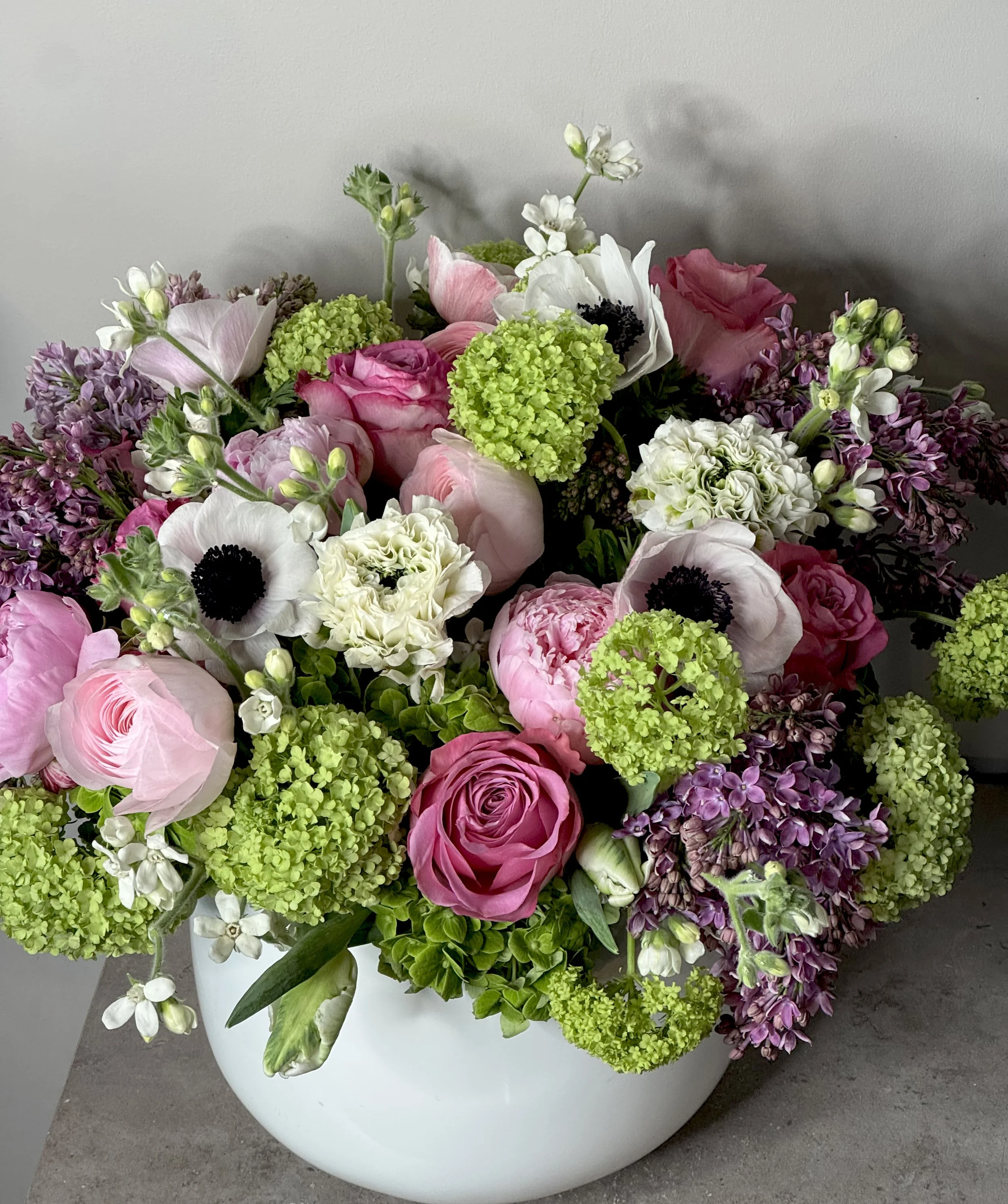
Scent is also personal. One person may associate lilies with elegant celebrations, while another remembers them from solemn occasions. Lavender might suggest calm to one guest and a childhood garden to someone else. This is why styling flowers with fragrance requires more than choosing the strongest-smelling blooms. You need to consider the room, the time of day, the people using the space, and the emotional experience you want to create.
Balance is essential. A subtle floral note can make a room memorable, but an overpowering arrangement can interfere with food, cause discomfort, or compete with candles and perfumes. The goal is not to make guests immediately announce that they smell flowers. The most successful fragrance often reveals itself gradually. Someone enters the room, relaxes slightly, and only later notices the vase of blossoms responsible for the shift.
When flowers are selected and placed thoughtfully, scent becomes part of the architecture of the home. It moves with air, changes as petals open, and gives each room a living quality that artificial décor cannot fully reproduce.
Why Floral Fragrance Matters in Interior Atmosphere
A room is experienced through more than sight. We notice temperature, acoustics, texture, light, and scent, often without consciously separating those sensations. Floral fragrance influences this complete experience because it can make a space feel cleaner, softer, brighter, richer, or more intimate. It is a small design detail with an unusually large emotional reach.
Think about the difference between entering a room with no noticeable scent and walking into one where a vase of lilacs has just begun to open. The furniture has not changed. The walls are the same color, and the lighting may be identical. Yet the second room feels more alive. The flowers introduce movement and seasonality, while the fragrance suggests that something fresh is happening in the space.
Scent can also reinforce the purpose of a room. A home office benefits from flowers that feel crisp and energizing rather than sleepy or heavy. A guest room may need something gentle and universally pleasant. A dining room should smell inviting without allowing fragrance to overpower the meal. The floral selection becomes more successful when it supports how people are expected to feel and behave in the space.
There is also an important difference between a room that smells strongly perfumed and one that smells naturally floral. Artificial fragrance can remain consistent for hours, while fresh flowers change. Their scent may be strongest in warm afternoon light, softer during the morning, and more noticeable as new petals open. That variation creates a sense of life. The room does not smell exactly the same from one day to the next.
Floral fragrance can make a home feel more intentional because it suggests preparation and care. A small arrangement in an entryway tells guests that their arrival was anticipated. Fragrant herbs on a kitchen table make the room feel connected to cooking and daily life. Roses beside a reading chair can turn a forgotten corner into a place where someone wants to pause.
The strongest interior atmosphere is rarely created by one dramatic element. It comes from several quiet choices working together. Fragrant flowers belong in that category. They do not need to dominate the room to change it.
How Scent Connects With Emotion and Memory
Scent has an unusually direct relationship with memory. A fragrance can bring back a place, person, or moment before you have time to explain why. The smell of peonies may recall a family garden. Hyacinths might bring back spring holidays, while roses could remind someone of a wedding, anniversary, or relative who always kept flowers on the table. This emotional speed gives fragrance a special role in the home.
Visual details often require attention. You need to look at a photograph or recognize an object. Scent can work while your attention is elsewhere. You may be walking through a hallway or setting down a bag when a floral note suddenly creates a feeling of familiarity. The memory does not always arrive as a complete story. Sometimes it appears as comfort, energy, sadness, or calm without a clear explanation.
That emotional connection means fragrance should be selected thoughtfully. A flower with a traditionally pleasant scent will not produce the same reaction in every person. Lilies may feel luxurious to one guest but overly formal to another. Carnations may bring warmth because they were always present in a grandparent’s home. Jasmine may feel relaxing to someone who associates it with summer evenings, while another person may find it too intense.
Personal memory can become a useful design tool. Instead of choosing flowers only because they are fashionable, ask which scents make the home feel meaningful. A vase of lilacs during their short season may create more emotional impact than a year-round arrangement of expensive imported flowers. Rosemary and garden roses might remind a family of outdoor meals. Narcissus may signal the true beginning of spring.
Fragrance can also help create new memories. A particular flower used for annual birthday dinners, holiday gatherings, or weekend brunches may eventually become associated with those traditions. Over time, the scent becomes part of the ritual. Guests may not remember the exact table setting, but they remember how the house smelled.
This is one reason flowers can change the mood of a room so effectively. Their influence is not limited to the present environment. They bring layers of history, association, and personal meaning into the space.
Match the Fragrance to the Mood You Want to Create
Choosing fragrant flowers begins with one practical question: how should the room feel? Many people shop by appearance first, selecting flowers that match the paint, furniture, or table linens. Color matters, but fragrance should be chosen with equal care. A visually delicate flower can carry an intense scent, while a large dramatic bloom may have almost no noticeable fragrance.
For a bright, energetic room, look for crisp floral notes with green, citrus-like, or herbal qualities. Freesia, mint, eucalyptus, scented geranium, and certain narcissus varieties can make a room feel alert and fresh. These materials work well in kitchens, breakfast areas, studios, and home offices where you want the atmosphere to feel active rather than sleepy.
For calm, choose softer fragrances that reveal themselves slowly. Lavender, delicate roses, chamomile flowers, and lightly scented sweet peas can create a more peaceful environment. The arrangement should remain small enough that the fragrance does not become heavy. In a bedroom or reading space, one fragrant variety supported by unscented flowers often feels more balanced than a bouquet filled with several competing scents.
Romantic rooms can support richer floral notes. Garden roses, jasmine, tuberose, stock, and peonies can create warmth and intimacy, particularly during the evening. These flowers should be used with restraint because warmth and enclosed air can intensify fragrance. One branch of jasmine may create a stronger impression than an entire vase of heavily scented flowers.
Comforting spaces often benefit from familiar, garden-like scents rather than exotic intensity. Lilacs, carnations, herbs, and seasonal blossoms can make a living room feel relaxed and welcoming. Their emotional effect may come from recognition as much as fragrance strength.
Desired Mood
Suitable Floral Notes
Best Rooms
Fresh and energetic
Freesia, mint, eucalyptus, narcissus
Kitchen, office, entryway
Calm and peaceful
Lavender, sweet peas, delicate roses
Bedroom, reading room
Romantic and intimate
Garden roses, jasmine, stock, tuberose
Dining room, bedroom
Warm and welcoming
Lilacs, carnations, herbs, peonies
Living room, guest room
Clean and understated
Greenery, lightly scented tulips, herbs
Bathroom, hallway
The goal is emotional consistency. A room feels more convincing when its fragrance supports its purpose.
Fresh and Uplifting Flowers for Energetic Rooms
Some rooms need a sense of movement. Kitchens, home offices, studios, and entryways often benefit from flowers that feel clean, crisp, and energetic. Heavy perfume can make these spaces feel slower or more formal, so choose fragrances with green, herbal, citrus-like, or lightly sweet qualities.
Freesia is a strong option for an uplifting arrangement. Its fragrance is fresh and noticeable without always feeling dense, and its curved stems create visual movement. Freesia is available in white, yellow, pink, purple, and orange, making it easy to coordinate with many interiors. A few stems in a simple vase can add enough fragrance for a small kitchen or workspace.
Narcissus and paperwhites can bring brightness during cooler months, but their scent is distinctive and sometimes intense. Begin with a small number of stems, especially in a compact room. Place them near an entryway or window where air circulation can soften the fragrance. Their visual association with spring also contributes to the feeling of renewal.
Herbs can be as useful as traditional flowers. Mint, basil, rosemary, lemon balm, and scented geranium add fragrance when leaves are touched or moved. They are ideal for kitchens because their scent connects naturally with food preparation. A loose arrangement of herbs, tulips, and small white flowers can feel more modern than a formal bouquet.
Eucalyptus provides a clean, recognizable aroma, although it should not be used in enormous quantities indoors. One or two stems can refresh an arrangement and add structure. Too much may overpower more delicate flowers or create a medicinal impression. The same principle applies to strongly scented greenery: a supporting role is usually enough.
Yellow and white flowers often reinforce an uplifting atmosphere visually. Butter-yellow ranunculus, white tulips, green herbs, and a few freesia stems create a palette that feels sunny even on a gray morning. The combination of color and fragrance works together.
Place fresh, energizing flowers where people begin activities. A small arrangement near the coffee maker, desk, or front door can change the first impression of the room. Fragrance becomes a quiet signal that the day is starting and the space is ready to be used.
Calming Floral Scents for Quiet, Restful Spaces
Restful rooms require restraint. A bedroom, reading corner, meditation area, or quiet sitting room should not be filled with fragrance so strong that it becomes impossible to ignore. The best calming floral scents sit near the edge of awareness. They become noticeable when someone moves closer to the arrangement, opens a window, or passes through the room.
Lavender is the most familiar choice for a peaceful atmosphere. Fresh stems bring a softer, greener fragrance than many concentrated lavender products. A small bundle in a ceramic vase can make a bedside table or reading desk feel more grounded. Dried lavender offers longer-lasting scent, but it may shed and can become dusty, so use it in a clean container and refresh it when the fragrance fades.
Sweet peas provide a delicate floral aroma and light visual movement. Their thin stems and ruffled petals make them especially suitable for intimate spaces. They do not need heavy greenery or elaborate styling. A few stems in a small glass vase can create a sense of quiet luxury.
Garden roses vary widely in fragrance. Some have citrus, tea, spice, or traditional rose notes, while others have little noticeable scent. Ask a florist which varieties are fragrant rather than assuming every rose will perfume the room. In a bedroom, one or two open garden roses may be enough.
Chamomile flowers and herbs can add a gentle meadow-like quality. Their small scale works well in loose arrangements with unscented flowers. Jasmine may also feel relaxing to some people, but it can become intense in enclosed rooms. Place it several feet away from the bed and use only a small amount.
Airflow changes the experience. A fragrant arrangement beside a slightly open window may release scent gradually, while the same flowers in a warm, closed room may become overpowering. Bedrooms should be ventilated regularly, particularly when strong flowers are present.
Calm comes from balance, not from filling the room with every flower commonly associated with relaxation. Choose one main scent, keep the arrangement modest, and allow unscented materials to provide shape and color. The room should feel softened, not perfumed.
Romantic Flowers That Create Warmth and Intimacy
Romantic floral fragrance is usually rich, layered, and slightly enveloping. It works well in dining rooms, bedrooms, and small evening gathering spaces where the goal is to create warmth and closeness. The challenge is avoiding a fragrance that becomes so heavy it feels theatrical or competes with food, wine, perfume, and candles.
Garden roses are a natural starting point. Their scent can range from soft and powdery to citrusy, spicy, or deeply traditional. Rather than filling the room with a dozen heavily scented roses, use a few open blooms mixed with unscented ranunculus, lisianthus, or tulips. The arrangement still feels abundant, but the fragrance remains controlled.
Jasmine creates a sensual evening atmosphere, especially when a small flowering vine is placed near an open window or doorway. Its scent travels easily, so one stem may influence an entire room. Jasmine works beautifully with white flowers and dark greenery, creating a design that feels elegant rather than overly sweet.
Tuberose is another intensely fragrant flower. Its creamy white blooms can make a room feel luxurious, but it should be introduced carefully. A single stem in a tall vase may be sufficient for a dining area or bedroom. Several stems in a warm room can quickly dominate every other scent.
Stock offers a clove-like floral fragrance and comes in soft shades such as cream, lavender, blush, and peach. It can create a romantic garden feeling, particularly when combined with roses and loose greenery. Because stock is fragrant, keep arrangements low and small near a dining table.
Peonies are associated with romance through both appearance and seasonality. Their fragrance varies by variety, so select them in person when possible. One fully open peony can perfume a small area and become the visual focus of the arrangement.
Lighting strengthens the effect. Warm lamps and unscented candles make rich floral scents feel more intimate. Avoid fragranced candles in the same room because the combination may become confusing. Romantic styling works best when every element supports one atmosphere: soft light, limited color, natural texture, and fragrance that unfolds gradually rather than arriving all at once.
Comforting Fragrances That Make a Home Feel Welcoming
A welcoming room does not need to smell expensive. It needs to smell familiar, fresh, and cared for. Comforting floral fragrance often comes from flowers people recognize from gardens, family homes, seasonal traditions, or ordinary daily life. The emotional effect is less about luxury and more about ease.
Lilacs are a powerful example. Their scent can immediately suggest spring, open windows, and neighborhood gardens. A few branches in an entryway or living room create a strong sense of season. Because lilacs are highly fragrant, they should be used in moderation and kept away from dining tables where their perfume could interfere with food.
Carnations have a gentle spicy fragrance that is often overlooked. Modern varieties are available in sophisticated shades such as cream, mauve, caramel, pale yellow, and burgundy. Their durability makes them useful in family rooms and kitchens where arrangements may remain on display for several days. A monochromatic bunch can look contemporary while still carrying a familiar garden scent.
Peonies, sweet peas, and garden roses also create warmth because their fragrance feels natural and recognizable. They work especially well in living rooms where people gather for conversation. Instead of one formal centerpiece, divide the flowers into several smaller vases placed on a coffee table, shelf, or sideboard. The scent becomes distributed rather than concentrated.
Herbs add another layer of comfort. Rosemary, mint, thyme, basil, and sage can make a kitchen or dining area feel active and lived-in. Their fragrance often becomes stronger when someone brushes against the leaves, creating small sensory moments throughout the day.
Seasonal branches can make a home feel connected to the landscape outside. Flowering cherry, apple, or quince branches may have a subtle scent, but their visual freshness contributes to the same welcoming atmosphere. The room feels current and responsive to the season rather than permanently styled.
A comforting home fragrance should not appear overly controlled. Slightly loose arrangements, familiar containers, and natural movement often feel more inviting than perfect symmetry. The flowers should suggest that beauty belongs in everyday life, not only during formal events. That sense of ease is what makes guests want to stay.
Choose Seasonal Flowers for a Natural Scent Story
Seasonal flowers create a fragrance story that changes throughout the year. This variation keeps the home from feeling artificially consistent and allows scent to become part of the natural calendar. Spring should not smell exactly like winter, and a summer room can carry different floral notes than an autumn one.
Spring offers some of the most recognizable fragrances. Lilacs, hyacinths, narcissus, sweet peas, lily of the valley, and flowering branches bring freshness after colder months. Many spring flowers are strongly scented, so small arrangements are usually sufficient. A single bunch of hyacinths can influence an entire room. Pair fragrant spring flowers with unscented tulips or ranunculus to create visual fullness without increasing intensity.
Summer supports roses, jasmine, gardenias, lavender, herbs, sweet peas, and flowering vines. Warm air naturally strengthens fragrance, especially near windows and patios. Outdoor arrangements can be more generous because open space disperses scent. Indoors, use summer flowers carefully and keep them away from direct heat.
Autumn fragrance often comes from herbs, foliage, seed heads, scented geraniums, chrysanthemums, late roses, and dried botanical materials. The scent profile becomes greener, spicier, and earthier. Rosemary, sage, and flowering herbs can complement the warmer colors of the season without relying on artificial cinnamon or pumpkin fragrance.
Winter floral scent can be quiet and structural. Paperwhites, narcissus, evergreens, rosemary, eucalyptus, and forced bulbs create a sense of life during colder months. Evergreen branches carry a strong seasonal association, but they can make a room smell like a holiday display if used heavily. Mixing them with white flowers and bare branches creates a more refined effect.
Seasonality also makes fragrance more memorable because certain flowers are available for a limited time. Lilacs feel special precisely because they do not appear naturally all year. Their brief season encourages attention. The same is true of peonies, lily of the valley, and flowering fruit branches.
A natural scent story does not require strict local sourcing, but it benefits from awareness of what is growing and blooming. When the flowers reflect the season outside, the room feels more grounded and authentic. Fragrance becomes part of the home’s relationship with time.
Use Placement to Control How Fragrance Moves
Where flowers are placed can matter as much as which flowers you choose. Fragrance moves through a room with heat, airflow, humidity, and human activity. A strongly scented arrangement beside a heating vent may fill the space quickly, while the same flowers in a cool hallway release fragrance more gradually.
Begin near entry points. A fragrant arrangement in an entryway creates an immediate welcome, but it should not sit directly beside the door where cold drafts or heat can damage the flowers. Place it on a console several feet inside the room. Guests will notice the scent as they enter without standing directly over the arrangement.
Windows can help distribute fragrance. A vase near a gently open window allows air to carry the scent into the room. Strong flowers such as jasmine, lilacs, and stock often benefit from this placement. Avoid intense direct sunlight, which can shorten vase life and make fragrance overly strong during warm hours.
In dining rooms, place fragrant flowers away from plates and serving dishes. A sideboard or console is often better than the center of the table. Guests can still enjoy the atmosphere, but the scent does not interfere with the taste of food. If flowers must sit on the table, choose low-fragrance varieties and keep the arrangement small.
Bedrooms require extra care. Avoid placing heavily scented flowers directly beside the pillow. A dresser across the room or a vase near a window offers a softer experience. People who are sensitive to fragrance may prefer flowers outside the sleeping area entirely.
Bathrooms can support slightly stronger fragrance because the space is used for shorter periods, but humidity may intensify the scent. One small arrangement is usually enough. Kitchens benefit from herbs and fresh green materials placed away from cooking heat.
Movement also releases fragrance. Herbs, scented geraniums, and flowering branches may become more noticeable when people brush past them. Use this quality in hallways or transition spaces, but keep stems within the boundaries of the table so they do not catch on clothing.
Thoughtful placement allows fragrance to circulate instead of concentrating in one uncomfortable cloud. The room feels naturally scented rather than deliberately perfumed.
Style Fragrant Flowers Room by Room
Each room has a different function, scale, and level of activity, so the same fragrant bouquet should not simply be moved from one space to another. Room-by-room styling creates a more balanced home and prevents scent from becoming repetitive or overwhelming.
The entryway can handle a recognizable but controlled fragrance. Lilacs, stock, roses, or seasonal branches create a welcoming first impression. Choose a stable vessel and leave enough space for keys, bags, and other everyday objects. The arrangement should frame the entrance rather than crowd it.
Living rooms benefit from warm, familiar scents such as garden roses, carnations, sweet peas, or peonies. These spaces often have more air volume than bedrooms, so a medium arrangement can work well. Place flowers near a seating area but not directly beside a guest’s face. A coffee table, mantel, or sideboard usually provides enough distance.
In the dining room, fragrance should remain subtle. Use lightly scented roses, freesia, herbs, or small amounts of stock. Strong lilies, tuberose, and gardenias are better placed elsewhere. If the table is small, an unscented centerpiece with a fragrant arrangement on a nearby console offers the best of both worlds.
Kitchens suit herbs, mint, scented geraniums, eucalyptus, and fresh seasonal flowers. These scents feel connected to cooking and cleanliness. Keep arrangements away from fruit bowls, direct heat, and food preparation surfaces.
Bedrooms need the lightest approach. Lavender, sweet peas, or one fragrant rose may create a calming mood, but avoid dense bouquets. A small arrangement across the room is usually more comfortable than flowers on the nightstand.
Bathrooms can use freesia, eucalyptus, herbs, or lightly scented roses. Humidity may intensify fragrance, so begin with fewer stems than you would use elsewhere. Avoid flowers that shed pollen or petals near wet surfaces.
Home offices benefit from crisp, green scents. Rosemary, mint, eucalyptus, freesia, and flowering herbs can make the space feel more alert. Keep the arrangement compact so it does not compete with screens, paperwork, or equipment.
Styling room by room creates variety. The house develops a subtle sequence of scent rather than one fragrance repeated everywhere.
Layer Flowers With Candles, Diffusers, and Home Fragrance
Layering scent can make a home feel sophisticated, but it is also where many interiors become overwhelming. Flowers, candles, diffusers, room sprays, cleaning products, perfumes, cooking aromas, and laundry fragrance may all be present at the same time. Without a plan, even individually pleasant scents can compete.
Begin by identifying the dominant natural fragrance in the room. If a vase contains strongly scented garden roses, jasmine, lilies, or tuberose, let the flowers lead. Use unscented candles and avoid diffusers nearby. The room already has a clear scent identity and does not need another strong layer.
When the flowers are lightly scented, a candle or diffuser can provide a background note. Keep the fragrance families related. Lavender flowers may pair naturally with a soft herbal or woody candle. Roses may work with subtle tea, amber, or green notes. Citrus-colored flowers do not require a citrus candle, but a fresh complementary scent can reinforce the mood.
Avoid literal layering that repeats one fragrance at maximum strength. A rose bouquet, rose candle, rose diffuser, and rose room spray will not necessarily create a richer experience. It may simply become exhausting. Variation creates depth. Natural roses combined with a quiet wood or clean linen note often feel more balanced.
Consider timing. Candles can be lit after dinner or during the evening when flower fragrance becomes softer in cooler air. Diffusers remain constant, so they should be placed farther from fresh arrangements. Room sprays are best used before guests arrive, allowing the initial intensity to settle.
Cleaning products can interfere with floral styling as well. Strong lemon, pine, or bleach-like scents may remain in the room long after surfaces are cleaned. Ventilate before placing flowers so their natural fragrance is not forced to compete.
Scent should move through a home in layers rather than attack from every direction. One room may feature fresh flowers, another a candle, and a hallway a subtle diffuser. This creates discovery and prevents sensory fatigue. The most elegant fragrance design often involves knowing what not to add.
Control Scent Intensity Without Losing Character
A fragrant arrangement does not need to be large to have personality. In fact, the strongest-smelling flowers often work better in small quantities. Controlling intensity allows guests to appreciate the fragrance without feeling trapped by it, and it protects the room’s other sensory elements.
Begin with fewer stems than you think you need. Place the arrangement in the room for several hours, then evaluate it from different distances. Fragrance may become stronger as flowers warm, open, and hydrate. A bouquet that seems subtle immediately after arranging can feel much more powerful the next day.
Mix fragrant flowers with unscented or lightly scented varieties. Garden roses can be paired with ranunculus, tulips, anemones, or foliage. Stock can be combined with lisianthus and carnations. One jasmine stem can move through a design of orchids and greenery. This approach creates visual abundance without multiplying fragrance.
Room size matters. A small bathroom or bedroom may need only one fragrant bloom, while a large living room can support a fuller arrangement. High ceilings and open doors allow scent to disperse. Closed rooms with warm air hold fragrance more intensely.
Temperature also affects perception. Flowers placed in direct sun, near a radiator, or close to kitchen heat may release fragrance more quickly and fade sooner. Keep them cool and out of harsh light. Air circulation should be gentle; strong vents can dry the petals and spread scent unevenly.
Remove flowers as they age. Some blooms develop a heavier or less pleasant smell near the end of their vase life. Regularly check the arrangement, discard declining stems, clean the water, and recut the remaining flowers. Freshness is part of fragrance quality.
You can also divide one bouquet among several rooms. Instead of concentrating ten fragrant roses in the living room, place three in the entryway, three in the living room, and two in a bedroom. Each space gains character without becoming overloaded.
Control does not make fragrance less expressive. It gives the scent room to breathe. A restrained arrangement often feels more memorable because people can approach, notice, and move away naturally.
Consider Allergies, Pets, and Fragrance Sensitivities
Beautiful flowers should not make a room uncomfortable or unsafe. Before introducing strongly scented arrangements, consider the people and animals who use the space. Fragrance sensitivity, asthma, allergies, migraines, and pet safety can all influence which flowers are appropriate.
Strong scent is not the same as an allergy, but it can still cause discomfort. Lilies, hyacinths, gardenias, jasmine, tuberose, lilacs, and stock may trigger headaches or irritation in sensitive individuals. When hosting guests, choose lighter flowers unless you know their preferences. A large fragrant bouquet in a dining room or guest bedroom may feel generous to one person and overwhelming to another.
Pollen is another concern. Lilies can release visible pollen that stains linens, furniture, and clothing. Florists often remove the pollen-bearing anthers, but sensitive households may prefer to avoid lilies completely. Flowers with heavy pollen or shedding materials should be placed away from food and frequently touched surfaces.
Pet safety requires specific attention. Some common flowers and foliage can be harmful to cats, dogs, or other animals if eaten. Lilies are especially dangerous for cats, and even small exposures may be serious. Because pet risks vary by species and plant, verify every unfamiliar flower with a reliable veterinary source before bringing it into the home. Keep arrangements out of reach, but remember that fallen petals and vase water can also create exposure.
Vase water may contain bacteria, flower food, sap, or plant material. Pets should never be allowed to drink from floral containers. Use stable, heavy vessels that cannot be knocked over, and clean spilled water immediately.
Guest rooms should remain flexible. If you are uncertain whether a visitor is sensitive to fragrance, use low-scent flowers and ask before placing an arrangement near the bed. Beauty should feel hospitable, not imposed.
A thoughtful floral plan recognizes that scent is optional. The atmosphere of a room can still be created through color, form, and texture. Choosing safety and comfort over fragrance intensity does not weaken the design. It shows expertise and care.
Choose Low-Fragrance Flowers When Scent Is Not the Priority
Sometimes the visual beauty of flowers matters more than their fragrance. Dining tables, offices, healthcare environments, guest rooms, and homes with sensitive occupants may need arrangements that offer color and texture without a noticeable scent. Fortunately, low-fragrance flowers can still create rich, expressive designs.
Tulips are a versatile option. Most have little noticeable fragrance, and their naturally curved stems add movement. They work in minimal single-variety bouquets or loose seasonal arrangements. Ranunculus also provides layered texture without filling the room with perfume. Its wide color range makes it useful for romantic, bright, or neutral palettes.
Anemones create a strong graphic effect through their dark centers and delicate petals. They are excellent for modern arrangements and generally do not dominate a room with scent. Lisianthus offers a softer, rose-like appearance, while many orchids provide sculptural beauty with limited fragrance. Orchid scent varies by variety, so confirm before purchasing.
Hydrangeas create fullness and strong color. They need consistent hydration, but they are useful in large rooms where you want visual impact without heavy perfume. Dahlias, zinnias, many chrysanthemums, and numerous carnation varieties can also provide shape and color with relatively restrained fragrance.
Foliage should be selected carefully because some greenery is highly aromatic. Eucalyptus, rosemary, mint, and scented geranium may be more fragrant than the flowers themselves. Choose simple leaves, branches, or nonaromatic greenery when a low-scent design is essential.
Low fragrance does not mean no atmosphere. Color affects energy, shape influences style, and movement creates emotion. A bowl of white tulips can make a room feel calm. A vase of yellow ranunculus can brighten a kitchen. Burgundy dahlias may create depth and drama without changing the scent of the room.
These flowers are also useful when candles, food, or another home fragrance should remain dominant. The arrangement contributes visually without creating competition. A skilled design does not require every sense to be stimulated at once. Sometimes visual restraint and clean air create the most comfortable and sophisticated room.
Conclusion
Flowers can change the mood of a room before anyone consciously notices their color or shape. Their fragrance moves through the air, connects with memory, and gives a space an emotional quality that furniture and décor cannot create alone. A room may feel brighter, calmer, more romantic, or more welcoming simply because the right flowers are present.
The key is intention. Choose fragrance according to the purpose of the room rather than selecting the strongest-smelling bouquet available. Kitchens and offices often benefit from fresh herbal notes. Bedrooms need soft, restrained scents. Living rooms can support familiar garden flowers, while dining spaces require particular care so fragrance does not interfere with food.
Placement gives you control. A fragrant arrangement on a sideboard may influence the dining room without sitting directly beside guests. Flowers near an open window can release scent gradually. One jasmine branch in an entryway may be more effective than a large bouquet crowded into a small bedroom.
Seasonality adds emotional depth. Lilacs signal spring, roses suggest early summer, herbs bring warmth to autumn, and evergreens create structure during winter. These changing scents help the home feel connected to the world outside.
Balance remains essential. Mix fragrant flowers with low-scent varieties, begin with fewer stems, and allow the arrangement to develop over time. Avoid combining powerful flowers with heavily scented candles, sprays, and diffusers. Remove aging blooms and refresh the water so the fragrance remains clean.
Safety and comfort should guide every decision. Consider allergies, sensitivities, pets, children, and room size. A fragrance-free or low-scent arrangement can still be beautiful and emotionally expressive.
The best floral fragrance is not necessarily the most noticeable. It is the scent that belongs in the room. It supports the light, purpose, season, and people using the space. When those elements align, flowers stop feeling like decoration placed on a table. They become part of how the room lives and how people remember being there.