Bridal Shower Flower Ideas That Feel Stylish, Not Predictable
Bridal shower flowers have a difficult job. They need to make the celebration feel special without turning the room into a miniature wedding reception. They should look romantic without becoming overly sweet, fashionable without appearing designed for social media alone, and elegant without making guests afraid to touch anything. That balance is exactly where the most interesting bridal shower flower ideas begin. Instead of repeating familiar formulas—tight pink rose arrangements, oversized hydrangea balls, or flower walls covered in artificial greenery—modern hosts are creating floral designs that feel more personal, artistic, and connected to the setting.
A stylish bridal shower does not need hundreds of blooms. It needs a clear point of view. One sculptural arrangement near the entrance can create more atmosphere than a dozen generic centerpieces. A row of mismatched bud vases can feel more refined than a table crowded with identical bouquets. Even a simple combination of tulips, branches, and herbs can look sophisticated when the color palette, vessel, and proportions have been considered carefully.
The real secret is to stop treating flowers as an accessory added after the invitations, linens, and menu have already been selected. Flowers are part of the visual language of the event. Their colors affect how the tableware looks. Their shapes influence whether the room feels formal or relaxed. Their fragrance can enhance the experience or overwhelm it.
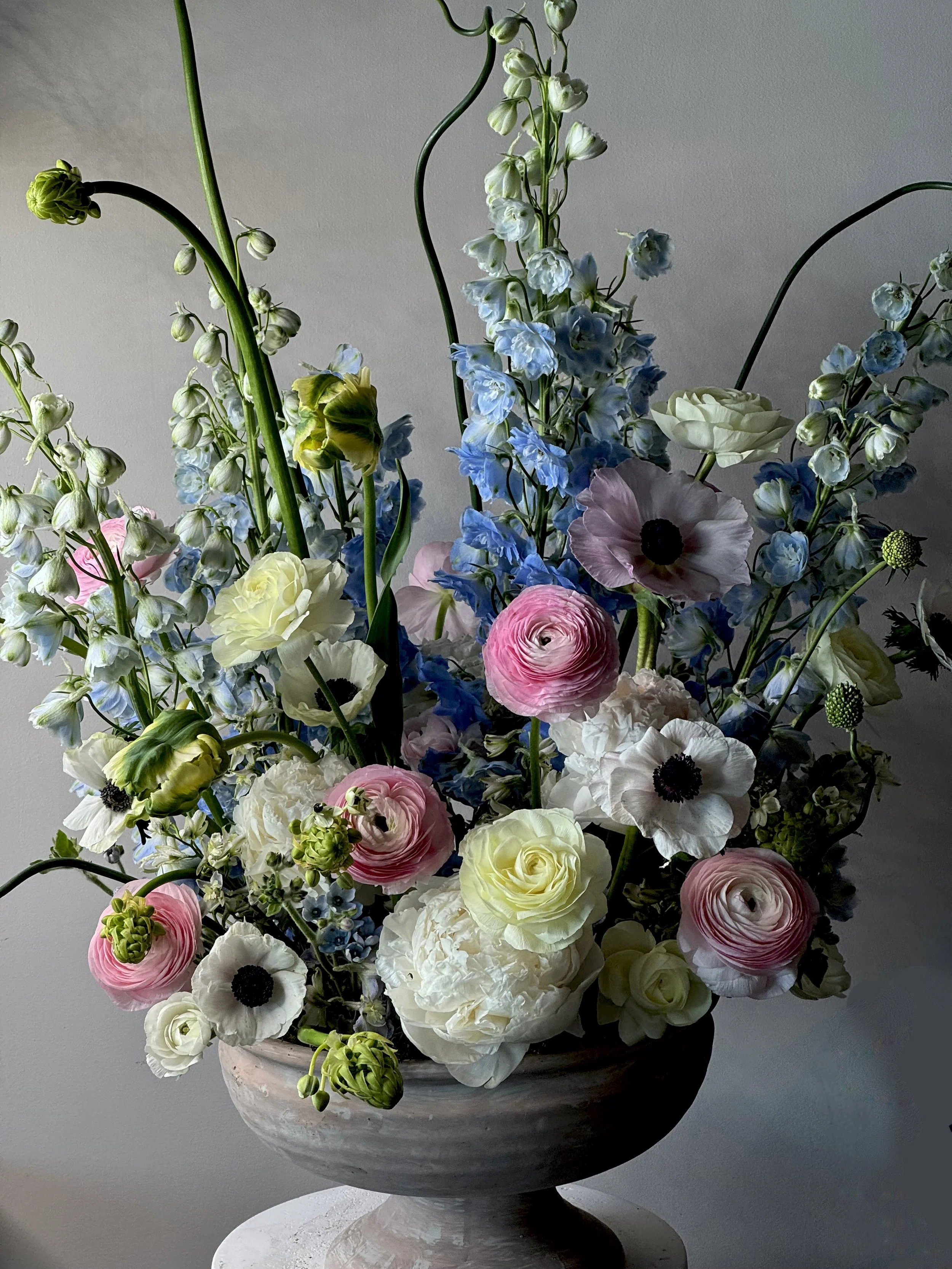
The freshest bridal shower designs borrow from gardens, fashion, interiors, and contemporary art rather than relying on obvious bridal symbols. They leave room for movement, texture, and a little imperfection. The result feels less like a package ordered from a catalog and more like a celebration created specifically for one bride.
Why Traditional Bridal Shower Flowers Can Feel Dated
Traditional bridal shower flowers are not automatically unattractive. White roses, blush peonies, hydrangeas, and baby’s breath can all look beautiful when they are handled thoughtfully. The problem appears when those flowers are arranged in the same predictable combinations, placed in the same mirrored containers, and surrounded by matching decorations that leave no room for personality. Guests may recognize that the room is pretty, but they may not remember anything distinctive about it once the celebration ends.
One reason conventional arrangements can feel dated is their dependence on perfect symmetry. Tight, rounded centerpieces were once associated with formality and luxury, but contemporary floral design tends to favor movement and negative space. Modern arrangements allow stems to lean, branches to extend, and individual flowers to remain visible. The eye has somewhere to travel. The flowers feel alive instead of compressed into a decorative ball.
Predictable color choices create a similar problem. When blush flowers are paired with blush napkins, blush menus, rose-gold flatware, and pink desserts, the room can lose dimension. Nothing stands out because every surface repeats the same idea. A more stylish approach introduces contrast. Blush may be grounded with tobacco brown, softened with cream, or refreshed with pale blue and botanical green.
The language of the celebration has also changed. Many brides want gatherings that reflect their tastes rather than a traditional idea of femininity. They may love architectural flowers, deep colors, wild garden textures, minimalist ceramics, or unusual foliage. A bridal shower can still feel warm and romantic while incorporating those elements.
The goal is not to reject every classic flower. It is to use familiar blooms in less familiar ways. White roses can be paired with twisting branches and olive foliage. Baby’s breath can be arranged in airy clouds rather than compact bunches. Hydrangeas can be mixed with delicate grasses and sculptural stems. Style comes from composition, not novelty alone.
Start With an Atmosphere Instead of a Theme
Themes can be helpful, but they can also make a bridal shower feel like a collection of matching props. Once a host chooses “garden party,” “bride in bloom,” or “love in full flower,” it becomes tempting to place the phrase on signs, napkins, favors, and desserts. The flowers then become literal decorations supporting the theme instead of creating a genuine atmosphere. A more sophisticated planning process begins by asking how the event should feel.
Perhaps the goal is to create a relaxed lunch that feels like an afternoon in an English garden. The floral design might feature sweet peas, foxglove, garden roses, herbs, and loose branches arranged in aged stone vessels. A shower inspired by a contemporary art gallery could use calla lilies, anthuriums, orchids, and tall grasses with clean-lined ceramics. A cozy dinner in a private dining room might call for low arrangements in deep berry, caramel, cream, and plum, surrounded by warm candlelight.
Atmosphere gives the designer more creative freedom than a strict theme. It allows flowers, tableware, lighting, and food presentation to work together without requiring every element to match. A linen does not need to feature a floral print simply because flowers are central to the décor. A plain oatmeal tablecloth may actually make the arrangement look more dramatic.
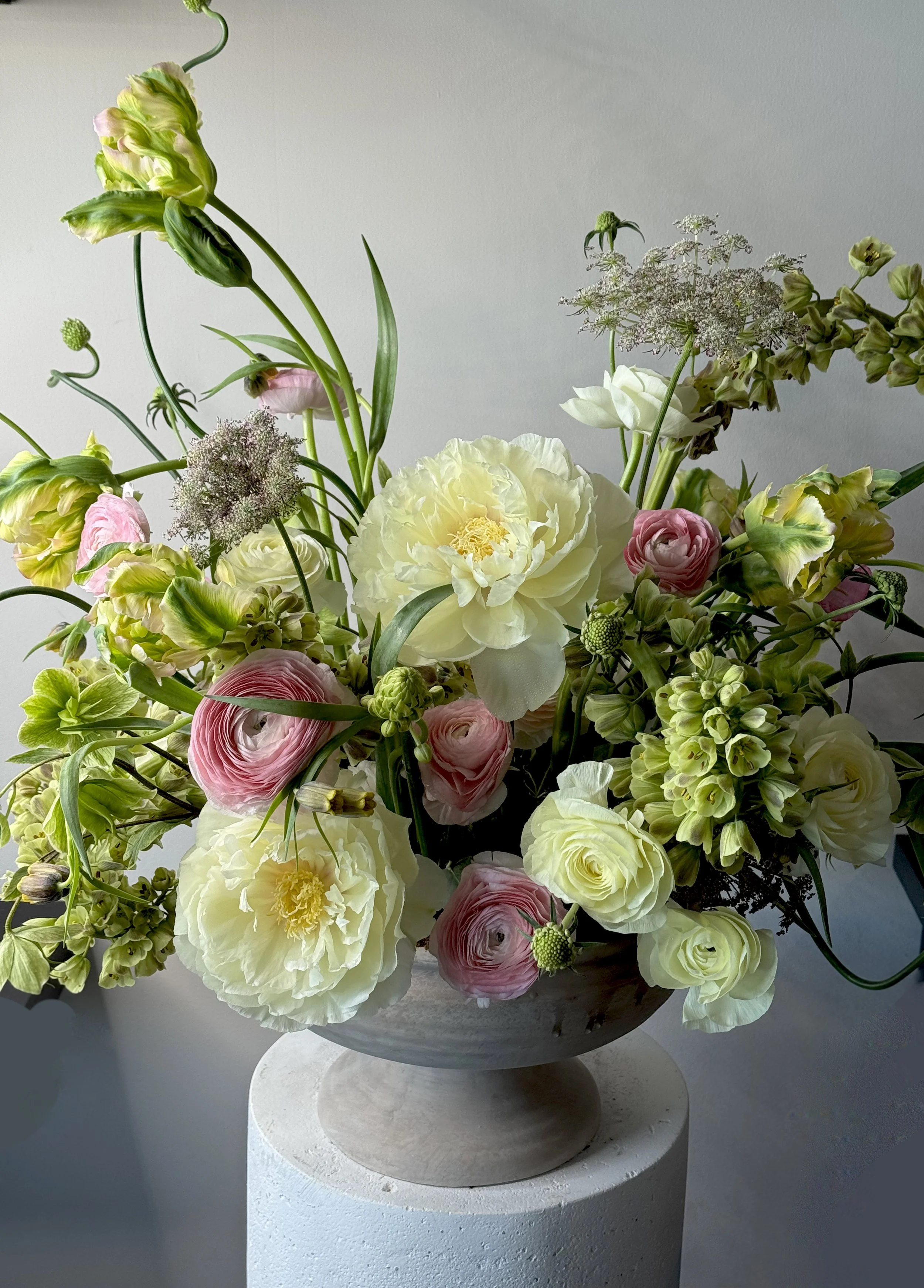
Begin with three descriptive words. “Airy, romantic, and natural” will lead to different decisions than “bold, artistic, and intimate.” Those words can guide the shape of the arrangements, the density of the flowers, the color palette, and the choice of vessels.
It also helps to consider the bride’s everyday style. Does she prefer tailored clothing or flowing silhouettes? Is her home colorful or neutral? Would she choose an abundant bouquet or a single dramatic stem? Translating those preferences into floral design creates a celebration that feels recognizable to her. That recognition is far more meaningful than following a theme simply because it is currently popular.
Choose a Modern Color Palette With Personality
A memorable bridal shower palette usually contains more nuance than a single dominant color. Instead of choosing “pink flowers,” think in terms of undertones, contrast, and visual temperature. A warm palette could combine pale apricot, dusty rose, caramel, cream, and olive. A cooler design might include lavender-gray, soft blue, white, and silvery green. Even a mostly neutral arrangement becomes more interesting when ivory, sand, champagne, and pale brown are layered together.
Modern palettes often work because they include one unexpected note. Butter yellow can energize an otherwise neutral table. Rust can give blush flowers more maturity. A small amount of burgundy can sharpen a soft lavender arrangement. These contrasts prevent the design from becoming overly coordinated.
The venue’s existing colors should influence the decision. A room with dark wood, patterned carpet, and warm lighting may need stronger floral tones to remain visible. A bright space with white walls and large windows can support extremely subtle differences between cream, pale peach, and beige. Linens matter too. White flowers against a white tablecloth may disappear, while the same arrangement can look rich against taupe, sage, or soft gray.
Floral Direction
Main Colors
Best Supporting Materials
Overall Feeling
Warm Modern
Apricot, cream, clay, olive
Natural linen, amber glass, brass
Inviting and refined
Cool Romantic
Lavender, pale blue, white, sage
Gray linen, silver, clear glass
Airy and graceful
Graphic Neutral
Ivory, sand, black, green
Matte ceramics, dark candles
Clean and editorial
Garden Color
Peach, yellow, lilac, fresh green
Woven textures, pale wood
Joyful and relaxed
Moody Elegant
Plum, mauve, caramel, cream
Velvet ribbon, smoked glass
Intimate and luxurious
Avoid repeating every floral color throughout the entire room. The arrangement should contain the most developed version of the palette, while stationery, napkins, and desserts use selected accents. This creates depth and keeps the setting from looking like a coordinated retail display. Color should connect the event, not flatten it.
Select Flowers for Shape, Texture, and Movement
Choosing bridal shower flowers by color alone often leads to arrangements that feel one-dimensional. Two flowers may share the same shade but behave completely differently within a design. A rose creates a rounded, layered focal point. A tulip bends and continues to move after it has been arranged. Delphinium adds vertical height. Sweet peas flutter around the edges. Calla lilies create clean, sculptural lines. When these shapes are combined intentionally, the arrangement develops rhythm.
A strong floral composition usually includes several roles. Focal flowers draw the eye. Supporting blooms build volume. Line flowers create height or direction. Textural elements add detail, and foliage connects the design. Not every arrangement needs all five categories, but thinking in these terms prevents the flowers from becoming an undifferentiated mass.
Texture is especially useful in a restrained color palette. An all-white arrangement can still feel complex when it contains ruffled garden roses, delicate cosmos, smooth calla lilies, lacy Queen Anne’s lace, and glossy foliage. Each surface catches light differently. The design becomes visually rich even without strong color contrast.
Movement gives flowers their emotional quality. An arrangement with curved stems and extending branches often feels natural and relaxed. A design built from upright flowers and clean lines feels more architectural. Neither is better; the right choice depends on the mood and venue.
Hosts should also remain flexible about exact varieties. Flowers are agricultural products, and their availability, size, and color can change. Requesting a feeling—such as loose spring texture in cream, lavender, and soft green—gives the florist room to choose the strongest seasonal material. Insisting on one exact rose seen in an edited photograph may increase the cost and limit the final design.
The most stylish arrangements do not appear to contain every beautiful flower available. They feel edited. Each bloom has a purpose, and every shape contributes to the composition rather than competing for attention.
Create Centerpieces That Encourage Conversation
A bridal shower centerpiece should improve the table, not divide it. Guests often arrive from different parts of the bride’s life, and the meal gives them a chance to meet, exchange stories, and become comfortable with one another. A tall arrangement positioned directly between two guests works against that experience. Even a beautiful centerpiece becomes frustrating when people must lean around it to hear a conversation.
Low arrangements are not the only solution. Tall designs can work when the floral material begins well above eye level and the base remains narrow. Elevated arrangements are most successful in large rooms with high ceilings, where they help fill vertical space. For intimate showers, however, low compotes, small bowls, or grouped bud vases usually create a more relaxed table.
Proportion is critical. A centerpiece photographed on an empty table may look perfectly scaled, but the setting will also need plates, glassware, napkins, menus, serving dishes, and perhaps favors. The florist should know the width and shape of the table before designing the arrangement. A narrow restaurant table may need compact pieces, while a wide round table can support a broader centerpiece.
Asymmetrical centerpieces often feel fresher than perfect domes. One side may feature a reaching branch, while the other contains a lower concentration of flowers. Negative space allows individual stems to remain visible. The arrangement feels balanced without looking mechanically even.
Long tables benefit from rhythm rather than repetition. A series of small arrangements, candles, and individual stems can lead the eye down the table. Every section does not need to be identical. Slight differences make the setting feel collected and natural.
Consider conversation when choosing fragrance as well. Strongly scented flowers placed directly beneath guests’ noses can interfere with food and make sensitive attendees uncomfortable. Centerpieces should participate quietly in the meal. Their job is to create beauty around the conversation, not become the main subject of it.
Use Bud Vases Without Making the Tables Look Sparse
Bud vases are popular because they are flexible, easy to repurpose, and naturally suited to conversational tables. Yet simply placing a few small bottles along a table does not automatically create a finished design. Without enough variation in height, shape, flower type, and spacing, bud vases can look like leftover stems distributed at the last minute. The difference between sparse and stylish lies in composition.
Begin by treating the vases as a group rather than individual decorations. Clusters of three or five usually feel more intentional than evenly spaced single vessels. Within each cluster, combine different heights while maintaining a common material or color. Clear glass can keep the arrangement light. Amber or smoky glass adds warmth. Small ceramic vessels create a more substantial, handcrafted feeling.
The flowers should also vary. One vase may hold a curved tulip, another a small cluster of ranunculus, and another a delicate branch or textural stem. Repeating a few key varieties across the table creates continuity, while the individual combinations keep the design from feeling mechanical.
Spacing matters. Bud vases should create a visual path without filling every inch. Leave breathing room around place settings and serving pieces. On a long table, candles or small pieces of fruit can bridge the gaps, but those details should support the floral story rather than introduce a competing theme.
Scale can be introduced through one or two slightly larger arrangements. A table made entirely of tiny pieces may lack a focal point. Placing a low compote near the center, then extending bud vases outward, gives the design a clear visual hierarchy.
Bud vases are also practical after the event. They can be offered to guests, moved to the gift table, or taken home by the bride. When they are planned as a complete composition rather than a budget shortcut, they can feel modern, intimate, and remarkably elegant.
Design One Statement Floral Moment
One memorable floral installation can define an entire bridal shower. It gives guests an immediate sense of arrival, provides a natural location for photographs, and allows the rest of the décor to remain restrained. The statement does not need to be a traditional flower wall. In fact, the most interesting installations often respond directly to the architecture of the venue.
A floral arrangement climbing one side of a fireplace can emphasize the room’s height and character. Branches suspended above a long table can create a garden-like canopy without occupying dining space. A sculptural floor arrangement near the entrance can welcome guests with movement and color. Flowers arranged around an existing doorway, staircase, bar, or set of windows may look more integrated than a freestanding backdrop brought into the room.
The installation should have a clear reason for being there. A floral display behind the bride’s chair can frame gift opening, but it should not make her look trapped inside a decorative arch. A photo area should have enough space for groups to stand comfortably and should be positioned where the light is flattering. A dessert-table installation needs to complement the cake rather than compete with it.
Scale must match the venue. A modest private room may be overwhelmed by an enormous wall of flowers, while a large loft needs more height and width to create impact. Negative space can make a statement piece feel more modern. Flowers do not need to cover every visible section of the structure. A concentrated sweep of blooms combined with exposed branches or open framework often looks more artistic.
Discuss setup requirements with the venue early. Installations may require wall protection, floor coverings, ladders, additional labor, or specific delivery windows. A beautiful statement moment depends on invisible planning. When those logistics are handled well, the flowers look as though they naturally belong in the space.
Match the Flowers to the Venue
Flowers should respond to the room around them. A design that looks charming in a garden may feel lost in an industrial loft, while sleek orchid arrangements can appear cold inside a cozy historic home. Matching the floral style to the venue creates harmony and often reduces the amount of decoration required. When the arrangements belong to the setting, the architecture does part of the work.
In a traditional home or historic inn, garden roses, sweet peas, flowering branches, and loose foliage can echo decorative moldings, woodwork, and softer furnishings. A contemporary restaurant may call for cleaner vessels, fewer varieties, and stronger shapes. Calla lilies, anthuriums, tulips, or orchids can look especially effective against simple walls and modern furniture.
Outdoor venues require a different kind of thinking. The flowers need enough scale to remain visible against the surrounding landscape. Tiny arrangements may disappear on a lawn or terrace, even if they looked substantial in the studio. At the same time, competing with the natural setting is rarely necessary. A few large, well-placed pieces can frame the view while smaller table flowers provide intimacy.
Color is influenced by the room as well. Dark walls absorb pale arrangements, particularly in evening light. Bold or warm tones may photograph better in those conditions. In bright white spaces, extremely colorful flowers can become the dominant visual element, so a more limited palette may feel sophisticated.
Existing décor should be considered before ordering containers or candles. If the venue already has patterned chairs, colored glassware, or dramatic lighting, the flowers may need to be quieter. If the room is nearly empty, the floral design can introduce more texture and personality.
The goal is not to imitate the venue. It is to create a conversation between the setting and the flowers. When they respond to one another, the entire event appears more intentional.
Let the Season Guide the Floral Design
Seasonal flowers give a bridal shower a natural sense of time and place. They also allow the event to feel current without depending on decorative trends. Spring tulips and flowering branches communicate freshness. Summer cosmos and garden roses create abundance. Autumn dahlias and textural foliage bring depth. Winter hellebores, ranunculus, and sculptural branches offer quiet elegance.
Spring showers benefit from flowers that appear to be waking up. Tulips, anemones, sweet peas, lilacs, narcissus, muscari, and flowering quince can create light arrangements with graceful movement. These blooms are especially beautiful when arranged loosely, allowing their natural curves to remain visible.
Summer provides access to a broad range of garden flowers, including roses, delphinium, hydrangeas, cosmos, zinnias, lisianthus, and snapdragons. Heat becomes a practical concern, particularly for outdoor events. Delicate varieties should remain shaded and hydrated, while containers must be stable enough to handle wind.
Fall does not require orange flowers or harvest-themed decorations. Muted mauve, caramel, cream, plum, and soft rust can create a mature seasonal palette. Dahlias, chrysanthemums, berries, seed heads, and foliage provide strong texture without making the event feel like a Thanksgiving table.
Winter floral design can be warm and romantic. Layered whites, ivory, pale beige, evergreen accents, and dark branches create depth. Candlelight becomes especially effective, though open flames must be placed safely. A small amount of deep red, plum, or chocolate brown can prevent pale arrangements from disappearing in dim rooms.
Seasonality should guide the design rather than restrict it. Many flowers are available beyond their natural local season through global sourcing, but requesting the best material available at the time usually improves quality. The event will feel more authentic when the flowers acknowledge the world outside the venue.
Layer Flowers Into the Smallest Event Details
Large centerpieces create immediate impact, but small floral details often make a bridal shower feel genuinely considered. A single bloom tied to a place card, a tiny arrangement in the powder room, or a few carefully placed stems near the dessert display can connect different areas of the event without requiring major installations. These details work best when they feel purposeful rather than added everywhere simply because flowers are available.
Place-setting flowers should be small enough to avoid interfering with plates and glassware. A sprig of rosemary, a miniature rose, or a single sweet pea can be tied to a napkin with silk ribbon or simple twine. The material should be clean, secure, and free of anything that could stain the linen. Highly fragrant stems may be better avoided directly beside food.
The bar offers another opportunity. A low arrangement can soften a service area without blocking staff. Cocktail garnishes may echo the floral palette through citrus, herbs, or edible flowers, but decorative flowers should never be placed in drinks unless they have been confirmed as food-safe and properly sourced.
Cake flowers require similar care. Florist-grade blooms are not automatically edible, and stems should not be inserted directly into a cake without protective preparation. Coordination between the baker and florist is essential. Sometimes a small arrangement placed beside the cake creates the same visual effect with fewer safety concerns.
Flowers can also appear on welcome signs, menus, chair backs, or favor displays. Restraint keeps these moments elegant. When every sign and surface receives a floral accent, the design loses hierarchy. Choose two or three areas where smaller details will be noticed.
These touches act like punctuation in a sentence. They guide the guest experience and connect the visual story, but they do not need to shout. Their charm comes from discovery.
Keep Scent, Safety, and Guest Comfort in Mind
A floral design can look perfect and still create an uncomfortable guest experience. Strong fragrance, shedding pollen, unstable vessels, or oversized arrangements can quickly distract from the celebration. The most professional bridal shower designs consider how flowers behave in the room, not simply how they appear in photographs.
Fragrant flowers should be selected carefully. Lilacs, hyacinths, lilies, stock, tuberose, and some garden roses can produce a noticeable scent. In a large, well-ventilated room, a few fragrant stems may feel lovely. In a small private dining area, they may overpower the meal or trigger headaches and allergies. Using scented flowers near the entrance rather than on dining tables can provide atmosphere without overwhelming guests.
Pollen is another concern. Open lilies can stain linens, clothing, and furniture. Florists often remove the anthers, but families with severe sensitivities may prefer to avoid the flower entirely. Dried grasses and loose botanical materials may also shed, making them unsuitable near food.
Vessels need stability. Tall, narrow containers can tip when guests move chairs or reach across the table. Outdoor arrangements require additional weight and secure mechanics. Candles should remain clear of flowers, trailing greenery, sleeves, and hair. Battery-operated candles may be a better choice in venues with flame restrictions.
Toxicity matters when children or pets will attend. Many common flowers and foliage varieties are not safe to eat. Arrangements should be positioned where young guests cannot pull them apart, and petals should not be scattered on food surfaces.
Sightlines remain part of comfort as well. Guests should not need to rearrange the centerpiece to speak with someone across the table. Good floral design feels effortless because these practical issues have already been solved. Beauty works best when no one has to struggle around it.
Spend the Floral Budget Where It Matters
Bridal shower flower costs can vary dramatically, and the number of stems is only one part of the price. Premium varieties, seasonal availability, arrangement size, vessel rentals, delivery distance, setup labor, installations, and breakdown services all affect the final proposal. Understanding those elements helps hosts make better decisions instead of comparing quotes based only on the number of centerpieces.
Begin by identifying the moments that matter most. If the entrance and photographs are priorities, invest in one strong statement arrangement and simplify the tables. If the celebration centers on a long lunch, direct more of the budget toward centerpieces and place settings. A private dining room may already have enough visual character to require only a few carefully positioned pieces.
Do not divide the budget evenly across every surface. Ten undersized arrangements often create less impact than one large design supported by several smaller pieces. Visual hierarchy makes a room feel complete. Guests notice the strongest moments and perceive the rest of the design as connected to them.
Flower selection also affects cost. Large quantities of imported garden roses or out-of-season peonies can raise the budget quickly. Allowing seasonal substitutions gives the florist more flexibility. A skilled designer can achieve the same palette and mood with flowers that are fresher and more readily available.
Labor deserves consideration. Flowers must be ordered, conditioned, cleaned, designed, packed, transported, installed, and sometimes removed. Large installations may require several designers and hours of setup. Rental containers must be collected and cleaned after the event.
Be transparent about the budget from the first conversation. A professional florist can recommend where to spend, simplify, or repurpose. The goal is not to make every floral element inexpensive. It is to ensure that each dollar contributes to a design guests can see, feel, and remember.
Repurpose Bridal Shower Flowers After the Event
Flowers do not need to lose their purpose when the bridal shower ends. With a little planning, arrangements can become guest favors, gifts for family members, decorations for another gathering, or keepsakes for the bride. Repurposing is easiest when it is discussed before the flowers are designed, because containers and mechanics affect how easily arrangements can be moved.
Bud vases are naturally suited to gifting. Guests can take home one or two stems without dismantling a large centerpiece. Small ceramic pots or simple glass vessels can serve the same purpose. Provide a discreet note inviting guests to take an arrangement so they do not wonder whether the containers belong to the florist.
Larger centerpieces may be divided after the event. The florist can sometimes supply paper, bags, or temporary containers for transportation. Rental vessels usually need to remain at the venue, so the flowers must be removed before guests leave. Assigning one person to manage this process prevents confusion during cleanup.
Flowers can also move during the shower. An entrance arrangement may be transferred to the gift-opening area after everyone arrives. Bud vases from the dining tables can be gathered around the cake before dessert. A movable backdrop can sometimes be repositioned, though larger installations may not be safe to dismantle without the florist.
Donation is another possibility. Care facilities, community organizations, or local services may accept fresh arrangements, but approval should be requested in advance. Policies vary, and transportation must be organized.
The bride may also want to preserve a few meaningful flowers. Individual blooms can be pressed, dried, or incorporated into a framed keepsake. Not every variety preserves well, so select a few stems rather than attempting to save an entire arrangement.
Repurposing gives the flowers a graceful ending. Instead of being discarded after a few hours, they continue carrying the celebration into other homes and memories.
Conclusion
Stylish bridal shower flowers do not depend on novelty for its own sake. They become memorable when the design feels connected to the bride, the venue, the season, and the way guests will experience the celebration. A familiar flower can look completely fresh when it is arranged with movement, paired with an unexpected color, or displayed in a vessel that gives it a new context.
Begin with atmosphere instead of a literal theme. Choose three words that describe how the room should feel, then use those words to guide the flowers, palette, materials, and scale. Look for contrast rather than perfect matching. Let arrangements breathe. Give individual stems space to show their natural shapes, and use texture to make restrained color palettes feel rich.
The strongest floral plans also understand hierarchy. One statement moment can establish the visual identity of the event, while centerpieces and smaller details support it. Every surface does not need flowers. Empty space allows the most beautiful elements to receive attention.
Practical choices are part of good design. Centerpieces should preserve conversation, fragrances should remain comfortable, and vessels must be safe. Seasonal flexibility can improve both quality and value. Repurposing flowers after the event can extend their emotional life while reducing waste.
Most importantly, avoid decorating for an imaginary bride. The shower should reflect the woman being celebrated. Her personal style may be romantic, minimalist, colorful, unconventional, or quietly classic. Flowers can translate that style without relying on predictable symbols.
A bridal shower becomes elegant when the design feels thoughtful rather than excessive. It becomes modern when it makes clear choices. It becomes personal when guests walk into the room and immediately recognize something of the bride in the flowers.