Flowers for Baby Showers: Soft, Elegant and Modern Ideas for Connecticut Celebrations
A baby shower is one of those rare celebrations that feels joyful before the guest of honor even walks into the room. The anticipation is already there, humming quietly beneath every conversation, and flowers help give that emotion a visible shape. For Connecticut celebrations, the best floral designs often combine softness with structure: romantic blooms that feel welcoming, modern colors that photograph beautifully, and thoughtful arrangements that complement the venue instead of competing with it. Whether the shower is being held in a Greenwich home, a West Hartford restaurant, a New Haven loft, a Litchfield County barn or a coastal venue near Mystic, the flowers should feel connected to both the setting and the family being celebrated.
Today’s baby shower flowers in Connecticut are moving beyond predictable pink-and-blue displays. Hosts are choosing layered neutrals, muted apricot, dusty lavender, pale blue, creamy yellow and botanical green, often blending several shades to create a more personal atmosphere. The arrangements may be airy and garden-inspired, clean and sculptural, or built from dozens of small bud vases that encourage conversation across the table. What matters is not how many flowers fill the room, but how intentionally they are used. A few carefully placed designs can guide guests through the celebration, frame important moments and make an ordinary room feel like it belongs to this one special day.
The strongest baby shower floral concepts also balance beauty with practicality. Flowers should not block sightlines, overpower the food or create strong scents around expectant parents and guests. They should hold up through photographs, gift opening, lunch and dessert without looking tired. Most of all, they should feel emotionally right. Soft does not have to mean overly sweet, elegant does not have to mean formal, and modern does not have to mean cold. When those three qualities come together, the flowers become more than decoration. They become part of the memory.
Why Flowers Define the Mood of a Connecticut Baby Shower
Flowers influence how a baby shower feels long before guests consciously notice individual varieties. A low arrangement of ivory ranunculus, pale sweet peas and delicate greenery creates a completely different emotional response than a tall display of bright tropical blooms. One whispers; the other announces itself. For most Connecticut baby showers, the goal is usually somewhere between those extremes: enough visual presence to make the event feel special, but enough softness to keep the room relaxed, intimate and comfortable. This balance matters because a baby shower is not simply a styled event. It is a gathering centered on connection, storytelling, encouragement and the excitement of welcoming a new child.
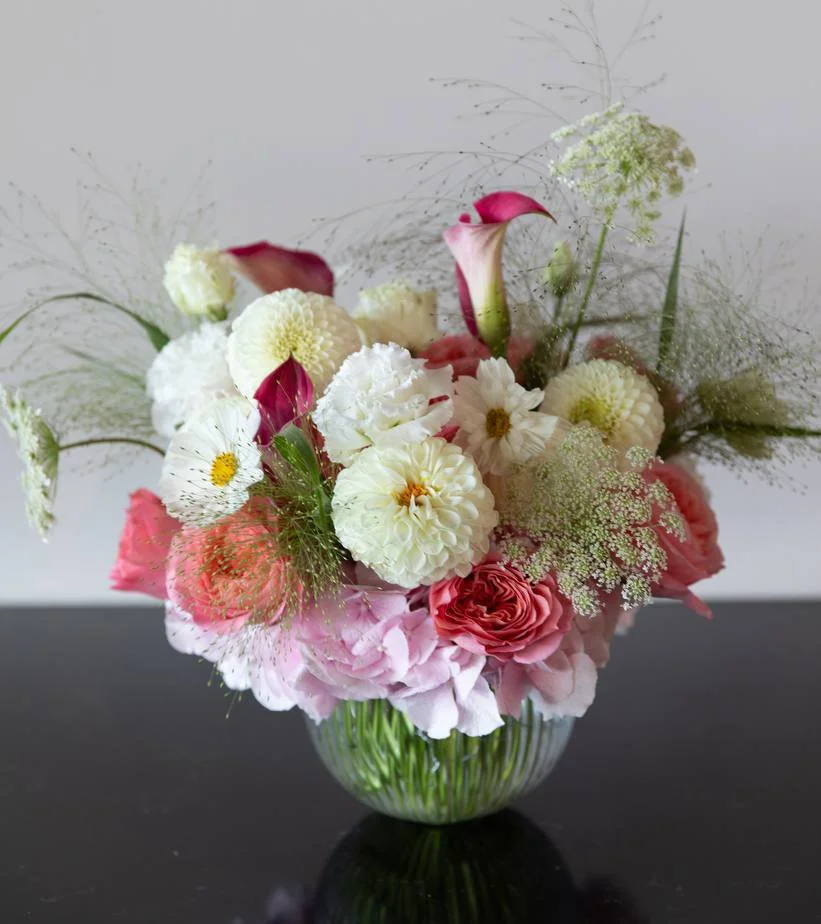
The venue often provides the first clue about the right floral mood. A historic inn in Litchfield County may call for loose, romantic arrangements with branches, seasonal foliage and flowers that appear freshly gathered from a garden. A contemporary restaurant in Stamford may look better with sleek ceramic vessels, restrained greenery and sculptural flowers arranged with visible negative space. A shower in a Fairfield County home might need flexible pieces that can move between a kitchen island, dining table and outdoor patio. Rather than forcing a trend into every setting, an experienced designer studies the architecture, lighting, linens and furniture, then chooses flowers that make those elements look more intentional.
Flowers also help establish the level of formality. Abundant centerpieces, floral installations and coordinated table details create a polished, hosted experience, while bud vases and casually arranged seasonal stems feel intimate and personal. Neither approach is automatically better. The right choice depends on the guest count, schedule, venue and personality of the parents-to-be. Think of the flowers as the event’s speaking voice. They can sound refined, playful, calm, celebratory or quietly luxurious. When the floral style matches the emotional tone of the gathering, guests may not be able to explain exactly why the room feels so harmonious, but they will feel it immediately.
How to Build a Soft, Modern Color Palette
A successful baby shower color palette usually begins with emotion rather than tradition. Instead of asking whether the event should be pink, blue or gender-neutral, ask what the room should feel like when guests arrive. Should it feel warm and nurturing, bright and cheerful, quiet and sophisticated, or fresh and botanical? That emotional direction makes it easier to choose colors that work together rather than collecting individual shades simply because they are associated with babies. Modern palettes often use four or five related tones, allowing the flowers, linens, stationery and desserts to feel coordinated without appearing overly matched.
The most elegant combinations usually include a grounding neutral, a primary floral color, a secondary accent and a natural botanical tone. For example, ivory can provide the foundation, soft apricot can add warmth, dusty rose can create depth, and muted green can keep the design fresh. A cooler palette might pair white with pale blue, lavender-gray and silvery foliage. A more contemporary celebration could use butter yellow, cream, clay and olive. This layered approach creates dimension in photographs and allows the florist to work with seasonal availability instead of depending on one exact flower in one exact shade.
Lighting should also shape the palette. Connecticut venues with large windows and abundant daylight can support subtle colors because natural light reveals gentle differences between ivory, blush, peach and beige. Dim restaurants or evening celebrations often need slightly stronger contrast so the flowers do not disappear into the background. Table materials matter too. Pale flowers may become washed out against white linens, while the same blooms can look rich and dimensional against oatmeal, sage or soft gray fabric. Before finalizing the design, imagine every element together: flowers, vessels, chairs, menus, candles, cake and surrounding walls. A color palette works best when it behaves like a well-dressed family rather than a collection of strangers wearing the same color.
Warm Neutrals for an Effortlessly Elegant Look
Warm neutral flowers have become a favorite for Connecticut baby showers because they feel calm, elevated and adaptable. Rather than relying on plain white, a neutral palette can include cream, champagne, sand, pale beige, soft caramel and hints of muted green. These shades create depth without demanding attention, making them especially effective in refined homes, private dining rooms and venues with strong architectural details. They also work beautifully for celebrations where the parents prefer a gender-neutral design or simply want something timeless. The result can feel luxurious without becoming formal, much like a beautifully tailored linen dress that looks effortless even though every detail has been considered.
Flowers that support this palette may include ivory garden roses, cream spray roses, white ranunculus, lisianthus, stock, hellebores, anemones and seasonal tulips. Dried or textural elements can be introduced sparingly through bleached grasses, seed pods, preserved ferns or soft-toned foliage, but restraint is important. Too many dried materials may shift the design toward rustic or bohemian styling, while a baby shower often benefits from the freshness and movement of living flowers. Greenery should also be selected carefully. Bright emerald foliage can feel too sharp beside warm neutrals, while olive, eucalyptus, dusty miller or delicate vine-like stems create a softer transition.
Vessels make a major difference in a neutral design because the flowers themselves are intentionally subtle. Matte ceramic bowls, stone-colored compotes, clear glass and brushed brass can each push the arrangement in a different direction. For a modern Connecticut home, low ceramic vessels often feel clean and architectural. For a romantic inn or estate, footed compotes add grace and movement. Candlelight can provide another layer through ivory tapers or small glass votives, especially when the event continues into late afternoon. A neutral palette should never feel empty or unfinished. The beauty comes from texture, shape and tonal variation, proving that quiet colors can still create a memorable visual statement.
Blush, Peach and Apricot for Gentle Warmth
Blush has long been associated with baby showers, but modern floral design gives it more depth by mixing it with peach, apricot, cream, dusty rose and soft terracotta. This prevents the palette from looking overly sugary or tied to a single traditional theme. The warmer shades make the room feel welcoming, while the lighter tones preserve the softness expected from a celebration honoring a new baby. In Connecticut, these colors work particularly well during spring and early summer, when natural light is clear and gardens are beginning to bloom, yet they can also bring warmth to autumn and winter venues that might otherwise feel cool.
Peach and apricot flowers are especially effective because they bridge the distance between pink and neutral. Garden roses, ranunculus, tulips, dahlias, lisianthus and certain varieties of stock can provide those subtle sunset tones. Coral should be used with care, as a small amount can energize the arrangement while too much may overpower the gentle mood. A florist may also use cream flowers to create breathing room between stronger colors, allowing each bloom to remain visible. Greenery can lean warm as well, with olive branches, jasmine vine or muted eucalyptus supporting the flowers without introducing a harsh contrast.
This palette pairs naturally with materials such as natural wood, champagne linen, woven place mats, warm white candles and pale gold details. It can feel romantic in a garden room, polished in a Fairfield County restaurant or relaxed in a backyard tent. The key is to avoid making every element blush. When invitations, linens, napkins, cake frosting, balloons and flowers all repeat the same shade, the room loses dimension. Instead, let the floral arrangements carry the richest range of color while surrounding details remain quieter. The flowers then become the emotional center of the design, glowing gently rather than shouting. The effect is flattering, joyful and mature enough to feel stylish in photographs years after the celebration.
Modern Blue, Lavender and Green Without the Clichés
Blue baby shower flowers can look modern and sophisticated when the palette moves beyond bright primary blue and obvious themed accessories. Soft blue hydrangeas, delphinium, tweedia and seasonal muscari can create a cool, airy foundation, especially when combined with white, lavender-gray and fresh green. The result feels peaceful rather than predictable. This approach works beautifully for coastal Connecticut celebrations, where blue can subtly echo the shoreline without turning the event into a nautical theme. It also suits contemporary venues with white walls, natural light and clean architectural lines.
Lavender adds complexity to blue because it introduces both warmth and softness. Flowers such as lilac, clematis, lavender sweet peas, scabiosa and pale purple lisianthus can prevent a blue-and-white palette from feeling too crisp or formal. A small amount of green also matters. Mint, sage, olive and delicate trailing vines make the arrangement feel alive and botanical rather than color-blocked. For a more gender-neutral interpretation, blue can become an accent instead of the dominant shade. Cream flowers and soft foliage may form most of the arrangement, with blue delphinium or hydrangea appearing in carefully placed moments.
The same principle applies to green-centered baby showers. Green does not need to mean a room filled with eucalyptus or a generic woodland theme. A modern green palette can include hellebores, green hydrangea, viburnum, bell-shaped flowers, herbs and sculptural foliage, balanced with ivory or pale yellow blooms. Texture becomes essential because several green flowers placed together can otherwise blend into one mass. Mixing round, spiked, ruffled and trailing forms creates visual rhythm. Accessories should remain understated: clear glass, pale wood, soft gray linens or matte white ceramics keep the colors feeling intentional. By treating blue, lavender and green as sophisticated design tools rather than labels, hosts can create a baby shower that feels fresh, serene and personal.
Choosing Seasonal Baby Shower Flowers in Connecticut
Seasonality is one of the most useful tools for creating beautiful baby shower floral arrangements in Connecticut. Flowers that naturally belong to the time of year often have better movement, more character and a stronger connection to the setting. They can also give the event a sense of place. A spring shower filled with tulips and flowering branches feels naturally linked to Connecticut’s return to color, while an autumn gathering with dahlias, garden roses and textured foliage reflects the warmth of the landscape without relying on pumpkins or obvious seasonal symbols. Seasonal design does not mean using only locally grown flowers, but it does mean allowing the calendar to influence the overall look.
Availability can vary from week to week, so it is wise to choose a style and color story rather than insisting on one exact variety. A host who requests “soft peach, cream and loose garden texture” gives the florist room to select the best flowers available. A host who requests only one particular imported rose may face substitutions or higher costs. Flexibility often leads to a more natural and luxurious result because the designer can prioritize quality. It also reduces stress if weather, transportation or growing conditions affect a specific bloom.
Connecticut’s changing seasons influence more than the flower list. Spring venues may have cool daylight and budding landscapes, summer celebrations may move between indoor and outdoor spaces, fall events often feature warm wood tones, and winter showers may need floral color to soften darker rooms. The floral plan should respond to these conditions. Delicate flowers may need extra hydration during a hot outdoor shower, while winter deliveries require careful protection from freezing temperatures. A knowledgeable florist plans for those practical realities behind the scenes. When seasonal choices are combined with thoughtful mechanics and proper handling, the arrangements look effortless even though they have been designed to perform throughout the entire celebration.
Spring Flowers for Airy, Romantic Celebrations
Spring is naturally suited to baby showers because the season already carries a sense of beginnings. Connecticut landscapes begin to soften, daylight grows longer, and flowering trees create the impression that the entire environment is waking up. Floral designs can mirror that feeling through movement, delicate stems and fresh color. Tulips, ranunculus, sweet peas, hyacinths, anemones, lilacs, narcissus and flowering branches are among the flowers that can bring a spring arrangement to life. Rather than packing them tightly into a formal dome, designers often allow stems to lean, curve and open in different directions, creating the feeling of a small garden growing across the table.
A spring palette can be pale and romantic, but it does not need to look washed out. Cream, blush, lavender, butter yellow and fresh green create a balanced combination that feels light while still offering contrast. Flowering branches can add height to an entry arrangement or gift table, while low centerpieces keep dining tables comfortable. Sweet peas and lilacs bring beautiful texture, yet their fragrance can be noticeable, so they should be used thoughtfully around food or guests who may be sensitive to scent. Tulips also continue to move after being arranged, which is part of their charm. Their curved stems make the design feel alive rather than perfectly controlled.
Weather is the quiet challenge of a Connecticut spring event. A sunny morning can become chilly or rainy, and venues may shift between indoor and outdoor plans. Floral arrangements should therefore be designed for flexibility. Portable centerpieces, sturdy vessels and protected ceremony-style installations are often more practical than delicate pieces that depend on ideal conditions. If the shower is held at home, flowering branches near the entrance can create an immediate seasonal moment without requiring flowers in every room. Spring already provides the story. The best floral design simply edits and frames that story, bringing the freshness of the season indoors in a way that feels graceful, hopeful and completely appropriate for welcoming a new baby.
Summer Flowers for Garden-Inspired Baby Showers
Summer baby showers in Connecticut invite a more abundant floral style, particularly when the celebration takes place in a backyard, garden, tented terrace or light-filled venue. Peonies may appear in early summer, followed by garden roses, delphinium, cosmos, lisianthus, hydrangeas, zinnias, snapdragons and other flowers with expressive shapes. The season supports color, but a modern arrangement does not need to become a rainbow. A focused palette of cream, soft yellow, apricot and pale blue can feel cheerful without losing elegance. Another option is to choose one dominant color and allow the flowers’ natural textures to create variation.
Garden-inspired design works because it looks generous without feeling stiff. Stems are arranged at different heights, small flowers weave between larger focal blooms, and greenery creates movement around the edges. The arrangement should look as though it has been gathered with an excellent eye, even though careful technique supports every stem. For dining tables, low compotes or clusters of bud vases preserve sightlines and make the flowers feel integrated with the meal. Larger arrangements can be reserved for the entrance, backdrop or dessert display, where they provide visual impact without crowding guests.
Heat and humidity must be considered during a summer celebration. Hydrangeas, sweet peas and other thirsty flowers can struggle if left in direct sun, so shaded placement and reliable water sources are essential. Outdoor arrangements should also be secured against wind, especially on coastal properties or open lawns. Heavy-bottomed vessels, stable mechanics and flowers that tolerate warmth can prevent last-minute problems. Timing matters as well; flowers should not be placed outside hours before guests arrive unless conditions are mild. A summer shower can look wonderfully relaxed, but the design requires practical planning behind the scenes. When that preparation is done well, the flowers feel like an extension of the season itself: lively, generous and full of possibility.
Fall and Winter Flowers for Warm, Refined Events
Fall and winter baby showers offer a chance to move beyond pale pastels and explore richer, more textural palettes. Connecticut’s autumn landscape naturally supports colors such as caramel, cinnamon, muted mauve, antique rose, deep plum and olive, yet these shades can still feel soft when balanced with cream and blush. Dahlias, garden roses, chrysanthemums, scabiosa, amaranthus, berries and textured foliage create arrangements with depth and personality. The goal is not to make the event look like a harvest festival unless that is the intended theme. Instead, seasonal colors can be softened and edited to create a warm, refined atmosphere.
Winter designs can feel equally inviting. White flowers are an obvious choice, but combining several whites and creams produces a more luxurious effect than using a single flat shade. Ranunculus, roses, hellebores, anemones, tulips and delicate branches can be paired with evergreen accents, silvery foliage or subtle berry tones. Evergreen should be used carefully so the shower does not resemble a holiday party. A few textured stems can acknowledge the season, while ceramic vessels, candlelight and soft fabrics keep the design centered on the baby celebration.
Indoor lighting becomes especially important during the colder months. Connecticut afternoons darken early, and many venues rely on warm artificial light. Flowers with slightly deeper colors may photograph better than extremely pale arrangements that disappear in dim rooms. Candlelight can add glow, but open flames must be coordinated with the venue and placed safely away from flowers, greenery and guests. Delivery logistics also matter because freezing temperatures can damage blooms quickly. Professional florists protect arrangements during transportation and minimize exposure when loading into the venue. These behind-the-scenes precautions allow winter flowers to arrive looking fresh and delicate. With the right palette and lighting, a cold-weather baby shower can feel exceptionally intimate, like a warm room gathered around a beautiful new beginning.
Modern Floral Arrangement Styles That Feel Fresh
Modern baby shower flowers are defined less by a single trend than by a sense of intention. The arrangements may be lush or minimal, but they avoid unnecessary clutter. Each piece has a clear role within the event: welcoming guests, anchoring a table, framing photographs or highlighting the dessert display. This approach creates a more polished environment than placing similar arrangements on every available surface. It also helps hosts use their budget strategically. One memorable installation and several understated table pieces may create more impact than numerous medium-sized arrangements scattered without a visual plan.
Shape is one of the clearest differences between traditional and modern design. Older centerpiece styles often relied on round, symmetrical forms, while contemporary arrangements embrace asymmetry, negative space and varied height. A branch may extend to one side, a cluster of flowers may sit low near the vessel, and a few delicate stems may rise above the rest. The design feels balanced without being mirrored. This natural irregularity makes flowers look more expressive and helps each variety retain its individual character.
Vessels also influence the style. Footed compotes create a romantic garden feeling, while cylindrical glass or matte ceramic bowls appear cleaner and more architectural. Tiny bud vases feel light and conversational. Sculptural vessels can become part of the decoration, especially when the floral palette is restrained. Even mechanics may be visible in some modern arrangements, though they should always look deliberate rather than unfinished.
The right style depends on the venue and guest experience. A narrow restaurant table needs compact designs, while a spacious private home may support one dramatic statement piece. A tented shower can handle taller arrangements if they are stable and do not interrupt conversation. Modern design is not about choosing the most unusual option. It is about editing carefully, respecting the space and allowing every floral element to contribute to a cohesive story.
Organic Garden-Style Centerpieces
Garden-style centerpieces remain popular because they feel romantic, generous and relaxed at the same time. Instead of arranging flowers into a tight, uniform shape, the designer creates layers. Larger focal blooms establish the main color and form, medium flowers build fullness, and delicate stems add movement around the edges. Greenery may trail over the vessel or rise between flowers, giving the arrangement a sense of life. The finished piece should look effortless, yet its apparent looseness depends on strong structure. Without careful mechanics and proportion, a garden-style arrangement can quickly look messy rather than natural.
For baby showers, this style works best when the scale remains appropriate to the table. Guests should be able to see one another easily, pass serving dishes and place drinks without navigating around leaves or petals. Low compotes are often ideal because they provide width and movement without blocking sightlines. On long tables, several smaller arrangements may feel more graceful than one oversized centerpiece. Flowers can be connected visually through scattered bud vases or candles, creating rhythm along the table while preserving practical space.
Connecticut venues with traditional architecture, gardens, stone walls or countryside views are especially compatible with organic arrangements. The flowers can echo the setting through seasonal branches, local foliage and colors drawn from the surrounding landscape. Yet garden style can also work in a modern venue when the vessels are simple and the palette is edited. Cream flowers with sculptural greenery, for example, can feel both natural and contemporary.
A common mistake is requesting “wild” flowers without considering color control. True garden inspiration still benefits from a clear palette. Limiting the arrangement to three or four related colors allows varied textures to feel cohesive. The result should resemble a thoughtfully composed painting rather than an unedited field. When proportion, color and movement are handled well, garden-style centerpieces bring emotional warmth to the room and make guests feel as though they have been invited into something intimate and beautifully cared for.
Minimalist Designs, Bud Vases and Sculptural Blooms
Minimalist floral design is an excellent choice for baby showers held in contemporary restaurants, lofts, galleries or streamlined private homes. It focuses attention on shape, line and negative space rather than volume. A single branch may create a dramatic silhouette, or three carefully chosen flowers may appear more memorable than a crowded arrangement. Minimalism does not necessarily mean inexpensive, because rare blooms, artistic vessels and labor-intensive placement can carry significant value. Its strength comes from precision. Every stem is visible, so color, condition and angle matter.
Bud vases offer a softer version of minimalism and work particularly well on long tables. Each vase may hold one to three stems, allowing different flowers to appear individually while still contributing to a larger composition. Clear glass creates a light, airy look, colored glass can reinforce the palette, and ceramic vessels add warmth. Varying the heights slightly keeps the table from feeling repetitive. The flowers should remain low enough for conversation, and the number of vases should be balanced with plates, serving pieces and glassware.
Sculptural blooms can create impact without requiring large quantities. Anthuriums, calla lilies, orchids, delphinium, alliums and expressive branches bring distinctive lines to the arrangement. For a baby shower, these stronger shapes are often softened with delicate flowers or gentle colors. A pale anthurium paired with sweet peas, for example, can feel modern without becoming severe. The contrast between architectural and romantic elements gives the design personality.
This style is also practical for repurposing. Bud vases can become guest favors, move from the dining table to the gift-opening area or be gathered into small arrangements after the event. Minimal designs are easy to distribute throughout a venue without making it feel crowded. For hosts who value clean spaces and thoughtful details, this approach proves that elegance does not depend on abundance. Sometimes one beautifully placed flower can hold an entire room’s attention.
Planning Flowers Around the Venue, Budget and Guest Experience
The most successful baby shower floral plan begins with the venue rather than a saved photograph. A centerpiece that looks beautiful on a wide editorial table may overwhelm a narrow restaurant setting, while a delicate arrangement designed for an intimate dining room may disappear inside a large tent. Before selecting flower varieties, consider the room’s dimensions, ceiling height, table shape, natural light and existing décor. Connecticut venues vary widely, from historic homes and coastal inns to modern event spaces and private backyards. Each setting presents different opportunities and limitations, and the flowers should solve those conditions rather than ignore them.
Budget should be connected to priorities. If photographs and guest arrival matter most, invest in an entrance arrangement or floral backdrop, then keep dining tables simple. If the meal is the center of the event, direct more of the budget toward centerpieces and place settings. A combination of one statement piece, several medium arrangements and bud vases often creates a more dynamic result than repeating one arrangement size everywhere. Seasonal flexibility can also help manage costs. Giving the florist permission to substitute varieties within the agreed palette usually provides better value and fresher flowers.
Delivery, setup and breakdown should be included in the conversation from the beginning. Large installations require time, access and safe mechanics. Restaurants may have narrow setup windows, private homes may need floor protection, and outdoor venues require weather plans. Ask who will move arrangements if the schedule changes and what happens to the flowers after the shower. Some florists provide wrapping or repurposing services, while others expect the host to distribute arrangements.
Guest comfort remains the final test. Avoid heavily scented flowers near dining areas, keep centerpieces below eye level and leave enough table space for plates and drinks. Consider allergies, young children and elderly guests when placing candles, glass vessels or trailing greenery. Beautiful flowers should make the celebration easier to enjoy, not harder to navigate. When logistics and aesthetics are planned together, the room feels polished, calm and welcoming from the first arrival to the final goodbye.
Conclusion
Flowers can transform a baby shower without making the celebration feel overdesigned. The most memorable arrangements support the emotion already present in the room: excitement, tenderness, anticipation and love for a family entering a new chapter. For Connecticut hosts, that may mean spring branches in a light-filled home, garden roses in a coastal restaurant, sculptural blooms in a modern Stamford venue or warm dahlias at an autumn gathering in Litchfield County. The specific flowers will change with the season and setting, but the principles remain consistent. Choose a clear mood, build a layered palette, respect the venue and keep guests comfortable.
Soft floral design does not require every flower to be pale or traditionally feminine. Softness can come from movement, texture and the relationship between colors. Elegance does not require towering centerpieces or extravagant quantities. It often appears through restraint, beautiful proportions and details that feel carefully considered. Modern style does not mean removing warmth. The strongest contemporary arrangements combine clean decisions with natural materials, allowing the flowers to feel expressive rather than manufactured.
A good florist will help translate inspiration into a design that works in real life. Bring photographs that communicate mood, but remain open to seasonal substitutions and professional recommendations. Share the guest count, table dimensions, schedule and venue restrictions early. Be honest about the budget and identify which moments matter most. Those conversations make it possible to create a floral plan that feels generous without wasting resources.
Ultimately, flowers for baby showers in Connecticut should feel connected to the people being celebrated. Trends can provide direction, but personal meaning gives the design lasting value. A flower that reminds the expectant parent of a grandmother’s garden, a palette inspired by the nursery or a small bloom repeated from the invitation can make the event feel uniquely theirs. That personal connection is what turns decoration into memory.