Best Flowers for a Coastal Wedding in Connecticut
A coastal wedding in Connecticut has a beauty that feels both relaxed and refined. The shoreline offers weathered docks, sailboats, rocky beaches, historic inns, white-clapboard buildings, salt marshes, and broad views across Long Island Sound. Those surroundings already carry a strong visual identity, which means the flowers should complement the landscape instead of turning the celebration into a literal nautical theme. You do not need blue-dyed roses, seashell-filled centerpieces, or anchors tied to every vase to make the wedding feel coastal. The most sophisticated floral designs borrow from the shoreline quietly through color, movement, texture, and season.
Choosing the best flowers for a coastal wedding in Connecticut requires more than selecting blooms that look beautiful in photographs. Coastal weather can change quickly, particularly near open water. Wind may pull at ceremony installations, heat can weaken delicate petals, and humidity can affect flowers that seemed perfectly stable in the studio. The arrangements also need to suit the architecture and character of the venue. A formal yacht club in Greenwich calls for a different floral language than a relaxed inn near Mystic, a private estate in Madison, or a waterfront restaurant in Old Saybrook.
The strongest coastal wedding flowers feel natural but intentional. Garden roses, lisianthus, orchids, delphinium, calla lilies, hydrangeas, ranunculus, cosmos, dahlias, snapdragons, and seasonal branches can all work beautifully when selected for the date and setting. Their shapes matter as much as their colors. Curving stems, airy blossoms, and delicate grasses can echo the movement of water, while sturdy focal flowers provide enough structure to withstand an outdoor ceremony.
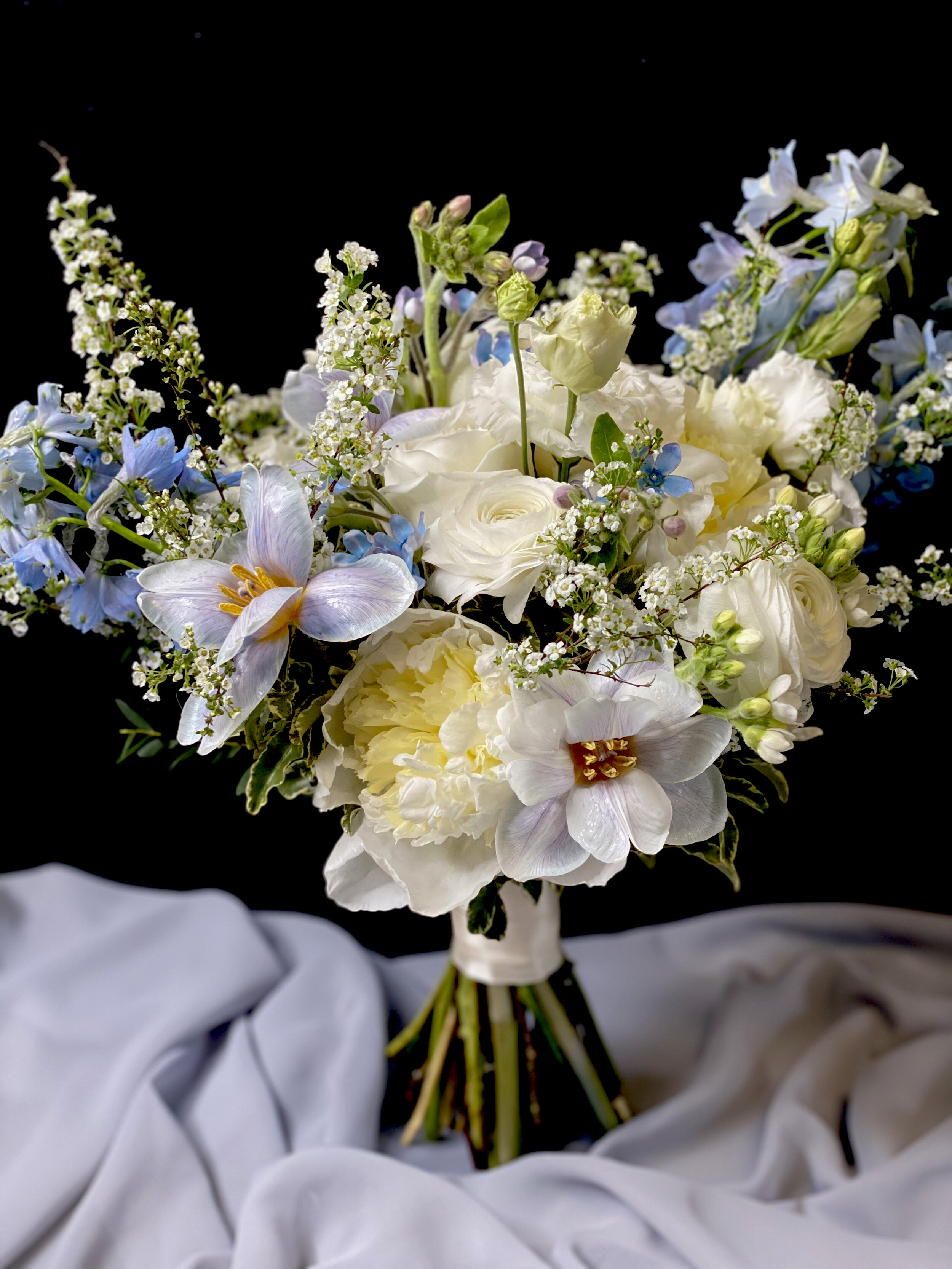
A coastal floral plan should ultimately feel connected to the couple rather than built around a generic idea of the ocean. The shoreline can inspire soft blue, oyster white, weathered green, pale lavender, sand, coral, and sunset peach, but personal style should determine how those colors are used. With thoughtful planning, flowers can frame the view, soften the venue, and make the entire celebration feel rooted in Connecticut’s distinctive coast.
Why Coastal Connecticut Weddings Need a Different Floral Approach
Coastal weddings require floral planning that considers movement, exposure, and the strength of the surrounding landscape. A ballroom arrangement is usually designed for a stable indoor environment with controlled temperature and limited wind. A shoreline arrangement may be carried across a dock, installed near open water, photographed under direct sun, and exposed to salt air before the ceremony even begins. Those conditions affect everything from flower selection to vessel weight and installation mechanics.
The view also changes the visual scale. A centerpiece that feels substantial inside a floral studio may look unexpectedly small against a wide horizon, marina, or lawn. Ceremony flowers need enough presence to frame the couple without attempting to compete with the water. This often means using fewer but larger floral moments rather than distributing many small arrangements across an outdoor space. A pair of grounded aisle installations, for example, may look more intentional than dozens of tiny floral markers that disappear against the shoreline.
Wind is one of the most important concerns. Lightweight arches, tall narrow vases, loose fabric, and delicate trailing flowers can become unstable during waterfront ceremonies. Professional florists use weighted bases, secure mechanics, flexible stems, and carefully chosen flower varieties to create movement without losing control. The goal is not to eliminate every natural response to the breeze. A little movement can make the flowers feel alive. The design simply needs enough structure to remain safe and visually balanced.
Coastal light also affects color. Bright sun can wash out extremely pale arrangements, while overcast skies may make cool blue and gray palettes feel flatter than expected. Adding tonal depth through cream, lavender, green, peach, or soft yellow helps flowers remain visible in photographs. Connecticut’s coast is elegant because it combines polished venues with an organic landscape. The floral approach should do the same: refined enough for the event, natural enough to belong beside the water, and practical enough to perform under real shoreline conditions.
The Best Overall Flowers for a Connecticut Shoreline Wedding
The best coastal wedding flowers combine visual softness with reliable performance. Garden roses are an excellent focal flower because they bring layered texture and romance without requiring a formal, tightly packed design. Their rounded shape can be balanced with taller flowers and natural foliage, creating arrangements that feel generous but not heavy. Choose varieties with moderate fragrance for dining areas, and ask the florist to recommend roses that tolerate the expected temperature.
Lisianthus is another strong choice. Its ruffled petals resemble a smaller, lighter rose, and its branching stems create natural movement. It works in bridal bouquets, boutonnieres, centerpieces, and larger installations. White, cream, blush, lavender, and muted green varieties fit naturally into coastal palettes. Ranunculus offers similar elegance during its best seasonal windows, though it may need additional protection in intense heat.
Delphinium is particularly useful for Connecticut shoreline weddings because its vertical lines echo sea grass, masts, and open sky. Pale blue varieties can introduce coastal color without looking themed, while white and lavender forms add height to ceremony arrangements. Snapdragons, stock, and foxglove-like shapes provide similar movement, though fragrance and seasonal availability should be considered.
Orchids and calla lilies bring a cleaner, more architectural quality. They suit modern yacht clubs, contemporary waterfront restaurants, and formal hotel venues. Cymbidium orchids are relatively sturdy and come in white, green, blush, yellow, and deeper tones. Calla lilies create strong curves and work beautifully in streamlined bouquets.
Hydrangeas are visually connected to New England gardens and coastal homes. They provide softness and volume, but they are thirsty flowers and need expert conditioning. Dahlias are ideal for late-summer and fall weddings, while tulips and anemones suit spring. Cosmos, sweet peas, scabiosa, and delicate local garden flowers add the airy movement that makes a coastal arrangement feel natural. The best recipe usually combines sturdy focal blooms, flexible line flowers, textural accents, and restrained foliage rather than relying on one flower alone.
Coastal Wedding Color Palettes That Feel Elegant, Not Themed
A coastal palette should suggest the shoreline rather than reproduce it literally. The most elegant designs take inspiration from natural materials: sea glass, oyster shells, weathered wood, marsh grass, pale sand, cloudy skies, and late-afternoon sunlight. These references create depth and sophistication because they reflect the coast as it actually appears, not as a collection of nautical decorations.
Soft blue and white remain popular, but the palette benefits from additional tones. Pale blue delphinium, white garden roses, cream lisianthus, lavender-gray flowers, and muted green foliage create a layered design that photographs more beautifully than bright blue and pure white alone. Cream is especially useful because it softens the contrast and prevents the arrangement from feeling cold. A small amount of butter yellow or pale peach can add warmth without changing the overall coastal mood.
For couples who prefer warmer colors, consider coral, apricot, blush, sand, and olive. These shades echo beach roses, sunset light, weathered brick, and warm stone. Peach garden roses, apricot ranunculus, cream stock, blush lisianthus, and soft green foliage can look romantic beside blue water without relying on a blue palette at all. This direction works particularly well for late-summer and early-fall celebrations.
Neutral coastal designs can combine ivory, oyster, beige, pale brown, and botanical green. Texture becomes essential because the colors are intentionally subtle. Orchids, roses, calla lilies, grasses, seed heads, and sculptural foliage can keep the arrangement visually rich.
Coastal Palette
Main Floral Colors
Supporting Materials
Overall Mood
Sea Glass
Pale blue, lavender, white, green
Clear glass and silver
Airy and refined
Sunset Coast
Peach, coral, blush, cream
Champagne metal and linen
Warm and romantic
Oyster Neutral
Ivory, sand, beige, olive
Stoneware and natural wood
Quietly luxurious
Garden Shoreline
Blue, yellow, white, fresh green
Woven textures and pale wood
Cheerful and relaxed
Moody Harbor
Plum, navy, mauve, cream
Smoked glass and dark metal
Dramatic and sophisticated
The palette should also consider the venue’s walls, flooring, chairs, linens, and natural light. Coastal style feels most convincing when color is layered, restrained, and connected to the actual surroundings.
Spring and Summer Flowers for Connecticut Coastal Celebrations
Spring and summer are popular seasons for coastal weddings in Connecticut, but each offers a different floral character. Spring brings cooler light, flowering branches, tender greenery, and flowers with delicate movement. Tulips, ranunculus, anemones, sweet peas, narcissus, hellebores, lilacs, and flowering quince can create arrangements that feel fresh and optimistic. These flowers work beautifully in loose bouquets, low centerpieces, and asymmetrical ceremony designs.
Tulips are especially effective near the coast because their stems continue to bend and grow after arranging. That movement can echo water and breeze, giving the design an organic quality. Ranunculus provides layered petals in white, blush, peach, yellow, and burgundy, while anemones add graphic dark centers that stand out clearly in photographs. Sweet peas and lilacs bring fragrance, so they should be placed carefully around food and sensitive guests.
Summer expands the flower selection. Garden roses, lisianthus, delphinium, hydrangeas, snapdragons, cosmos, zinnias, scabiosa, stock, and locally grown field flowers can create more abundant designs. Early summer may also offer peonies, although their exact availability depends on weather and sourcing. Peonies are luxurious but delicate in heat, so they are often best reserved for bouquets or protected indoor arrangements.
Hydrangeas feel naturally connected to New England coastal architecture, yet they need a reliable water source and protection from direct sun. Delphinium provides height and blue color, while cosmos adds airy movement. Zinnias offer cheerful color and durability for later summer dates. Herbs such as mint, rosemary, basil, and scented geranium can introduce texture and a subtle garden quality.
Heat planning is essential. Flowers should be stored in a cool environment, installed as late as possible, and kept shaded before the ceremony. The florist may substitute sturdier varieties when temperatures rise. Seasonal flexibility usually produces better results than insisting on one exact flower. Spring and summer coastal arrangements should feel light and generous, but their apparent ease depends on careful hydration, timing, and mechanics.
Fall and Winter Flowers for a Refined Shoreline Wedding
Fall and winter coastal weddings have a quieter, more atmospheric beauty. The shoreline becomes less crowded, the light grows softer, and venues often feel more intimate. Floral design can respond with richer color, stronger texture, and architectural shapes while still maintaining the elegance associated with the coast.
Fall does not need to mean bright orange, pumpkins, and heavy harvest décor. A refined shoreline palette may include mauve, plum, antique rose, caramel, cream, burgundy, and olive. Dahlias are one of the strongest choices for late-summer and fall weddings. Their varied shapes and colors create immediate depth, whether used in a bridal bouquet or a large ceremony arrangement. Garden roses, chrysanthemums, scabiosa, berries, amaranthus, seed heads, and textured foliage can support them without making the design feel rustic.
Muted blue can still appear in fall through delphinium, hydrangea, or ribbon, but it often looks more sophisticated when balanced with warmer shades. A palette of dusty blue, cream, caramel, and plum can reflect both the water and the changing landscape. Darker vessels, smoked glass, wood, and candlelight reinforce the seasonal atmosphere.
Winter flowers can be elegant and sculptural. White ranunculus, anemones, hellebores, orchids, roses, calla lilies, tulips, bare branches, and restrained evergreen accents create a clean coastal look. Evergreen should be used carefully so the wedding does not automatically resemble a holiday event. A few cedar or pine elements can suggest the season, while white flowers and branches keep the design centered on the shoreline.
Delivery and installation require additional planning in cold weather. Flowers can be damaged by freezing temperatures during even brief exposure. Professional florists protect arrangements during transportation and minimize the time they spend outdoors. Candlelight is especially effective during shorter winter days, but all flames must remain safely separated from flowers and greenery. A fall or winter coastal wedding can feel deeply romantic because the flowers bring warmth and life into a quieter landscape.
Bridal Bouquet Ideas Inspired by the Connecticut Coast
A coastal bridal bouquet should feel comfortable to carry, visually connected to the setting, and personal enough to avoid looking like a generic beach arrangement. The strongest designs use movement and texture rather than literal seaside decorations. Long ribbons, curving stems, airy flowers, and soft color can suggest wind and water without adding shells, starfish, or rope.
For a romantic garden-style bouquet, combine cream garden roses, blush or peach ranunculus, white lisianthus, pale blue delphinium, sweet peas, and delicate greenery. The shape can remain slightly asymmetrical, with one or two stems extending naturally. This style works beautifully with flowing dresses, lace, soft tailoring, and ceremonies held at inns, estates, or garden-facing waterfront venues.
A modern coastal bouquet may use white orchids, green anthuriums, calla lilies, tulips, and a limited amount of sculptural foliage. The design can be compact and linear rather than round. This approach suits clean gowns, contemporary venues, and couples who prefer minimalism. Pale blue or lavender can be introduced through one flower variety or ribbon rather than spread across the entire bouquet.
For late-summer or fall weddings, dahlias, garden roses, scabiosa, berries, and textural foliage can create warmth. A sunset-inspired bouquet in apricot, coral, cream, and mauve looks striking beside the water, particularly during golden-hour photographs. Winter bouquets can feature orchids, hellebores, anemones, ranunculus, and branches in layered white and green.
The bouquet’s scale should match the bride and dress. An oversized arrangement can cover important garment details and become tiring to carry, especially during waterfront portraits that involve walking over grass, docks, or uneven paths. The stems should be wrapped securely, and trailing ribbons should be controlled in windy conditions. A bouquet inspired by the Connecticut coast should feel alive and graceful, but it must also remain practical from the first portrait through the final reception entrance.
Ceremony Flowers That Frame the View Without Competing With It
The ceremony is where coastal floral design needs the most restraint. The water, sky, shoreline, and architecture already create a dramatic background. Covering the space with dense flowers can block the view and make the design feel disconnected from the landscape. The goal is to frame the couple and define the ceremony area while allowing the coast to remain visible.
Grounded floral installations are often more effective than traditional arches. Low clusters placed on either side of the couple can create a natural frame without interrupting the horizon. These designs can include garden roses, delphinium, snapdragons, hydrangeas, branches, grasses, and sturdy foliage. Their bases should be heavily weighted and hidden with flowers or natural materials.
An asymmetrical arch can also work when the venue and weather allow it. Instead of covering the entire structure, concentrate flowers in two or three areas and leave portions of the frame exposed. This creates negative space and reduces wind resistance. The structure must be professionally secured, particularly on docks, lawns, terraces, and open waterfront platforms.
Aisle flowers should be scaled to the setting. Small chair markers may disappear outdoors, while large arrangements at every row can crowd the walkway. Consider floral clusters at the entrance and midpoint, or place low pieces along selected sections of the aisle. These arrangements can later be repurposed near the bar, escort-card display, stage, or reception entrance.
Flowers attached to chairs should remain lightweight and secure. Trailing ribbons can move beautifully in a gentle breeze, but long fabric may become tangled or distracting in stronger wind. Use materials that photograph well without creating a maintenance problem.
The ceremony design should also consider guest sightlines and accessibility. Flowers must not narrow the aisle, block ramps, or create trip hazards. When the view is already extraordinary, floral expertise appears through editing. A few strong, well-placed arrangements can make the ceremony feel intentional while preserving the reason the couple chose the Connecticut coast in the first place.
Reception Centerpieces for Waterfront and Seaside Venues
Reception centerpieces at coastal venues must balance scale, conversation, food service, and the visual strength of the room. Waterfront spaces often feature large windows, high ceilings, outdoor terraces, or broad views. Small arrangements can disappear in those settings, but oversized centerpieces may block the scenery and make guests feel separated from one another.
Low compote arrangements are one of the most versatile options. They create enough width and fullness to feel substantial while preserving sightlines. Garden roses, lisianthus, hydrangeas, ranunculus, dahlias, tulips, delphinium, and seasonal flowers can be layered with restrained foliage. The shape should feel organic rather than perfectly round. A few extending stems can add movement without taking over the table.
Long tables often benefit from a series of smaller floral moments. Bud vases, low bowls, candles, and individual stems can create rhythm without filling every inch. Clear glass keeps the design light, while stoneware, ceramic, or brushed metal can introduce texture. Repeating two or three flower varieties across the table creates cohesion, even when every vase contains a slightly different combination.
Elevated centerpieces may work in ballrooms or tented spaces where the ceiling height can support them. The floral material should begin above eye level, and the base must remain stable. Near open tent sides or waterfront doors, wind exposure should be evaluated carefully. Tall arrangements that are safe indoors may become vulnerable when strong air moves through the room.
Candlelight adds warmth to cool coastal palettes. Unscented tapers and votives can make pale blue, cream, lavender, and green flowers feel more intimate after sunset. Venue rules and fire safety must always be respected.
Centerpieces should also fit the meal style. Family-style service requires more open table space than plated dining. The florist should know the linen color, table width, glassware, serving plan, and room layout before finalizing size. The most successful reception flowers feel generous when guests enter, then become a beautiful background once conversation, food, and dancing begin.
How to Protect Wedding Flowers From Wind, Heat, and Humidity
Weather-smart floral design begins long before the wedding day. The florist should understand which parts of the event will take place outdoors, how long the flowers will be exposed, whether shade is available, and what backup spaces the venue provides. Connecticut coastal weather can shift quickly, so the floral plan needs enough flexibility to respond without losing its visual identity.
Wind affects both safety and appearance. Tall arrangements require weighted bases, low centers of gravity, and secure mechanics. Ceremony structures should never depend on flowers or fabric for stability. Flexible stems such as grasses and delicate branches can move attractively, but rigid branches or loosely attached blooms may become dangerous. The design team should know how wind moves through the specific ceremony area, especially on docks, terraces, lawns, and bluffs.
Heat creates a different challenge. Hydrangeas, sweet peas, peonies, and other delicate flowers can weaken quickly in direct sun. Professional conditioning, hydration, shade, and late installation help protect them. The florist may reserve more fragile flowers for bouquets and indoor reception arrangements while using sturdier blooms outdoors. Orchids, carnations, chrysanthemums, certain roses, calla lilies, lisianthus, and durable foliage can perform more reliably when temperatures rise.
Humidity can soften petals, increase fragrance, and affect paper or ribbon. Bouquet wrapping should remain secure and resistant to moisture. Personal flowers such as boutonnieres and corsages need cool storage until they are worn. They should not be left in parked vehicles or placed near sunny windows.
A realistic backup plan is essential. Ceremony arrangements should be movable when possible, and the florist should know where each piece will go if the event shifts indoors. Grounded floral clusters often adapt more easily than complex fixed installations. The couple should also accept that outdoor flowers may move slightly in the breeze. That natural movement can look beautiful. Protection is not about forcing the flowers into complete stillness; it is about making sure they remain safe, hydrated, and visually intentional throughout the celebration.
Match the Floral Design to the Coastal Venue
Connecticut’s shoreline includes a wide range of wedding venues, and each one calls for a different floral response. A yacht club, historic inn, private estate, modern hotel, marina restaurant, garden property, and beachside tent do not share the same architecture or level of formality. The flowers should belong to the venue rather than simply being transported into it.
Yacht clubs and formal waterfront venues often suit tailored floral design. White orchids, calla lilies, garden roses, hydrangeas, delphinium, and clean greenery can create a polished look. Clear glass, silver, ceramic, and brushed metal vessels reinforce the refined atmosphere. The arrangements may be structured, but they should still contain enough movement to connect with the shoreline.
Historic inns and New England-style properties can support looser garden flowers. Ranunculus, lisianthus, sweet peas, flowering branches, roses, herbs, and seasonal foliage feel natural beside woodwork, stone, clapboard siding, and landscaped gardens. Footed compotes, aged ceramics, and glass bud vases can enhance the character without turning the wedding rustic.
Modern hotels and restaurants may look best with sculptural flowers and more visible negative space. Orchids, anthuriums, tulips, calla lilies, alliums, and architectural leaves create strong shapes against simple interiors. A restrained palette allows the room’s windows and water views to remain central.
Tented weddings require attention to ceiling height, flooring, lighting, and open sides. Suspended greenery or branches can define the tent, but installation and wind conditions must be evaluated carefully. Long tables may support layered bud vases, while large round tables need stronger central pieces.
Private homes and estates require additional logistical planning. Floors, walls, furniture, and landscaping must be protected. Delivery access may be narrower than at a commercial venue, and setup areas can be limited. The florist should visit or review detailed photographs and measurements.
Matching the flowers to the venue does not mean imitating every architectural feature. It means respecting scale, material, light, and atmosphere. When the floral design responds to the setting, the entire wedding feels cohesive before guests consciously understand why.
Sustainable and Locally Inspired Coastal Wedding Flowers
Sustainability in wedding flowers is not achieved through one label or a single sourcing decision. It involves flower origin, growing methods, transportation, mechanics, vessel use, labor, repurposing, and waste management. Couples planning a coastal Connecticut wedding can make thoughtful choices without expecting every flower to be grown locally or every design to produce zero waste.
Seasonal and locally grown flowers can bring a strong sense of place. Spring tulips, summer cosmos, zinnias, snapdragons, garden roses, herbs, and fall dahlias may be available from regional farms during their natural growing windows. These flowers often have expressive movement and character because they are selected closer to harvest. Local availability changes with weather, so couples should choose a palette and style rather than insisting on exact varieties months in advance.
Reusable mechanics can reduce reliance on single-use materials. Floral frogs, wire structures, reusable grids, water-filled containers, and rental vessels offer alternatives for many designs. Not every installation can be created in the same way, so the florist should explain what is practical and safe. Sustainability should never compromise structural stability, particularly in windy waterfront settings.
Repurposing is another effective strategy. Ceremony arrangements can move to the reception entrance, bar, stage, or lounge. Bridesmaid bouquets may be placed in prepared vases after photographs. Bud vases can become guest favors, and reception flowers may be divided among family members after the event. Donation may be possible when an organization agrees in advance and transportation is arranged.
Containers also matter. Rental vessels prevent couples from purchasing dozens of items they will never use again. Natural materials such as wood, stone, ceramic, and glass can support the coastal aesthetic while remaining reusable.
A sustainable floral plan should feel beautiful and generous, not restricted. The goal is to make informed choices, reduce unnecessary waste, and create a stronger relationship between the wedding and its setting. Locally inspired design is most successful when it reflects the Connecticut coast through season, texture, and thoughtful use of materials rather than decorative clichés.
How to Budget and Work With a Connecticut Wedding Florist
Wedding flower budgets vary widely because floral design includes far more than the visible stems. The final proposal may cover consultation, design development, sourcing, conditioning, vessels, mechanics, rentals, transportation, staffing, installation, room changes, breakdown, and cleanup. Coastal venues can add logistical complexity through restricted delivery windows, long carrying distances, docks, elevators, outdoor setups, and weather contingencies.
Begin by identifying priorities. If the ceremony view is central to the wedding, invest in grounded installations or a carefully designed frame, then keep aisle flowers simple. If the reception lasts several hours and includes a seated dinner, centerpieces may deserve a larger share of the budget. Couples who value photographs might prioritize the bridal bouquet, ceremony setting, sweetheart table, and entrance.
Avoid dividing the budget evenly across every possible surface. One memorable statement installation supported by restrained table flowers often creates more impact than many medium-sized arrangements with no visual hierarchy. Ask which pieces can be repurposed. Ceremony flowers may move to the reception, but this requires enough time, staff, and physical access. It should be planned rather than assumed.
When contacting a florist, provide the date, venue, guest count, ceremony and reception locations, table types, preferred palette, desired style, and realistic budget range. Share inspiration images that communicate mood, but remain open to seasonal substitutions. A photograph may feature flowers that are unavailable, unsuitable for coastal weather, or far more expensive than they appear.
Review the proposal carefully. Confirm whether delivery, setup, breakdown, taxes, candles, vessel rentals, and installation structures are included. Ask how weather-related changes are handled and who makes the final decision about moving flowers indoors.
A strong florist-client relationship depends on trust. The couple should communicate preferences clearly, while the florist should explain limitations honestly. Flexibility gives the designer room to select the freshest, strongest flowers available. The best budget is not the one that buys the greatest number of blooms. It is the one that supports the wedding’s most meaningful visual moments with quality, safety, and intention.
Coastal Floral Styling Mistakes to Avoid
One of the most common coastal wedding mistakes is treating the shoreline as a literal theme. Shells, anchors, rope, fishing nets, blue dye, and starfish can quickly turn an elegant celebration into themed décor. Coastal style is more convincing when it comes through color, texture, movement, and natural materials. Pale blue delphinium, oyster-toned ceramics, grasses, clear glass, and wind-shaped branches can suggest the setting without explaining it.
Another mistake is ignoring wind. Lightweight arches, tall narrow vases, loose aisle decorations, and long ribbons may look beautiful in still photographs but behave unpredictably near open water. Every outdoor floral element should be evaluated for stability. Couples should trust the florist when a design needs additional weight, a lower profile, or a sturdier flower.
Overusing blue can also make the palette feel flat. The shoreline contains green, gray, cream, beige, lavender, coral, peach, and brown as well as blue. Layering those tones creates a more natural result. Bright artificial blue flowers may appear harsh against the landscape, while pale blue or lavender accents usually feel more refined.
Choosing flowers without considering heat or hydration is another costly error. Hydrangeas, peonies, sweet peas, and delicate garden flowers can be beautiful, but they may need shade, water, and limited outdoor exposure. A professional florist may recommend substitutions or reserve certain varieties for indoor arrangements.
Scale should not be underestimated. Tiny centerpieces can disappear in large waterfront rooms, while enormous ceremony structures can block the view. The floral plan should respond to the architecture and horizon rather than following a standard package.
Finally, avoid decorating every surface. Too many floral details can make the wedding feel cluttered and increase the budget without creating stronger impact. Focus on arrival, ceremony, dining tables, and one or two reception moments. Coastal elegance depends on breathing room. The water, sky, architecture, and flowers should all have space to be seen.
Conclusion
The best flowers for a coastal wedding in Connecticut are not defined by one variety or one predictable blue-and-white palette. They are flowers that suit the season, perform well near the water, complement the venue, and reflect the couple’s personal style. Garden roses, lisianthus, orchids, calla lilies, delphinium, hydrangeas, ranunculus, tulips, dahlias, cosmos, and seasonal branches can all become part of a successful shoreline design.
The planning process should begin with the setting. Consider the view, wind exposure, temperature, ceremony location, reception architecture, and available backup spaces. Flowers that work beautifully in a climate-controlled ballroom may need different mechanics or substitutions outdoors. Stability, hydration, and timing are part of the design, not separate technical details.
Color should be inspired by the coast rather than limited by it. Sea-glass blue, oyster white, lavender gray, marsh green, sand, coral, apricot, mauve, and sunset peach can create sophisticated combinations. The strongest palettes use tonal variation and contrast so the flowers remain visible against water, sky, dark interiors, and formal clothing.
Floral hierarchy also matters. One strong ceremony frame, a beautiful bridal bouquet, and thoughtfully scaled centerpieces can define the wedding more effectively than flowers scattered across every possible surface. Repurposing arrangements can increase value, while seasonal flexibility allows the florist to select material at its best.
A Connecticut coastal wedding should feel connected to the shoreline without becoming a costume version of it. The flowers can move slightly in the breeze, echo the colors of the landscape, and soften the architecture while still feeling polished. When design and practicality work together, the result is not simply a wedding decorated with flowers. It is a celebration that appears to belong naturally beside the water.