How to Choose the Right Size Flower Arrangement for Any Table
A beautiful flower arrangement can transform an ordinary table into the visual heart of a room. Yet choosing attractive flowers is only half the job. The arrangement also needs to fit the table correctly, leave enough room for people to use the surface, and feel balanced within the surrounding space. A centerpiece that looks perfect in a photograph may become frustrating in real life if guests have to lean around it to see one another or move it aside to reach their plates. At the other extreme, a tiny vase placed in the middle of a large dining table can look lonely, almost as though it wandered into the wrong room.
Learning how to choose the right size flower arrangement is less mysterious than it may seem. You do not need advanced floral training or a complicated measuring system. You simply need to consider a few practical elements: the shape of the table, its dimensions, the purpose of the gathering, the height of the vase, and the amount of usable surface space you want to preserve. Once those factors work together, the flowers feel like a natural part of the setting rather than an object that was added at the last minute.
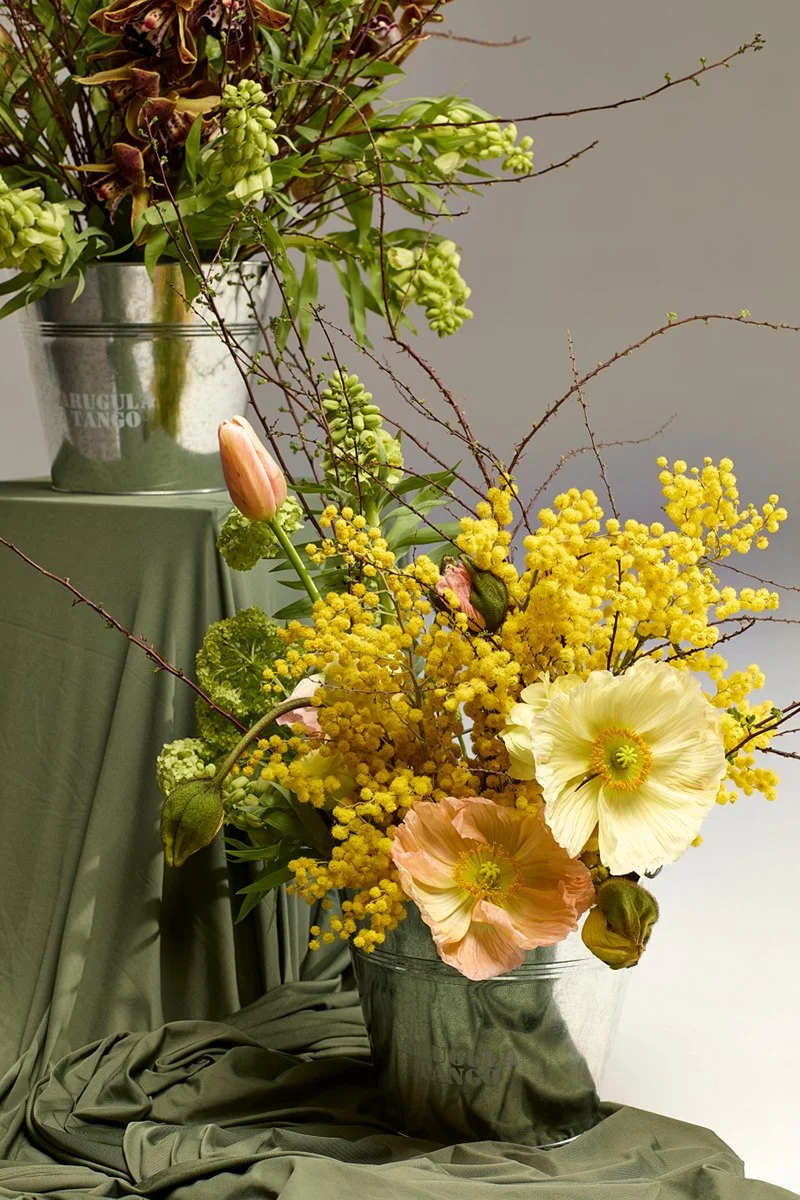
Think of the table as a stage and the arrangement as one of the performers. The flowers should attract attention, but they should not block everyone else from participating. Their size should support the meal, conversation, décor, and movement around the room. A successful centerpiece creates atmosphere without demanding constant adjustment.
This guide explains how to select flower arrangement dimensions for dining tables, coffee tables, side tables, buffets, kitchen islands, and event tables. You will learn practical rules for height and width, along with ways to adapt those rules to different occasions. The goal is not to follow a rigid formula. It is to develop an eye for proportion so that every arrangement looks intentional, comfortable, and beautifully at home.
Why Flower Arrangement Size Matters More Than You Think
Flower arrangement size influences much more than visual appearance. It affects conversation, table functionality, room balance, and even how comfortable guests feel during a meal. When the scale is right, people may not consciously notice the dimensions at all. They simply experience a table that feels welcoming and complete. When the scale is wrong, however, the arrangement quickly becomes the center of attention for all the wrong reasons. Guests may move it, chairs may feel crowded, serving dishes may have nowhere to go, or the entire setting may appear awkward.
The first principle of good floral sizing is proportion. Proportion describes how the arrangement relates to the table beneath it and the room around it. A generous bouquet may look impressive on a large entry table but overwhelm a narrow dining surface. A small cluster of delicate stems may feel charming on a bedside table but disappear visually when placed on a long banquet table. Neither arrangement is inherently too large or too small. The problem appears only when the flowers and their surroundings are out of scale.
Function matters just as much as appearance. A table used for dinner needs room for plates, glasses, serving bowls, utensils, and people’s hands. A console table in an entryway can support a taller and fuller design because no one needs to look across it while eating. A coffee table arrangement should allow space for drinks, books, or remote controls. Before choosing flowers, ask yourself what people actually do at that table. A centerpiece should cooperate with those activities, not compete with them.
Size also affects the emotional tone of the setting. A low, loose arrangement often feels relaxed and approachable. A tall, sculptural display can feel dramatic and formal. Several small vessels create rhythm and movement, while one large arrangement makes a confident focal statement. In other words, dimensions communicate mood.
The best flower arrangement is not necessarily the biggest or most elaborate one. It is the arrangement that looks as though it belongs exactly where it has been placed. When scale, function, and atmosphere align, even simple flowers can produce an unforgettable table.
Start With the Shape and Purpose of the Table
Before measuring vase height or counting stems, look closely at the shape of the table. Table shape determines how people gather around the surface, where sightlines intersect, and how much room is available in the center. A flower arrangement that works beautifully on a round table may feel narrow and disconnected on a long rectangular one. In the same way, a wide horizontal centerpiece designed for a banquet table can make a square table feel cramped.
Begin by identifying the visual center of the surface. On a round or square table, the center is clear and naturally draws the eye. On a long rectangular table, however, the visual focus may extend across an entire central line. That difference affects whether you should use one arrangement, a series of smaller arrangements, or a combination of flowers and other decorative elements.
Next, consider the table’s purpose. Is it used for everyday family meals, occasional entertaining, formal dinners, or decoration only? A table that must remain functional throughout the day benefits from a lightweight arrangement that is easy to move. A table prepared for a special event can support a more elaborate design, provided it leaves guests enough personal space. Decorative tables allow even greater freedom because there are no dinner plates or serving dishes competing for room.
The number of people seated at the table also matters. A small arrangement may appear correctly proportioned when the table is empty but feel undersized once place settings surround it. Conversely, an arrangement that fills the center attractively before dinner may become intrusive when every seat is occupied. Whenever possible, visualize the flowers alongside the complete table setting rather than judging them in isolation.
Table shape gives you the basic geometry, while table purpose tells you how much of that geometry you can use. These two considerations create the foundation for every sizing decision that follows. Once you understand how the surface functions, you can choose flowers that enhance its natural lines instead of fighting against them.
Choosing an Arrangement for a Round Table
A round table naturally directs attention toward its center, making a single flower arrangement an obvious and effective choice. Because everyone sits at a similar distance from the middle, the centerpiece can be viewed from every angle. This means the design should look complete all the way around rather than having a clear front and back. A rounded, dome-shaped, garden-style, or loosely symmetrical arrangement usually complements the circular surface beautifully.
For a small round table measuring approximately 30 to 36 inches across, an arrangement about 8 to 12 inches wide is often enough. This creates a noticeable focal point without consuming the entire surface. On a round dining table between 42 and 48 inches across, a centerpiece in the range of 12 to 16 inches wide generally feels balanced. Larger tables measuring 54 to 60 inches or more may support an arrangement 16 to 22 inches wide, depending on the number of place settings and the amount of serving space required.
One practical guideline is to keep the centerpiece footprint within roughly one-third of the table’s diameter. This is not an unbreakable rule, but it gives you a reliable starting point. A 48-inch table, for example, could comfortably hold an arrangement around 14 to 16 inches wide. If the meal includes several shared dishes, choose the smaller end of that range. If plates are served individually and the center remains mostly decorative, you can use a fuller design.
Height is especially important on a round table because every guest looks across the center. Keep dining arrangements below about 12 to 14 inches when measured from the tabletop to the highest dense cluster of flowers. A few airy stems may rise higher without causing problems, but thick blooms at eye level can interrupt conversation.
Avoid arrangements that spread outward unevenly toward particular seats. Trailing greenery or extended branches may look artistic, yet they can invade personal dining space. A round table works best when the centerpiece remains visually centered, physically contained, and equally attractive from every chair.
Sizing Flowers for a Rectangular Table
Rectangular tables create a different challenge because their length is often much greater than their width. One small vase placed in the exact center may technically be centered, yet visually it can leave large empty areas at both ends. The arrangement needs to acknowledge the table’s horizontal shape without spreading so far that it crowds place settings or serving pieces.
For a rectangular dining table seating four to six people, one medium arrangement can work well. A centerpiece around 14 to 20 inches long and 8 to 12 inches wide usually provides enough presence. As the table grows, consider extending the design horizontally or using several smaller arrangements. On a table seating eight or more people, a series of two or three coordinated floral groupings often looks more natural than one oversized centerpiece.
The key is rhythm. Repeated arrangements guide the eye along the length of the table and make the setting feel connected. They do not need to be identical. One arrangement may be slightly fuller, while the others repeat the same flowers, colors, or vase materials. Keeping the spacing consistent helps the design feel intentional. On a long table, aim to leave approximately 18 to 24 inches between small arrangements, adjusting for place settings and serving dishes.
Width requires careful attention because many rectangular dining tables are only 36 to 42 inches wide. Once plates are placed on both sides, the open central strip may be surprisingly narrow. The arrangement should usually remain within that strip rather than overlapping the dining areas. A centerpiece width of 8 to 12 inches is comfortable for many standard tables. Narrower tables may require bud vases or slender linear designs.
A horizontal arrangement can be slightly taller at the center and taper toward the ends, echoing the table’s shape without becoming rigid. Just remember that length does not have to come from one heavy mass of flowers. Negative space can connect multiple vessels just as effectively.
The best rectangular table design feels like a visual path rather than a roadblock. It should lead the eye from one end to the other while preserving room for food, glassware, conversation, and natural movement.
Decorating Square and Oval Tables
Square tables combine the intimacy of round tables with the stronger geometry of rectangular ones. Because each side is equal, the arrangement should usually remain centered and balanced from all four directions. A compact round bouquet, a low square design, or a group of several small vessels can work especially well. The main risk is choosing a centerpiece that is too wide, since square tables often provide less diagonal space between place settings than people expect.
On a small square table measuring 30 to 36 inches, keep the arrangement around 8 to 10 inches wide. A table measuring 42 to 48 inches can usually support a centerpiece between 10 and 15 inches wide. As with round tables, limiting the arrangement to approximately one-third of the tabletop width gives you a useful starting point. When four people are seated, check the corners of each place setting to make sure the flowers do not extend into dining space.
Square tables also respond well to grouped arrangements. Four tiny vases arranged in a compact square can mirror the tabletop’s geometry without creating a heavy visual block. Another option is to position three vessels in a loose triangle, which softens the strict lines of the table. Whatever grouping you choose, treat the vessels as one overall centerpiece when calculating the footprint.
Oval tables are more forgiving because they combine a long central axis with curved ends. A single elongated arrangement often suits them better than a perfectly round bouquet. The flowers can follow the oval shape, extending gently along the length while staying narrow enough for place settings. On larger oval tables, multiple arrangements can create balance, especially when the center would otherwise feel empty.
Avoid placing large floral masses near the curved ends of an oval table. Those areas usually hold place settings, and the tapering surface provides less usable room. Keep the main decorative weight closer to the center.
For both square and oval tables, the goal is to respect the shape without copying it too literally. The arrangement should echo the table’s lines, soften its geometry, and leave enough breathing room for the setting to feel graceful rather than crowded.
Measure the Table Before Choosing the Flowers
Guessing can work occasionally, but measuring produces far more reliable results. Even a few inches can determine whether an arrangement feels elegant or intrusive. Before buying flowers or selecting a vase, measure the table’s length, width, and height. Then note how much of the surface is occupied by place settings, serving dishes, lamps, books, or other permanent objects. The visible dimensions of the table are not always the same as the usable dimensions.
Start by setting the table as it will actually be used. Place dinner plates, glasses, utensils, and any serving pieces in their expected positions. The open area that remains in the center represents the realistic maximum footprint for the flowers. This approach is much more accurate than measuring an empty table and assuming the entire middle section is available.
For a decorative table, arrange the objects that normally live there before measuring. A coffee table may hold books and trays. A console may include a lamp or framed photographs. A side table needs room for a drink or reading glasses. Flowers should join the composition without forcing every other object off the surface.
Table height matters too. Standard dining tables are typically around 28 to 30 inches high, so seated sightlines become the main concern. Coffee tables sit much lower, which allows arrangements to be viewed from above. Console and entry tables are often taller, giving you more freedom to use vertical flowers or branches. The same 18-inch arrangement can feel enormous on a coffee table and perfectly proportioned on an entry table.
Write down your measurements instead of trying to remember them while shopping. Include the maximum acceptable height, width, and depth. You can even cut a piece of paper or cardboard to the planned footprint and place it on the table. This simple template immediately shows how much space the arrangement will occupy.
Measuring does not remove creativity. It creates a practical frame within which creativity can work. Like tailoring clothing to fit a person, accurate dimensions allow the final design to appear effortless, even though careful planning made that ease possible.
Finding the Right Arrangement Height
Arrangement height affects both appearance and usability, especially on dining tables. The most common guideline is to keep a low centerpiece below 12 to 14 inches from the tabletop to the highest substantial blooms. At this height, guests can usually see one another comfortably across the table. Thin stems, wispy greenery, or delicate flowers may extend a little higher because they do not create a solid visual barrier.
To test the height, sit at the table rather than standing beside it. Eye level changes dramatically when you take a seat. Ask someone to sit across from you and place the empty vase in the center. Then hold a piece of paper or a book above the vase to represent the flowers. If the shape blocks the other person’s face, the finished arrangement is likely to feel too tall or dense.
Tall arrangements can still work on dining tables, but they need to rise clearly above the conversation zone. Instead of ending directly at eye level, a tall design should usually place its main floral mass at least 24 to 30 inches above the tabletop. This creates open space underneath the flowers so guests can see through the lower portion. Tall, narrow stands or elevated vessels are often used for this purpose at formal events.
For coffee tables, height depends on the surrounding furniture. Since the arrangement is viewed from above and from nearby seating, a design between 8 and 15 inches is often comfortable. Very tall flowers can interfere with television viewing or make the surface feel visually top-heavy. On side tables, consider the height of nearby lamps and chair arms. The flowers should complement those vertical lines rather than competing with them.
Entry tables, consoles, and buffets can support taller displays because people rarely need to maintain sightlines across them. An arrangement measuring 20 to 36 inches may feel appropriate, especially in a room with high ceilings.
The right height is not a single universal number. It is the point at which the flowers feel visible and expressive without interrupting the way people use the space.
Calculating the Ideal Width and Footprint
The footprint of a flower arrangement includes everything that occupies horizontal space: the vase, blooms, leaves, branches, and any trailing elements. People often focus only on the container’s width, forgetting that flowers may spread several inches beyond its rim. A six-inch vase can easily support an arrangement 14 inches wide, so measuring the finished design matters more than measuring the vessel alone.
For dining tables, a useful starting guideline is to keep the centerpiece within one-third of the table’s width. On a 42-inch-wide table, that suggests a maximum arrangement width of about 14 inches. This leaves roughly 14 inches on either side for place settings and movement. When the table is narrower or filled with serving dishes, reduce the floral footprint accordingly.
Length works differently on rectangular and oval tables. A single arrangement can occupy approximately one-quarter to one-third of the table’s length without looking too small or too dominant. On a 72-inch table, for example, an arrangement between 18 and 24 inches long may feel balanced. For longer tables, several smaller arrangements usually provide better coverage than one enormous piece.
Consider the flowers’ natural movement as well. Flexible stems and loose greenery may shift when someone brushes the table. Keep delicate extensions away from glasses, candles, and food. If the arrangement contains broad leaves or open blooms, allow a little extra clearance around the measured footprint.
You can test the width before arranging by placing household objects on the table. Use books, bowls, or folded towels to create a rough shape with the same dimensions as the planned centerpiece. Walk around the table, sit in each chair, and reach toward the center. This quick experiment reveals crowding that may not be obvious on paper.
Negative space is part of good design. Flowers do not need to fill every open inch. Empty surface around an arrangement acts like a frame around a painting, helping the flowers stand out. A correctly sized centerpiece claims enough space to feel important while leaving enough space for the table itself to remain visible and functional.
Match the Arrangement Size to the Occasion
The same table may need completely different flower arrangement sizes depending on the event. A family breakfast, an intimate dinner, a holiday gathering, and a formal reception each place different demands on the surface. Matching the centerpiece to the occasion helps you create the right mood while maintaining practical comfort.
Casual occasions usually benefit from arrangements that feel relaxed and easy to live with. Small vases, low garden-style bouquets, or a few loosely grouped stems create warmth without making the table feel staged. Guests can pass dishes, move glasses, and settle into conversation without worrying about damaging an elaborate display. These arrangements often look best when they appear slightly imperfect, as though the flowers were gathered and placed naturally.
Formal occasions can support greater scale and drama. A taller vase, a longer horizontal centerpiece, or a coordinated series of arrangements can reinforce the sense that the event is special. Yet formality does not justify blocking sightlines or crowding guests. The arrangement still needs to work with the seating plan, menu, and service style.
The way food is served makes a major difference. A plated dinner leaves the table center relatively open, allowing more room for flowers. Family-style service requires space for shared bowls and platters. A buffet table needs visual impact, but it also requires a clear path for guests to reach food without brushing against petals or tipping a vase.
Duration matters too. At a brief reception, guests may tolerate a dramatic arrangement that would feel cumbersome during a three-hour dinner. For long meals, comfort becomes increasingly important. People need places to rest their arms, set down glasses, and engage naturally with others.
Rather than asking only, “What arrangement looks impressive?” ask, “What will happen around this table?” Picture the flow of the event from beginning to end. Flowers should support that experience. When the size reflects the occasion, the arrangement feels thoughtful instead of decorative for decoration’s sake.
Everyday Meals and Casual Gatherings
Everyday table flowers should be attractive without becoming another household obstacle. The best arrangements are easy to move, simple to refresh, and compact enough to leave the surface useful. A small vase containing a handful of seasonal stems often creates more charm than a large, complicated centerpiece. The goal is to add life to the room while preserving the relaxed rhythm of daily meals.
For a small kitchen or breakfast table, an arrangement between 6 and 10 inches wide is usually sufficient. Keep the height under about 12 inches so family members can talk across the table. A narrow vase with three to seven stems may provide all the color and texture you need. Because the arrangement is viewed at close range, individual flowers become more noticeable, allowing a modest quantity to make a strong impression.
On a larger everyday dining table, resist the urge to fill the entire center. One medium arrangement around 10 to 14 inches wide can create a clear focal point. Another option is to use two or three small vessels grouped closely together. The group feels substantial, but each piece remains easy to relocate when homework, serving dishes, or other activities take over the table.
Casual gatherings require slightly more planning because the number of guests and dishes may increase. If food will be passed around the table, keep flowers narrow and contained. You can also move the main arrangement to a nearby console once the meal begins, leaving behind one or two tiny bud vases for atmosphere. This approach allows you to enjoy a fuller display before dinner without sacrificing space during the meal.
Choose sturdy containers with stable bases. Everyday tables are busy places, and a top-heavy vase can easily be knocked over. Avoid branches that reach toward chairs or delicate flowers that drop pollen near food.
An everyday centerpiece should feel like a friendly presence, not a museum exhibit. When people can use the table naturally without constantly protecting or rearranging the flowers, the size is probably right.
Formal Dinners, Buffets, and Special Events
Formal dinners and special events invite greater visual drama, but they also demand more precise sizing. Every element is usually planned, from the place settings to the seating arrangement, so the flowers need to fit into a larger composition. A centerpiece can be fuller, taller, or more structured than an everyday arrangement, provided it respects guest comfort and table service.
For a formal seated dinner, decide first whether the design will be low or elevated. Low arrangements should generally remain below 12 to 14 inches and may extend horizontally along the center of the table. Elevated arrangements need enough clearance underneath the floral mass for guests to see across the table. Dense flowers ending at face level create an elegant photograph but an uncomfortable meal.
Long event tables often look best with repeated floral moments rather than one central arrangement. Several medium arrangements spaced evenly can establish rhythm while leaving openings for candles, table numbers, serving pieces, or decorative objects. On a very long table, alternating medium bouquets with smaller bud vases creates variation without losing unity.
Buffet tables allow taller and more dramatic arrangements because guests do not sit across from one another. Place the largest floral display near the back, at one end, or in a raised central position where it will not interfere with food access. Avoid low, wide flowers placed directly in front of serving dishes. Guests should not need to reach through leaves or lean around branches to fill their plates.
Cocktail tables usually require compact arrangements because the available surface is limited. A vase between 4 and 7 inches wide and under 12 inches tall is often enough. Since guests may stand close to the table, make sure flowers do not extend beyond the edge where they can catch on clothing.
Special-event arrangements should create impact from the room entrance as well as from nearby seats. Step back and view the entire space before finalizing the scale. The flowers must connect with the room while still serving the people gathered around them. True elegance comes from that balance.
Balance the Vase, Flowers, Room, and Sightlines
A flower arrangement is not measured by blooms alone. The vase, the room, the surrounding furniture, and the viewing angle all contribute to its perceived size. A narrow container with tall stems may occupy very little table space while creating strong vertical impact. A low bowl filled with spreading flowers may appear smaller from across the room but consume far more usable surface. Good sizing considers both physical dimensions and visual weight.
The vase should feel proportional to the finished arrangement. As a general guide, the visible stems and flowers may measure approximately one and a half to two times the height of the vase. This proportion works well for many upright designs, though loose garden arrangements and sculptural branches may require different ratios. More important than following a formula is ensuring that the container can physically support the flowers. A narrow or lightweight vase paired with a large top-heavy bouquet is both visually unstable and easy to tip.
Color influences perceived scale. Dark, saturated flowers often appear heavier and more compact, while pale colors and airy textures can make a similarly sized arrangement feel lighter. Dense clusters of large blooms carry more visual weight than delicate stems separated by open space. If a centerpiece feels too dominant, you may not need to reduce its actual dimensions. Removing a few heavy flowers or adding space between stems can soften the design.
Room size also changes perception. A bouquet that feels generous in a small dining room may look modest in an open-plan space with tall ceilings. Look beyond the tabletop and compare the arrangement with nearby lighting, artwork, windows, and furniture. The flowers should be noticeable without appearing disconnected from the room.
Sightlines remain the final test. Sit at every place setting, walk past the table, and view the flowers from the room entrance. Check whether guests can see one another, reach serving dishes, and move comfortably. A successful arrangement works from multiple angles and distances. When the vase, flowers, room, and human experience feel balanced, the exact measurements become almost invisible—which is usually a sign that you chose them well.
Common Flower Arrangement Sizing Mistakes
One of the most common mistakes is selecting flowers before considering the table. People often fall in love with a large bouquet and then try to force it into a space that cannot support it. The result may look impressive for a few minutes, but frustration begins as soon as people sit down. Measuring first allows you to choose flowers that serve the setting instead of dominating it.
Another frequent error is focusing only on height. A centerpiece may be low enough for conversation but still spread so widely that plates, glasses, and serving dishes have no room. Always evaluate the complete footprint, including leaves and stems that extend beyond the vase. Turn the arrangement slowly and check its widest points from every direction.
Using an undersized arrangement can also create imbalance. A tiny vase on a large table may look accidental, especially when the room contains substantial furniture or high ceilings. Instead of buying a much larger bouquet, group several small vessels or add supporting elements around the flowers. Repetition can create visual scale without producing a single heavy centerpiece.
Ignoring the vase is another problem. A large flower mass in a small container often looks unstable, while a wide, heavy vase with only a few short stems may feel bottom-heavy. The container and flowers should appear to support one another both physically and visually. Their proportions do not need to be perfectly mathematical, but they should feel intentional.
Many people also forget to size the arrangement with the complete place settings in position. An empty table can make a bouquet seem appropriately modest. Once plates, glasses, napkins, and food arrive, the same arrangement may become intrusive. Test the design under realistic conditions whenever possible.
Finally, avoid treating every table in the room the same way. A dining table, buffet, coffee table, and side table have different functions and viewing angles. Repeating exactly the same arrangement size everywhere can make the décor feel rigid. Coordinated flowers in varied scales create a more natural result. The goal is harmony, not duplication.
Conclusion
Choosing the right flower arrangement size becomes much easier when you stop thinking of the centerpiece as an isolated decoration. The flowers are part of a working environment that includes the table, room, place settings, food, and people. Each of those elements affects what “right size” actually means. A successful arrangement respects all of them while still bringing beauty and personality to the space.
Begin with the table’s shape. Round and square tables usually favor centered arrangements that look attractive from every side. Rectangular and oval tables often benefit from elongated designs or multiple smaller arrangements that follow the length of the surface. Then measure the usable area rather than relying on the table’s total dimensions. Place settings, serving pieces, and everyday objects reduce the space available for flowers.
Height should protect conversation. Low dining arrangements generally work best below 12 to 14 inches, while tall centerpieces need to lift the main flowers clearly above eye level. Width should leave enough open surface for people to eat, reach, and move comfortably. Keeping the arrangement within approximately one-third of the table’s width provides a dependable starting point.
The occasion adds another layer. Everyday flowers should be easy, compact, and movable. Formal dinners can support more structure and drama. Buffet tables allow greater height, while coffee tables and side tables require arrangements that respect nearby seating and daily use.
Most importantly, trust what you see and experience. Sit at the table. Walk around it. Reach for a glass or serving dish. View the arrangement from the doorway and from the nearest chair. Measurements provide guidance, but real-life testing reveals whether the design truly works.
The right arrangement does not simply fit the table. It makes the entire setting feel more welcoming, balanced, and complete. When flowers enhance the experience without interrupting it, you have found the perfect scale.