Wedding Welcome Party Flowers for Connecticut and New York Celebrations
A wedding welcome party has a special kind of energy. Guests are arriving, old friends are reconnecting, families are meeting, and the formality of the wedding day has not yet begun. The atmosphere usually feels lighter, more spontaneous, and full of anticipation. That makes wedding welcome party flowers more than simple decoration. They help guests understand the mood the moment they enter the space. Bright, loose arrangements can say, “Relax, grab a drink, and enjoy the evening,” while sculptural flowers and candlelight can create a polished opening that feels intimate and intentional.
Connecticut and New York offer an unusually wide range of welcome party settings. One celebration may take place beside the water, surrounded by weathered wood and open sky. Another may unfold in a historic inn, a garden, a private estate, a city restaurant, an industrial loft, or a rooftop overlooking the skyline. The flowers should respond to that specific environment rather than follow a generic formula. A bouquet that looks effortless in a coastal Connecticut setting may feel too casual in a dramatic Manhattan dining room. Likewise, a highly architectural arrangement could appear out of place at a relaxed garden gathering.
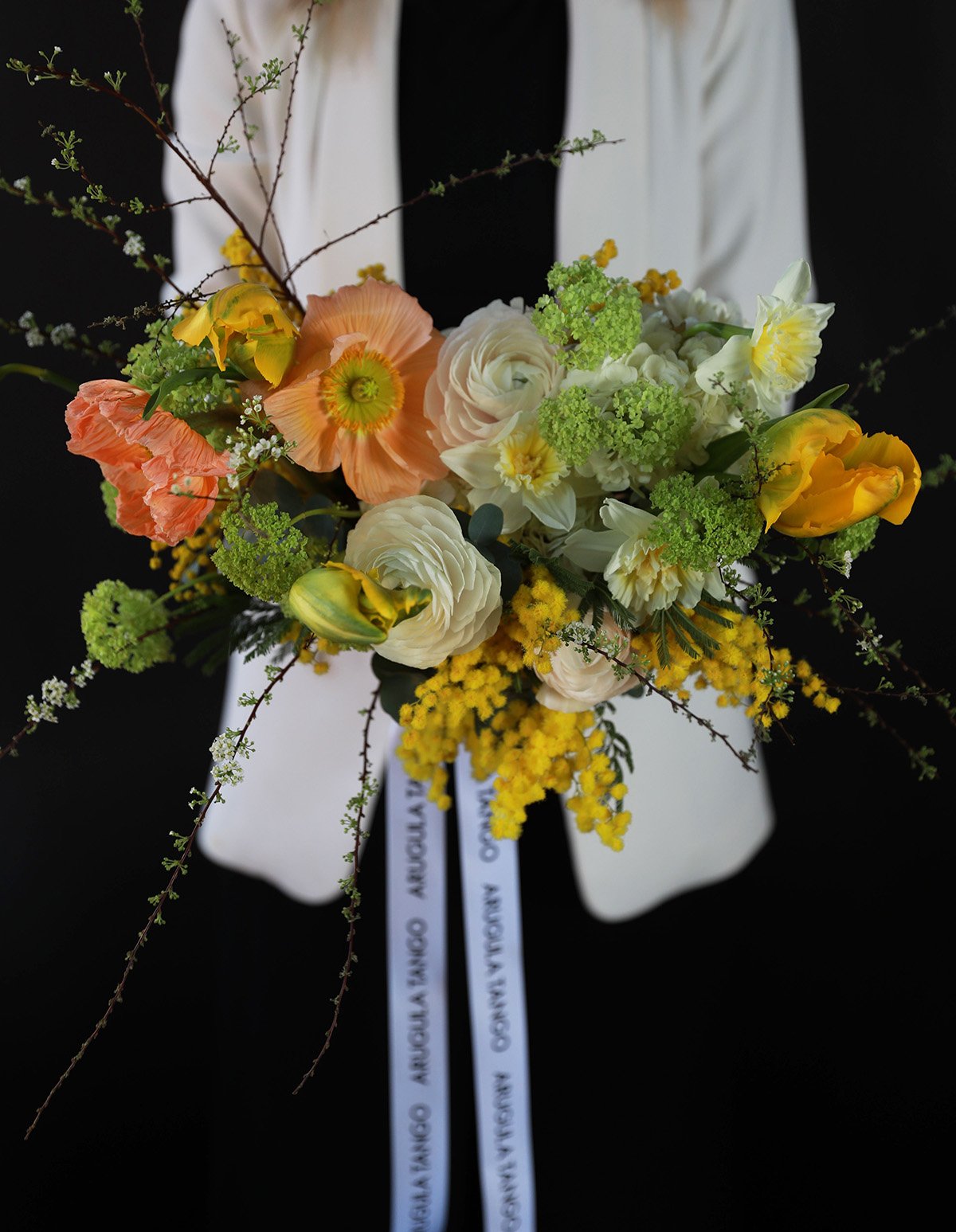
The strongest welcome party designs do not attempt to preview every detail of the wedding. They create their own chapter. You can use color, shape, texture, containers, lighting, and placement to give the evening a distinctive identity while maintaining a subtle connection to the ceremony and reception. Perhaps the welcome party introduces one wedding color in a brighter form, or uses seasonal flowers in smaller, looser arrangements before the wedding presents them on a grander scale.
This guide explains how to plan flowers for Connecticut and New York welcome parties with both beauty and practicality in mind. You will learn how to respond to different venues, select a palette, identify the focal points that matter, prepare for changing weather, and make the most of your floral budget. The goal is not to fill every surface. It is to create an opening-night atmosphere that feels personal, memorable, and unmistakably connected to the people being celebrated.
Why Welcome Party Flowers Deserve Their Own Identity
The welcome party is often the first time most guests experience the wedding weekend as a complete group. That first impression matters. It sets expectations, establishes the social tone, and helps everyone transition from travel mode into celebration mode. Flowers play an important role because they communicate atmosphere before anyone reads a menu, hears a speech, or understands the schedule. A table filled with vivid seasonal stems feels lively and approachable. A room with restrained white flowers and low candlelight feels elegant and calm. Neither direction is automatically better; the right choice depends on the experience you want guests to have.
Giving the welcome party its own floral identity also protects the visual impact of the wedding day. When the same flowers, colors, centerpiece styles, and containers appear at both events, the wedding may feel less surprising. Guests have already seen the main design idea. A separate welcome party look creates progression. The opening event can be more colorful, textural, playful, or relaxed, while the wedding moves toward greater formality, romance, or drama. The two celebrations still belong together, but they do not repeat the same visual sentence.
This distinction is especially valuable in Connecticut and New York, where weekend events may take place in very different environments. A couple might host a welcome party at a casual waterfront venue and marry the next day inside a historic estate. Another may begin with cocktails in a city loft before moving to a formal ceremony in a grand interior. The flowers can help guests feel that shift. They bridge the locations while allowing each space to retain its character.
A unique floral identity does not require an entirely separate design universe. You might repeat one flower variety, one ribbon color, or one foliage tone across the weekend. The difference can come from scale, arrangement shape, or container style. A flower used as a single stem at the welcome party may appear in fuller wedding arrangements the next day.
Think of the welcome party as the opening note of a song. It should introduce the emotional world of the weekend without revealing every melody at once.
Define the Relationship Between the Welcome Party and Wedding
Before choosing flowers for the welcome party, define how the event relates to the wedding itself. Are the two celebrations meant to feel closely connected, or do you want a clear contrast? Will they take place in similar settings, or does each venue have a completely different personality? Answering these questions early prevents the welcome party from becoming a collection of attractive details that do not support the overall weekend.
A useful planning method is to identify one shared element and two contrasting elements. The shared detail might be a color, a flower variety, a type of greenery, or an overall preference for organic movement. The contrasts might involve arrangement size and formality. For example, both events could include warm peach, but the welcome party uses small mixed vases while the wedding features large garden-style centerpieces. The connection is visible without making the events look identical.
You can also create contrast through emotional tone. If the wedding will be soft, romantic, and neutral, the welcome party may be brighter and more energetic. If the wedding is expected to be bold and dramatic, the evening before can feel quieter, with candles, restrained flowers, and a limited palette. This sequence gives guests a sense of discovery. Each event reveals something new rather than repeating what came before.
Clothing and food can offer useful clues. A welcome party with casual attire, local food, and open seating may call for loose flowers and relaxed table arrangements. A seated dinner with formal invitations and a structured menu may support more polished designs. The flowers should reinforce the way people will actually experience the event.
Write down three words for each celebration. The welcome party might be “warm, colorful, social,” while the wedding is “romantic, refined, timeless.” Those words become a filter for every floral decision. When considering a flower, vessel, or centerpiece shape, ask which event it serves more naturally.
The relationship between the two designs should feel intentional but not overmanaged. Guests do not need to recognize a complicated visual system. They simply need to feel that the weekend unfolds with purpose, and that each celebration has a personality of its own.
Connecticut Celebrations: Relaxed Elegance and Natural Texture
Connecticut welcome parties often draw strength from their surroundings. Coastal towns, wooded properties, historic homes, gardens, barns, country clubs, and private estates offer natural texture before a single arrangement is placed. The most successful flowers respond to that existing character instead of trying to overpower it. A loose, seasonal design can feel polished while still appearing comfortable in the landscape.
For a coastal celebration, consider airy flowers, pale colors, grasses, and stems with natural movement. The palette does not need to rely on obvious blue-and-white combinations. Sand, cream, faded coral, soft yellow, muted green, and warm blush can suggest the coast in a more nuanced way. The flowers should feel as though they belong beside open sky and changing water rather than inside a highly controlled ballroom.
Country and estate settings can support richer textures. Branches, garden roses, flowering vines, herbs, seed-like accents, and seasonal foliage may look appropriate, especially when arranged in low bowls or simple vessels. The design can appear gathered and abundant without becoming rustic. Restraint matters. Too many burlap-like textures, wooden accessories, or field-inspired details can push the look toward a theme rather than refined country style.
Historic Connecticut venues often feature brick, stone, dark wood, porches, and traditional rooms. Flowers can soften those architectural elements through curved stems and layered petals. Warm colors tend to work beautifully against aged materials, while all-white flowers can create a crisp, formal contrast. Candlelight adds depth after sunset, especially when the arrangements remain low enough for conversation.
Weather must be part of the design. Coastal wind, summer humidity, sudden rain, and cool evenings can all affect delicate flowers. Stable vessels and durable stems are essential. Outdoor arrangements should remain low or weighted, and flowers should be protected before guests arrive.
Connecticut style is often most convincing when it feels effortless but edited. The flowers may appear natural, yet every stem has been chosen for color, movement, and proportion. That balance between polish and ease is what makes the setting feel luxurious without appearing overly staged.
New York Celebrations: Energy, Contrast, and Strong Visual Moments
New York welcome parties often benefit from a more concentrated floral strategy. City venues may have smaller footprints, dramatic architecture, bold interiors, and limited setup time. Rather than spreading flowers across every surface, it is often more effective to create a few strong visual moments. A sculptural arrangement at the entrance, a striking bar installation, or a continuous line of small flowers along a communal table can transform the space without creating clutter.
Urban settings invite contrast. Soft garden flowers can look extraordinary against concrete, metal, glass, brick, or dark wood. Conversely, architectural stems and monochromatic arrangements can feel at home in a clean contemporary room. The flowers do not have to imitate the city. They can either echo its structure or deliberately soften it.
Lighting plays an important role. Many city welcome parties begin in late afternoon and continue after dark. Rooftops move from bright daylight to sunset and then artificial light. Restaurants and lofts may be dim from the beginning. Pale flowers reflect candlelight and remain visible in lower light, while deep colors create drama but may need lighter accents to avoid disappearing. The palette should be evaluated in the actual room whenever possible.
Space requires discipline. Narrow restaurant tables, small cocktail areas, and busy bars leave little room for wide arrangements. Bud vases, compact bowls, elevated pieces with open space underneath, and wall-adjacent installations can preserve usable surfaces. Every arrangement should have a reason for being there.
New York celebrations can also support bolder color. Saturated red, yellow, orange, purple, or pink may feel especially energetic against a neutral urban background. A limited palette of one dominant color and one supporting tone can appear more sophisticated than a broad mixture.
The goal is not to make the flowers feel loud simply because the location is in New York. It is to use confidence. Strong shape, clear color, and intentional placement create impact. In a city setting, a few decisive floral gestures often speak more powerfully than a large quantity of arrangements competing for attention.
Choose a Clear Floral Direction Before Selecting Blooms
One of the most common planning mistakes is selecting specific flower varieties before deciding what the event should feel like. A couple may collect images of individual blooms they love, only to discover that the resulting combinations do not suit the venue, season, or level of formality. A stronger approach begins with a floral direction: a clear statement describing the palette, silhouette, texture, and emotional mood.
Your direction might be “sun-warmed garden flowers in small collected vessels” or “modern white flowers with sculptural green branches.” It could be “bright seasonal color with playful movement” or “quiet neutrals, candlelight, and low architectural arrangements.” This sentence becomes a design compass. It keeps the flowers, containers, linens, and lighting moving in the same direction.
The welcome party’s purpose should influence the choice. If guests will circulate with drinks, flowers should create energy without blocking movement. If the event centers on a seated dinner, the arrangements can become more detailed because guests will view them closely. For a casual drop-in party, a few focal pieces may be more useful than centerpieces on every table. For a formal dinner, repetition and rhythm may matter more.
Scale is part of the direction too. Decide whether the event should feel abundant or restrained. Abundance does not necessarily mean large centerpieces. It can come from many small arrangements, layered textures, and repeated color. Restraint does not mean empty. A few carefully placed stems can create a strong sense of intention.
The floral direction should also account for what the wedding will look like. If the next day features loose pastel flowers, the welcome party might use brighter colors and cleaner shapes. If the wedding is modern and monochromatic, the welcome party can feel more organic and varied.
Once the direction is clear, specific flower choices become much easier. You can evaluate each option based on whether it supports the overall mood. This prevents the design from becoming a collection of favorites with no shared language. Flowers are most powerful when they work together to create a recognizable atmosphere, not when each stem competes to be the main attraction.
Build a Color Palette That Sets the Opening Mood
Color is often the first floral element guests notice, even before they recognize individual flowers. It immediately shapes the emotional tone of the welcome party. Warm colors such as coral, peach, yellow, rust, and red can make a room feel social and energetic. Cool colors such as blue, lavender, gray-green, and white create calm. Neutral palettes feel refined, while high-contrast combinations can appear modern and expressive.
The welcome party palette should respond to the venue. In Connecticut, natural surroundings may already provide green, blue, brown, or seasonal foliage. Flowers can complement those colors rather than repeat them. A garden surrounded by green may benefit from warm blooms that stand out. A coastal space can support creamy neutrals and faded sunset colors. In New York, the room may have colored walls, patterned upholstery, brick, or metallic finishes that influence the design.
A limited palette generally looks more polished than an unrestricted mix. Choose two or three leading colors and allow small tonal variations within them. Peach can range from pale apricot to deeper coral. White can include ivory, cream, and soft beige. Green can move from fresh leaf tones to muted olive. These variations create depth without visual confusion.
Consider how the palette transitions into the wedding day. You might use brighter versions of the wedding colors at the welcome party, then soften them for the ceremony. Another option is to feature a supporting wedding color more prominently during the first event. If pale blue appears only as an accent at the wedding, it could become the main welcome party color.
Lighting can change how colors appear. Deep burgundy may look nearly black in a dim restaurant, while pale blush may disappear against warm cream walls. Take photographs of the venue at the same time of day as the event and evaluate the palette in that light.
Color should also work with attire and printed materials, but it does not need to match them exactly. Coordination feels more natural when tones share an undertone rather than duplicate one another. The right palette acts like a warm handshake: it introduces the personality of the weekend before the formal celebration begins.
Use Shape and Texture to Establish the Party’s Personality
Shape and texture determine whether flowers feel loose, polished, playful, formal, architectural, or romantic. Two arrangements can use the same color palette and still create completely different moods. A rounded bowl of tightly grouped blooms feels composed. A collection of thin stems with visible space feels modern and airy. A low runner suggests community, while a tall sculptural piece creates drama.
For a relaxed welcome party, consider arrangements with varied stem heights and natural movement. Flowers may lean slightly, curve outward, or appear loosely gathered. This style works well in gardens, coastal settings, and casual dining environments. The design should still be secure and balanced. “Loose” should describe the visual effect, not unstable construction.
A more polished dinner may call for compact arrangements with clean silhouettes. Monochromatic flowers grouped in low bowls can look confident and sophisticated. Repetition across tables creates rhythm, especially in a private dining room or formal estate setting. The flowers do not need to be large when the shape is clear.
Texture adds emotional depth. Soft petals feel romantic, glossy leaves appear modern, grasses suggest movement, and branches introduce structure. Combining too many textures can make the arrangement feel restless. Choose one dominant texture and one or two supporting elements. A bouquet of ruffled flowers may need only simple foliage. A branch-heavy design may benefit from a few smooth blooms rather than several competing flower forms.
Negative space is equally important. Empty areas between stems allow guests to see the shape of each flower and keep the arrangement from feeling dense. In city venues, negative space can make a small arrangement appear more artistic. In country settings, it prevents natural textures from becoming overly rustic.
Container shape reinforces the floral form. A shallow bowl supports a low spreading arrangement, while a narrow vase encourages vertical lines. Collected bottles create informality, and a single substantial vessel feels more formal.
When shape and texture are chosen deliberately, the welcome party develops a recognizable personality even before color enters the conversation. They are the body language of floral design, quietly telling guests how the evening is meant to feel.
Match the Flowers to the Venue and Guest Experience
A floral plan should begin with how guests will use the venue. Will they sit for a full meal, circulate between stations, gather around a bar, or move between indoor and outdoor spaces? Flowers must support those activities. An arrangement that looks beautiful in an empty room can become frustrating once guests, glasses, plates, and service staff enter the picture.
At a cocktail-style welcome party, prioritize entry points, bars, food stations, and a few high-visibility surfaces. Guests will not spend the entire evening at one table, so numerous small centerpieces may have less impact than one memorable arrangement. Flowers should remain narrow enough to preserve drink space and stable enough to withstand movement around crowded areas.
For a seated dinner, table design becomes the focus. Arrangements should preserve sightlines and leave room for plates, menus, glassware, and shared food. Long tables can support repeated small arrangements or a low runner. Round tables usually need one central grouping. The flowers should create rhythm without dividing guests from one another.
Venue character matters just as much as function. A richly decorated room may need restrained flowers. A plain space may benefit from stronger color or larger focal pieces. Outdoor locations already contain natural elements, so the arrangements should frame the environment rather than compete with it.
Consider what guests see first. The entrance often provides the strongest opportunity to establish mood. A welcome sign with flowers, a statement arrangement near check-in, or a decorated bar can create an immediate sense of celebration. From there, the floral story can become quieter as guests move deeper into the space.
Movement paths should remain clear. Avoid arrangements that extend into narrow aisles, block service doors, or make it difficult to reach food. Tall pieces must be secure, especially in windy or crowded environments. Flowers near candles should be carefully spaced.
A successful design feels generous because it supports comfort. Guests can talk, eat, move, and enjoy the setting without managing the décor. The flowers become part of the experience rather than an obstacle placed inside it.
Coastal, Country, Garden, and Estate Settings
Natural and historic venues invite flowers that feel connected to the landscape, but that connection should be interpreted rather than copied. A coastal party does not need shells and blue hydrangea on every table. A country celebration does not require mason jars or excessive rustic texture. The most refined designs borrow color, movement, and atmosphere from the surroundings while maintaining a clear visual point of view.
At coastal venues, wind is often the first practical concern. Low arrangements, weighted vessels, and compact groupings are safer than top-heavy centerpieces. Flowers with flexible stems can move gracefully, but fragile extended branches may bend or break. Pale yellow, warm white, faded peach, soft blue, sandy beige, and fresh green can echo light, water, and shoreline without becoming literal.
Garden settings already provide floral abundance, so additional arrangements should be selective. Use flowers to guide attention toward dining areas, bars, or entrances rather than trying to compete with every planted bed. A limited palette can help the event feel designed rather than simply surrounded by blooms. If the garden is highly colorful, neutral arrangements may offer balance.
Country venues can support layered seasonal texture. Branches, foliage, herbs, fruiting elements, and gathered flowers may feel appropriate, particularly on wood tables or porches. Keep the styling edited so the result feels elegant rather than themed. Clean linens, simple vessels, and controlled color can balance organic materials.
Estate settings vary from grand and formal to relaxed and residential. Historic rooms often benefit from flowers with curved lines that soften heavy architecture. Outdoor terraces may require arrangements that remain stable in changing weather. Large lawns can visually reduce small centerpieces, so concentrate flowers in guest areas rather than scattering them widely.
In every natural setting, pay attention to insects, heat, humidity, and direct sunlight. Strong fragrance and exposed fruit may attract unwanted attention outdoors. Flowers should be kept shaded before setup and hydrated as long as possible.
The best venue-responsive design looks as though the flowers could only belong in that place. It feels rooted in the environment while still reflecting the couple’s personal style.
City Restaurants, Rooftops, Lofts, and Private Rooms
Urban welcome party venues demand precision. Space is often limited, setup windows can be short, and the room may already contain a strong visual identity. The floral design must make an impact without interfering with service, circulation, or the architecture. A few deliberate arrangements usually work better than flowers placed everywhere.
Restaurants require careful measurement. Tables may be narrow, closely spaced, or filled with shared plates. Compact arrangements, bud vases, and small clusters preserve dining space. Strong fragrance should be avoided near food, and loose petals or pollen can become distracting. Flowers should enhance the room’s atmosphere without competing with the menu.
Rooftops introduce weather and perspective. Wind can overturn light vessels, while direct sun can weaken flowers before the event begins. Weighted containers and low arrangements are safer. Because the skyline already creates a dramatic backdrop, flowers can remain simple. Clear color and repeated shapes may be more effective than large, complicated pieces.
Lofts offer flexibility but can feel visually empty when the ceiling is high and the room is open. Small table arrangements may disappear from a distance. Create a few stronger focal points near the bar, entrance, or central table, then use smaller supporting flowers elsewhere. Architectural branches or taller pieces can help connect the tables to the scale of the room.
Private dining rooms are more intimate. Guests see the flowers at close range, making texture and detail important. Candlelight, menus, tableware, and linens should be considered alongside the arrangements. A large centerpiece may overwhelm the room, while several small vessels can create depth without blocking conversation.
Access and delivery logistics are particularly important in city buildings. Elevators, loading areas, security procedures, stairs, and limited parking can affect installation time. Arrangements should be designed for efficient transport and quick placement.
City style does not require a particular color or flower type. It requires confidence and control. When every floral element has a clear purpose, even a compact room can feel transformed.
Design the Floral Focal Points Guests Will Actually Notice
Not every surface deserves the same floral investment. The most effective welcome party designs concentrate flowers where guests naturally look, gather, and take photographs. This approach creates stronger visual impact and often uses the budget more intelligently than spreading small arrangements across every corner.
The entrance is one of the most important focal points. It establishes the mood before guests fully enter the event. A floral arrangement beside a welcome sign, on a check-in table, or near the doorway can create a clear transition from ordinary space to celebration. The design should not block movement or make check-in difficult. It simply needs enough presence to signal that guests have arrived somewhere special.
The bar is another high-value location because people visit it repeatedly. Flowers can frame the back of the bar, sit at one end, or appear in a tall arrangement that remains clear of service space. Avoid placing low flowers directly where drinks are mixed or passed. The arrangement should support the bar’s function rather than compete with it.
Dining tables deserve careful attention because guests spend the most time there. Instead of thinking only in terms of centerpieces, consider the table as a complete landscape. Flowers, candles, menus, linens, and tableware should work together. One table may need several small arrangements, while another needs a single statement piece.
Food and dessert displays can also benefit from flowers, but placement must be hygienic and practical. Keep petals, pollen, and foliage away from uncovered food. A floral arrangement beside the display is often more useful than one woven through it.
Photo areas do not always require a formal backdrop. A beautiful arrangement near an architectural feature, window, terrace, or wall can create a natural place for pictures. Guests will use it without feeling directed into a staged setup.
The focal points should form a visual path. Guests encounter flowers at the entrance, notice them again near drinks, and then experience them more closely at the table. This rhythm makes the entire event feel decorated even when only a few areas contain substantial arrangements.
Plan Around Season, Weather, Delivery, and Setup
Welcome party flowers must survive real conditions, not just look beautiful in a design proposal. Season, weather, delivery access, storage, and setup time all affect what is practical. Connecticut and New York can experience heat, humidity, rain, strong wind, sudden cold, and rapid temperature changes, depending on the month and location. A successful plan prepares for those conditions without allowing logistics to dominate the visual design.
Spring weather can be unpredictable. A warm afternoon may become cold after sunset, especially near the water. Delicate flowers should not remain exposed during setup, and outdoor arrangements may need to move indoors if rain develops. Summer brings heat and humidity, which can shorten vase life. Flowers should remain shaded, hydrated, and away from hot pavement or enclosed vehicles.
Fall offers rich seasonal material, but wind and temperature drops can create challenges. Tall branches and lightweight vessels need extra stability. Winter events require protection during transport. Flowers moving from a heated vehicle into freezing air can suffer damage quickly, so they should remain covered until installation.
Delivery timing should account for venue access. Restaurants may allow setup only shortly before guests arrive. Private properties may offer more flexibility, while city buildings may require loading instructions, elevator reservations, or security check-in. The floral plan should match the actual amount of installation time available.
Whenever possible, arrangements should arrive mostly completed. Complicated on-site construction increases risk, especially in a small room or during a short setup window. Large focal pieces may still require assembly, but table flowers should be designed for efficient placement.
Create a clear weather backup for outdoor events. Decide where flowers will move if the party shifts inside. Arrangements designed for long outdoor tables may not fit the indoor layout, so flexibility matters. Small grouped vessels are particularly useful because they can be redistributed quickly.
Assign one person to confirm that flowers are placed correctly before guests arrive. That person should know the intended layout and have access to extra water, towels, and basic cleanup supplies.
Logistics are part of elegance. When flowers arrive fresh, remain stable, and fit the schedule, guests experience only beauty—not the planning required to create it.
Balance Budget, Personalization, and Visual Impact
A memorable welcome party does not require flowers on every table, ledge, bar, and doorway. The strongest designs use budget with purpose. They identify where flowers will create the greatest emotional and visual return, then allow lighting, linens, architecture, and natural surroundings to support the rest of the atmosphere.
Begin by ranking priorities. Dining tables may come first for a seated dinner, while the bar and entrance may matter more at a cocktail-style party. One statement arrangement can create more impact than several medium pieces with no clear focal point. Small bud vases can make long tables feel abundant while using fewer stems than traditional centerpieces.
Color can increase perceived value. A limited palette looks intentional and allows flowers to be grouped for stronger impact. Monochromatic arrangements often feel luxurious because the repetition creates confidence. Seasonal flowers can also provide fullness and texture without forcing the design around rare or fragile varieties.
Personalization does not have to involve expensive custom installations. A flower connected to family history, a color inspired by the location, or a vessel style that reflects the couple’s home can make the event feel intimate. Handwritten notes, meaningful table names, and photographs can share the visual work with flowers.
Reuse may be possible, but it should be planned carefully. Small welcome party arrangements can move to breakfast tables, getting-ready rooms, or hospitality areas the next day. They should not simply be transferred into the wedding design if that would make both events look the same. Reuse works best in secondary spaces where the flowers extend enjoyment without weakening the wedding’s identity.
Avoid reducing every arrangement equally when adjusting the budget. A small reduction across the entire room can make the design feel thin. It is often better to remove flowers from lower-priority areas and preserve the strength of key focal points.
Luxury comes from coherence, not quantity. Guests remember a clear color story, a beautifully styled table, and the feeling of entering a thoughtful space. They rarely count stems. When budget, personalization, and placement are balanced, the welcome party feels generous because every choice contributes to the experience.
Conclusion
Wedding welcome party flowers for Connecticut and New York celebrations should do more than decorate the evening. They should introduce the emotional world of the wedding weekend. Whether the event takes place beside the water, in a garden, at a private estate, inside a city restaurant, or on a rooftop, the flowers can help guests understand how the celebration is meant to feel.
Begin by defining the welcome party’s relationship to the wedding. The two events can share one visual thread while differing in color, shape, texture, or formality. A brighter welcome party can lead into a softer wedding. A quiet candlelit dinner can prepare guests for a dramatic ceremony and reception. The goal is continuity without repetition.
Let the venue guide the design. Connecticut settings often benefit from natural movement, seasonal texture, and relaxed elegance. New York spaces may call for stronger visual moments, controlled color, and precise use of limited space. Neither region requires a fixed style. The best flowers respond to the actual room, landscape, light, and guest experience.
Choose focal points strategically. Entrances, bars, dining tables, and photo-friendly areas usually provide the greatest impact. Flowers should never interfere with movement, food service, or conversation. Negative space is part of the design, not a sign that something is missing.
Plan for weather and logistics early. Stable vessels, realistic setup windows, proper hydration, and flexible layouts protect both the flowers and the event. A beautiful plan only works when it can be installed safely and efficiently.
Budget should support the strongest ideas rather than spread flowers thinly across the venue. A limited palette, seasonal materials, and carefully chosen focal arrangements can create a luxurious atmosphere without unnecessary volume.
The welcome party is the first shared memory of the wedding weekend. When the flowers feel personal, site-specific, and distinct from the wedding day, they create a sense of arrival that guests will remember long after the final toast.
Should welcome party flowers match the wedding flowers?
Welcome party flowers do not need to match the wedding flowers exactly. In most cases, a related but clearly distinct design creates a stronger experience. The two events should feel like they belong to the same weekend, but guests should be able to sense that each one has its own purpose and mood.
A simple way to create connection is to repeat one element. That element might be a specific flower, a foliage tone, a ribbon color, or one shade from the wedding palette. The welcome party can then change the arrangement shape, scale, supporting colors, and containers. For example, soft peach may appear in small relaxed welcome party arrangements and return the next day as a subtle accent within larger neutral centerpieces.
The opposite approach can also work. You may keep the same colors but completely change the design style. White and green flowers can feel casual in a collection of small glass vessels and formal in large structured wedding arrangements. Guests recognize the shared palette while experiencing a different visual atmosphere.
Exact repetition is usually less effective because it can make the wedding flowers feel familiar before the ceremony begins. Save the most dramatic scale, signature arrangement, or distinctive floral combination for the wedding day. The welcome party should create anticipation rather than reveal every design idea.
Venue differences may naturally guide the contrast. A coastal welcome party can use airy movement and sun-warmed colors, while an indoor wedding adopts a more refined palette. A city restaurant may inspire sculptural arrangements before a romantic estate wedding the following day.
Matching is not the same as cohesion. Cohesion comes from a shared sensibility: similar attention to detail, compatible color temperatures, and an overall style that reflects the couple. The designs can look different while still feeling related.
The best relationship resembles two outfits chosen for the same weekend. They may share a color or level of sophistication, but each is appropriate for its own setting. That balance allows the welcome party to feel complete without competing with the wedding.