How to Preserve Your Wedding Bouquet: Modern Options for Connecticut Brides
Your wedding bouquet spends the day closer to you than almost any other decorative detail. You carry it while walking into the ceremony, hold it during portraits, place it nearby during dinner, and see it in many of the photographs that will define your memories of the celebration. It may contain flowers chosen for their color, family significance, fragrance, season, or connection to the place where you married. Then, almost overnight, the bouquet begins to change. Petals soften, stems bend, and the arrangement that once looked perfectly fresh starts moving through its natural life cycle.
That is why many Connecticut brides choose to preserve at least part of their bouquet. Modern preservation is no longer limited to hanging flowers upside down in a dark closet and hoping for the best. Today, a bouquet can become pressed botanical artwork, a dimensional shadow box, a sculptural display, or a decorative keepsake containing individual petals. Some methods retain the bouquet’s recognizable shape, while others transform the flowers into a completely new form. The right choice depends on what you love most about the arrangement and how you imagine enjoying it years from now.
Preservation works best when it is treated as part of wedding planning rather than an emergency decision made the morning after the reception. Different flowers respond differently to drying, pressing, and dimensional preservation. Connecticut’s changing weather can also affect the bouquet before it reaches its next destination. Summer humidity, winter cold, rain, transportation delays, and warm indoor spaces all influence how quickly flowers begin to deteriorate.
The goal is not to make fresh flowers remain permanently unchanged. No preservation method can freeze nature exactly as it appeared during the ceremony. Color may soften, petals may become more delicate, and the final design may emphasize certain flowers over others. That transformation is part of the beauty. Your preserved bouquet becomes less like a duplicate of the original arrangement and more like a physical memory—recognizable, personal, and shaped by time.
This guide explores the most useful wedding bouquet preservation options for Connecticut brides, including air-drying, pressing, silica drying, resin casting, dimensional displays, transportation, storage, and post-wedding timing. With the right preparation, your flowers can continue telling the story long after the final photograph is taken.
Why Wedding Bouquet Preservation Is Worth Planning
A wedding bouquet is temporary by design, yet its emotional meaning can feel permanent. The flowers may have been selected to reflect your relationship, the season, the venue, or someone important to your family. Perhaps one bloom reminds you of your childhood garden, while another was chosen because it appeared in your parents’ wedding photographs. Even when the bouquet has no hidden symbolism, it still becomes connected to the physical experience of the day. You remember its weight in your hands, the way the stems felt against your palm, and how the arrangement moved as you walked.
Preservation gives that emotional detail a place in your life after the wedding. Photographs capture the bouquet beautifully, but a physical keepsake creates another kind of connection. Pressed petals in a frame reveal the delicate structure of each flower. A dimensional display preserves the arrangement’s overall silhouette. A small decorative object containing a few meaningful blooms can sit on a desk or shelf where you see it regularly. The flowers become part of your home rather than remaining only in an album.
Planning is essential because preservation is time-sensitive. Fresh flowers continue changing after the celebration, even when they appear reasonably healthy. Petals lose moisture, hidden bruising becomes visible, and bacteria can develop in old water. Flowers left in a warm hotel room or parked vehicle may deteriorate rapidly. When preservation begins promptly, there is a better chance of retaining recognizable shape, stronger color, and cleaner petals.
Early planning also allows you to choose a method that fits your taste. Some preserved bouquets are large and decorative, requiring significant wall or shelf space. Others are subtle enough to fit into a small frame or personal object. It is easy to become excited by a preservation style online without considering where it will live in your home. A beautiful keepsake should suit your actual space and decorating preferences.
There is also a practical financial benefit to deciding early. You can include preservation in the wedding budget, understand transportation requirements, and avoid paying for rushed shipping or last-minute arrangements. You can assign a trusted person to protect the bouquet and make sure it reaches the correct destination.
Preservation is worth planning because the bouquet is not simply a bundle of flowers. By the end of the wedding, it has become part of the story. A thoughtful plan helps that story continue in a form you will genuinely want to keep.
Decide How to Preserve Your Bouquet Before the Wedding
The ideal time to select a preservation method is before the bouquet has even been created. That may feel unusually early, but the preservation plan can influence flower selection, bouquet structure, ribbon treatment, transportation, and post-wedding responsibilities. You do not need every technical detail finalized months in advance. You simply need to know the kind of keepsake you want and the general process required to create it.
Begin by picturing the finished object. Do you want to see the bouquet’s original three-dimensional shape, or would you prefer a flat botanical composition? Do you want a large statement piece or a small, discreet keepsake? Would you enjoy flowers in a shadow box, or are you more likely to display framed pressed petals? Perhaps you want to preserve only one bloom and the ribbon rather than the entire arrangement. The answers will narrow the available methods quickly.
Consider your home as part of the decision. A large dimensional bouquet display may need a deep shelf, protective case, or dedicated wall. Pressed art can be easier to integrate into an existing gallery wall. A small decorative keepsake may suit an apartment or minimalist interior. It is better to choose a format that fits naturally into your life than to create an impressive object that remains in storage.
Speak with your florist about preservation plans. The bouquet still needs to serve the wedding first, but certain flowers may respond more predictably to drying or pressing. The florist can also explain how the bouquet is constructed and whether any hidden mechanics, wires, or water sources should be removed before preservation begins. Do not dismantle the arrangement without understanding its structure.
You should also decide whether to preserve the entire bouquet or only selected flowers. Full-bouquet preservation offers a strong visual connection to the original design, but it can be more complex and may require a larger display. Preserving a few focal flowers, smaller accent blooms, foliage, ribbon, and a personal charm can produce a more edited keepsake.
Finally, build preservation into the wedding timeline. Assign someone to retrieve the bouquet, keep it hydrated, store it correctly, and deliver or ship it. The couple should not be responsible for managing fragile flowers while leaving the reception, checking out of a hotel, or departing for a trip. The best preservation plan is one that continues working even when the newlyweds are focused on everything else.
Match the Preservation Method to Your Flowers
Not every flower responds to preservation in the same way. Some dry with their shape largely intact, while others collapse, darken, or become extremely fragile. Thick, moisture-rich flowers can be difficult to press because they take longer to dry. Delicate flowers may flatten beautifully but lose their three-dimensional character. Before choosing a method, consider the structure, color, and condition of the bouquet’s main blooms.
Air-drying often works well for flowers with naturally sturdy petals and defined shapes. These flowers usually become more muted and textured, developing the romantic appearance associated with dried botanicals. Very delicate petals may shrink significantly, while pale flowers may turn cream, tan, or light brown. The result can be beautiful, but it will not look identical to the fresh bouquet.
Pressing is ideal when you appreciate the graphic shape of petals and leaves. Flat or relatively thin flowers tend to press more easily because moisture can escape evenly. Thick blooms may need to be separated into individual petals or carefully divided. Small filler flowers, foliage, and individual petals are often excellent candidates for framed compositions. Pressing changes the bouquet into botanical art rather than preserving its original volume.
Silica drying is useful when maintaining flower shape is a priority. The drying material supports the petals as moisture is removed, helping individual blooms remain three-dimensional. This method can preserve detail more effectively than ordinary air-drying, although colors may still shift. Flowers must be handled gently because fully dried petals become brittle.
Resin casting typically requires the flowers to be dried first. Fresh flowers contain moisture, and sealing that moisture inside a decorative object can cause browning, cloudiness, or decay. Small flowers, petals, and carefully prepared focal blooms are often more suitable than an entire bouquet. The final object may preserve the emotional material of the bouquet without copying its original arrangement.
Freeze-drying and other professional dimensional methods aim to retain the bouquet’s overall shape. However, even advanced preservation changes the flowers. Whites may warm, bright colors may soften, and petals can become more delicate.
The best method often involves editing. Rather than forcing every flower into one process, use different methods for different parts of the bouquet. A focal bloom may become dimensional art, smaller petals may be pressed, and ribbon may be framed. The keepsake feels more personal when the preservation method respects the natural behavior of each flower.
Create a Clear Post-Wedding Handoff Timeline
The hours immediately after the wedding matter more than many couples realize. A bouquet may look fresh when the reception ends, but it has already spent a long day being carried, photographed, exposed to warm rooms, moved between locations, and temporarily placed outside water. A clear handoff plan protects it during the period when the couple is least likely to be paying attention.
Assign one reliable person to take responsibility for the bouquet. That person may be a family member, member of the wedding party, coordinator, or trusted friend. Choose someone who understands that the bouquet is not simply another item to place in a cleanup box. The person should know where the flowers need to go, how they should be stored, and when the next handoff must occur.
The bouquet should be placed in clean water whenever possible. The stems do not need to be submerged deeply, but they should remain hydrated. Keep the arrangement upright in a stable container and away from direct sunlight, heaters, fireplaces, strong air-conditioning, open windows, and ripening fruit. Do not place it in a freezer. Extreme cold can damage petals and plant tissue.
If the bouquet will be transported by car, secure the water container in a box, crate, or bucket holder. Placing the flowers flat on a seat can crush the arrangement. During summer, never leave the bouquet in a parked vehicle. In winter, cover it before carrying it into freezing air and avoid placing it directly beside a car heater.
Create a written timeline with exact responsibilities. For example, one person may collect the bouquet at 10:30 p.m., place it in water at the hotel, and deliver it to a local preservation professional the following morning. If shipping is required, another person may prepare the package and bring it to the shipping location. The couple should know who has the bouquet, but they should not need to supervise every step.
Remove personal accessories only when the preservation plan calls for it. Ribbon, lockets, charms, pins, or heirloom fabric may be incorporated into the final display. Keep those items attached or place them in a clearly labeled bag.
A handoff plan may seem overly detailed for a bouquet, yet it prevents the most common problem: everyone assumes someone else has it. Clear responsibility gives the flowers the best chance of reaching preservation in strong condition.
Modern Wedding Bouquet Preservation Options
Modern bouquet preservation offers a much wider range of styles than many brides expect. You can maintain the arrangement’s three-dimensional character, reduce it to a clean pressed composition, preserve selected petals in a decorative object, or combine flowers with ribbon, vows, stationery, and photographs. The process can be traditional, artistic, minimalist, or highly contemporary.
The right method depends on three things: the bouquet, your aesthetic preferences, and your expectations. A large garden-style arrangement may contain flowers that behave differently during drying. One bloom may retain shape beautifully, while another loses most of its color. A skilled preservation process can work with those differences, but it cannot remove the natural character of the material.
It helps to understand what each method emphasizes. Air-drying highlights texture and age. Pressing reveals line, shape, and botanical detail. Silica drying aims to retain volume. Resin transforms flowers into an object. Freeze-drying focuses on the bouquet’s recognizable structure. No method is universally superior because each produces a different interpretation of the original flowers.
Preservation method
Final appearance
Best suited for
Air-drying
Natural, muted, textural
Romantic interiors and sturdy flowers
Pressing
Flat, graphic, botanical
Framed art and paper-based keepsakes
Silica drying
Dimensional and detailed
Individual blooms and shadow boxes
Resin casting
Modern decorative object
Selected petals and small flowers
Freeze-drying
Three-dimensional bouquet display
Brides wanting a recognizable arrangement
Budget and space should also influence the decision. A professionally preserved full bouquet may become a substantial decorative piece. If you prefer a smaller keepsake, preserve only one or two focal flowers. The emotional value does not depend on the size of the finished object.
You can combine methods as well. Some flowers may be pressed, others dried dimensionally, and ribbon or a charm added to the display. This approach can be especially useful when the bouquet includes many flower types.
The most successful preservation does not attempt to hide the fact that the flowers have changed. It celebrates their transition from fresh arrangement to keepsake. The bouquet becomes another version of itself—quieter, more delicate, and designed to hold memory rather than water.
Air-Drying for a Natural, Romantic Look
Air-drying is one of the oldest bouquet preservation methods, and it remains popular because the finished flowers have an organic, time-softened beauty. Rather than maintaining the bright freshness of the wedding day, air-drying creates deeper textures, faded colors, and slightly irregular shapes. The result often feels romantic, nostalgic, and appropriate for relaxed interiors.
To begin, remove damaged petals and unnecessary foliage. Large bouquets should be separated into smaller bundles because tightly packed stems trap moisture and dry unevenly. Tie the stems securely with string or another breathable material, then hang the flowers upside down in a dry, dark, well-ventilated room. Darkness helps reduce rapid color fading, while airflow lowers the risk of mold.
The bouquet should not be hung in a bathroom, basement, laundry room, or humid garage. Connecticut humidity can be significant during warmer months, and moisture slows the drying process. An interior room, closet with airflow, or climate-controlled space is usually more dependable. Flowers should remain undisturbed until the stems and petals feel fully dry, which may take several weeks.
Expect the bouquet to change. White flowers often become ivory, beige, or light brown. Pink flowers may deepen or fade. Green leaves can turn olive or bronze. Petals shrink as water leaves the plant tissue, and the entire bouquet may become more compact. These changes are normal and contribute to the dried look.
Once dry, the bouquet becomes fragile. Avoid touching the petals frequently or placing the arrangement where it can be bumped. You may display it in a vase, under a protective case, or within a shadow box. Keep it away from direct sunlight and high humidity, both of which can accelerate fading and deterioration.
Air-drying is best for brides who appreciate natural imperfection. It is not the method to choose when maintaining bright color and precise fresh shape is the highest priority. Its beauty lies in transformation. The bouquet looks like a memory: recognizable, softened, and gently altered by time.
Pressed Flowers and Custom Framed Art
Pressed-flower preservation turns a wedding bouquet into a flat botanical composition. Instead of trying to maintain the arrangement’s volume, pressing focuses on individual shapes, petal patterns, leaves, stems, and color relationships. The final piece can feel traditional, modern, scientific, romantic, or minimalist depending on how the flowers are arranged.
This method works especially well for brides who want wall art rather than a bouquet displayed in a vase or deep case. Pressed flowers can be arranged around a wedding invitation, vows, photograph, date, or handwritten note. A few carefully selected blooms may create a clean composition, while a larger collection can reconstruct the bouquet in a flattened form.
The process begins by selecting healthy flowers. Bruised or damp petals may darken during pressing. Thick flowers often need to be separated into layers or individual petals because moisture can become trapped in the center. Smaller flowers and foliage can usually be pressed more directly. The flowers are placed between absorbent materials and held under even pressure while they dry.
Patience matters. Removing flowers too early may expose remaining moisture, which can lead to curling, discoloration, or mold. Absorbent sheets may need to be replaced during the process, particularly with thicker plant material. The environment should remain dry and stable.
Pressed flowers change in color. Some pale petals become warmer, while bright colors may soften. The finished arrangement should be protected from direct sunlight, which can cause additional fading. Framing materials should keep the flowers dry and secure without crushing delicate edges.
One advantage of pressing is flexibility. You do not have to preserve the entire bouquet. A single meaningful flower, several petals, a leaf, and a piece of ribbon can create a highly personal artwork. Smaller pressed pieces can also be placed in an album or paired with stationery.
Pressed preservation is ideal for a bride who sees her bouquet as a design rather than an object that must remain physically intact. It translates the flowers into another visual language. The bouquet’s volume disappears, but its structure, color, and emotional significance remain visible.
Silica Drying for Three-Dimensional Blooms
Silica drying is a useful option when you want individual flowers to retain more of their natural volume. Instead of hanging the bouquet in open air, the blooms are surrounded by a moisture-absorbing material that supports the petals while drawing out water. This can produce more recognizable shapes and clearer detail than conventional air-drying, especially for flowers with layered or cupped petals.
The process requires care. Flowers are usually separated from the bouquet so each bloom can be dried individually. The drying material must be placed around and between petals without crushing them. Pouring too quickly can distort the flower, while incomplete coverage may lead to uneven drying. The container is then sealed for the required period.
Timing varies by flower type and thickness. Removing a bloom too early can leave moisture in the center. Leaving it too long may make the petals unnecessarily brittle. Once drying is complete, the material must be removed gently with a soft brush or careful movement. Dried flowers can break easily, particularly along thin petal edges.
Silica-dried blooms may be used in shadow boxes, dimensional frames, small display cases, or mixed-media artwork. Ribbon, invitation paper, photographs, and bouquet charms can be added to provide context. Some brides preserve only the focal flowers this way and press smaller supporting material separately.
Color retention is often better than with ordinary air-drying, but change should still be expected. White flowers may warm slightly, and saturated colors may deepen or soften. The final appearance depends on flower condition, natural pigment, drying time, and storage.
Connecticut’s humidity makes sealed processing especially useful because the drying environment is more controlled. However, once the flowers are finished, they should still be displayed away from moisture. A humid room can affect dried botanical material over time.
Silica drying appeals to brides who want the flowers to remain visibly three-dimensional without preserving the entire bouquet as one object. It allows the arrangement to be edited into its strongest individual elements. The result often feels detailed and delicate, like a botanical collection created from the wedding day.
Resin Casting for Decorative Keepsakes
Resin casting transforms wedding flowers into a decorative object rather than a traditional dried arrangement. Selected petals or small blooms can be placed inside clear or tinted material to create shapes suitable for display. The finished keepsake may be compact, modern, and easy to incorporate into everyday life, especially for brides who do not want a large floral frame or bouquet case.
The flowers must usually be dried before casting. Fresh blooms contain water, and trapped moisture can cause cloudiness, bubbles, browning, or decay. Drying also reduces the risk of the petals releasing liquid into the surrounding material. Depending on the flower, pressing or silica drying may be used before the casting process begins.
Not every part of a bouquet is equally suitable. Small flowers, loose petals, thin leaves, and carefully dried focal blooms are often easier to arrange. Large flowers may need to be separated or preserved in sections. Trying to fit the entire bouquet into one object can create a crowded result and hide the details that made the flowers special.
Composition matters. The petals should not simply be dropped into the material without a plan. Their placement determines whether the finished object feels elegant or cluttered. Negative space allows light to pass through and makes individual flowers easier to see. Ribbon fibers, tiny pieces of invitation paper, metallic flakes, or a small charm may be added, but too many elements can distract from the bouquet.
Resin is not a magical shield against all change. Flowers can continue to alter slightly, particularly if they were not fully dried. Clear materials may also change in appearance over time depending on formulation, light exposure, and storage. The keepsake should be kept away from prolonged direct sunlight and excessive heat.
This method works best when you want a small piece that suggests the bouquet rather than reproducing it. A few petals can carry the same emotional weight as a full arrangement when they are connected to the memory of holding those flowers.
Resin casting is modern because it turns botanical material into a designed object. The flowers no longer look like a bouquet, yet their color, texture, and meaning remain suspended within something made to last.
Freeze-Drying for a Dimensional Bouquet Display
Freeze-drying is one of the preservation methods most closely associated with maintaining a bouquet’s three-dimensional appearance. The process removes moisture under controlled conditions while the flowers remain frozen, helping them retain more of their original structure than ordinary air-drying. After preservation, the bouquet may be reconstructed and placed inside a protective display.
This option is well suited to brides who want the finished piece to resemble the bouquet they carried. The overall shape, focal flowers, and color relationships can remain recognizable, although natural changes still occur. White flowers may shift toward ivory, bright petals may become softer, and delicate elements may require replacement or repositioning during reconstruction.
Timing is critical. The bouquet should reach the preservation process as soon as possible after the wedding. Flowers that have already wilted, bruised, or browned cannot be restored to their earlier condition. Careful hydration and cool storage may slow deterioration, but they do not stop it. That is why transportation should be arranged before the event.
The bouquet’s size influences the final display. A full arrangement may require a substantial shadow box or case, while preserving only a portion allows for a smaller piece. Brides should consider where the display will live. A large bouquet can be impressive, but it may not suit every home or apartment. An edited reconstruction may provide a stronger balance between emotional value and practical display.
Dimensional preservation is delicate. The finished flowers should be protected from dust, humidity, direct sunlight, and repeated handling. A sealed case provides more protection than an open vase. Even then, preserved botanical material may gradually change over the years. The goal is long-term stability, not permanent fresh-flower appearance.
This method can include personal elements such as ribbon, a bouquet charm, a copy of the invitation, or a photograph. These details help the display tell a fuller story and make it feel less like a botanical specimen.
Freeze-drying is a strong choice when preserving the bouquet’s physical identity matters most. It allows you to recognize the arrangement at a glance, while the subtle changes in color and texture remind you that the flowers have moved from living decoration into memory.
Connecticut Climate and Preservation Logistics
Connecticut weddings take place through humid summers, wet springs, colorful but unpredictable falls, and cold winters. Those seasonal conditions affect bouquet preservation before the actual preservation process even begins. A method may be technically suitable for your flowers, yet poor transportation or storage can reduce the quality of the final result.
Warm weather accelerates water loss and bacterial growth. A bouquet carried outdoors in July may experience direct sun, humidity, and repeated movement between air-conditioned and outdoor spaces. Even when the flowers look healthy at dinner, they may begin deteriorating quickly afterward. Immediate hydration and climate-controlled storage become especially important.
Cold weather creates a different problem. Flowers contain water, making them vulnerable to freezing. Brief exposure to very low temperatures can damage petals and foliage. The bouquet may look acceptable while cold, then develop translucent, brown, or collapsed areas after warming. Covering the arrangement during transportation helps, but the best protection is limiting outdoor exposure.
Rain can spot pale petals, weaken delicate flowers, and soak ribbon. Wind can bruise blooms and bend extended stems. If outdoor portraits are planned, the preservation strategy should account for the bouquet’s exposure. A trusted person can hold an umbrella, carry a protective sleeve, and place the arrangement back in water between photographs.
Geography also matters. A wedding in a rural or coastal area may be some distance from a preservation destination or shipping location. City traffic and weekend congestion can create delays in other parts of the state. Build a practical route into the handoff timeline rather than assuming the bouquet can be delivered immediately.
Indoor conditions are equally important. Historic buildings may be warm, while tents can change temperature rapidly after sunset. Hotels may have strong air-conditioning or heating. The bouquet should be stored in a stable environment, away from vents and direct light.
Connecticut’s climate does not make bouquet preservation difficult, but it rewards preparation. The flowers need a protected path from ceremony to reception, from reception to storage, and from storage to preservation. When those transitions are planned, the chosen method has much better material to work with.
Protect Flowers From Heat, Humidity, and Cold
Heat, humidity, and cold affect flowers in different ways, but all three can reduce preservation quality. The most useful strategy is to minimize sudden environmental changes and keep the bouquet hydrated, upright, and protected whenever it is not being photographed or carried.
During warm-weather weddings, keep the bouquet out of direct sunlight as much as possible. A few minutes for photographs may be unavoidable, but the arrangement should return to shade or an indoor space between sessions. Never place it on hot pavement, a stone wall warmed by the sun, or the roof of a car. These surfaces can transfer heat directly into stems and petals.
Humidity slows natural drying and encourages mold when flowers are stored improperly. If you plan to air-dry the bouquet at home, choose a climate-controlled room with good airflow. A damp basement, bathroom, enclosed porch, or garage is unsuitable. Large bouquets should be separated into smaller bundles so moisture does not remain trapped between stems.
In winter, use a paper or fabric cover while moving the bouquet between a building and vehicle. Keep outdoor exposure brief. Do not place the arrangement directly in front of a car heater after bringing it in from the cold. The rapid temperature shift and dry hot air can damage already stressed petals. Allow the bouquet to warm gradually in a stable interior environment.
Rain requires immediate attention. Gently blot excess moisture rather than rubbing petals. Wet ribbon may need to be loosened or removed if the preservation method permits. Flowers should not be sealed inside plastic while damp because trapped moisture can encourage deterioration.
The bouquet container also matters. Fresh water should be clean and deep enough to hydrate the stems without soaking ribbon or decorative wrapping. Remove foliage below the waterline. If the water becomes cloudy, replace it.
A bouquet does not need to remain in perfect laboratory conditions throughout the wedding. It is meant to be enjoyed. The goal is simply to protect it during unnecessary downtime. Thoughtful handling between portraits and events can make a noticeable difference when the flowers are later pressed, dried, or reconstructed.
Plan Transportation, Storage, and Shipping
Transportation is often the weakest part of a preservation plan. Couples may carefully choose a method but assume the bouquet will somehow reach the right place after the reception. In reality, the flowers may need to travel from the venue to a hotel, from the hotel to a home, and then to a preservation destination or shipping location. Each transfer creates another opportunity for tipping, crushing, overheating, freezing, or delay.
Use a stable water container for local transportation. Place it inside a box or crate so it cannot slide across the vehicle floor. The bouquet should remain upright, with enough open space around the flowers to prevent compression. Avoid a deep bucket that allows blooms to strike the rim during turns.
The climate inside the vehicle should remain moderate. Do not leave the bouquet in a parked car while attending brunch, checking out of a hotel, or running errands. During winter, the trunk may become too cold. During summer, even a short period inside a closed car can be damaging.
Overnight storage should occur in a clean, cool room. Keep the bouquet away from direct sunlight, vents, fireplaces, pets, and food preparation areas. A refrigerator may be appropriate only when it is clean, not excessively cold, and free from produce that can accelerate floral aging. Household refrigerators can also contain moisture and food odors, so they are not automatically the best choice.
When shipping is required, follow the recipient’s instructions closely. The bouquet may need to be partially dried, packed without water, or delivered through a particular service window. Improvised wet packing can leak, crush the arrangement, or create temperature problems. Remove only the materials specifically identified in the instructions.
Shipping timing should avoid unnecessary weekend or holiday delays. The bouquet should not remain sealed in a box longer than required. Confirm the destination address, contact details, and receiving schedule before the wedding.
Include ribbon, charms, and personal accessories in clearly labeled packaging. If they are removed from the bouquet, place them in a separate small bag within the shipment so they are not lost.
A successful preservation journey is less dramatic than the wedding day, but it requires just as much clarity. Proper transportation protects the bouquet from becoming damaged during the final miles between celebration and keepsake.
Conclusion
Preserving your wedding bouquet is not about preventing change. It is about choosing how the flowers will change and what form their memory will take. A fresh bouquet cannot remain exactly as it looked during the ceremony, but it can become pressed botanical art, a dimensional display, a dried arrangement, or a decorative object containing the flowers you carried.
The process should begin before the wedding. Decide whether you want to preserve the bouquet’s complete shape or only selected elements. Think about the size of the final piece, where it will be displayed, and whether its style fits your home. Then choose a method that works with the flowers rather than forcing every bloom into the same process.
Air-drying produces a soft, romantic look with muted color and natural texture. Pressing turns petals and leaves into graphic artwork. Silica drying helps individual flowers retain volume, while resin casting transforms selected material into a modern decorative keepsake. Freeze-drying offers one of the strongest options for brides who want a recognizable three-dimensional bouquet.
Connecticut weather makes logistics especially important. Summer heat and humidity, cold winter air, rain, and changing temperatures can affect flowers before preservation begins. Keep the bouquet hydrated, protect it during transportation, and avoid leaving it in parked vehicles or unstable environments. Assign one person to manage the post-wedding handoff so the flowers are not forgotten during cleanup.
It is also worth preserving the details around the flowers. Ribbon, charms, heirloom fabric, invitation paper, vows, and photographs can help the final piece tell a more complete story. You do not need to save every stem. A few meaningful blooms may be enough to bring back the memory of the entire arrangement.
Accept that color and texture will evolve. Preserved flowers are beautiful precisely because they reveal the passage of time. Their altered petals are not failed copies of the originals. They are the next stage of the bouquet’s life.
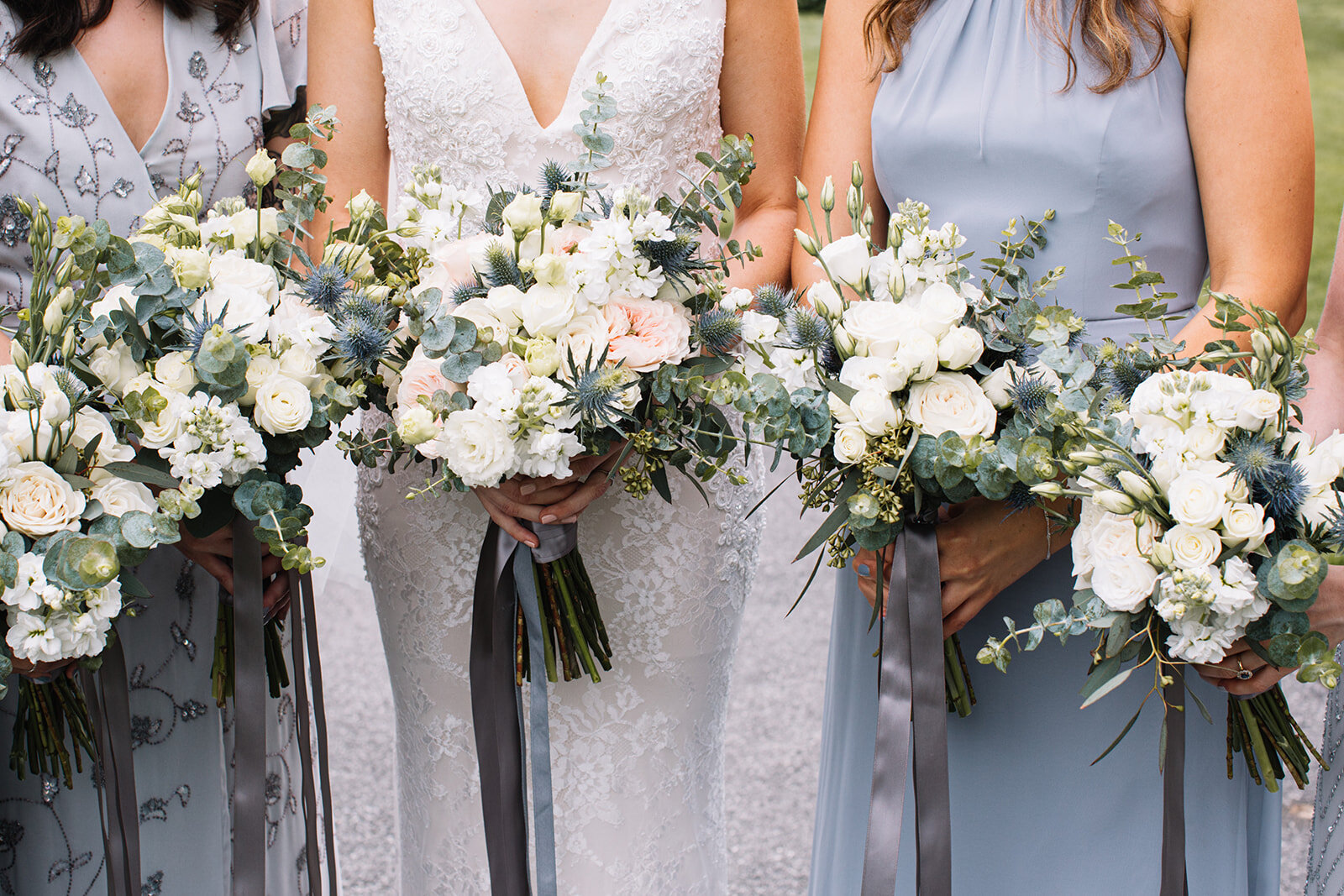
The best preservation choice is the one you will actually enjoy. Whether you display a full bouquet or one pressed flower, the keepsake should feel connected to your wedding without becoming an object you are afraid to live with. When planned thoughtfully, your bouquet can move from something you held for one day into something that quietly holds the day for you.