How Luxury Hotels Use Flowers to Create a Memorable Guest Experience
Walk into a truly luxurious hotel and there is usually a moment when you instinctively slow down. Maybe it happens beside a towering arrangement of white orchids in the lobby. Maybe you notice garden roses spilling from an antique urn, or a simple branch arrangement rising dramatically behind the reception desk. You probably do not stop and analyze why the space suddenly feels expensive, calm, sophisticated, or welcoming. You simply feel it. That reaction is exactly why luxury hotel floral design has become such an important part of modern hospitality.
Flowers are much more than decoration in a five-star property. Used thoughtfully, they influence how guests experience a room, remember a stay, photograph a hotel, and even talk about the property afterward. They bring movement and life to architecture that might otherwise feel too polished or formal. They soften marble, glass, metal, and stone. Most importantly, they add something that cannot be perfectly manufactured: a sense that the environment is alive and changing.
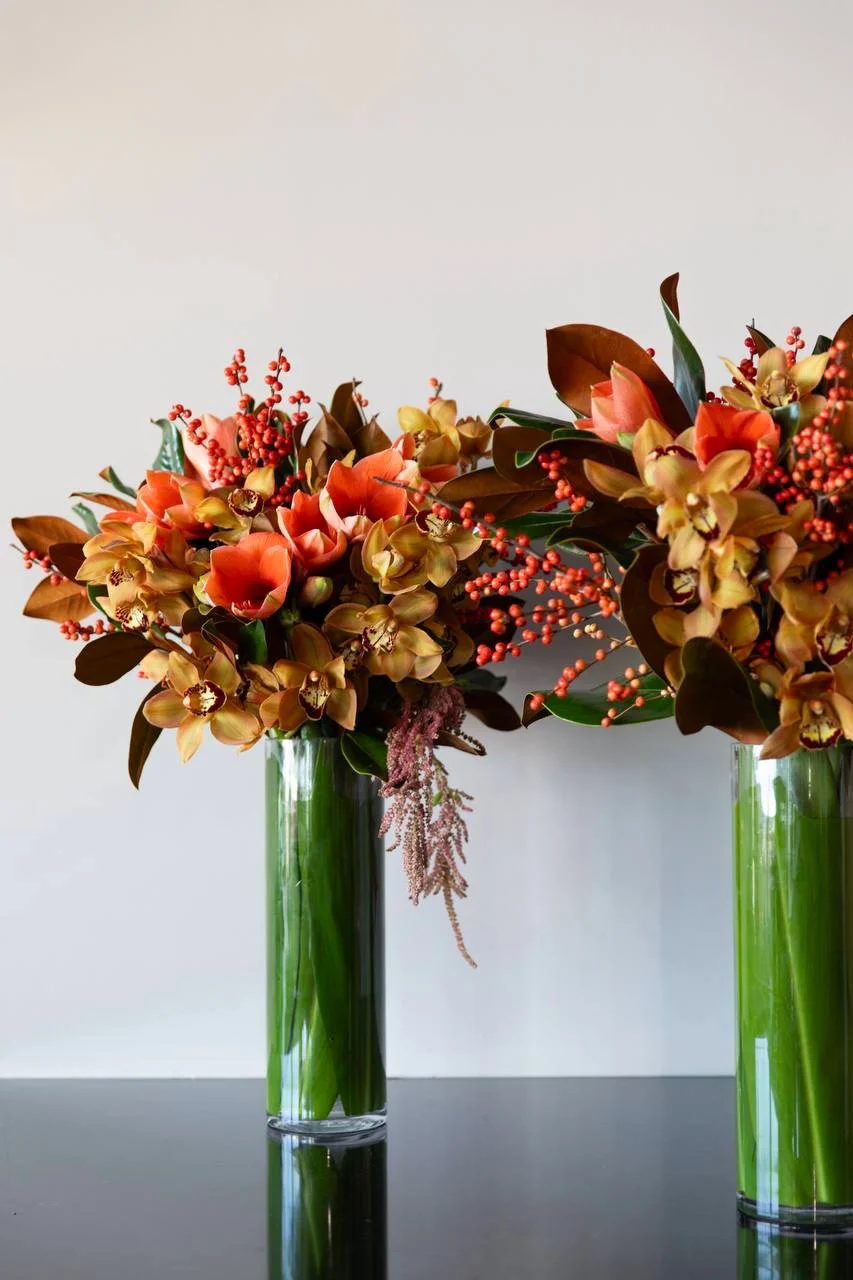
The best hotels understand this emotional power. Rather than placing random bouquets wherever there is an empty table, they develop a complete hotel flower strategy that supports the brand, location, season, and guest journey. The flowers in the entrance may be dramatic and theatrical, while arrangements in guest rooms feel quiet and personal. Restaurant flowers might encourage intimacy, whereas spa arrangements may rely on greenery and subtle natural textures.
That is the real secret behind memorable flowers in luxury hotels. Guests are rarely impressed because a hotel simply bought expensive blooms. They remember the experience because every arrangement feels as though it belongs exactly where it is. When floral design becomes part of hospitality rather than an afterthought, a bouquet stops being a bouquet. It becomes part of the story the guest takes home.
Why Flowers Matter So Much in Luxury Hospitality
Luxury hospitality is built around details that guests may not consciously notice but almost certainly feel. The temperature in the lobby, the sound of the music, the texture of the bed linen, the way the lighting changes after sunset—each small element contributes to a larger emotional experience. Hotel flowers work in exactly the same way. They communicate care before a member of staff even says hello, which makes them especially powerful during those first few minutes after arrival.
Fresh flowers also create something that expensive furniture cannot: evidence of ongoing attention. A marble floor can look beautiful for decades, but a vase filled with perfect peonies tells a guest that someone worked on the space today. Somebody selected those blooms, conditioned them, arranged them, removed damaged petals, cleaned the vase, and positioned everything carefully. That sense of active care reinforces one of the biggest promises of a luxury hotel—the idea that the environment is constantly being prepared for the guest.
There is also an emotional side to floral design in hospitality. Flowers are connected with celebrations, romance, welcome, gratitude, comfort, and meaningful personal moments. People bring flowers to weddings, dinners, birthdays, anniversaries, and important life events. Hotels can borrow some of those associations simply by introducing flowers into the guest experience. A restrained arrangement beside a bed can make a room feel more residential. A dramatic installation in a lobby can make arriving feel like entering an event.
Flowers also provide contrast. Many luxury hotels use carefully controlled architectural palettes—cream limestone, dark wood, brass, muted upholstery, polished stone. Flowers introduce natural irregularity into these highly designed spaces. A curved stem, changing petal, unexpected leaf, or organic branch prevents the environment from feeling sterile.
That is why effective luxury hospitality floral arrangements are not merely accessories. They are part of the sensory architecture of the hotel. Guests may forget the exact fabric used on a lobby chair, but they often remember walking into a room filled with extraordinary flowers.
The Hotel Lobby: Where the Floral Experience Begins
The lobby has one difficult job: it must introduce an entire hotel in seconds. Guests may have traveled for ten hours, rushed through an airport, sat in traffic, or arrived late after a frustrating day. When those doors open, the hotel needs to change their emotional temperature almost immediately. That is why some of the most ambitious examples of luxury hotel flower arrangements appear precisely where guests enter.
A large lobby arrangement functions almost like a visual anchor. In a spacious property with high ceilings and broad architectural lines, a tiny bouquet can disappear. Luxury hotels often respond with oversized vessels, long branches, sculptural foliage, or masses of a single flower variety. The scale tells guests that they have arrived somewhere intentional. Yet bigger is not automatically better. Successful hotel floral design works with the architecture instead of competing against it.
Consider a lobby built around contemporary minimalism. Filling it with a complicated rainbow bouquet could instantly weaken the design language. A florist might instead use quince branches, magnolia, calla lilies, white orchids, or bold tropical foliage arranged with plenty of negative space. In a romantic historic hotel, layered garden roses, hydrangeas, delphiniums, or seasonal flowering branches may feel more natural.
Placement matters just as much. Flowers should create impact without blocking reception staff, interrupting traffic, hiding signage, or overwhelming seating areas. Great designers think about the arrangement from multiple angles because guests will encounter it differently when entering, checking in, passing toward an elevator, or sitting across the lobby.
The strongest hotel lobby flower arrangements also change often enough to stay interesting. Returning guests may notice a new seasonal palette or completely different floral sculpture. That creates a quiet sense of discovery.
In other words, the lobby arrangement acts much like the opening sentence of a great novel. It does not tell the entire story, but it establishes mood, personality, and expectation before the guest experiences anything else.
Signature Colors, Scents, and Floral Personality
A luxury hotel should not feel as though its flowers were chosen from a generic catalog. The most sophisticated properties develop a recognizable floral personality, almost the same way a fashion house develops a recognizable silhouette. A hotel may repeatedly use creamy white flowers and deep green leaves, for example, while another becomes known for wild seasonal branches and unexpected color combinations. This consistency helps turn hotel floral arrangements into a genuine part of the brand.
Color is usually the easiest place to begin. A coastal resort might work with pale blues, whites, sandy neutrals, and sun-washed seasonal flowers. An urban property could choose deeper burgundy, plum, rust, or dramatic green foliage. A hotel known for modern interiors may rely on monochromatic arrangements, while a country property might embrace loose, garden-inspired combinations. The goal is not to match every sofa and wall literally. Good floral styling complements a room instead of making it look like somebody selected flowers using paint swatches.
Scent requires even more judgment. Fragrance can create powerful memories, which makes scented flowers tempting in luxury environments. Yet strong lilies, jasmine, tuberose, or other highly fragrant varieties can quickly become overwhelming, especially for guests who are sensitive to scent. That is why experienced hospitality florists use fragrance selectively. A subtle botanical note near an entrance can feel wonderful; an intensely scented bouquet beside a restaurant table can interfere with food and wine.
Over time, repeated floral choices can become surprisingly recognizable. Regular guests may associate orchids with a particular hotel or anticipate cherry blossom branches each spring. This kind of continuity strengthens luxury hotel branding without relying on logos.
Think of it as a visual signature. A guest may never know the florist's name or identify every flower in the arrangement. They simply recognize the feeling. That is often the highest compliment a floral program can receive: the flowers look unmistakably like they belong to that hotel and nowhere else.
How Flowers Transform Luxury Hotel Guest Rooms
The lobby is designed for impact, but the guest room requires a different kind of floral intelligence. This is someone's private space for the next night, weekend, or week. Anything placed inside should make the room feel more comfortable rather than more crowded. For that reason, flowers in luxury hotel rooms are usually smaller, quieter, and more personal than arrangements displayed in public areas.
A modest vase beside a writing desk or seating area can immediately soften the room. Even a single stem may be enough. Luxury is not necessarily about adding twenty roses when three beautifully chosen flowers would communicate more restraint. What matters is freshness, placement, proportion, and how naturally the flowers connect with the rest of the room.
Hotels must also think practically. Floral arrangements should not steal valuable bedside space, interfere with laptops on a desk, drop pollen onto furniture, or create a strong fragrance near the bed. Designers typically favor flowers that hold their shape well and remain elegant for several days. The vessel matters too. A heavy, stable vase is often more useful than a delicate container that could easily tip over.
The psychological effect is considerable. Hotel rooms, even beautiful ones, are temporary spaces. Guests know hundreds of other people have stayed there before them. Fresh flowers can make the environment feel less anonymous. They suggest that the room has been prepared rather than merely cleaned.
This is especially meaningful in suites or premium room categories, where guests expect additional signs of care. Luxury hotel room flowers can reinforce that elevated experience without appearing flashy.
The smartest approach feels effortless. Guests should not look at the arrangement and think about procurement schedules, florist contracts, conditioning techniques, or housekeeping procedures. They should simply notice something living and beautiful beside them and feel a little more at home. That quiet shift in atmosphere is one of the reasons flowers remain so effective even as hotel design trends change.
Personalized Floral Arrangements for Individual Guests
Personalization is where flowers move from interior decoration into genuine hospitality. Imagine checking into a hotel for an anniversary and finding the same type of flowers that appeared in your wedding bouquet. Or imagine a repeat guest arriving to discover that the hotel remembered she prefers tulips rather than roses. These moments feel meaningful because they communicate something beyond luxury: the hotel paid attention.
High-end properties often maintain detailed guest preference systems, particularly for frequent visitors and VIPs. Floral preferences can become part of that information alongside pillow choices, favorite drinks, dietary needs, room locations, and other service notes. When appropriate and handled respectfully, those details give hotel teams an opportunity to create personalized guest experiences that feel natural rather than staged.
Flowers can also support specific occasions. A honeymoon suite may receive romantic but sophisticated blooms. A birthday arrangement can use cheerful seasonal colors rather than predictable red roses. Guests arriving for a business trip might receive something more architectural and restrained. Someone returning after a long absence could find a small welcome arrangement with a handwritten note from the team.
The important part is context. Personalized flowers should never feel intrusive. Not every guest wants a romantic gesture, intensely scented bouquet, or giant arrangement taking over the room. Luxury service is often about knowing when to add something and when to leave space.
Hotels can also personalize through regional flowers. If someone has traveled across the world to experience Napa Valley, Hawaii, Provence, or another distinctive destination, locally meaningful blooms can provide a subtle connection to place.
This is where hotel flower arrangements for guests become storytelling tools. A florist is no longer simply choosing what looks good. The arrangement answers a question: who is this guest, why are they here, and what would make this arrival feel special?
When the answer is thoughtful, a relatively small bouquet can create more emotional impact than a much more expensive but completely generic gift.
Flowers in Hotel Restaurants, Bars, and Dining Spaces
Restaurant floral design looks simple until you try to do it well. The flowers need to enhance the atmosphere without becoming the main event because, in a restaurant, food should remain the star. That means hotel restaurant flowers have to balance beauty, scale, fragrance, table space, lighting, and visibility all at once.
Height is one of the first practical concerns. Nothing ruins an intimate dinner faster than talking to someone through a jungle of stems. Low arrangements are usually safest for dining tables, although very tall, narrow designs can work when the flowers sit completely above eye level. Designers may also use a single flower in a small vessel when tables are compact. This approach can look surprisingly luxurious because it feels intentional rather than excessive.
Fragrance requires restraint as well. Guests came to smell roasted vegetables, fresh bread, wine, herbs, sauces, coffee, and dessert—not an overpowering lily sitting twelve inches away. Experienced florists therefore select low-fragrance varieties for dining areas and reserve stronger scents for spaces where they will not compete with culinary aromas.
Restaurants also provide excellent opportunities to reinforce a chef's philosophy. A farm-driven dining room might use herbs, flowering vegetables, edible plants, seasonal grasses, or local wildflowers. A formal restaurant could lean toward sculptural monochromatic arrangements. A tropical resort might use native leaves and bold flowers rather than importing traditional European roses.
Bars often allow more drama. Because guests move around and the atmosphere may become livelier after dark, floral arrangements can be moodier, larger, and more theatrical. Candlelight reflected against dark foliage or richly colored flowers can completely change a room.
Strong hospitality floral design recognizes that restaurants evolve throughout the day. Flowers that look delicate and fresh in morning sunlight may appear flat at night. Great floral teams evaluate arrangements under the same lighting guests will experience.
The result should never feel like flowers were placed on a table because there happened to be space. They should quietly support the food, interior, service, and social energy of the room.
Floral Design in Luxury Spas and Wellness Areas
A hotel spa demands a different floral language. Guests enter these spaces looking for calm, privacy, restoration, and relief from stimulation. A huge explosion of brightly colored blooms might be beautiful in the lobby but completely wrong beside a treatment room. Luxury spa floral design tends to work best when it feels natural, restrained, textural, and almost meditative.
Greenery frequently plays a major role. Ferns, eucalyptus, branches, grasses, leaves, moss, and other botanical materials can connect interiors with nature without demanding attention. White or pale flowers are common because they reinforce feelings of freshness and simplicity, although this does not mean every spa needs to look identical. A desert resort might use sculptural dried botanicals and local plants, while a tropical property can embrace large leaves and native flowers.
Again, fragrance deserves careful consideration. Wellness environments often use aromatherapy, essential oils, scented towels, candles, or treatment products. Highly fragrant flowers can clash with those sensory elements. The goal is harmony, not a competition between five different smells.
Placement is equally important. A subtle arrangement at reception can soften the check-in process. Small botanical touches in relaxation lounges make the environment feel cared for without breaking the visual quiet. Flowers beside treatment beds should generally be avoided if they create clutter or trigger sensitivities. Sometimes greenery viewed through a window or arranged in an adjacent corridor is more effective than a bouquet placed directly beside the guest.
This approach reflects a broader shift in luxury hotel wellness experiences. Modern luxury is increasingly associated with space, silence, nature, and authenticity rather than constant ornamentation. Flowers still belong, but they often appear in a more understated form.
The best spa florals feel like part of the environment instead of decoration added after construction was finished. They whisper rather than shout. When guests leave feeling calmer than when they arrived, the botanical design has done its job—even if nobody consciously remembers the exact flowers used.
Creating Unforgettable Weddings, Events, and Celebrations
Hotels become emotionally important places when guests choose them for life's biggest moments. Weddings, proposals, milestone birthdays, anniversaries, corporate galas, holiday dinners, and private celebrations all demand a different level of floral creativity. In these settings, luxury hotel event flowers do more than beautify a room. They help define how the occasion will be remembered.
Weddings provide the clearest example. A couple may encounter flowers from the moment they enter the ceremony until the final dance. There may be entrance arrangements, aisle flowers, ceremony installations, bouquets, boutonnieres, cocktail-hour designs, reception centerpieces, bar flowers, cake florals, and botanical details around signs or seating charts. The challenge is creating continuity without making every area look identical.
Luxury hotel floral teams often collaborate with event planners, decorators, lighting designers, culinary teams, and outside florists. Ceiling height, linens, table shapes, candle placement, stage design, photography, guest movement, and service access all affect floral decisions. A centerpiece that looks incredible in a studio may fail completely if servers cannot place plates around it.
Scale matters particularly in ballrooms. Large spaces can swallow ordinary arrangements, which is why tall designs, floral arches, hanging installations, trees, or grouped centerpieces may be used to create visual architecture. Smaller private rooms usually benefit from intimacy rather than spectacle.
Events also give hotels an opportunity to demonstrate craftsmanship to hundreds of potential future guests at once. A striking installation may appear repeatedly on social media, wedding blogs, and personal photo galleries long after the flowers themselves are gone.
This makes hotel wedding floral design part of both guest experience and marketing. Yet emotional relevance should always come first. Guests rarely remember an arrangement because it contained the greatest number of stems. They remember how the room felt when the doors opened.
That distinction matters. The goal is not floral excess. It is to use flowers to turn a temporary hotel space into a setting that feels completely connected to one unforgettable moment.
Seasonal Flowers and the Power of Local Storytelling
Luxury travelers increasingly want to understand where they are, not simply stay inside a beautiful building that could exist in any city. Floral design offers hotels an elegant way to create that sense of place. Seasonal hotel flowers can reflect climate, landscape, local traditions, and the changing rhythm of the destination without requiring a single explanatory sign.
Spring might bring flowering branches, tulips, ranunculus, sweet peas, or local blossoms. Summer can support lush garden flowers and brighter color. Autumn may introduce berries, seed heads, warm foliage, grasses, and textural branches. Winter does not have to mean artificial red-and-green decorations; evergreen foliage, bare branches, winter berries, amaryllis, or sculptural botanicals can create sophisticated seasonal atmosphere.
The advantage of this approach is emotional as much as aesthetic. Guests visiting the same hotel in April and October may encounter two completely different floral personalities. That makes the property feel alive. There is always something slightly new to discover.
Seasonal design can also prevent flowers from looking forced. When a hotel fills its lobby with varieties that naturally belong to the surrounding season, the arrangement tends to feel more connected to the world outside. Imported flowers are sometimes necessary, especially for specific events or brand requirements, but relying entirely on the same globally available blooms throughout the year can flatten the experience.
Luxury is often associated with rarity, yet rarity does not always mean importing something from the other side of the planet. A branch cut at exactly the right stage of blossom or a locally grown variety available for only three weeks can feel far more exclusive.
That is the beauty of seasonal floral design for hotels. It introduces impermanence. The display guests see today may not exist next month. In an industry where rooms, furniture, and architecture are designed to remain consistent for years, flowers provide one constantly changing layer.
They remind guests that they arrived at a particular place during a particular moment—and that can make a hotel stay surprisingly memorable.
Why Local Sourcing Adds Authenticity
There is something slightly strange about traveling thousands of miles to a unique destination only to find the exact same flowers you saw in a hotel back home. Local sourcing offers an alternative. When hotels collaborate with nearby farms, growers, gardens, and independent florists, flowers become part of the destination rather than an imported decorative layer.
Locally sourced hotel flowers can tell regional stories with surprising depth. A property in a vineyard region might feature vines, herbs, flowering branches, and garden-style blooms. A coastal hotel can use plants associated with the shoreline climate. Mountain resorts may draw inspiration from alpine vegetation, while tropical properties have access to shapes and colors that would feel extraordinary in colder regions.
Local sourcing can also create valuable relationships with craftspeople and producers. Instead of ordering solely through international wholesale channels, a hotel may work directly with growers who understand seasonal availability and can supply unusual varieties. Those relationships can encourage designers to become more creative because they are responding to what is naturally available rather than selecting from a fixed catalog.
Guests increasingly appreciate these stories. A concierge or staff member who can casually explain that the lobby dahlias came from a nearby family farm adds another layer to the experience. Suddenly the arrangement has provenance.
Of course, local sourcing is not always simple. Climate, season, event volume, consistency, and luxury quality standards all affect availability. A five-star hotel cannot allow half of an event order to disappear because a storm damaged a crop. Many properties therefore combine local purchasing with reliable regional or international suppliers.
The point is not to chase a perfect “100% local” label. It is to use geography intelligently.
When luxury hotels use local flowers, they create visual connections between the interior and the destination outside. Guests are no longer looking at generic decoration. They are looking at a small piece of the place they came to experience, arranged carefully enough to feel special.
Floral Design as Part of a Luxury Hotel’s Brand Identity
Branding is often associated with logos, colors, typography, advertising, and photography. Luxury hotels work with something broader: atmosphere. Guests experience the brand through music, uniforms, lighting, scent, service style, materials, food, and yes, flowers. That makes floral design for luxury hotels a surprisingly important branding tool.
Imagine two properties. The first is sleek, urban, architectural, and contemporary. Its florals might consist of one enormous branch arrangement or a disciplined group of calla lilies. The second is romantic, historic, and residential. Here, loose roses, hydrangeas, seasonal foliage, and layered garden textures might feel natural. Swap those arrangements, and both hotels would immediately seem less coherent.
Consistency matters because strong hospitality brands make hundreds of separate decisions feel like one idea. Floral design should speak the same visual language as the architecture and service. It does not have to match literally, but it should make emotional sense.
Some hotels develop signature floral elements that guests recognize over time. A particular orchid, color palette, vessel style, or arrangement shape may become associated with the property. Those details can appear in brand photography and social content, gradually becoming part of the hotel's visual memory.
This is particularly valuable because flowers provide brand expression without overt advertising. Nobody wants to walk through a five-star lobby covered in logos. A distinctive arrangement can communicate elegance, creativity, heritage, or modernity much more subtly.
The best hotel brand experience works almost subconsciously. Guests may not say, “The flower selection perfectly supports this property's positioning.” They say, “Everything here just feels right.”
That sentence is branding in its most effective form.
Flowers help create that feeling because they can adapt while remaining recognizable. The exact blooms may change weekly, but the underlying approach—the scale, palette, texture, and personality—remains consistent. Like a musician playing different songs in the same unmistakable style, the hotel can keep evolving without losing its identity.
The Operational Craft Behind Hotel Floral Displays
Guests see a perfect arrangement. Behind that arrangement is an operation involving ordering, delivery schedules, conditioning, storage, design, installation, maintenance, replacement, removal, budgeting, and coordination with multiple hotel departments. Luxury hotel floral design may appear effortless, but operationally it can be remarkably complex.
Large hotels may employ an in-house floral team, work with an external florist, or combine both approaches. In-house designers have the advantage of knowing the building intimately. They understand which lobby corner receives direct afternoon sun, where air-conditioning dries flowers quickly, when restaurants turn tables, and which service corridors make installations easiest. External studios can bring specialized creative expertise and additional staffing for major events.
Timing is critical. Public-area arrangements may need to be installed early in the morning or overnight so work does not disturb guests. Wedding flowers have narrow installation windows because ballrooms might be used for another event only hours earlier. Guest-room arrangements must coordinate with housekeeping so flowers arrive after the room is cleaned but before check-in.
Inventory creates another challenge. Vases, urns, mechanics, containers, tools, storage racks, transport carts, and floral materials require dedicated space. Hotels also need systems for moving arrangements safely through back-of-house areas without leaving water, leaves, or damaged petals behind.
Budgeting requires discipline as well. Floral expenses can escalate rapidly, especially when a property has multiple restaurants, lounges, suites, event rooms, and public spaces. Great floral directors know where dramatic spending creates value and where simplicity works better.
This behind-the-scenes craft explains why successful hotel flower programs feel consistent rather than chaotic. Each arrangement may look spontaneous, but the system supporting it is anything but spontaneous.
That is true of luxury hospitality in general. The guest experiences ease because the team handles complexity out of sight. Flowers are a perfect example: a branch appears to sit casually in a vase, yet dozens of decisions may have been made before it reached that exact position.
Keeping Hotel Flowers Fresh and Picture-Perfect
Freshness is non-negotiable in luxury hospitality. A slightly bruised rose or curling leaf might seem trivial at home, but in a five-star environment it can undermine the impression of care. Guests compare every visible detail with the premium they paid for the experience. For that reason, maintaining fresh flowers in hotels requires daily attention.
It starts long before arrangements reach the lobby. Flowers need proper conditioning after delivery, which can involve trimming stems, removing foliage below the waterline, hydrating blooms, and storing them at appropriate temperatures. Different varieties behave differently, so experienced floral teams know which flowers open quickly, which prefer cooler conditions, and which are likely to struggle in particular areas of the property.
Once installed, arrangements must be inspected regularly. Water needs refreshing, damaged material should be removed, and certain stems may require replacement before the entire design is rebuilt. This “edit rather than wait” approach allows arrangements to stay polished throughout their display life.
Hotel environments create unique challenges. Strong air-conditioning can dry flowers. Direct sunlight can shorten vase life dramatically. Doors opening repeatedly to hot or cold outdoor air can affect lobby displays. Restaurants create heat and movement, while crowded event spaces may expose arrangements to accidental damage.
Photography has raised standards even further. A guest can photograph the lobby at any moment and post the image publicly within seconds. There is no safe period when a tired arrangement can quietly remain unnoticed.
The smartest floral teams therefore design for durability from the beginning. They choose varieties suited to each location rather eration. Traditional floral foam is convenient, but concerns about plastic-based waste have encouraged many designers to explore reusable alternatives such as pin frogs, wire structures, grids, branches, and water-based mechanics. These techniques often require additional skill, yet they can produce designs that look just as refined.
Waste reduction also happens through smart planning. A large lobby arrangement may be redesigned after several days, with healthy elements moved into smaller displays elsewhere in the property. Event flowers might be repurposed for brunch the following morning, donated where practical, or composted after use. Durable vessels and reusable structures can circulate through hundreds of installations.
Dried materials and potted plants can play a role too, although neither should automatically be considered sustainable in every situation. The entire lifecycle matters.
Perhaps the biggest shift is philosophical. Sustainable luxury asks whether impact should be measured by quantity or creativity. Does an arrangement need 500 imported roses to impress, or could a beautifully shaped local branch create more drama with far less material?
The answer depends on the hotel, but the question itself is changing the industry.
Guests increasingly notice environmental choices, particularly when hotels communicate them naturally rather than turning every sustainable decision into marketing theater. Eco-friendly hotel flowers can support that expectation while preserving the emotional pleasure people associate with fresh botanicals.
Luxury does not need to mean excess. At its best, it can mean selecting fewer things, choosing them carefully, and presenting themthan forcing delicate flowers into hostile environments just because they look beautiful on installation day.
This attention protects more than the flowers. It protects the luxury guest experience.
Freshness communicates discipline. If every petal, leaf, and stem appears cared for, guests naturally assume the same attention extends to linens, food, housekeeping, and service. In that sense, a fresh flower arrangement can become a tiny but visible symbol of the hotel's overall standards.
Sustainability and the Future of Luxury Hotel Flowers
Luxury and sustainability were once treated as competing ideas. Luxury implied abundance: more flowers, more imported varieties, more elaborate installations, more everything. Modern hospitality is beginning to challenge that assumption. The future of sustainable hotel floral design is not about removing beauty. It is about achieving beauty with greater intelligence.
Local and seasonal sourcing is one obvious strategy because it can reduce dependence on long transportation chains while connecting arrangements more strongly with the destination. Hotels can also work with growers that use responsible production methods, although sustainability varies widely depending on climate, farming practices, transport, and supply infrastructure.
Floral mechanics are another major consid exceptionally well.
How Hotel Staff Turn Flowers Into Personal Service
Flowers become much more powerful when staff know how to use them as part of hospitality. A beautiful arrangement sitting silently in the lobby creates atmosphere. A thoughtfully selected bouquet delivered at exactly the right moment creates a memory. That difference reveals why luxury hotel service depends on people as much as design.
Front-desk agents, concierges, guest-relations teams, butlers, event coordinators, housekeeping staff, and restaurant teams can all identify moments where flowers might be meaningful. Perhaps a guest casually mentions that she is celebrating her mother's birthday. A couple becomes engaged during dinner. A frequent visitor returns after recovering from an illness. Someone is traveling alone on an anniversary that carries personal significance.
Not every moment requires flowers, and that judgment is important. Hospitality becomes awkward when gestures feel automatic or performative. Staff should have enough freedom and emotional intelligence to recognize when a simple arrangement would genuinely add warmth.
Small details often work best. A few flowers placed beside a handwritten card can feel more personal than a giant bouquet ordered from a standard package. Selecting a guest's favorite color or flower variety makes the gesture stronger. Even moving an existing room arrangement to a more suitable spot after noticing how the guest uses the space can demonstrate awareness.
Training helps teams understand what is possible. Staff should know whether the florist can produce same-day arrangements, which flowers are available, what personalization options exist, and how to handle allergies or fragrance sensitivities.
This creates a bridge between hotel floral services and human service.
Ultimately, guests do not remember hospitality because everything was expensive. They remember moments when someone appeared to understand what mattered to them. Flowers are useful because they can translate that attention into something tangible.
A bouquet says welcome. One carefully selected flower can say congratulations. An arrangement waiting in a room can say, “We remembered.”
When hotel teams understand that emotional vocabulary, flowers stop functioning as décor and start functioning as communication.
Flowers, Social Media, Guest Reviews, and Hotel ROI
Flowers may disappear after a week, but their visual impact can travel much further. In today's hospitality environment, a striking floral installation may be photographed hundreds or thousands of times by guests. Those images can appear on Instagram, TikTok, Pinterest, travel blogs, wedding galleries, Google reviews, and private messages. That gives luxury hotel flowers a marketing value previous generations of hoteliers could hardly have imagined.
The reason is simple: flowers photograph extremely well. They add color, scale, texture, and a recognizable sense of luxury to images. A dramatic lobby arrangement can become an informal photo spot without the hotel ever labeling it one. Guests naturally stop, pose, and share the environment because the space feels visually special.
User-generated content can expand a hotel's reach in a way traditional advertising cannot completely replicate. A polished campaign photograph says, “Look at our beautiful hotel.” A guest's photograph says, “I was here, and this experience was worth sharing.” That social proof carries a different kind of credibility.
Flowers can also appear indirectly in reviews. Guests may mention a beautiful lobby, romantic room setup, anniversary surprise, memorable wedding décor, or elegant restaurant atmosphere without focusing specifically on floristry. Those comments still reflect the contribution floral design made to the overall experience.
Measuring direct ROI from hotel floral design is complicated. A hotel cannot easily say that one arrangement generated a specific number of bookings. Yet floral programs influence several measurable outcomes: event photography, social engagement, wedding inquiries, brand imagery, guest satisfaction, and perceived quality.
That matters especially in the luxury segment, where emotional perception shapes willingness to pay. Guests are not purchasing square footage alone. They are purchasing atmosphere, service, identity, and memories.
A thoughtful floral budget should therefore be seen as part of experience design rather than a simple decoration expense. Poorly planned flowers can certainly waste money. Strategic flowers, however, can contribute to the visual identity that helps justify premium positioning.
One perfect arrangement may live for six days in a lobby—and for years in thousands of photographs.
Floral Design Mistakes Luxury Hotels Should Avoid
Expensive flowers do not automatically create good floral design. In fact, some of the most common mistakes happen when hotels focus too heavily on abundance and forget the guest experience. One frequent problem is scale. Arrangements that are too small disappear in large rooms, while oversized flowers can block sightlines, interfere with check-in, or make restaurant tables uncomfortable.
Another mistake is using fragrance without considering context. Strongly scented flowers near dining tables, beds, meeting spaces, or enclosed lounges can quickly become unpleasant. Guests may also experience allergies or sensitivities. Luxury hotel floral arrangements should engage the senses without attacking them.
Poor maintenance is even more damaging. Wilted petals, cloudy water, brown leaves, pollen on furniture, or drooping stems immediately signal neglect. A smaller fresh arrangement will almost always look more luxurious than an enormous display that has stayed in place two days too long.
Hotels should also avoid following trends blindly. A floral style that looks beautiful on social media may have nothing to do with the property's architecture or personality. Copying popular installations without considering brand identity can make the hotel feel generic.
Too many competing flower styles create similar problems. If the lobby is tropical, the restaurant is romantic English garden, the spa is minimalist Japanese-inspired, and the guest rooms contain generic supermarket roses, the property loses visual coherence. Different spaces can absolutely have distinct moods, but there should be some connecting philosophy.
Operational practicality cannot be ignored either. Arrangements should not obstruct service, damage furniture, create slipping hazards, attract unwanted insects, or require unrealistic maintenance.
Perhaps the biggest mistake is assuming that luxury equals “more.” Good hotel flower design depends on editing. Sometimes the right decision is a room filled with flowers. Sometimes it is one extraordinary branch.
The goal is not to prove how much the hotel spent. Guests should feel beauty, care, and personality rather than notice the budget. When flowers support the experience instead of demanding attention for themselves, the design has found the right balance.
Conclusion
Luxury hotels are in the business of creating feelings that guests want to experience again. A comfortable mattress matters. Excellent food matters. Beautiful architecture matters. Yet memories are often shaped by details that are much harder to quantify. Fresh flowers belong firmly in that category.
From dramatic hotel lobby flower arrangements to a single bloom beside a guest-room card, florals can influence almost every stage of the stay. They welcome travelers, soften architecture, create seasonal atmosphere, connect interiors with local landscapes, support restaurant design, personalize celebrations, transform events, and give hotels a recognizable visual identity. When staff use flowers thoughtfully, they can even become part of the service itself.
The most successful properties understand that effective floral design is not about filling every available surface with expensive blooms. It is about choosing the right botanical gesture for the right place. A peaceful spa may need greenery rather than roses. An enormous lobby may require sculptural branches rather than hundreds of small flowers. A returning guest may appreciate three favorite tulips more than an extravagant generic bouquet.
Behind all of this sits an impressive amount of invisible work. Florists plan around seasons, budgets, architecture, guest movement, scent, maintenance, photography, sustainability, and hotel operations. When they do their jobs well, guests never need to think about that complexity. The experience simply feels effortless.
That is what flowers in luxury hotels ultimately contribute: a sense that someone has considered the environment down to the smallest living detail.
Flowers are temporary by nature. They bloom, change, and eventually disappear. Strangely, that may be exactly why they work so beautifully in hospitality. A hotel stay is temporary too. You arrive, inhabit a place for a short time, and leave.
The flowers help make that temporary moment worth remembering.