Floral Styling for Product Launches and Brand Activations in New York City
New York City does not exactly suffer from a shortage of events. On any given night, there may be a fashion launch in SoHo, a beauty pop-up in Flatiron, a media preview in Tribeca, a tech activation in Chelsea, and an influencer dinner somewhere in Brooklyn—all fighting for the same limited supply of attention. That is precisely why floral styling for product launches and brand activations in New York City has become much more than arranging pretty flowers in attractive vases. Done correctly, floral design becomes part of the brand language. It helps people understand the mood, positioning, personality, and visual world of a product before anyone even starts explaining it.
Think of great event florals the way you would think about set design. The flowers are not supposed to float around independently from everything else happening in the room. They should work with the lighting, graphics, product packaging, furniture, architecture, guest journey, and overall campaign concept. A minimalist skincare launch may call for sculptural white calla lilies and translucent vessels. A playful fragrance pop-up could use saturated color, dramatic petal shapes, and flowers arranged almost like an art installation. A luxury fashion dinner might need something quieter and more architectural, where every stem looks deliberate rather than abundant for the sake of abundance.
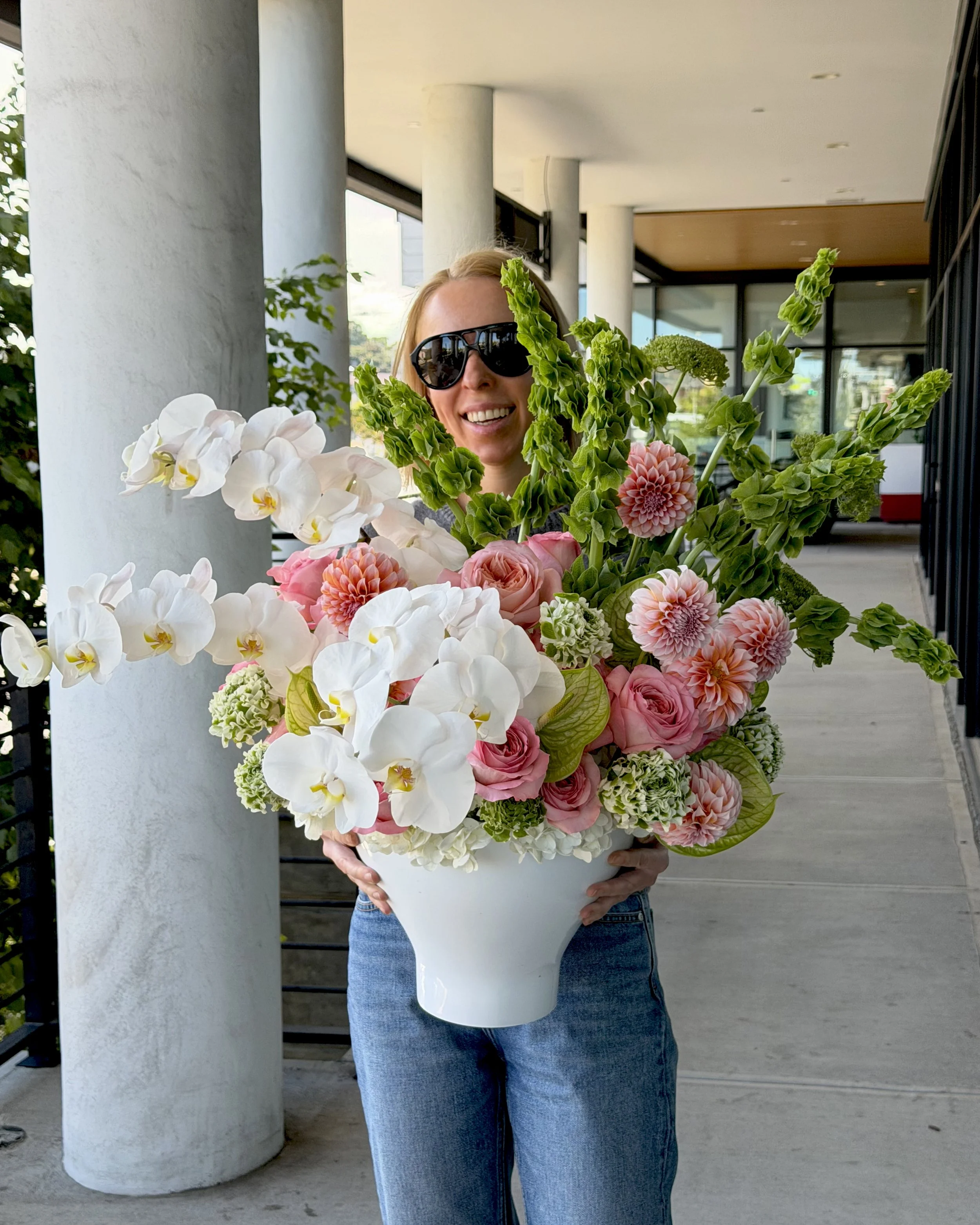
That distinction matters in New York because guests here see a lot. Editors, buyers, creators, stylists, photographers, influencers, and industry insiders attend enough launches to know immediately when an event feels thoughtfully produced and when the décor looks like a last-minute add-on. An arrangement can technically be beautiful and still feel completely wrong for the brand.
The most successful NYC event floral design starts with strategy. What should guests feel when they walk in? Where should they take photos? Which product needs attention? What colors should dominate the frame? How should the room look from the entrance, from the press wall, and through the lens of a phone camera?
Flowers can answer all of those questions when they are treated as part of the creative direction rather than just decoration.
Why Floral Styling Matters for Brand Events in NYC
A brand activation lives or dies by how quickly it communicates an idea. Guests rarely walk into an event and spend ten minutes carefully reading every piece of signage. They absorb the room in seconds. They notice color, scale, texture, lighting, sound, and movement long before they process written messaging. Floral styling for brand events in NYC can influence all of those first impressions at once.
Flowers are particularly effective because they bring organic texture into spaces that often feel highly produced. Product launches are usually full of hard surfaces: acrylic displays, LED screens, branded walls, retail fixtures, metal structures, and camera equipment. Floral design softens that environment without necessarily making it feel romantic or traditional. A florist working with interesting materials can make flowers feel futuristic, architectural, minimalist, surreal, lush, rebellious, or almost sculptural.
That flexibility is important because no two brand activations should look identical. A clean beauty company may want the visual language of freshness and natural ingredients. A sneaker brand could use bold monochromatic florals that feel graphic and energetic. A high-end jewelry launch may call for quiet, highly edited arrangements that create an atmosphere of exclusivity. Flowers are not one aesthetic; they are a design medium.
They also create strong sensory contrast. Guests expect to see logos and product displays. They may not expect to walk beneath an overhead floral installation, step into a room surrounded by hundreds of hanging stems, or find a product emerging from a garden-like environment. Those moments create memory because they are physically experienced.
In a city where brands constantly compete for attention, memorability is valuable. People may forget the wording of a launch presentation, but they remember that wild installation that looked like flowers were growing out of the walls. They remember the color-drenched entry tunnel. They remember the table that seemed to disappear beneath a field of blooms.
The point is not spectacle for spectacle’s sake. Great floral styling helps translate brand identity into an environment. When the flowers feel connected to the product and campaign, guests do not simply see decoration. They experience the brand.
How Flowers Shape the First Impression of a Product Launch
The entrance to a product launch is essentially the opening sentence of a story. Before guests touch the product, hear the founder speak, or understand the campaign narrative, they have already decided how the event feels. That makes the first floral moment especially important.
A strong entrance installation can immediately establish scale. Imagine stepping off a Manhattan sidewalk and entering a venue through an arch of monochromatic flowers in the exact shade used in the product packaging. That transition tells the guest that they have entered a deliberately designed world. It creates separation between everyday New York and the event experience.
On the other hand, not every launch benefits from a giant floral arch. For a restrained luxury brand, a dramatic doorway may actually feel too obvious. A single sculptural arrangement positioned with perfect sight lines can communicate more sophistication than hundreds of flowers competing for attention.
This is why product launch floral design should begin with the desired emotional response. Should the room feel fresh? Mysterious? Luxurious? Youthful? Energetic? Natural? Futuristic? Flowers can support any of these directions, but the choices will be very different.
Texture also plays a role in first impressions. Soft garden roses and delicate sweet peas create a completely different world from spiky anthuriums, glossy tropical leaves, orchids, or sculptural branches. Even greenery can communicate a clear message depending on whether it is lush and abundant or highly edited and architectural.
Scale changes perception too. Tiny arrangements can feel intimate and editorial. Oversized installations feel immersive. Tall branches can make a room feel grander. Low floral landscapes can create intimacy without blocking faces or cameras.
Brands should also think about what the entrance looks like through a phone camera. Guests will often photograph the first visually exciting thing they see. If that image includes a clearly visible product, logo, or recognizable brand color, the floral design is already doing marketing work without behaving like an advertisement.
The best first impression feels effortless even when it took weeks of planning. Guests walk in and immediately understand the atmosphere. They may not be able to explain why the room feels right—but they feel it.
Floral Styling for Brand Activations: More Than Decoration
The phrase “event flowers” can make floral work sound like a finishing touch, something added after the important decisions have already been made. For modern brand activations in New York City, that approach leaves a lot of creative potential on the table.
Floral styling can become part of the activation itself. Instead of simply decorating cocktail tables, flowers can guide traffic, frame interaction zones, identify photo moments, create sensory experiences, or physically integrate with the product. Think of a fragrance launch where guests move through different flower environments corresponding to scent notes. Imagine a beauty activation where products appear embedded in sculptural botanical displays. Picture a fashion presentation where floral materials become part of the runway architecture.
These concepts work because people interact with them. A traditional centerpiece is something guests look at. An installation can be something they step into, walk through, photograph, touch, or experience from different angles.
That difference matters for experiential marketing. Brands want guests to participate, not simply attend. Florals can help create moments that feel discoverable rather than prescribed. One corner might feature a floral wall designed for photography. Another could contain a product-testing station surrounded by plants and textured materials. A ceiling installation can shift the feeling of the whole room without consuming valuable floor space.
The flowers can also help define zones in venues without building permanent structures. This is especially useful in New York spaces where square footage is expensive and event layouts must work hard. Tall arrangements can visually separate a lounge from a product area. Floral columns can mark an entrance. Hanging installations can create a destination without adding furniture.
The most important thing is that every floral element has a reason to exist. If the activation is about sustainability, imported flowers flown halfway around the world may conflict with the message. If the brand is known for radical minimalism, an overflowing garden installation may feel off-brand.
Strategic floral styling asks the same questions as brand strategy: What are we communicating? Who are we speaking to? What do we want people to remember?
Once those questions are answered, the flowers become much easier to design.
Translating Brand Identity Into Floral Design
A logo color is not a floral concept. That may sound obvious, but it is one of the most common shortcuts in branded event design. Matching flowers to packaging can be useful, but true brand floral styling goes deeper than simply finding roses in the correct shade.
Start with the brand personality. Is the brand polished or irreverent? Minimalist or maximalist? Romantic or technical? Heritage-focused or futuristic? Premium or accessible? Floral design should reflect those qualities through form, texture, proportion, color, and composition.
A luxury skincare brand with minimalist white packaging may not need white roses arranged symmetrically in glass cubes. That interpretation is technically accurate but predictable. A better direction could be sculptural white orchids, calla lilies, or single-variety stems displayed with negative space. The design language would echo the restraint of the packaging without literally copying it.
A playful Gen Z beverage brand might benefit from something much louder: unexpected color combinations, flowers arranged at exaggerated heights, fruit integrated into displays, or bold sculptural vessels. The installation could feel slightly surreal because the brand itself is playful.
Texture can communicate positioning just as strongly as color. Velvet-like petals and soft garden flowers feel sensual. Tropical leaves and anthuriums can feel glossy and contemporary. Dried grasses and seed pods may suggest earthiness. Branches can make an installation feel raw, seasonal, or architectural.
Shape matters too. Round, symmetrical arrangements feel more formal and traditional. Asymmetrical designs feel modern and editorial. Low, meadow-like arrangements create natural movement. Tall, vertical forms can feel dramatic and directional.
Even the flower variety can support storytelling. If a product highlights rose extract, jasmine, lavender, citrus blossom, or another botanical ingredient, those elements may provide a natural creative starting point. Just avoid turning the room into a literal ingredient chart unless that is intentionally part of the concept.
Good floral designers read a brand deck the way a stylist reads a wardrobe brief. They are looking beyond the obvious. They want to understand tone, audience, campaign imagery, materials, cultural references, and emotional intent.
When that translation is done well, the flowers do not merely match the branding. They feel like the brand somehow grew them itself.
Choosing the Right Floral Color Palette for a Launch
Color is one of the fastest ways to make an event feel cohesive. Guests may never consciously compare the flowers with the packaging, but their brains notice when everything belongs to the same visual world. That makes color planning one of the most important parts of floral styling for product launches.
Brand colors are the obvious starting point, but exact matching is not always possible—or desirable. Flowers are natural materials, so their shades vary. A specific digital lavender on a brand guide may not exist perfectly in nature. Trying too hard to force an exact match can produce arrangements that feel artificial.
A more sophisticated approach is to build a tonal family. If the hero color is cobalt blue, for example, the floral design might combine blue delphinium with white flowers, cool green foliage, silver accents, or even contrasting orange depending on the campaign. The goal is not to recreate a hex code. It is to support the visual identity.
Monochromatic installations can be extremely effective at launches because they create strong visual impact in photographs. A room dominated by shades of red, pink, yellow, or white can instantly become recognizable in social content. The repetition helps the event feel intentional.
Contrast can be just as powerful. A black-and-white product displayed against saturated yellow florals may feel more dramatic than a perfectly color-matched arrangement. Complementary colors can make products stand out, especially when photography is a major consideration.
Lighting must be part of the conversation. Warm event lighting can change how flowers appear. Pale pink may read peach. Deep purple can disappear into low light. White flowers may pick up colored LED lighting dramatically. Designers should consider the actual venue conditions rather than choosing colors only from reference images.
The product should also guide the balance. If packaging is already visually busy, flowers may need to calm the scene. If the product is minimal, the florals may have more freedom to create drama.
Ultimately, the best floral palette supports recognition. Guests should be able to look at event photos later and immediately connect them to the brand. Color creates that visual memory faster than almost anything else.
Creating Instagrammable Floral Moments Without Looking Forced
Every brand wants shareable content. The problem is that guests can tell when an event has been designed entirely around the hope that someone will post it. A neon sign saying “TAKE A PHOTO HERE” surrounded by random flowers may technically produce images, but it can also feel like a trap.
The strongest Instagrammable floral installations in NYC give people a reason to photograph them naturally. Scale helps. Unexpected placement helps. Strong color helps. Most importantly, the installation should be interesting even if nobody takes out a phone.
Consider sight lines. A floral moment that looks beautiful in person may photograph poorly if a fire extinguisher, exit sign, kitchen door, or coat rack sits directly behind it. Good event design thinks through the camera angle before installation day. The background matters almost as much as the flowers.
Product visibility is equally important. If the goal is social amplification for a launch, guests should be able to capture the brand without awkwardly holding the product in front of the flowers themselves. Logos, packaging, or branded architectural elements can be integrated subtly into the scene.
Height is another useful tool. Floor-to-ceiling flowers create immersion. Low floral landscapes encourage seated portraits. Hanging arrangements add interest overhead and keep the floor clear. Floral walls can work, but they need dimension and texture to avoid looking like flat rental backdrops.
Movement makes images feel more alive. Trailing vines, suspended stems, delicate grasses, or sculptural branches introduce shape and depth. Even asymmetry can make a photo feel more editorial.
Do not forget human scale. A beautiful installation designed without considering where a person will stand can fail as a photo moment. There should be space for guests without them crushing flowers or standing six feet in front of the branding.
Finally, resist copying whatever floral trend dominated social media last season. Guests in New York have probably seen it already. The most shareable installations often feel specific to the brand and campaign rather than designed from a generic “Instagram wall” template.
People share what feels new, beautiful, strange, clever, or emotionally resonant. Give them one of those reasons and the cameras usually come out on their own.
Floral Installations for Pop-Ups, Retail Events, and Experiential Marketing
Pop-ups are built around temporary transformation. A brand takes an ordinary retail shell, gallery, loft, or storefront and turns it into another world for a few days—or sometimes just a few hours. Flowers are especially useful in these environments because they can dramatically change a space without permanent construction.
For NYC pop-up floral design, adaptability is everything. Installations may need to be assembled quickly, survive heavy guest traffic, work around retail fixtures, and disappear just as quickly when the activation ends. That requires a different mindset from traditional wedding or gala florals.
Vertical installations can be extremely effective because they maximize impact without consuming valuable selling space. Floral columns, doorway treatments, suspended elements, and wall-based designs can transform architecture while keeping paths clear. In small Manhattan venues, every square foot matters.
Retail activations also benefit from floral zoning. Flowers can identify product categories, draw attention to hero displays, or guide visitors deeper into a store. A color shift between floral areas can even signal different product stories.
For beauty and fragrance activations, botanical storytelling can become part of the experience. Ingredients can inspire the materials used throughout the room. A fragrance built around jasmine and citrus could reference those notes visually, even if the literal flowers are not used everywhere.
Durability is essential. Pop-ups may run for several days under warm lighting, surrounded by crowds. Fragile varieties that look perfect for six hours may not survive a weekend activation. Florists need to choose materials with the event duration in mind and schedule maintenance when necessary.
Safety is equally important. Installations should never obstruct exits, accessibility routes, sprinklers, electrical equipment, or customer movement. Large structures must be secure enough for crowded environments.
The most successful pop-up florals feel integrated into the retail concept rather than temporarily dropped into the room. Guests should not see “a store plus flowers.” They should see one complete visual environment where product, architecture, and botanical design all belong together.
That cohesion is what makes a temporary activation feel like a real brand world rather than an event rental dressed for the weekend.
Entrance Flowers and Statement Installations That Set the Tone
New York guests are used to walking into dramatic spaces, so the entrance has to work hard. A strong arrival moment creates anticipation before the main activation even begins. It is the visual handshake of the event.
For some brands, a statement floral installation may mean an oversized arch or doorway treatment. For others, it could be a single sculptural floral form positioned beneath the logo. The correct approach depends entirely on the brand and venue.
Architecture should guide the design. A raw industrial space in Brooklyn may benefit from wild organic flowers that contrast with concrete and steel. A polished Midtown venue might call for something cleaner and more structured. Historic spaces may already contain decorative details, so floral styling should complement rather than fight them.
The entrance is also where operational reality meets creative ambition. Guests need room to check in, security teams need visibility, photographers need sight lines, and staff may be moving equipment throughout the evening. A dramatic floral installation that creates a bottleneck is not good design.
Outdoor entrances require even more planning. Wind, rain, heat, cold, sidewalk traffic, and building regulations all affect what is possible. A giant freestanding flower structure might look incredible in a rendering but become dangerous if it cannot be properly anchored.
Brand visibility matters too. If the entrance will be photographed by press or guests, make sure logos are not hidden behind foliage. Floral framing often works better than placing flowers directly in front of signage.
For red-carpet or step-and-repeat moments, restraint can help. Flowers should create dimension without distracting from people and clothing. For beauty or lifestyle launches, more immersive framing may make sense.
Think of the entrance as a movie trailer. It should reveal enough of the event’s visual language to build excitement without giving everything away immediately.
When done well, guests slow down before they even step fully inside. They notice. They photograph. They understand the mood. That reaction is exactly what a strong arrival experience should create.
Product Display Florals That Keep the Product as the Hero
Flowers are naturally attention-grabbing. That is both their advantage and their biggest risk. At a product launch event, the product must remain the star. If guests walk away remembering a giant peony installation but cannot remember what was being launched, the floral design has failed strategically.
The simplest solution is hierarchy. Not every area needs the same level of floral intensity. Use flowers to frame hero products, create contrast, or guide the eye rather than surrounding everything with equal visual weight.
Low arrangements work particularly well around product tables because they preserve visibility. Single stems or sculptural botanical elements can create sophisticated detail without crowding packaging. For small products such as jewelry, cosmetics, or fragrance, scale becomes critical. Oversized flowers can make the product physically disappear in photographs.
Color contrast can help product visibility. Pale packaging may stand out against deep foliage or saturated flowers. Dark products can look striking against light neutral blooms. Designers should test these combinations under actual lighting whenever possible.
Negative space is powerful. A product surrounded by empty space can feel more luxurious than one buried under decorative material. Floral designers working with premium brands often use fewer stems but choose each one carefully.
Height can be used to separate visual layers. Flowers may sit behind the product instead of beside it, creating an attractive background for photography. Suspended florals can add atmosphere while leaving display surfaces clean.
Ingredient-driven brands have another option: using botanical elements that connect directly to the product story. A skincare launch featuring rose extract might include roses, but they can be interpreted in an unexpected way rather than placed literally next to every jar.
Photography should always be considered. Product displays will likely be photographed close-up, so mechanics, floral foam, exposed wires, tape, and unfinished container edges must be invisible. What looks acceptable from six feet away may look messy through a macro lens.
The goal is partnership between florals and product. Flowers create mood, context, and visual richness. The product creates meaning. Neither should overwhelm the other.
Designing Flowers for Luxury, Beauty, Fashion, and Lifestyle Brands
Different industries speak different visual languages, and floral styling should adapt accordingly. A beauty launch, fashion presentation, luxury dinner, and lifestyle pop-up may all use flowers, but they should not look like variations of the same event.
For luxury brand floral styling, restraint often communicates more than abundance. Sculptural orchids, calla lilies, branches, anthuriums, or highly edited monochromatic arrangements can feel premium because they emphasize form and negative space. Expensive-looking design is not always about using the most expensive flowers. It is about intentionality.
Beauty brands tend to have more freedom with softness, color, and botanical references. Floral design can connect naturally to ingredients, skincare rituals, fragrance notes, or packaging colors. A dewy, fresh product might suit translucent vessels and delicate flowers, while a bold makeup launch may call for saturated tones and exaggerated shapes.
Fashion events often benefit from editorial floral design. Unusual combinations, unexpected materials, asymmetry, and dramatic silhouettes can complement clothing without making the space feel like a traditional party. Flowers might even interact with garments, mannequins, runway architecture, or display plinths.
Lifestyle brands sit somewhere between these worlds. A home brand may want flowers that feel achievable and lived-in. A wellness company may prefer naturalistic designs. A beverage brand can be playful, integrating fruit, herbs, or unconventional materials. A travel brand might use botanical references connected to destination.
The audience matters just as much as the industry. A launch aimed at editors may prioritize sophisticated visual storytelling. An influencer activation may need more interactive photo moments. A trade-focused event for buyers might require cleaner displays and easier movement.
Brand maturity also changes the approach. An established heritage brand can rely on subtle cues because guests already know its visual identity. A new brand may need stronger color and more obvious environmental storytelling to establish recognition.
The common thread is specificity. Generic “luxury flowers” or “beauty flowers” rarely create memorable events. Designers need to understand exactly which luxury brand, which beauty brand, which fashion label, and which audience they are styling for.
That is where event florals move from décor into brand expression.
Seasonal Floral Styling for New York City Events
New York seasons are not subtle. Spring can feel like the entire city wakes up at once. Summer brings heat and humidity. Fall introduces deep color and texture. Winter can be brutally cold, especially during early-morning load-ins. Seasonal awareness matters both aesthetically and practically when planning event florals in NYC.
Spring is ideal for tulips, ranunculus, peonies, sweet peas, flowering branches, and other soft seasonal materials. These flowers naturally communicate freshness, making them excellent for beauty, wellness, fashion, and lifestyle launches. Spring branches can also create impressive height without requiring huge quantities of flowers.
Summer offers bold color and lush varieties, but heat becomes a serious concern. Flowers may be transported through hot streets, loading docks, and venues before air conditioning stabilizes. Designers need to select durable materials and manage hydration carefully. Tropical flowers often perform well and suit energetic brand activations.
Fall opens up richer textures: dahlias, chrysanthemums, berries, branches, grasses, seed pods, and warm-toned foliage. Brand launches during September fashion season can use these materials in sophisticated ways without defaulting to obvious orange-and-brown “autumn” décor.
Winter invites strong sculptural design. Bare branches, evergreens, white flowers, amaryllis, orchids, and dramatic foliage can create striking environments. However, freezing temperatures can damage delicate flowers quickly during transportation, so logistics become especially important.
Seasonality also affects cost. Requesting a flower far outside its normal season may increase price and reduce quality. A good florist can usually suggest alternatives that achieve a similar color, shape, or feeling without forcing unavailable materials.
Using seasonal flowers can also make an event feel more connected to New York itself. A spring launch full of flowering branches feels completely different from the same concept in December. That sense of time and place adds authenticity.
Brands do not need to let the season dictate the concept, but they should work with it rather than pretend it does not exist. Nature has its own production calendar, and floral design usually looks best when it respects that reality.
Choosing Flowers That Can Handle a Busy NYC Event Environment
Event flowers in New York have a hard life. They may begin the day in a refrigerated studio, travel through traffic, sit on a loading dock, move in a freight elevator, survive lighting tests, endure warm crowds, and remain camera-ready until late at night. Choosing flowers only for appearance is not enough.
Durability should be part of the creative conversation from the beginning. Orchids, anthuriums, carnations, chrysanthemums, tropical flowers, and certain roses can be surprisingly resilient depending on the environment. Delicate garden varieties can still be used, but designers need to understand where they will be placed and how long they must last.
Hydration systems matter. Large installations often cannot simply sit in vases of water. Florists may use hidden water tubes, containers, mechanical structures, or other techniques to keep materials fresh. Those systems must remain invisible while also being safe.
Temperature is a major variable. Venue heat can build quickly once guests arrive. Bright event lighting may also warm specific areas. Flowers positioned near heaters, kitchen doors, vents, or direct sunlight may deteriorate much faster than identical flowers elsewhere in the room.
Crowd interaction should be considered too. Fragile flowers placed along narrow pathways are likely to be bumped. Hanging installations need enough clearance. Table flowers should not drop pollen onto products or clothing. Thorny stems, irritating sap, or toxic botanical materials may need special handling depending on the event.
Fragrance can become overwhelming in enclosed spaces. Heavily scented lilies or hyacinths may look beautiful but dominate a small room, particularly when guests are testing perfume or beauty products. In scent-focused activations, floral fragrance should never compete with the hero product.
Maintenance plans can help for multi-day events. Florists may replace damaged flowers, refresh water, remove wilted stems, or rebuild sections between sessions.
A beautiful installation that looks perfect at 3 p.m. but exhausted by the 7 p.m. press arrival is not successful. Event floral design has to survive the event, not merely installation photography.
Venue-Specific Floral Styling in New York City
New York venues have personalities of their own, and good floral design responds to them. A white-box gallery in Chelsea should not necessarily receive the same treatment as a SoHo loft, Upper East Side townhouse, Brooklyn warehouse, Midtown rooftop, or Fifth Avenue retail store.
White galleries give designers tremendous freedom because the architecture stays visually quiet. Bold color can look especially powerful in these spaces. However, galleries may have strict rules about attaching anything to walls, ceilings, or floors, so freestanding installation methods are often necessary.
Lofts usually offer more texture. Exposed brick, columns, timber, and large windows create warmth that can support naturalistic or editorial floral styles. Daylight should be considered carefully because arrangements may look different before and after sunset.
Industrial venues in Brooklyn or Queens can handle large-scale work beautifully. Flowers create a dramatic contrast against concrete, steel, and raw architecture. Oversized branches, botanical sculptures, and hanging installations can help fill high ceilings without making the room feel cluttered.
Retail stores come with a different set of constraints. Product displays, customer circulation, existing fixtures, and merchandising rules all affect where flowers can go. Installations may need to happen overnight or before opening hours, making speed and precision critical.
Rooftops bring weather into the equation. Wind can destroy delicate arrangements or destabilize tall structures. Sun exposure can shorten floral life. Everything must be secured carefully.
Hotels and traditional event spaces often have easier load-in systems but may come with established design rules, preferred vendors, or limitations on open water and installation methods.
Historic buildings may restrict attachments or protect original surfaces. Luxury venues may require extensive insurance documentation. Small downtown spaces may have narrow stairs and no freight elevator at all.
This is why NYC floral event styling cannot happen entirely from mood boards. Designers need venue measurements, access information, ceiling heights, load-in rules, event schedules, and photographs.
The city’s architecture is part of the design brief whether anyone writes it down or not.
Logistics Behind Large-Scale Floral Installations in NYC
Some of the most glamorous floral moments begin with very unglamorous questions: Where can the truck park? Is there a freight elevator? What time does the loading dock close? Can a twelve-foot structure fit through the doorway?
These details are especially important in New York, where event logistics can be almost as complex as the design itself. Large-scale floral installations in NYC require careful coordination among florists, producers, venue managers, rental companies, lighting teams, photographers, security staff, and sometimes building management.
Load-in windows may be extremely short. A venue could host another event the night before, leaving only a few hours for transformation. Floral teams often pre-build as much as possible off-site, then complete final assembly at the venue.
Transportation needs to protect both flowers and structures. Delicate blooms may travel in climate-controlled vehicles. Large framework pieces must be designed to fit through service entrances and elevators. There is no point creating an incredible twelve-foot arch in a studio if the venue door is eight feet high and nothing comes apart.
Insurance and safety requirements may affect installation methods. Suspended florals often require venue approval, rigging professionals, or specific load calculations. Freestanding structures need weighted bases. Fire codes can influence where decorative materials are placed.
Water introduces another concern. Venues may protect flooring carefully, especially in luxury retail stores or historic buildings. Florists need waterproof containers, protective materials, and contingency plans.
Strike timing matters too. Many New York venues require everything to disappear immediately after the event. A floral team may spend hours building an installation that must be dismantled at midnight in a fraction of the time.
Waste planning is becoming increasingly relevant. Some brands choose to donate flowers, allow guests to take arrangements home, compost botanical material, or repurpose installations across multiple event days.
The best guests never see any of this complexity. They walk into a room that feels effortless.
That illusion of ease is one of the clearest signs of professional production. Behind it is a team that thought through every freight elevator, delivery window, bucket of water, structural support, and emergency pair of floral shears.
How Far in Advance Brands Should Book a Floral Designer
Good floral work requires more lead time than many people assume, especially for ambitious brand activations. A florist may need to source specific flowers, engineer custom structures, coordinate with fabricators, conduct venue walkthroughs, produce mockups, and schedule a large installation crew.
For major launches, starting the conversation several weeks—or even months—before the event can significantly improve the result. Large-scale installations, custom brand colors, unusual flowers, and international sourcing all benefit from early planning.
Fashion Week periods, holiday seasons, spring wedding months, and other busy event periods can make availability tighter in New York. The best creative floral studios may already have major commitments on key dates.
Smaller events can often come together with less lead time. A press breakfast requiring ten arrangements and one statement piece is very different from a three-floor experiential activation with hanging installations and custom floral sculptures.
Creative development itself takes time. Brands may begin with broad campaign imagery and refine the concept through several design rounds. Floral teams need updated floor plans, product dimensions, lighting information, and production schedules as the event develops.
Budget approval can also slow the process. It is better to discuss budget expectations early rather than design an elaborate concept that later has to be rebuilt completely.
Flower availability becomes more predictable with advance notice. While florists can work quickly when necessary, last-minute sourcing often means accepting what is available rather than choosing from the full range of ideal materials.
A good rule is simple: contact the floral team as soon as the event date, venue, and general creative direction are reasonably clear. They can tell you whether the timeline is comfortable based on the scope.
Early involvement also gives florists a chance to influence spatial planning. That can prevent situations where the perfect installation location turns out to be occupied by catering equipment or blocked by AV infrastructure.
Floral design is most effective when it is integrated into production, not added after every other decision has already been made.
Budgeting for Floral Styling at Product Launches and Activations
There is no single standard price for floral styling for product launches in New York City because the scope can vary dramatically. A few editorial arrangements for a private press preview and a multi-room immersive floral installation are barely the same category of project.
Flowers themselves are only one part of the budget. Labor can be significant, especially for complex builds. Designers may need a creative director, floral designers, installers, drivers, production assistants, and strike crew. Custom structures, fabrication, vessels, rentals, rigging, transportation, refrigeration, and disposal can all contribute to the final cost.
Scale matters, but complexity matters just as much. An installation using thousands of inexpensive flowers may cost more in labor than a smaller arrangement using premium orchids. Suspended work often requires specialized equipment or riggers. Overnight installation may involve additional labor costs.
Seasonality affects floral pricing too. Peonies can be reasonable during their natural season and dramatically more expensive when imported from another part of the world. Specialty colors or unusual varieties may need to be ordered far in advance.
Brands should think about visual priorities rather than spreading budget evenly across the room. One exceptional entrance installation and one strong product moment may deliver more impact than dozens of average arrangements placed everywhere.
Photography is a useful budgeting lens. Ask which areas are most likely to appear in press images, social content, campaign recaps, or influencer posts. Floral investment can be concentrated where it creates the most visual value.
Reusability can stretch budgets for multi-day activations. Some installations can move between a press preview, influencer event, retail opening, and private dinner if they are designed with those transitions in mind.
Brands should also build contingency into the budget. Events change. Guest counts rise. Floor plans shift. Weather affects outdoor concepts. Backup flowers or structural modifications may become necessary.
The best budgeting conversation is transparent. Tell the floral designer the realistic range and the moments that matter most. A talented team can then direct resources toward maximum impact instead of guessing what the brand is comfortable spending.
Common Floral Styling Mistakes Brands Should Avoid
The biggest floral mistakes are rarely about choosing an objectively ugly flower. They happen when design decisions ignore context.
One common problem is overdecorating. Brands sometimes believe more flowers automatically mean a more luxurious event. In reality, excessive florals can hide products, reduce guest movement, clutter photographs, and make an otherwise sophisticated space feel busy.
The opposite mistake is spreading the budget too thin. A small arrangement on every possible surface may create less impact than one or two memorable installations. Strong event design needs focal points.
Ignoring product scale is another issue. Tiny beauty items can disappear beside huge blossoms. Large products may need bigger botanical forms to create visual balance. Everything should be considered proportionally.
Poor scent planning can be disastrous at fragrance events. Strongly scented flowers can interfere with product testing. Even outside fragrance launches, excessive scent may bother guests in compact venues.
Brands also sometimes choose flowers based entirely on Pinterest references without considering season, venue, brand identity, or logistics. Inspiration images are useful, but copying them literally can produce a result that feels generic.
Forgetting the camera is another major mistake. Mechanics may be visible. Signage may be obscured. Guests may not have anywhere to stand. The installation might look great from one angle and unfinished from another.
Late planning can force compromises in flower availability, staffing, and fabrication. It can also create rush costs.
Safety should never be sacrificed for visual impact. Unstable structures, blocked exits, slippery water spills, low hanging branches, and overloaded tables can turn beautiful design into a liability.
Finally, one of the most subtle mistakes is trying to make flowers do too many jobs. They do not need to communicate every brand message simultaneously. Sometimes a floral installation simply needs to establish mood and support the product.
Good design is often about editing. The question is not “What else can we add?” It is “What can we remove until the idea becomes clear?”
How to Make Floral Styling Feel Premium, Strategic, and On-Brand
Premium floral styling is rarely defined by the number of flowers in the room. It is defined by how intentionally every element relates to the brand experience.
Start with a strong concept. The flowers should support a clear creative idea rather than existing as independent decoration. That concept can come from campaign imagery, packaging, product ingredients, architecture, fashion references, or even a specific emotion.
Material selection should feel deliberate. Mixing every beautiful flower available often weakens the design. Restricting the palette can create stronger visual identity. One or two hero varieties used repeatedly may feel more luxurious than a random assortment of ten.
Containers and mechanics matter too. A beautiful arrangement placed in the wrong vase can instantly feel generic. Custom plinths, sculptural vessels, mirrored surfaces, metal structures, acrylic bases, or ceramic pieces can connect floral work to the broader production design.
Negative space is especially important for premium brands. Give flowers room to breathe. Allow the product to stand alone where necessary. Luxury often comes from confidence, and confidence does not need to fill every empty surface.
Lighting should collaborate with the flowers. Warm directional light can emphasize texture. Colored light can transform white florals. Backlighting can make translucent petals glow. Floral and lighting teams should ideally share information before the event.
Consistency across touchpoints is another sign of thoughtful design. The entrance installation, product tables, press area, dinner florals, and restroom details do not need to be identical, but they should feel related.
Most importantly, the flowers should make sense for the brand even without a logo nearby. That is a useful test. If you removed all signage from the room, would the environment still feel like it belongs to the company?
When the answer is yes, floral styling has moved beyond decoration. It has become part of the brand system.
That is the level of integration that makes a launch feel expensive, memorable, and genuinely considered.
Conclusion
In New York City, a product launch or brand activation is competing with hundreds of other visual experiences happening around the same audience. Great flowers alone cannot guarantee attention, but strategic floral styling can transform how a brand is experienced, photographed, and remembered.
The strongest designs start with brand identity rather than flower preferences. Color, scale, texture, shape, seasonality, venue architecture, audience behavior, lighting, and product presentation all influence the final concept. A florist is not simply choosing what looks beautiful. They are translating the brand into physical space.
That translation can happen quietly through a single sculptural arrangement or dramatically through a room-sized installation. Both approaches can be effective when they serve a clear idea.
Brands should also think practically. New York logistics are demanding. Freight elevators, short load-in windows, traffic, weather, building rules, venue restrictions, installation safety, and immediate strike schedules all affect what can realistically be built. The best creative concept is one that survives contact with the actual venue.
Budget should follow priority. Instead of putting flowers everywhere, identify the moments guests will remember and photograph: the entrance, the hero product, the press backdrop, the dinner table, or the immersive activation zone. Concentrated impact often feels more sophisticated than decorative abundance.
Most of all, floral styling should never compete with the product. It should create the world around it.
When guests walk into a launch and immediately understand the tone of the brand—before anyone explains anything—the design is working. When photographs from the event feel unmistakably connected to the campaign, it is working. When people remember not just the flowers but how the entire experience felt, it is really working.
That is the power of thoughtful floral styling for product launches and brand activations in New York City. Flowers become more than something beautiful in the room. They become part of the story the brand is telling.