Client Appreciation Flowers: When and How Businesses Should Send Them
Business relationships may be built around contracts, invoices, meetings, deadlines, and deliverables, but they are still relationships between actual people. That is easy to forget when most communication happens through email threads, project-management tools, video calls, and automated CRM reminders. A thoughtful gesture can cut through all that digital noise, and client appreciation flowers are one of the simplest ways to do it. They arrive in the real world, they create a moment, and unlike another promotional email, they do not ask the client to click anything, book anything, or buy anything.
That does not mean every business should start shipping roses after every invoice clears. Corporate flower gifting works best when there is a clear reason behind it and when the gift fits the relationship. Flowers can celebrate a major project, thank a client for years of loyalty, recognize a referral, acknowledge a new office, or simply show appreciation after an especially important collaboration. The difference between a thoughtful floral gift and an awkward one often comes down to timing, presentation, message, and context.
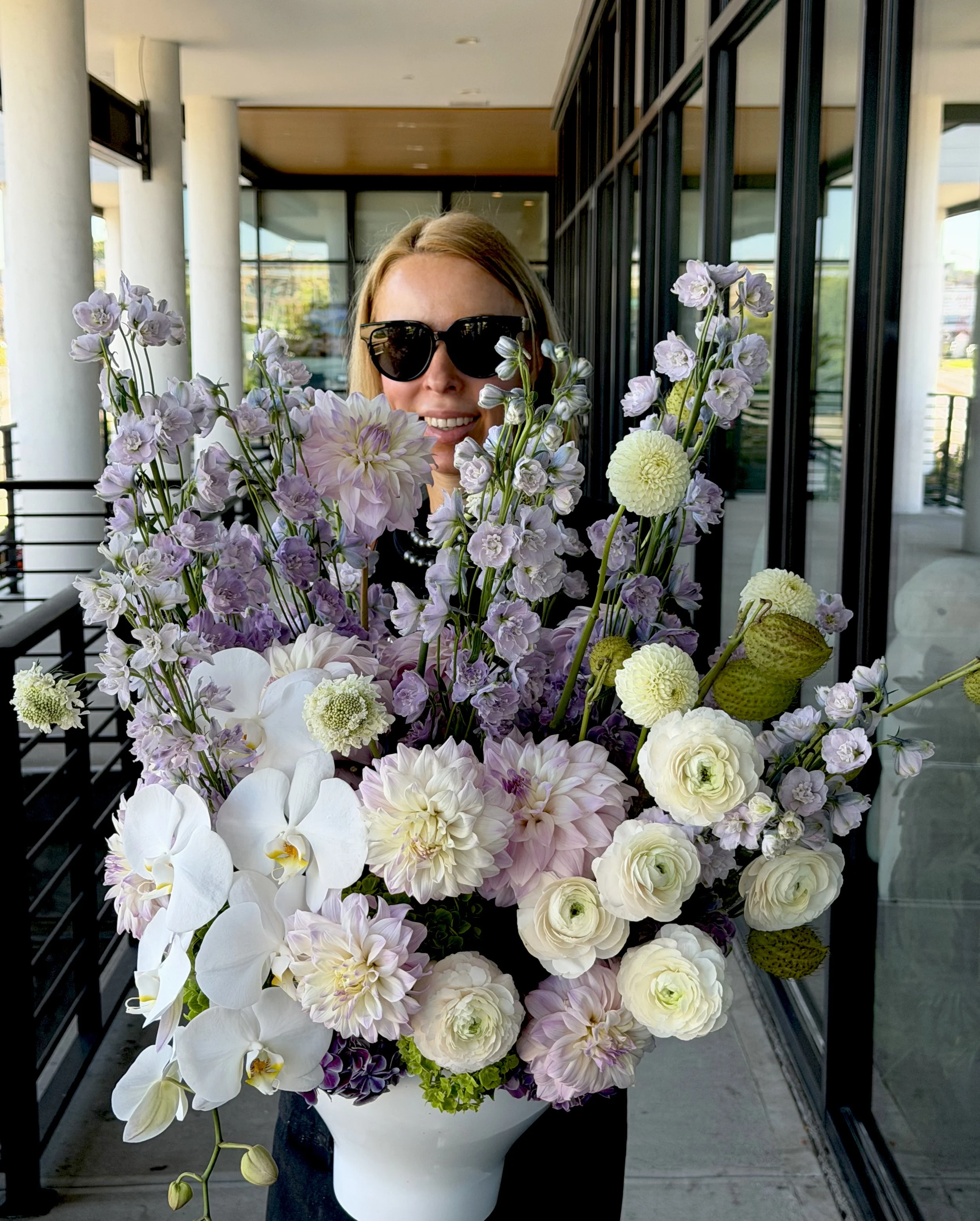
That context matters more than price. A modest arrangement sent after a meaningful milestone can make a stronger impression than a huge luxury bouquet delivered randomly with a generic card. Good client gifting feels observant. It tells the recipient, “We noticed this moment, and we appreciate the relationship.” Bad client gifting feels automated, excessive, or suspiciously like a sales tactic wearing a ribbon.
There is also an etiquette side businesses need to consider. What flowers are appropriate for a professional relationship? Should you send them to the office or home? How much should you spend? What happens if your client has corporate gift restrictions? And what do you write on the card without sounding like a robot trained on corporate jargon?
This guide answers those questions in practical terms. We will look at when to send business flowers for clients, how to choose the right arrangement, how to handle sensitive occasions, and how companies can use thoughtful gifting to strengthen client relationships without making the gesture feel transactional.
Why Client Appreciation Flowers Still Matter in Business
It would be easy to assume flowers are old-fashioned in a business world obsessed with personalization software, digital gift cards, and automated customer journeys. In reality, that is part of what makes them effective. Most professional interactions are now intangible. A proposal arrives as a PDF. A contract is signed electronically. A thank-you note appears in Slack. Even major projects can begin, develop, and close without the people involved ever sitting in the same room. Client appreciation flowers create something physical inside a relationship that may otherwise exist almost entirely on screens.
The impact is not really about flowers themselves. It is about attention. A client who receives an appropriate arrangement after an important milestone realizes someone remembered the event, selected a gift, included a message, and arranged delivery. Even if a florist handled most of the logistics, the gesture still feels more deliberate than an automatically generated “Thank you for your business” email. That difference can be surprisingly powerful in industries where competitors often provide similar services at similar prices.
Flowers also have a useful professional flexibility. They can feel premium without being extravagant, personal without becoming invasive, and warm without forcing the recipient to keep some branded object forever. Nobody has to pretend they love another company-logo coffee mug. A floral arrangement simply brightens a reception desk, conference room, office, or home for a while and then naturally disappears.
Another advantage is visibility. When flowers arrive at a client’s office, other employees may see them. If the card says, “Thank you for ten years of partnership,” the gift quietly communicates that your company values relationships. That is not advertising in the traditional sense, and it should never be treated as one, but positive gestures have a way of shaping how organizations remember the businesses they work with.
The key word is appreciation. If the flowers are obviously designed to pressure a client into renewing a contract or buying another service, their meaning changes immediately. People can sense when a thank-you gift comes with invisible strings attached. Flowers work best when the appreciation stands on its own. Send them because something deserves recognition, not because you are trying to sneak another sales pitch onto someone’s desk.
When Should a Business Send Flowers to a Client?
The best time to send flowers is when there is a genuine reason for the client to understand why they are receiving them. Random acts of appreciation can certainly be charming, but business gifts tend to feel more natural when connected to an event, achievement, relationship milestone, or meaningful interaction. Timing gives the flowers context, and context prevents the gift from feeling like a marketing stunt.
Major project completions are an obvious opportunity. If your team and the client have spent six months launching a new product, completing a commercial real estate transaction, implementing a system, or navigating a complicated project, flowers can mark the finish line. The gift does not have to celebrate only your company’s success. In fact, it is better when the message emphasizes what was accomplished together.
Client anniversaries are another excellent occasion. A company that has trusted you for five or ten years deserves more recognition than a routine CRM email. Sending client appreciation flowers around an important partnership anniversary shows that you view the relationship as something worth remembering. Referrals are another natural trigger. When a client recommends your company to another organization, they have put some of their own reputation on the line. A thoughtful thank-you can acknowledge that trust without turning the referral into a purely financial transaction.
Professional milestones also work well. If a key client contact is promoted, their company opens a new location, or the organization celebrates a major anniversary, sending flowers shows that you pay attention to what is happening in their world rather than focusing only on your invoices.
There are personal occasions too, although they require more judgment. A client recovering from an illness, experiencing a loss, or celebrating an important life event may appreciate flowers if the relationship is established enough for the gesture to feel appropriate.
The easiest rule is this: send flowers when the client would immediately understand the reason. If they open the card and think, “That was thoughtful,” you probably chose well. If their first reaction is, “Why exactly did they send me this?” your timing may need more consideration.
Client Flowers After Closing a Major Deal
Closing a major deal is one of the most natural moments for corporate client flowers, but there is a subtle distinction worth making. The flowers should celebrate the relationship or shared achievement, not congratulate your own sales team through the client. A card that practically says, “Thanks for giving us a lot of money” can turn a generous gesture into something strangely transactional.
Think about the deal from the client’s perspective. Maybe they just purchased a property, selected your agency for an important campaign, completed a merger, invested in new equipment, signed a long-term professional services agreement, or finished a complicated legal process. There is usually a milestone on their side worth celebrating. Build the message around that.
Timing matters here. You generally want the deal to be genuinely complete before the flowers arrive. Sending an expensive bouquet before the agreement is signed can create awkward questions about influence, particularly in industries with strict gift policies. In some organizations, employees cannot accept gifts above a certain value at all. If you regularly work with enterprise clients, government entities, financial institutions, healthcare organizations, or heavily regulated businesses, checking the recipient’s gift policy is not optional.
Once everything is finalized, an arrangement can provide a satisfying emotional punctuation mark. Business deals often end with surprisingly little ceremony. Months of meetings and revisions may conclude with a DocuSign notification and an email saying, “Executed copy attached.” Flowers bring some humanity back into the moment.
Choose an arrangement that reflects the scale of the relationship without becoming excessive. A tasteful orchid, premium seasonal bouquet, or elegant arrangement in the recipient’s office colors can work beautifully. You do not need a floral structure large enough to block the conference-room door.
The card should emphasize partnership. Something like, “Congratulations on this exciting milestone. We’ve truly appreciated the opportunity to work with your team and look forward to what comes next” feels far more natural than generic corporate praise.
Done well, post-deal flowers are not about closing business. They are about recognizing that both sides invested time, trust, and effort to get there.
Flowers for Client Anniversaries and Long-Term Partnerships
Long-term clients are often the most valuable relationships a business has, yet they can ironically receive less attention than new prospects. Everyone gets excited about winning a fresh account. Meanwhile, the client who has renewed year after year quietly keeps the company running. That is exactly why partnership anniversaries are such a strong opportunity for client appreciation gifts.
You do not have to celebrate every twelve months. For important relationships, milestones such as three years, five years, ten years, or twenty years can make more sense. The goal is not to create another mandatory calendar event that turns into a robotic gift program. It is to recognize longevity when that longevity actually means something.
Flowers are especially useful because they can scale with the relationship. A local accounting firm thanking a small business client might send a warm seasonal arrangement. A national consulting company recognizing a decade-long enterprise partnership might choose an elegant display for the client’s headquarters or send arrangements to several key contacts. The gesture can be adapted without losing its basic meaning.
The message is where many businesses get lazy. “Thank you for being a valued customer” sounds like text printed on the bottom of a receipt. If someone has worked with you for ten years, you can probably do better. Mention the length of the partnership and, when appropriate, reference what has been built together. “Ten years already—thank you for the trust, collaboration, and many projects we’ve tackled together” sounds like it came from people who actually know the client.
This is also a perfect moment to avoid sales pressure. Do not add a coupon, upsell offer, or request for another meeting to the card. Your account manager can have business conversations separately. Let appreciation have its own space.
A partnership anniversary is really about continuity. In a business environment where vendors come and go, employees move companies, and contracts change constantly, sustained trust is meaningful. Flowers give that abstract idea a visible form. They sit on the desk and quietly say, “We remember how long we’ve been doing this together.”
Sending Flowers After a Referral or Recommendation
A good referral is one of the strongest compliments a client can give your business. They are not simply buying from you again; they are telling someone else that your company is worth trusting. That recommendation puts a small piece of their own credibility behind your name, which is why referrals deserve genuine appreciation.
Flowers can be an excellent thank-you when the referral is significant or the client relationship is strong. The important point is that the gift should recognize the recommendation, not function as a secret commission unless you have an explicit referral program. Those are two different things. A formal referral fee may be part of a business agreement. Thank-you flowers for clients are a gesture of gratitude.
You also do not necessarily need to wait until the referred lead becomes a paying customer. If someone made a thoughtful introduction to a valuable prospect, they have already helped you. Waiting six months to see whether the deal closes can make the eventual thank-you feel more like a reward for revenue than appreciation for trust.
Choose the scale of the gift according to the situation. A major introduction that leads to a valuable relationship may justify a premium arrangement. A casual referral from a friendly long-term customer might call for something smaller. Consistency matters, particularly if clients know one another. You do not want your gift practices to appear arbitrary or based entirely on the financial value of each person.
The card should be direct. “Thank you for introducing us to the team at [Company]. We really appreciate your trust and the recommendation” says everything it needs to say. No paragraph about your services is necessary.
Before sending anything, consider compliance rules. Some professionals—especially those working in government, finance, healthcare, procurement, or large corporations—may have restrictions on accepting gifts. If there is any doubt, check.
The underlying principle is simple: referrals are based on reputation, and gratitude reinforces that relationship. A thoughtfully timed floral gift tells clients that their recommendation did not disappear into your sales pipeline unnoticed. Someone noticed, someone appreciated it, and someone took the time to say thanks.
Client Appreciation Flowers for Holidays and Special Occasions
Holiday gifting is common in business, which creates both an opportunity and a problem. The opportunity is obvious: there are natural moments throughout the year when appreciation feels appropriate. The problem is that everyone else has the same idea. By mid-December, some clients have received enough snack baskets, wine bottles, branded notebooks, and corporate gift boxes to stock a small conference.
Holiday flowers for clients can stand out because they contribute to the atmosphere instead of becoming another object the recipient has to store. Seasonal arrangements can brighten an office reception area, conference room, storefront, or home without feeling overly promotional. Winter greenery, white flowers, red accents, autumn arrangements, spring tulips, or elegant seasonal orchids can all work depending on the occasion.
Still, businesses should be thoughtful about which holidays they assume clients celebrate. Not every recipient observes Christmas, and sending heavily religious or culturally specific gifts without knowing the client well can feel careless rather than inclusive. A seasonal “year-end thank you” arrangement is often safer for a diverse client base. If you know a client personally and understand their traditions, more specific holiday flowers can be entirely appropriate.
Birthdays are another option, but the relationship needs to support that level of personalization. Sending birthday flowers to a client you have worked closely with for eight years can feel warm. Sending them to a procurement manager you met twice may feel like your CRM knows a little too much.
Company anniversaries, professional awards, retirement celebrations, and major public achievements are often easier territory because they are directly connected to the business relationship.
Holiday timing also deserves attention. Sending flowers during the busiest delivery days of the year can lead to delays and higher costs. Earlier delivery can actually be more memorable because it arrives before the recipient’s desk is buried under everyone else’s gifts.
Whatever the occasion, avoid turning seasonal appreciation into automatic clutter. The goal is not to prove your database can remember dates. It is to make important clients feel genuinely seen. Sometimes that means flowers. Sometimes the most thoughtful move is recognizing that no gift is necessary at all.
Flowers for a Client’s Business Opening, Expansion, or Milestone
Few occasions are better suited to flowers than a client opening a new business location. Flowers naturally belong in celebrations, and a new office, store, restaurant, showroom, clinic, or studio gives the arrangement somewhere to make an immediate visual impact. The gesture also communicates something important: you are interested in the client’s success beyond the specific services they purchase from you.
For a client business opening, think about the physical space before ordering. A dramatic standing arrangement may look fantastic at the entrance to a large showroom but ridiculous inside a ten-seat office. An orchid or sophisticated tabletop arrangement might be ideal for an executive suite, while colorful tropical flowers could complement a creative retail environment. Good corporate gifting requires some awareness of context.
Plants are particularly useful for business openings because they can stay in the new space long after launch week. Orchids, money trees, snake plants, ZZ plants, and other relatively manageable indoor plants can become part of the décor. A living plant also carries an obvious but effective metaphor of growth. Yes, it is a little symbolic, but sometimes symbolism works because it is simple.
Expansion milestones deserve recognition too. Maybe your client has opened a second warehouse, moved into a larger headquarters, entered a new market, celebrated its twentieth anniversary, or reached an important company milestone. These moments give you an opportunity to show that your team follows their progress.
The card should focus on their achievement. “Congratulations on the new location. It’s been exciting to watch your business grow, and we’re wishing the entire team a fantastic opening” is warm, specific, and professional.
If you are sending flowers before a grand-opening event, coordinate delivery carefully. The afternoon before the event can be ideal because staff have time to place the arrangement. Early morning on opening day can work too. Avoid having a giant bouquet arrive halfway through a ribbon-cutting ceremony unless you are confident someone will be available to deal with it.
This kind of gifting works because the flowers become part of the milestone rather than an interruption to it.
Sympathy, Recovery, and Sensitive Client Flower Etiquette
Not every client flower occasion is celebratory. Sometimes a business relationship includes difficult moments: a death in the client’s family, a serious illness, surgery, an accident, or another personal hardship. Flowers can be appropriate in these situations, but sensitivity matters far more than branding, price, or presentation.
Start by asking whether your relationship is personal enough for the gesture. If you have worked closely with someone for years and learn that they lost a parent or spouse, sending sympathy flowers may feel entirely natural. If the relationship is distant, a sincere card may be more appropriate. There is no universal formula because professional relationships vary dramatically.
For sympathy arrangements, keep company branding subtle. This is not the moment for a giant ribbon featuring your corporate logo. The recipient should feel supported, not marketed to. A simple card signed by the people who actually know them is far more meaningful.
Religious and cultural traditions also matter. Flowers are not appropriate for every mourning practice, and specific colors or arrangements may carry different meanings across cultures. If you are uncertain and the relationship is important, discreetly ask someone who knows the family or consult a florist familiar with the relevant traditions.
Recovery flowers require similar judgment. If a client is in a hospital, verify that flower delivery is permitted. Some units restrict fresh flowers due to health policies. Fragrance can also be an issue, so lightly scented arrangements or plants may be safer than strongly fragrant lilies.
Your message should be short and genuine. Do not try to turn grief into a motivational quote. “Thinking of you and your family during this difficult time” is often enough. For recovery, “Wishing you a smooth recovery and hoping you’re feeling stronger every day” feels warm without overstepping.
Sensitive occasions reveal whether a company actually understands relationship-building. The goal is not to check a box marked “client retention.” It is to behave like thoughtful humans when someone you work with is going through something that matters.
How to Choose the Right Flowers for a Client
Choosing professional flowers for clients begins with one question: what will make sense to this particular recipient? That sounds obvious, yet businesses often default to whatever arrangement appears first on a florist’s corporate gifting page. A little thought can make the same budget feel far more personal.
Start with the relationship. A conservative financial-services client may appreciate an understated orchid or refined white-and-green arrangement. A creative agency owner might love something colorful and architectural. A restaurant opening could suit bold tropical flowers, while an attorney celebrating a promotion might prefer sophisticated tulips, hydrangeas, or roses in neutral shades.
Consider the environment as well. A client working from a compact desk does not need an enormous arrangement that covers half their monitor. A spacious reception area can handle something much more dramatic. If the recipient works remotely, home delivery may be better, but only use a personal address if you have it legitimately and the relationship makes home delivery appropriate.
Fragrance is easy to overlook. Some flowers are beautiful but strongly scented, which can be uncomfortable in shared offices or healthcare environments. When in doubt, choose lower-fragrance options such as orchids, tulips, or many rose varieties.
You should also think about longevity. Cut flowers create immediate impact, while potted plants and orchids can last much longer. Neither is automatically better. An impressive bouquet can be perfect for a one-time celebration, while a plant may suit a partnership anniversary or new office.
Personal preferences are valuable when you genuinely know them. If your account manager remembers that the client loves sunflowers, that detail can make the gift feel incredibly thoughtful. If you do not know, do not guess too aggressively. Neutral elegance is safer than accidental symbolism.
Finally, consider whether the recipient or organization has a gifting policy. The most beautiful arrangement in the world becomes a headache if compliance requires them to refuse it. Thoughtful corporate gifting is not simply about choosing attractive flowers. It is about selecting something the recipient can comfortably receive, display, and enjoy.
Best Flower Types for Professional Client Gifts
Some flowers naturally work better in professional settings because their appearance feels polished without carrying strong romantic associations. Orchids are probably the most versatile example. A potted orchid looks elegant, requires relatively little space, and can remain attractive far longer than a traditional bouquet. White orchids are clean and modern, while purple varieties add personality without becoming overly casual.
Tulips are another excellent choice for business flower gifts. Their simple shape works beautifully in contemporary offices, and they come in enough colors to suit almost any brand or occasion. Yellow and orange tulips feel cheerful, white looks sophisticated, and purple can communicate admiration and achievement. They are particularly effective for spring gifting, promotions, and general appreciation.
Roses can absolutely work in business settings, despite their romantic reputation. The color is what matters. Yellow roses communicate friendship and warmth. Orange roses can suggest enthusiasm. Peach roses often feel appreciative, while white roses create a refined professional look. A dozen deep red roses, however, usually sends a different message and should be reserved for situations where that romantic association is intentional.
Hydrangeas create generous visual volume and work well in premium arrangements. White, green, blue, and purple varieties can look elegant in reception areas or executive offices. Calla lilies have a sculptural simplicity that suits modern professional environments. Sunflowers are more casual but can be fantastic for celebratory gifts, particularly for entrepreneurs, creative businesses, or cheerful summer arrangements.
Green plants deserve a place on the list too. Money trees, snake plants, ZZ plants, pothos, and succulents can all serve as lasting client gifts. Plants are especially useful for new offices and business openings because they become part of the space rather than a temporary decoration.
There is no single “best” flower. The most effective option depends on context. Think of flowers the way you would think of clothing for a meeting. A tuxedo is not automatically better than a blazer; it depends on where you are going. The same principle applies to client gifts. Elegance comes from choosing something appropriate, not simply something expensive.
Choosing the Right Flower Colors for Business Relationships
Color influences how a flower arrangement feels before the recipient reads a single word on the card. That makes color one of the easiest ways to keep client appreciation flowers professional and aligned with the occasion. You do not need to become an expert in Victorian flower symbolism, but understanding broad associations can help.
White is probably the safest professional color. It communicates simplicity, cleanliness, sophistication, and fresh beginnings. White orchids, roses, hydrangeas, or tulips paired with green foliage work beautifully for law firms, financial companies, medical practices, luxury brands, and corporate offices. The combination feels polished without demanding attention.
Yellow is much warmer. It suggests optimism, friendship, happiness, and positive energy. Yellow flowers are excellent for thank-you gifts, new business openings, successful project completions, and client anniversaries. Sunflowers make the mood more casual, while yellow roses or tulips can retain a more refined appearance.
Orange brings enthusiasm and confidence. It works especially well for celebrations such as expansions, successful launches, or major business milestones. Orange roses, gerberas, ranunculus, or tulips can create an energetic arrangement without relying on romantic red.
Purple communicates dignity, creativity, admiration, and achievement. It is a strong choice for promotions or clients in creative and premium industries. Purple orchids are particularly versatile because they look distinctive while remaining office-appropriate.
Green represents growth, renewal, balance, and prosperity, making plants and green-heavy arrangements ideal for new businesses. Blue flowers can suggest calm, trust, and stability, although naturally blue options are more limited.
Red requires caution. Red is powerful, confident, and visually dramatic, but red roses are strongly associated with romance in the United States. Unless that meaning is appropriate, it is usually smarter to use red only as an accent or choose another color entirely.
You can also draw subtle inspiration from a client’s brand colors. The word subtle matters. A tasteful nod to brand identity can feel thoughtful; recreating their logo in carnations can feel like a trade-show display. Professional gifting works best when design supports the relationship rather than overpowering it.
How Much Should Businesses Spend on Client Flowers?
There is no universal dollar amount that makes a floral gift appropriate. A $75 arrangement might feel generous in one client relationship and unusually modest in another. A $300 arrangement may be completely reasonable for a major corporate partnership but uncomfortable for a small client with strict gifting rules. The right budget depends on the relationship, occasion, industry, and company policy.
For routine appreciation, many businesses can achieve a polished result without choosing the largest arrangement on the florist’s website. Quality matters more than sheer size. A thoughtfully designed medium arrangement in a good container often looks more sophisticated than a giant collection of inexpensive flowers.
Major milestones can justify a higher spend. A ten-year client anniversary, important grand opening, or completion of a substantial project might call for something more premium. Corporate accounts with significant lifetime value may also warrant higher gifting budgets, but that does not mean gifts should be proportional to revenue in an obvious way. Clients should never feel that your appreciation can be calculated directly from their invoices.
Internal consistency is important. Establishing broad gifting guidelines can prevent awkward disparities between similar clients. Your team might create different budget ranges for routine thank-yous, major milestones, referrals, grand openings, and sympathy gestures. The exact numbers will depend on your business.
Compliance is more important than generosity. Many companies set limits on gifts employees can accept, and some organizations prohibit gifts entirely. Government employees and regulated industries may face additional restrictions. An expensive arrangement that violates a client’s policy is not impressive; it creates administrative work and potentially puts the recipient in an uncomfortable position.
Delivery fees should also be part of the budget. High-quality local florist delivery can cost more than people expect, especially for same-day orders or large arrangements. Plan for the total delivered price rather than comparing only the bouquet cost.
The basic principle is simple: spend enough that the gift feels intentional, not so much that it feels like influence. Client appreciation should communicate gratitude. It should never make someone wonder what you expect in return.
Where Should Client Appreciation Flowers Be Delivered?
The office is usually the obvious destination for client appreciation flower delivery, but it is not always the best one. The right location depends on the occasion, the recipient’s work arrangement, and how personal the relationship has become.
Office delivery is ideal for professional milestones such as business openings, project completions, promotions, client anniversaries, and company achievements. The gift arrives in the same environment where the relationship exists, and the recipient can display it in a reception area, office, or shared workspace. It also keeps personal boundaries clear.
Before ordering, confirm the recipient actually works at that location. Hybrid work has turned what used to be a simple assumption into a real logistical problem. Plenty of expensive bouquets now arrive at offices on days when the intended recipient is working from home. If you have an executive assistant or primary contact at the client organization, discreet confirmation can save the gift from spending three days with reception.
Home delivery can make sense for personal occasions such as recovery, bereavement, retirement, or a relationship where you already communicate socially outside work. It can also work for fully remote clients. However, never use a personal address pulled from some questionable database. Home delivery should rely on information the client has legitimately provided or an arrangement coordinated appropriately.
For business openings, always use the exact business address and include the company name, suite number, recipient, and any known delivery instructions. Large buildings often require couriers to check in at a security desk, and incomplete information can delay delivery.
Hospitals and care facilities require extra caution. Verify that flowers are permitted in the relevant unit and provide the recipient’s full name and room details if appropriate.
Think about delivery timing as carefully as the address. An arrangement arriving during a major board meeting or after the office closes is less charming than one arriving at a convenient moment.
Good delivery feels effortless to the recipient. They should enjoy the surprise, read the card, and put the flowers somewhere beautiful. They should not spend the next hour calling building security to locate a mysterious package.
What to Write on a Client Appreciation Flower Card
A flower card has very little space, which is actually helpful. It forces businesses to stop writing like a committee. You do not need phrases such as “We deeply value the synergistic relationship between our respective organizations.” Nobody talks like that over coffee, and your thank-you card should not either.
A good client appreciation message usually contains three things: the reason for the gift, genuine thanks or congratulations, and a warm closing. Keep it specific when possible. “Thank you for another great year working together. We appreciate the trust your team continues to place in us” immediately feels more sincere than “Thank you for your valued business.”
For a project completion, try: “Congratulations on a successful launch. We loved working alongside your team and appreciate the trust you placed in us throughout the project.” For a referral: “Thank you for the introduction to the Mason team. We truly appreciate your recommendation and your confidence in us.” For a business opening: “Congratulations on the new location! Wishing you and the entire team a fantastic opening and continued growth ahead.”
Partnership anniversaries give you room to mention history: “Five years already! Thank you for the collaboration, trust, and many great projects along the way. We’re grateful to work with you.”
Sympathy messages should be simpler. Avoid business language entirely. “Thinking of you and your family during this difficult time. With deepest sympathy from all of us at [Company].”
Always sign the card clearly. If the flowers come from an account team, list names when practical. If they are from the entire company, the company name may be enough. Anonymous flowers are intriguing in romantic comedies and unnecessarily confusing in corporate offices.
Most importantly, leave sales language out of it. Do not finish a congratulations card with “By the way, we’d love to discuss your Q4 needs.” That instantly turns the flowers into a prospecting tactic. Let the gift be a gift. There will be plenty of time for the next business conversation.
Common Mistakes Businesses Make When Sending Client Flowers
Corporate flower gifting sounds simple until a beautiful gesture accidentally becomes awkward. Most mistakes are preventable, and they usually come from focusing on the gift itself instead of the recipient’s experience.
One of the biggest mistakes is ignoring company gift policies. Some clients cannot accept gifts above a certain value. Others may not accept vendor gifts at all. This is particularly important in government, healthcare, financial services, procurement, and large enterprise organizations. When you are unsure, ask or check the company’s published policy before ordering.
Another common mistake is choosing flowers with unintended romantic associations. Sending twelve red roses to a client contact may be innocent from the sender’s perspective, but perception matters. For most professional relationships, yellow, white, orange, purple, green, or mixed arrangements create much clearer messaging.
Oversized arrangements can also become a burden. A bouquet that looks impressive online may occupy an entire desk, block a receptionist’s view, or require the recipient to haul a three-foot vase home at the end of the day. Scale should fit the space.
Generic cards are another missed opportunity. If your message could be sent to any person in your entire CRM without changing a word, it probably does not feel very personal. Even one specific detail can make a significant difference.
Poor timing creates problems too. Flowers sent before a deal closes may feel inappropriate. Flowers delivered to an empty office on Friday afternoon may wilt before the recipient returns. Sympathy flowers that arrive weeks late can reopen emotions in an uncomfortable way.
Businesses also occasionally over-brand the gift. Logo ribbons, promotional cards, brochures, discount codes, and branded containers can make appreciation feel like advertising. Your company name should be visible enough that the recipient knows who sent the flowers, but the bouquet does not need to function as a billboard.
The underlying mistake is treating flowers as a campaign instead of a human gesture. Automation can remind you when to send something. It should not remove the thought behind what you send, why you send it, or how the recipient is likely to feel when it arrives.
How to Make Corporate Flower Gifting Feel Personal, Not Promotional
The phrase “corporate gifting program” can sound like the exact opposite of personal. It brings to mind spreadsheets, tiers, automated triggers, and boxes of identical products shipped to hundreds of people. Systems are useful, especially for larger organizations, but client flower gifting works best when the system stays invisible to the recipient.
Personalization starts with context. Do not simply record a client’s birthday and fire off the same bouquet every year. Track meaningful relationship details: when the partnership began, major projects completed together, office openings, awards, promotions, and preferences your team learns naturally over time. If a client once mentioned loving peonies, that can become a thoughtful detail later. If they are allergic to lilies, that detail matters even more.
Your account managers should have some flexibility. A rigid rule that every five-year client receives Arrangement B at exactly $125 may be administratively neat but emotionally flat. Giving relationship owners a budget range and a few quality guidelines allows them to choose something appropriate.
Local florists can also improve the experience. National ordering platforms are convenient, but a good local florist may be better at designing an arrangement that suits the occasion, season, and recipient’s neighborhood or office. Seasonal flowers often look fresher and more natural than forcing a specific imported bloom year-round.
The card should sound like someone on your team wrote it. Mention the project, milestone, or relationship. Use the recipient’s name. If the sender has a friendly relationship with the client, let the tone reflect that instead of forcing everyone into identical corporate language.
And resist the urge to measure immediate ROI. If someone asks, “How many renewals did last quarter’s flower program generate?” the answer may be impossible to isolate. Relationship-building rarely operates like a paid search campaign. Thoughtful gifts contribute to how clients feel about working with you over time.
Personal gifting is ultimately about demonstrating memory. The flowers say, “We remembered.” The message says, “We understand why this matters.” That combination feels human even when a well-organized business process helped make it happen.
Building Client Appreciation Flowers Into a Relationship Strategy
Businesses do not need to choose between spontaneous generosity and organized relationship management. The best approach combines both. You can create a simple system that helps your team notice important moments without turning every gift into an automated marketing workflow.
Start by identifying occasions that genuinely matter to your client relationships. These might include major project completions, partnership anniversaries, significant referrals, business openings, promotions of key contacts, company milestones, recoveries, retirements, and bereavements. Not every event requires flowers, but defining the possibilities helps your team recognize them consistently.
Your CRM can store dates and notes, but human judgment should determine whether a gift is appropriate. A reminder might say, “Five-year client anniversary next month,” and then the account manager decides whether flowers, a handwritten card, a dinner invitation, or another gesture makes the most sense. Technology should prompt thoughtfulness rather than replace it.
Assign reasonable budgets and approval rules so employees are not improvising expense decisions every time. Large businesses may need specific guidelines for gift values, compliance checks, vendor selection, and international gifting. Smaller companies can keep the process simpler.
Track preferences when clients share them naturally. Someone may love orchids, dislike strong scents, work remotely, or have an office that does not allow fresh flowers. Recording useful information prevents future mistakes. Do not turn relationship notes into creepy surveillance; the goal is simply to remember what people willingly tell you.
You can also build relationships with reliable florists in markets where many of your clients are located. Consistent vendors make it easier to control quality and solve delivery problems quickly.
Most importantly, train teams to understand why the program exists. The objective is not “send X bouquets per quarter.” That metric encourages meaningless gifting. The objective is to acknowledge moments that matter in important business relationships.
Strong client relationships are built through performance first. Flowers cannot compensate for missed deadlines, poor communication, or mediocre service. But when the work is already good, appreciation strengthens the human connection around it. Think of flowers as seasoning, not the meal. They enhance a relationship that already has substance.
Conclusion
Client appreciation flowers work because business is more personal than companies sometimes admit. People remember who made difficult projects easier. They remember who acknowledged an important promotion, who celebrated the opening of their new office, and who sent a thoughtful note when life became difficult. Those moments sit alongside pricing, performance, and service when clients decide how they feel about a business relationship.
The best floral gifts are not necessarily the largest or most expensive. They are the ones that make sense. Send flowers after a meaningful deal closes, when a long-term partnership reaches an anniversary, after a valuable referral, or when a client celebrates a major business milestone. Use more personal occasions carefully and only when the relationship supports the gesture.
Choose flowers that fit a professional environment. Orchids, tulips, hydrangeas, calla lilies, yellow or orange roses, tasteful seasonal arrangements, and green plants all offer plenty of options. Use color intentionally, consider fragrance and available space, and make sure the recipient is allowed to accept the gift.
Then pay attention to the card. A few specific, genuine sentences will outperform a paragraph of polished corporate language every time. Tell the client why you are sending the flowers. Thank them, congratulate them, or acknowledge the moment. Do not sneak in a sales pitch.
Companies that want to send flowers regularly can build simple systems around important milestones, but automation should never become visible to the recipient. A CRM can remind you that a five-year anniversary is approaching. It cannot decide what that five-year relationship actually means.
That is the bigger lesson. Client appreciation is not a gifting tactic designed to manipulate retention. It is a way of recognizing that valuable business relationships involve trust, time, and human effort on both sides.
When flowers reflect that reality, they do much more than decorate a desk. They remind a client that behind the contracts and invoices, there are people who genuinely appreciate working with them.