Executive Dinner Flowers: Sophisticated Centerpieces That Do Not Interrupt Conversation
An executive dinner has a very different rhythm from a wedding reception, birthday party, or large social event. People are not only there to eat and admire the room. They are there to talk. Deals may be discussed, partnerships strengthened, introductions made, investors reassured, clients thanked, or senior leadership brought together around one table. That means every decorative decision has to support conversation rather than compete with it, and executive dinner flowers are a perfect example of where thoughtful design matters.
A centerpiece can be beautiful and still be completely wrong for a business dinner. Put a tall arrangement of hydrangeas and branches directly between two executives who are supposed to spend the evening getting to know each other, and you have essentially built a botanical wall in the middle of the table. Guests start leaning around flowers, moving vases, or talking through gaps in foliage. Suddenly the design that was supposed to make the evening feel sophisticated becomes a practical annoyance.
The best executive dinner centerpieces feel polished without trying to become the main attraction. They add texture, warmth, color, and atmosphere, but they leave enough visual space for people to see one another clearly. In many cases, that means working low and wide rather than tall and dramatic. It can also mean using bud vases, understated floral runners, sculptural stems, low compotes, or a combination of flowers and candlelight rather than a single oversized arrangement.
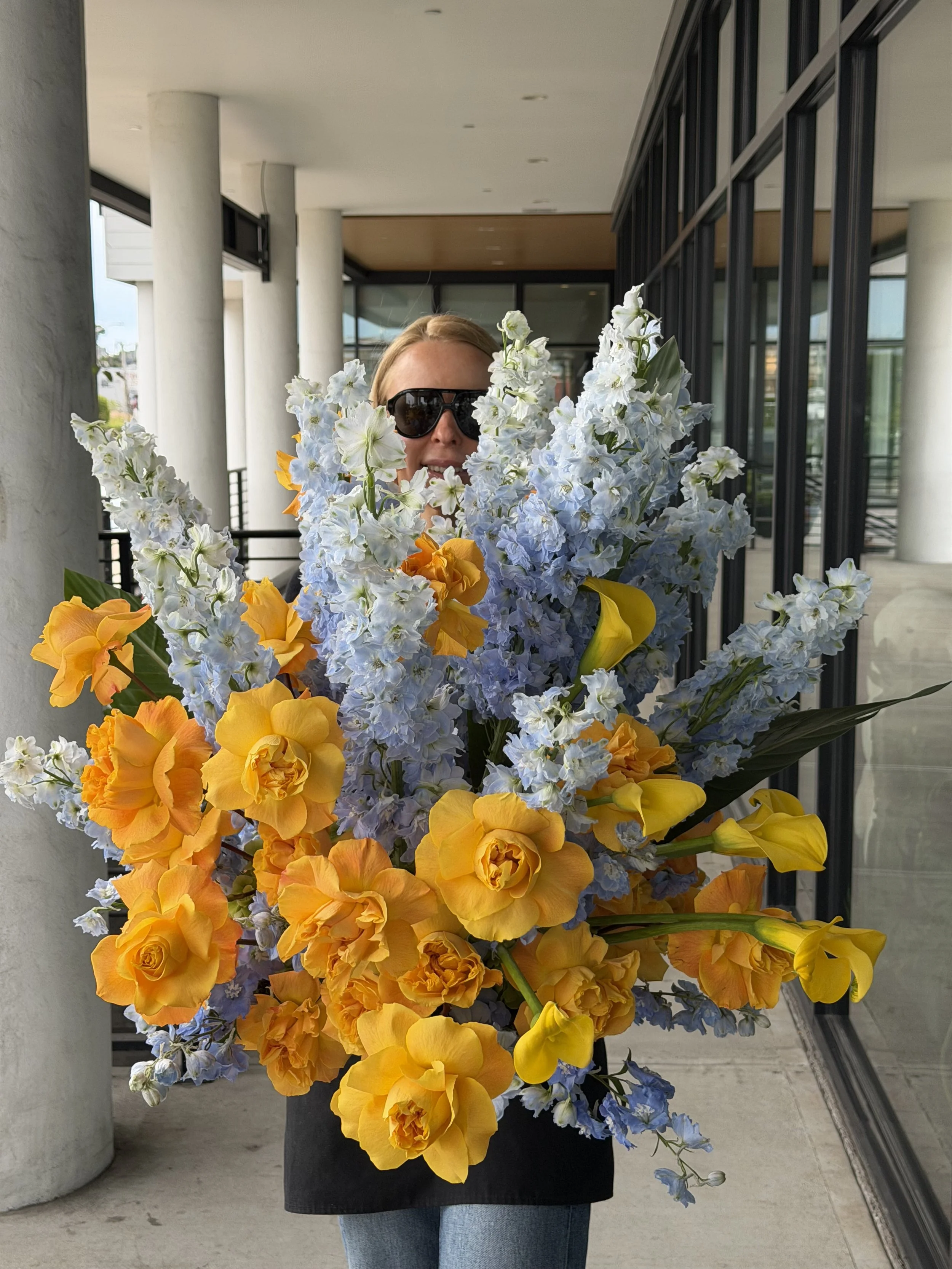
Sophistication is not about using the most flowers possible. In fact, executive tables often look more expensive when the florals are restrained. A carefully edited arrangement of calla lilies, orchids, roses, ranunculus, tulips, or seasonal branches can create far more impact than an overloaded centerpiece containing every premium flower the florist could source.
This guide looks at how to design sophisticated floral centerpieces for executive dinners without blocking conversation. We will cover height, proportion, flower choice, color, fragrance, table shape, candlelight, seasonal styling, venue considerations, and the practical details that separate a beautiful table from one that actually works.
Why Executive Dinner Flowers Need a Different Design Approach
Executive dinners are built around interaction, and that single fact changes everything about floral design. At a typical social event, guests may move between tables, dance, mingle, or spend only part of the evening seated. At an executive dinner, people can remain at the table for two or three hours, often engaging in sustained conversation with the people directly across from them. The centerpiece is therefore not simply decorative. It sits directly inside the social architecture of the evening.
That is why corporate dinner floral design needs to prioritize sight lines. Guests should be able to make eye contact comfortably with the person opposite them. They should not have to lean left or right to see who is speaking. They should also be able to look down the table during group conversation without seeing a forest of flower stems cutting the room into isolated sections.
There is also a psychological component. Executive dinners tend to work best when the table feels calm, organized, and intentional. Overly elaborate flowers can make the room feel ceremonial or theatrical, which may not match the purpose of the evening. If the dinner is designed to encourage candid conversation between senior leaders, an elaborate installation can create unnecessary formality. If it is a client appreciation dinner at a luxury venue, florals may be more expressive, but they still need to support the atmosphere rather than dominate it.
Another difference is brand perception. The flowers at an executive dinner quietly communicate something about the host. Minimalist arrangements may suggest confidence and restraint. Soft seasonal flowers can make a formal dinner feel warmer. Sculptural orchids or calla lilies can create a more contemporary, high-end mood. Whatever the style, guests often notice when the table feels thoughtfully designed, even if they never consciously analyze the flowers.
There are practical considerations too. Business dinners typically involve multiple courses, wine service, water glasses, bread plates, presentation materials, place cards, and sometimes discreet technology. Table space becomes valuable. A centerpiece that occupies too much room creates problems for servers and guests alike.
The best approach is therefore less about decoration and more about orchestration. Flowers should support the flow of conversation, dining, and service. When they do, guests notice the elegance. When they do not, guests notice the flowers for all the wrong reasons.
The Ideal Height for Executive Dinner Centerpieces
Height is one of the most important decisions in executive dinner floral design because it directly affects conversation. A centerpiece can be perfectly proportioned, beautifully colored, and made from exceptional flowers, yet still fail if it sits directly in the line of sight between guests.
As a general principle, centerpieces should stay comfortably below eye level when guests are seated. Rather than obsessing over one universal measurement, think about the practical viewing zone across the table. Guests should be able to sit normally, look straight ahead, and see the face of the person opposite them without adjusting their posture.
Low arrangements are usually the safest option. A compact floral centerpiece in a low bowl or compote creates visual richness without interfering with conversation. The design can spread horizontally, creating presence through width and texture rather than height.
Tall centerpieces are not automatically wrong, but they require a different structural approach. If flowers are elevated well above head level on slender, unobtrusive stands, guests can still see underneath them. This can work for larger gala-style executive dinners, but it is usually less appropriate for intimate board dinners or private dining rooms where the goal is closeness.
The problem area is the middle zone. Arrangements that sit somewhere between chin level and forehead level create the most disruption. They are too low to see under and too high to see over. This is where even beautiful flowers become annoying.
Stem placement matters too. A low arrangement with tall, loose branches rising through the center can still interrupt sight lines. Likewise, a group of bud vases may technically be small but become visually cluttered if they are packed too densely.
Before finalizing the table design, it is worth doing a seated test. Sit at the actual table if possible. Place the mock centerpiece where it will go. Look across it. Ask someone to sit opposite you and have a normal conversation. If your eye naturally catches foliage, branches, or flowers instead of the other person’s face, the arrangement should be adjusted.
That simple test is more useful than any abstract height rule. Executive dinner flowers succeed when guests forget there is a design constraint at all.
Why Low Floral Centerpieces Work So Well for Business Dinners
Low centerpieces are popular at business dinners for a reason: they solve several problems at once. They protect sight lines, preserve table space, create intimacy, and allow florists to build sophisticated compositions without forcing guests to interact around the flowers.
A low centerpiece also naturally keeps visual attention near the table surface, where the rest of the dining experience is happening. Plates, glassware, menus, place cards, linens, candles, and flowers all become part of one coordinated landscape. Nothing suddenly rises into the guest’s face and interrupts that visual rhythm.
From a design perspective, low arrangements can still feel luxurious. Luxury does not require height. A dense but refined composition of roses, ranunculus, hellebores, lisianthus, or orchids in a low vessel can feel incredibly polished. So can a looser arrangement built from only a few exceptional stems.
The key is proportion. A long rectangular table may need several low arrangements spaced at intervals rather than one large centerpiece. A round table can support one wider arrangement in the center, as long as it does not invade place settings or create service problems.
Low flowers also interact beautifully with candlelight. Taper candles, votives, or low hurricane lamps can add vertical variation while the flowers stay close to the table. This creates depth without creating a wall between guests.
Another advantage is photography. Executive dinners are often photographed for internal communications, brand content, investor relations, or private event documentation. Low centerpieces keep faces visible and help group photographs feel open rather than cluttered.
There is also something psychologically welcoming about a low table landscape. Tall flowers can create separation. Low flowers create a shared surface that everyone can see across. That may sound subtle, but executive hospitality is full of subtle cues.
If the dinner is intended to build trust or encourage conversation, the table should not feel defensive. Flowers should not become physical barriers.
This is why low centerpieces for executive dinners are not simply a practical compromise. In many cases, they are actually the more sophisticated design choice.
Choosing Flowers That Look Sophisticated Without Feeling Overdone
One of the hardest parts of executive floral design is finding the line between impressive and excessive. Business hosts often want the dinner to feel elevated, especially when important clients, investors, board members, or senior leaders are attending. The instinct can be to order premium flowers and use a lot of them. But more does not always look more sophisticated.
A refined table usually begins with editing. Instead of using eight flower varieties, a florist might use three. Instead of mixing many colors, the arrangement may stay within one tonal family. Instead of filling every inch of the vessel, the designer may allow negative space.
Flowers with clean forms work particularly well. Calla lilies, orchids, tulips, roses, ranunculus, hellebores, lisianthus, and anthuriums all have strong enough shapes to look intentional even when used sparingly.
Texture can add richness without requiring visual clutter. A few soft blooms combined with interesting foliage or branches can create depth. The goal is to make the centerpiece feel designed rather than merely full.
Container choice is equally important. A generic glass cube can work, but executive dinners often benefit from vessels with a stronger design point of view: matte ceramic, polished metal, smoked glass, stone, or understated low bowls. The container should support the room without demanding attention.
The venue influences how much floral material is appropriate. A private dining room with dark wood walls and low lighting may already feel rich and layered. In that environment, too many flowers can push the room toward heaviness. A minimal contemporary space might need more botanical texture to feel warm.
Brand personality matters too. A financial services firm may prefer classic elegance. A fashion company might want something more editorial. A technology company could use clean architectural flowers. A luxury hospitality brand may prefer lush but controlled arrangements.
The best design is one that feels like the host understands the room and occasion. It does not need to prove its expense.
Sophistication often comes from confidence, and confident design does not over-explain itself.
The Best Flower Varieties for Executive Dining Tables
Certain flowers naturally suit executive dining environments because they combine elegance, structural clarity, and versatility. That does not mean there is one approved list, but some varieties consistently work well when the goal is polished, conversation-friendly floral styling.
Orchids are one of the strongest options. Phalaenopsis orchids feel refined and modern, while cymbidium orchids offer more structure and color. Used sparingly, orchids can make even a small arrangement feel premium.
Calla lilies are another excellent choice because their sculptural shape creates sophistication without needing large quantities. White calla lilies feel clean and classic, while deep burgundy, blush, yellow, or near-black varieties can create a more dramatic mood.
Roses remain useful, especially when chosen carefully. Garden roses can create softness and depth, while classic roses offer cleaner structure. For business settings, white, cream, blush, peach, soft yellow, or muted burgundy often feel more appropriate than bright romantic red.
Ranunculus brings layered texture without excessive size. These flowers work beautifully in low centerpieces because their shape reads clearly at close range.
Tulips are excellent for spring executive dinners or minimalist tables. They create movement naturally because the stems continue to shift after arranging, which gives the design a relaxed elegance.
Hellebores are subtle, sophisticated, and especially effective in winter and early spring palettes. Their downward-facing blooms create beautiful detail at table level.
Anthuriums are useful for contemporary or fashion-forward events. Their glossy texture and graphic form can make an arrangement feel architectural.
Lisianthus offers softness without looking overly romantic, and seasonal materials such as dahlias, sweet peas, or delicate branches can add personality when used in the right context.
The best flower is not necessarily the rarest or most expensive one. A simple arrangement of seasonal tulips can look far more sophisticated than an overfilled arrangement of premium flowers if the proportions, color, and table setting are right.
Executive floral design is less about showing what you could afford and more about demonstrating judgment.
How to Use Color Without Distracting From the Conversation
Color sets the emotional tone of a table quickly. A room filled with deep red flowers feels completely different from one styled in white, green, and soft ivory. Because executive dinners are often designed around conversation and relationship-building, the floral palette should support the atmosphere instead of creating visual competition.
Neutral palettes are popular for a reason. White, cream, green, taupe, blush, and soft gray can make the table feel calm and refined. These colors also work well with many venues and table linens, which makes them easy to integrate into an existing design.
That said, neutral does not have to mean boring. White orchids, cream roses, hellebores, pale tulips, and layered greenery can create substantial visual interest through texture and shape.
Deeper tones can work beautifully for evening events. Burgundy, plum, chocolate, rust, forest green, and muted mauve can create intimacy and richness, especially in candlelit private dining rooms.
Bright colors require more restraint. Saturated orange, cobalt, hot pink, or vivid yellow can be fantastic for creative companies or brand-led dinners, but they should usually be concentrated rather than scattered randomly across the table.
One strong color used repeatedly can feel far more sophisticated than a mixed rainbow palette. For example, a table of deep orange ranunculus in clear bud vases may feel modern and intentional, while the same table using ten unrelated colors may feel casual.
The tableware should be part of the decision. Dark flowers against a black tablecloth may disappear. Pale florals against white linens may need stronger green or metallic accents to create contrast. Candlelight can also warm colors significantly.
Brand colors can inspire the palette, but direct matching is not always necessary. A navy-and-gold brand does not need blue and yellow flowers. The floral design could instead use white flowers, deep green foliage, and brass vessels to capture the same sense of polish.
Color should feel supportive, not loud. The guests should notice that the table feels beautiful before they notice exactly why.
Monochromatic Floral Design for a Refined Corporate Table
Monochromatic floral design is one of the easiest ways to make an executive dinner look polished. By limiting the arrangement to one color family, the eye focuses on shape, texture, and proportion rather than processing multiple competing hues.
An all-white floral table is a classic example. White roses, orchids, tulips, ranunculus, and hellebores can create a sophisticated layered look, especially when paired with varied green foliage or even no foliage at all. The result feels calm, clean, and timeless.
A deep burgundy palette creates a completely different mood. Dark dahlias, roses, scabiosa, or calla lilies can feel intimate and dramatic without becoming flashy. Paired with candlelight and dark linens, the table can take on a luxurious evening quality.
Monochromatic does not mean every flower must be exactly the same shade. In fact, slight tonal variation often makes the design more interesting. Ivory, cream, pale beige, and soft white can all sit within one visual family. Likewise, plum, wine, burgundy, and deep mauve can be combined without losing cohesion.
This approach works particularly well in executive settings because it reduces visual noise. Guests see a unified table rather than dozens of separate decorative decisions.
It also helps when the room already contains strong visual elements. If the private dining room has patterned walls, ornate lighting, or colorful art, a restrained monochromatic floral palette can keep the table from becoming too busy.
One interesting option is monochromatic greenery. Ferns, herbs, grasses, eucalyptus, or sculptural leaves can create an elegant botanical table without conventional flowers. This can be particularly effective for modern restaurants, sustainability-focused brands, or dinners where the host wants the design to feel understated.
The strongest monochromatic tables use texture to create depth. Smooth calla lilies, layered ranunculus, papery sweet peas, glossy leaves, and delicate grasses all reflect light differently.
When color is restrained, those details become visible.
That is what makes monochromatic executive dinner flowers feel expensive even when the design itself is relatively simple.
Long Tables vs. Round Tables: How Centerpiece Design Changes
Table shape has a major influence on floral strategy. A centerpiece that works beautifully on a round table may feel awkward or inefficient on a long rectangular one.
Round tables naturally create one shared center. A low, circular floral arrangement usually works well because it mirrors the table shape and can be viewed from every direction. The important thing is to keep the arrangement low enough for guests to see across it.
The diameter matters too. A centerpiece that is too wide can interfere with glassware, bread plates, wine bottles, or serving. The table should still have breathing room.
Long rectangular tables require a different rhythm. One giant centerpiece in the middle often makes the rest of the table feel empty. Instead, florists can create repetition through a series of low arrangements, clusters of bud vases, or a continuous botanical runner.
Spacing is important. The floral elements should create visual continuity without becoming a solid barrier. Gaps allow servers to place dishes, guests to see across the table, and candlelight to appear naturally between arrangements.
For very long executive tables, variation can make the design feel more sophisticated. One section might feature a slightly larger low arrangement, followed by smaller bud vase groupings, then another focal arrangement. This creates movement without breaking cohesion.
Banquet-style tables can also support floral runners, but the runner should stay narrow enough to preserve place settings and service lanes. Dense greenery stretching the entire length of the table can look beautiful in photographs but become inconvenient once food arrives.
Boardroom-style tables present another challenge because guests may need notebooks, laptops, or presentation materials. In those cases, flowers should be even more compact.
Table shape also affects candle placement. On long tables, repeated votives or tapers help create rhythm. On round tables, a grouped arrangement of low flowers and candles can create a central focal point.
The table itself should guide the design. Flowers are not an independent layer placed afterward. They are part of the spatial composition.
Using Bud Vases for Elegant, Conversation-Friendly Styling
Bud vases are one of the most useful tools for executive dinner design because they create visual richness without adding height or bulk. Instead of one large arrangement, a florist can use a series of small vessels containing one or two carefully chosen stems.
This approach naturally preserves sight lines. Guests can see between the vases easily, and the flowers rarely rise high enough to block faces. It also creates flexibility. Vases can be moved slightly if the table layout changes, unlike one large centerpiece that may be difficult to reposition.
Bud vase styling works especially well on long tables. Repeating small vessels creates rhythm and makes the entire table feel connected from one end to the other. The design can be highly minimal—one tulip per vase—or more layered, with several flower varieties distributed across the table.
Container consistency matters. Using identical clear glass vases creates a clean, modern look. Mixing different small ceramic or metal vessels can feel more collected and organic. For executive dinners, the mix should still feel intentional rather than eclectic for the sake of it.
The flower choice determines the tone. White ranunculus or sweet peas can feel soft and refined. Dark calla lilies may create a more dramatic mood. Single orchids in simple vases can feel highly contemporary.
Spacing is crucial. Bud vases placed too close together can become visually busy. Give each one enough breathing room that the stems read individually.
This is also an efficient way to use premium flowers. Instead of hiding expensive blooms inside a dense centerpiece, each flower becomes visible. One exceptional stem can do real design work.
There is a conversational advantage too. Guests often notice individual flowers at close range. A bud vase of an unusual seasonal bloom can become a small point of interest without dominating the dinner.
For business events where intimacy, conversation, and refinement matter, bud vases often deliver more than larger arrangements.
Floral Runners and Low Botanical Landscapes
A floral runner can turn a long executive table into one cohesive visual composition. Unlike a traditional table runner made from fabric, a botanical runner uses low flowers, foliage, branches, or repeated vessels to create a continuous line through the center.
The strongest versions remain low. The idea is to create horizontal movement, not a hedge that divides guests.
A loose runner might combine small clusters of flowers with greenery and candles. A more sculptural design could use repeated calla lilies, anthuriums, or orchids placed at different angles. A naturalistic style might resemble a narrow meadow running down the table.
The width needs careful control. Executive dinners usually require substantial space for glassware, chargers, menus, bread plates, and service. A wide floral runner can quickly become impractical.
Another consideration is how food will be served. If shared plates or wine bottles need to sit in the center, the floral design must leave designated spaces. Plated dinners provide more freedom because the center of the table is less operationally active.
Low botanical landscapes can also include non-floral materials. Moss, branches, herbs, fruit, seed pods, stones, or textured foliage may support the dinner concept. These materials can make the table feel more architectural and less conventionally decorative.
A continuous runner can look particularly strong in private dining rooms with a single long table. It visually emphasizes the communal nature of the dinner and leads the eye through the space.
Candlelight can be integrated directly into the runner, creating depth and variation. Small votives between floral sections often work better than large candles that compete with sight lines.
One caution: runners can become visually heavy if every inch is filled. Negative space is valuable. A broken runner made from repeated floral moments may actually look more sophisticated than an uninterrupted mass.
The goal is connection, not coverage.
How Candles and Flowers Can Work Together at an Executive Dinner
Flowers provide color and texture. Candles provide movement, warmth, and atmosphere. When used together carefully, they can make even a relatively simple executive table feel intentional and luxurious.
The first decision is height. If flowers are low, taper candles can create vertical rhythm without blocking conversation too much, provided they are slim and spaced carefully. Low votives are even safer because they stay below the sight line.
Candlelight changes how flowers appear. White petals become warmer. Deep red or plum flowers look richer. Glass vessels reflect light. Metallic containers pick up subtle highlights.
That makes lighting part of the floral palette rather than a separate decision.
Fire safety needs serious attention. Open flames may not be allowed in certain venues, hotels, private clubs, galleries, or corporate spaces. LED candles can be a practical alternative, especially when the event takes place in a venue with strict fire rules.
Dried materials require extra caution around flame because they can be highly flammable. Long grasses, dried leaves, and delicate branches should never sit directly beside open candles.
Spacing should also account for guests. Candles positioned too close to place settings can create heat or make people nervous about sleeves and napkins. The table should feel comfortable, not like everyone is dining inside a candle maze.
Scented candles are usually a poor choice at executive dinners. They can interfere with food, wine, and conversation just as strongly scented flowers can. Unscented candles allow the atmosphere to come from light rather than fragrance.
Candle color matters too. White or ivory feels classic. Deep colored tapers can become a stronger visual statement. Metallic holders can add polish, while clear glass keeps the look quieter.
The relationship between candles and flowers should feel balanced. If the floral design is lush, candles may be simple. If the flowers are extremely minimal, a stronger candle rhythm can add warmth.
Together, they can create an executive table that feels intimate without becoming romantic or overly ceremonial.
The Importance of Fragrance at a Business Dinner
Fragrance is one of the most overlooked factors in floral styling, especially at dinners. A flower can look extraordinary but become a problem if its scent competes with the meal.
Executive dinners are often held in smaller private rooms where fragrance accumulates quickly. Strongly scented lilies, gardenias, tuberose, hyacinths, jasmine, or certain roses may dominate the environment, particularly once the room fills with guests and doors remain closed.
That can affect both comfort and dining. People experience flavor partly through smell. A heavily fragrant centerpiece sitting inches away from a plate of carefully prepared food can interfere with the chef’s work.
Wine tasting is especially sensitive. If the dinner includes fine wine, floral fragrance should be kept to an absolute minimum because aroma is a major part of the tasting experience.
Guests may also have fragrance sensitivities. While no event can eliminate every possible trigger, using lightly scented or low-scent flowers reduces unnecessary risk.
Orchids, many tulips, ranunculus, anthuriums, calla lilies, and several rose varieties can work well when scent control is important. Your florist can recommend specific seasonal options.
Fresh herbs may seem appealing for a dinner table, but rosemary, basil, mint, or lavender can release strong aroma when touched. That might be desirable for a culinary concept, but it should be intentional.
Candles should generally remain unscented for the same reason.
Fragrance is a good example of why executive floral design cannot be judged only through photographs. A table may look perfect online and feel completely wrong in person because scent affects the room in a way the camera cannot capture.
The best design respects every sense without overwhelming any of them.
Matching Floral Design to the Venue and Brand Identity
Executive dinners often happen in spaces with strong identities of their own: private clubs, luxury hotels, chef-driven restaurants, galleries, penthouses, corporate boardrooms, or members-only dining rooms. Floral design should respond to the venue instead of treating every table as a blank canvas.
A dark-paneled private club may call for richer flowers, candlelight, and deeper tones. A contemporary glass dining room might suit white orchids, calla lilies, or minimalist bud vases. A historic townhouse can support softer arrangements and more traditional vessels.
The host’s brand identity adds another layer. A technology company may prefer clean, architectural florals. A luxury brand might choose highly edited premium blooms. A creative agency could use unexpected colors or more experimental forms. A law or financial firm may lean toward understated elegance.
The goal is not to turn the table into branded merchandise. Literal logo colors and obvious corporate references can make a dinner feel like a conference breakout session. Instead, translate brand qualities into design.
If the brand is known for precision, the floral arrangements might be highly structured. If it values craftsmanship, seasonal flowers arranged by hand in artisanal vessels could reinforce that idea. If sustainability is central to the company, local flowers and reusable mechanics may be more meaningful than imported luxury blooms.
The venue and brand should also coexist comfortably. A bold corporate palette may need to be softened if the restaurant already has strong colors. Likewise, a neutral venue gives the host more freedom.
Menus, place cards, linens, lighting, and tableware should be considered at the same time as flowers. When each element is designed independently, the table can feel fragmented. When they share one visual language, even simple flowers look more refined.
Executive guests may never consciously say, “The florals align nicely with the host’s brand positioning.” They simply notice that the evening feels coherent.
That is exactly the goal.
Seasonal Executive Dinner Flowers
Seasonal flowers can make an executive dinner feel more grounded, current, and thoughtful. They often have better quality, more interesting movement, and a sense of place that generic year-round arrangements may lack.
Spring offers tulips, ranunculus, hellebores, sweet peas, flowering branches, and peonies later in the season. These flowers work beautifully for executive dinners because they can feel fresh without becoming casual.
Summer allows for garden roses, dahlias, cosmos, zinnias, delphinium, and local field-grown varieties. The challenge is restraint. Summer flowers can easily become exuberant, so the design may need tighter color editing for a corporate setting.
Fall introduces deeper tones and stronger textures. Dahlias, chrysanthemums, berries, seed pods, branches, grasses, and foliage can create an elegant seasonal table that does not rely on obvious orange pumpkins or rustic styling.
Winter is excellent for sculptural florals. Amaryllis, orchids, calla lilies, hellebores, branches, evergreens, and white flowers can create dramatic but controlled arrangements. Winter tables often benefit from candlelight, which adds warmth when the floral palette is restrained.
Seasonality also influences cost. Flowers that are abundant locally or regionally in season are often better value than rare imported varieties requested at the wrong time of year.
A seasonal approach can also make repeat executive dinners feel different. If a company hosts quarterly dinners, the floral styling can change naturally with the calendar without requiring a completely new concept each time.
That creates continuity without repetition.
The best seasonal tables do not look themed. They simply feel appropriate for the moment.
Floral Styling for Private Dining Rooms and Boardroom Dinners
Private dining rooms offer more creative freedom because the entire environment can often be controlled: lighting, music, menus, table layout, and flowers. Boardroom dinners are more restrictive, but thoughtful floral design can make them feel significantly warmer.
In private restaurant spaces, floral styling should respond to the existing interior. Many private rooms already contain artwork, decorative lighting, mirrors, wood, or patterned textiles. Flowers should add to that atmosphere without overcrowding it.
Low arrangements and candlelight generally work well because guests are seated close together. If the room has one long table, a broken floral runner or series of bud vases can create continuity.
Boardroom dinners require extra restraint. Large conference tables may contain built-in technology, power outlets, microphones, screens, or presentation materials. Flowers should never cover equipment or interfere with sight lines to screens.
Compact bud vases or small low arrangements can soften the corporate setting without pretending the room is something it is not.
If presentations are part of dinner, floral placement should prioritize visibility. Guests may need to turn toward a speaker or monitor, so centerpieces should remain especially low.
Service logistics can also be more challenging in boardrooms because the room was not designed as a restaurant. Table space is often limited, and catering staff may need additional staging areas. The florals should occupy as little functional space as possible.
One elegant strategy is to concentrate flowers at the center of the table in narrow clusters rather than spreading them everywhere. Another is to place larger floral statements on side consoles, credenzas, or reception areas while keeping the dining table minimal.
The goal is to introduce hospitality without reducing function.
A boardroom dinner should still feel like a thoughtful hosted experience. Flowers help shift the mood from meeting to dinner while preserving the room’s practical purpose.
How Much Floral Design Is Enough for an Executive Dinner?
There is no universal amount of flowers that makes an executive dinner elegant. The right quantity depends on the table, room, guest count, venue, and purpose of the evening.
A common mistake is assuming that important guests require more flowers. In reality, senior-level dinners often benefit from greater restraint. The focus is usually on the people and conversation.
One beautifully executed low arrangement can be enough for a small round table. A long table may need several repeated floral moments to avoid feeling empty, but those arrangements do not need to be large.
A useful approach is to identify where floral impact matters most. The dining table is one area. The room entrance, reception console, or bar might be another. Rather than adding flowers to every available surface, select two or three moments and design them well.
Budget can actually become more effective this way. Premium flowers used sparingly often look more luxurious than large quantities of average material.
Negative space also helps expensive details stand out. A table that is completely filled with flowers, candles, menus, glasses, and décor can make it difficult to appreciate any one element.
Restraint signals confidence. A host does not need to overwhelm guests to prove the dinner matters.
The best question is not “How many flowers should we order?” It is “What does this table need in order to feel complete?”
Sometimes the answer is surprisingly little.
Common Centerpiece Mistakes That Interrupt Conversation
The most obvious mistake is height. If guests cannot see one another, the centerpiece is wrong for the dinner, regardless of how beautiful it looks.
Another common issue is width. Low arrangements can still become barriers if they spread too broadly across the table. A centerpiece that forces guests to shift glassware or lean around foliage is too large.
Too many bud vases can create the same problem. Individually small does not mean collectively unobtrusive. A dense row of vessels can clutter the visual field and make service difficult.
Strong fragrance is another frequent mistake. Flowers that smell wonderful in a florist’s studio may become overpowering around food.
Loose pollen, falling petals, or unstable stems can create distractions. Nobody wants to brush pollen from a suit during a client dinner.
Overly theatrical styling can also work against the purpose of the event. Elaborate flower towers, dramatic trailing vines, or complex installations may be appropriate for a gala but feel strange at a dinner designed for confidential conversation.
Ignoring table service is a practical error. Servers need space to place and remove plates, refill water, pour wine, and clear courses. Floral design must leave enough room for them to work smoothly.
Another mistake is choosing a centerpiece in isolation from the rest of the table. Flowers may clash with linens, menus, glassware, or room colors if the full design is not considered together.
And perhaps the most common mistake of all is designing only for photography. A table can look spectacular in a styled image and feel terrible once twelve people sit around it.
Executive dinner design should be tested from the chair, not just from the camera.
How to Brief a Florist for an Executive Dinner
A good florist can design far more effectively when the brief explains how the dinner is supposed to function, not just what colors the host likes.
Start with the basics: date, venue, guest count, table shape, table dimensions, event timing, installation window, and budget. If possible, provide photographs of the private dining room.
Explain who is attending. A board dinner, investor dinner, client appreciation event, executive retreat, and luxury brand dinner all carry different tones.
Describe the atmosphere in simple language. Words such as understated, warm, modern, discreet, elegant, intimate, editorial, classic, or architectural give the florist useful direction.
State clearly that conversation-friendly centerpieces are a priority. Ask for low arrangements or designs that preserve sight lines.
Mention any fragrance concerns, especially if wine tasting or a chef-led menu is involved.
Share information about linens, menus, tableware, candles, and brand colors. The florist does not need to match everything exactly, but they should understand the full visual environment.
Clarify service style. Plated dinners allow more floral freedom than family-style meals, where platters need central table space.
If presentations will happen during dinner, tell the florist where screens or speakers will be located.
Budget transparency is useful. A designer can make smarter choices when they know the actual range rather than guessing.
It can also help to identify one priority. Maybe the table should feel luxurious. Maybe the host wants a strong first impression when guests walk in. Maybe the brand prefers sustainability. Maybe the dinner needs to feel relaxed despite the senior guest list.
The clearer the purpose, the better the flowers will be.
Conclusion
The best executive dinner flowers are not the ones guests talk about because they could not see around them. They are the ones that make the table feel polished, warm, and intentional while allowing conversation to happen naturally.
That requires restraint.
Low centerpieces, bud vases, narrow floral runners, and carefully edited arrangements are usually the strongest options because they preserve sight lines and leave space for dining and service. Flowers such as orchids, calla lilies, roses, ranunculus, tulips, hellebores, and anthuriums can all create a refined table when used thoughtfully.
Height matters, but so do fragrance, width, color, container choice, candle placement, and table shape. A centerpiece should work from the guest’s chair, not just from above in a photograph.
Color can be subtle or dramatic, but it should feel intentional. Monochromatic palettes often create a particularly sophisticated result because they reduce visual noise and allow shape and texture to carry the design.
The venue and host brand should guide the style. A boardroom dinner may need extremely minimal flowers. A private dining room at a luxury hotel can support something richer. A creative company may want more color and personality.
Seasonal flowers can add another layer of refinement while keeping the design connected to the time of year.
Above all, remember why the dinner exists. Executives, clients, investors, and partners are gathering to talk, connect, listen, and build relationships.
The flowers should help create the right atmosphere for that conversation.
They should never get in the way of it.