Holiday Florals on a Snowy Day: Safe Delivery Tips for Connecticut & New York’s Winter Conditions
Let’s be real—nothing kills the holiday vibe faster than a wilted wreath or a frozen bouquet. You spent good money on beautiful florals to deck the halls, and Mother Nature had other plans. Between icy sidewalks, lake-effect snow, and city slush puddles, winter in the Northeast is a battleground for flower delivery.
But that doesn’t mean you have to skip the blooms this season. You just need to know how to order smart, prep your delivery zone, and work with florists who know how to navigate a Nor’easter like a boss.

Whether you’re in a Brooklyn brownstone or a colonial in West Hartford, here’s your go-to guide to getting those holiday florals safely to your door—and keeping them fresh once they arrive.
Why Winter Deliveries Are Tricky for Fresh Flowers
You’ve got two major enemies during holiday flower delivery: the cold outside and the heat inside. It’s not just the snow—although that’s part of it. It’s the rapid temperature shifts that send blooms into shock.
Here’s what makes winter floral delivery so delicate:
Freezing temps can cause petals to turn translucent or black
Sudden indoor heat causes wilting, dehydration, and early browning
Snow and moisture can damage delicate packaging or seep into stems
Delivery delays due to weather mean flowers sit in vans longer than usual
In short, flowers don’t like extremes—and Northeast winters are full of them.
Understanding the Fragility of Holiday Blooms
Some flowers are winter warriors. Others? Total divas. And when you’re ordering for snowy day delivery, knowing which is which makes all the difference.
Delicate blooms prone to cold damage:
Tulips
Hydrangea
Orchids
Anemones
Peonies
Sturdier flowers for winter travel:
Amaryllis
Carnations
Hellebores
Roses (to a point)
Winter greens like cedar, pine, eucalyptus
If you’re expecting snow or single-digit temps, ask your florist to build an arrangement using heartier blooms that can handle the journey.
How Florists Prepare for Snowy Day Deliveries
The best local florists in CT and NYC? They’re basically floral survivalists during winter. They’ve got a whole system for snow day delivery:
Wrapping arrangements in insulated sleeves
Placing stems in water picks or water tubes if no vase is used
Using lined delivery boxes to protect against wind chill
Timing deliveries to avoid early morning or late night freeze risks
Florists also coordinate with drivers to make sure flowers don’t sit in a freezing van for hours. That’s why it's so important to buy local—big chains often ship from out of state and can’t guarantee this kind of care.
Timing is Everything: Choosing the Right Delivery Window
Winter isn’t the time to wing it with a “leave it on the porch” attitude.
When you schedule your floral delivery, midday is golden:
Avoid early morning frost
Skip late evening freeze-ups
Give your florist a tight, clear time range when someone will be home
If possible, avoid weekend deliveries when weather delays are more likely and staff might be stretched thin. And always check the local forecast before placing an order—your florist will thank you.
Florist to Door: What Happens During Winter Transit
A good floral delivery person isn’t just a driver—they’re a petal protector. In snowy weather, they’re doing the most to make sure your blooms arrive intact:
Starting their van warm to avoid exposing florals to freezing air
Wearing gloves to avoid damaging delicate petals
Carrying arrangements in double-insulated boxes
Shielding florals from wind and snow during handoff
Calling ahead so you can meet them at the door—no porch drops!
Bottom line: communication matters. You can help by being ready to receive your flowers fast.
Top Tips for Receiving Flowers in Snowy Conditions
Here’s how to be a pro-level flower recipient on a snowy day:
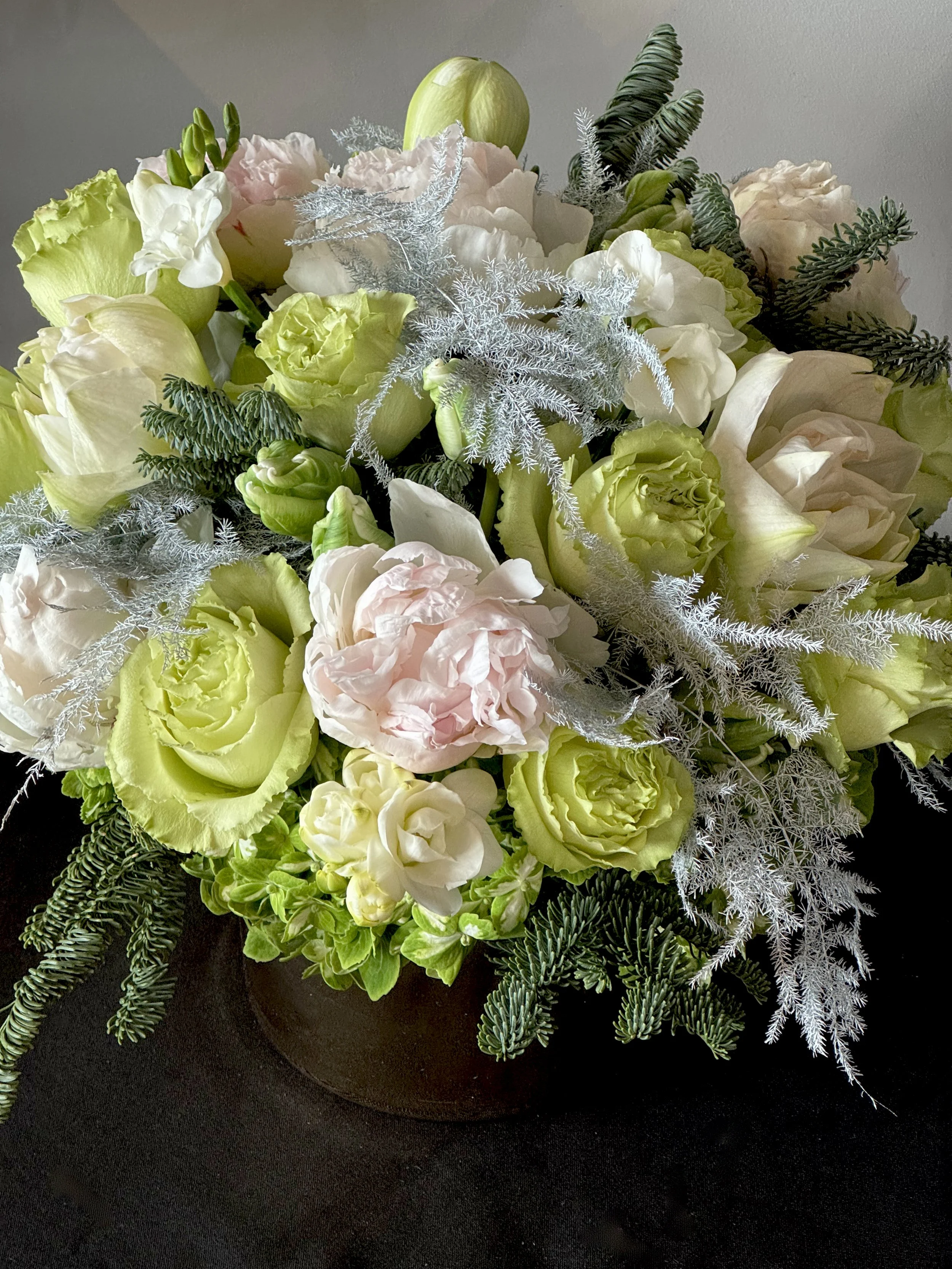
Clear a path to your door
Set up a dry, protected drop zone (like inside a storm door or covered porch)
Answer your phone—your delivery driver may need quick access
Have a vase of water ready if the bouquet doesn’t come pre-arranged
Never let flowers sit outside in freezing temps, even for a few minutes
Live in an apartment or condo? Read on.
Apartment Deliveries in NYC: The Doorman Dilemma
Ah, Manhattan in December. You’ve got high-rises, elevators, package rooms, and a doorman juggling a million things. And right in the middle of it? Your fragile-as-heck bouquet that’s about to be left on a cold marble floor next to someone’s Amazon box.
Here’s how to avoid a delivery disaster:
Talk to your doorman ahead of time—let them know you’re expecting a live floral delivery and ask them to keep it out of drafts or cold areas.
If you don’t have a doorman, leave clear instructions on the buzzer or call box. Tell the florist if there’s a safe lobby drop-off point.
Ask for the flowers to be double-boxed or wrapped in insulated sleeves, especially if they’ll sit unattended for any length of time.
If your building has a package room, make sure it's climate controlled—you’d be surprised how chilly those rooms get.
And always provide a backup phone number or neighbor in case your building’s delivery policy is strict.
Driveway Drop-Offs in Connecticut: Suburban Challenges
In the ‘burbs? The challenges shift—but they’re still real. Long driveways, icy stairs, and snow-covered house numbers can make things tricky for your florist, especially when visibility is low and sidewalks haven’t been cleared yet.
Want your delivery to go smoothly? Here’s what helps:
Shovel and salt your walkway and steps before the delivery window
Leave your porch light on (yes, even during the day)
If possible, place a weatherproof bin or box with a towel or mat inside as a drop zone
Add a note to your order with specific directions if your house is hard to find
Your florist may be navigating unplowed roads with a van full of flowers. Anything you do to make their job easier = safer delivery + fresher flowers.
Snowproof Packaging: What Works Best
Want to make sure your flowers arrive not looking like they just lost a snowball fight? Packaging matters—big time.
Here’s what works best during Northeast winter storms:
Insulated florist sleeves (thicker than your average plastic wrap)
Corrugated cardboard boxes with inner foam or padding
Water-tight containers inside the box (no leaks, no freeze)
Air holes to prevent condensation—but not too many
Pro tip: Ask your florist to label your order “LIVE FLOWERS—DO NOT FREEZE” if it's going through any third-party courier. That little message can save a whole bouquet.
What Not to Do: Common Mistakes That Kill Flowers in Winter
You’d be surprised how many holiday arrangements meet their doom before they even hit the vase. Don’t let that be you.
Leaving flowers on the porch “just for a few minutes” — nope. Even five minutes in below-freezing temps can kill certain blooms.
Putting flowers near a fireplace or radiator immediately after delivery — sudden heat after cold exposure = wilting disaster.
Opening the box outside in the cold air — always bring your arrangement fully indoors before unboxing.
Storing arrangements in the garage “until guests arrive” — unless your garage is heated, this is a floral graveyard.
Moral of the story? Handle your blooms like they’re fancy pastries or puppies. Keep them warm, stable, and safe.
Warming Up Right: How to Unbox and Acclimate Your Flowers
You just got your bouquet—yay! But it’s been outside in 20-degree weather for 30 minutes. Don’t just rip open the box and plop it in the center of your holiday table.
Instead, here’s how to properly “thaw” your arrangement:
Bring it inside, still in its packaging
Let it sit in a cool room (60–65°F) for 30–45 minutes
Remove outer packaging gently
Let the flowers rest in a vase with room-temp water
Avoid placing them near heat sources or in direct sun for the first day
This slow warm-up helps prevent shock and gives your flowers a longer, happier holiday life.
Emergency Fixes: If Your Arrangement Arrives Frozen or Wilted
It happens. Even with the best intentions, weather or transit can mess up your delivery. Don’t panic—you might be able to save them.
Frozen blooms?
Bring indoors and let them thaw slowly in a cool room
Once softened, trim stems and place in warm water
Don’t force the petals open—let nature take its course
Wilted from heat or dehydration?
Recut stems under water at a 45° angle
Soak entire bouquet in lukewarm water for 30 minutes
Mist gently and place in a cool, shaded spot for recovery
Still unhappy with how they arrived? Call your florist immediately. Most offer winter damage policies or same-day replacements if your blooms didn’t survive the trip.
Florist Tips: How to Order Smart in Winter
Ordering flowers in winter isn’t like spring or summer—you need to plan ahead.
Here’s what seasoned Northeast florists recommend:
Place orders at least 3–5 days in advance, especially around Christmas or New Year’s
Opt for hardy seasonal blooms (amaryllis, carnations, hellebores)
Ask about insulated or double-boxed packaging
Choose a local florist over national chains for faster, more protected delivery
Request midday delivery and confirm someone will be home
Planning and communication = flowers that show up on time, fresh, and fabulous.
Holiday Flower Delivery Etiquette in the Northeast
A snowy December delivery isn’t just a service—it’s a mission. Your driver probably just dodged traffic, black ice, and a parking ticket to get your bouquet to the door.
Here’s how to show appreciation:
Tip generously—$5–$20 depending on weather and effort
Leave a kind note or online review for your florist
Offer warm thanks (maybe even a cup of hot cider if they’ve really been hustling)
It’s a small gesture that makes a big difference during the busiest (and coldest) time of year.
Conclusion: Beautiful Blooms, Even in a Blizzard
Holiday florals are one of the easiest ways to bring warmth, color, and joy into your home—especially when it’s gray and freezing outside. But in the Northeast, you’ve got to work with the weather, not against it.
With the right florist, smart planning, and a few snow-day delivery hacks, you can enjoy fresh, stunning arrangements all season long—without the stress or the soggy petals.
So whether it’s a snow-dusted wreath for your brownstone or a farmhouse centerpiece out in the Connecticut hills, your flowers can make it to the table safe, sound, and celebration-ready.